Boys' Underwear Striped Fabric
CN → US| HS Code | Tariff Rate | Origin | Destination | Doc |
|---|---|---|---|---|
| 6207199010 | 28.0% | CN | US | Official Doc |
| 6114200020 | 28.3% | CN | US | Official Doc |
| 6107120010 | 32.4% | CN | US | Official Doc |
| 6107110010 | 24.9% | CN | US | Official Doc |
| 6114302010 | 49.5% | CN | US | Official Doc |
| 6107110020 | 24.9% | CN | US | Official Doc |
Product Images
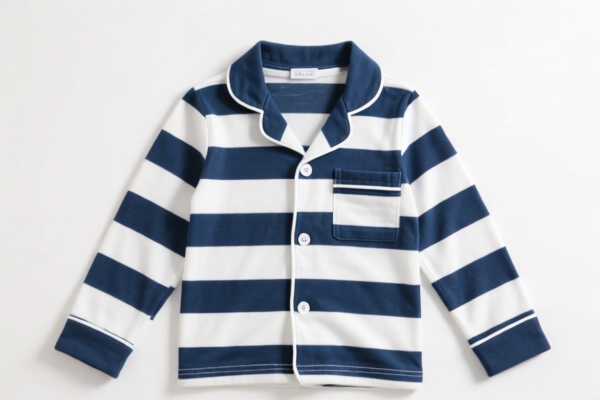
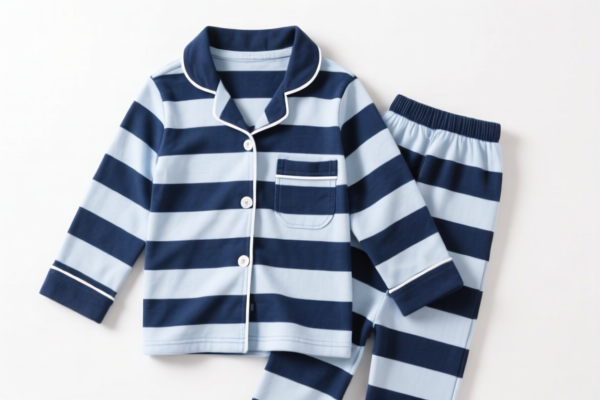
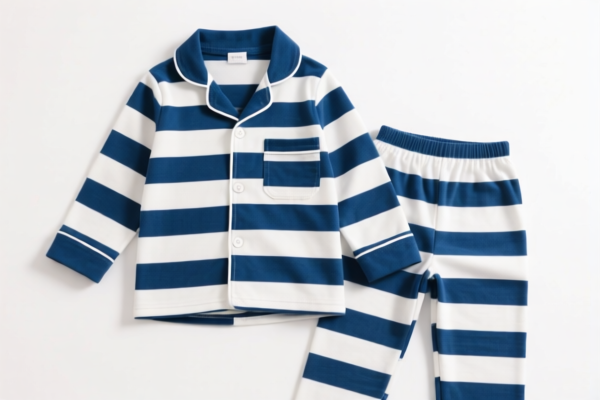
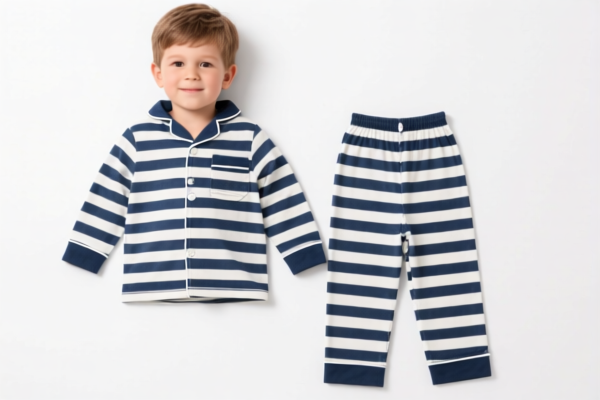
AI Analysis
👕 Boys' Underwear (Striped Fabric) – HS Code Classification & Tariff Breakdown
🌐 HS Code Reference & Customs Clearance Guide | 2026 Latest Tariff Analysis | Professional Clearance Strategy
📌 I. Product Definition & Classification: Do You Really Understand "Boys' Underwear"?
Boys' underwear refers to the lower-body undergarments worn by male children. In international trade, the classification depends heavily on: 1. Material: Cotton, synthetic fibers (polyester, nylon), or blends. 2. Manufacturing Process: Knitted (elastic, stretchy) vs. Woven (structured, non-stretch). 3. Age Group: "Boys" typically implies children under a certain age, distinct from men's adult underwear.
⚠️ Key Distinction Points:
- Knitted (Chapters 61): Usually elastic, made from jersey, rib, or interlock fabrics. Common for children’s underwear due to comfort.
- Woven (Chapter 62): Less elastic, often structured. Less common for basic underwear but possible for specific styles.
- Age Factor: Items specifically designed for children may fall under different subheadings than adult men’s underwear.
📦 II. HS Code Classification Details (2026 Latest Tariff Authority Comparison)
Based on the provided data for "Boys' Underwear Striped Fabric", here are the applicable HS Codes with their corresponding tax structures:
| HS Code | Product Description | Material/Type | Total Tax Rate | Key Characteristics |
|---|---|---|---|---|
6114.20.00.20 |
Men's Boys' Striped Knitted Underwear | Knitted Textile | 28.3% | Cotton or synthetic fiber blend; Knitted category |
6107.11.00.10 |
Men's Boys' Underwear | Knitted Textile (Cotton) | 24.9% | Cotton or similar fiber; No material conflict |
6107.11.00.20 |
Boys' Underwear | Knitted Textile (Cotton) | 24.9% | Specifically for boys; Cotton knitted underwear |
6207.19.90.10 |
Men's Striped Woven Underwear | Woven Textile | 28.0% | Matches form and material; Woven structure |
6107.12.00.10 |
Men's Underwear | Knitted Textile (Synthetic/Cotton) | 32.4% | Artificial fibers or cotton blend; Higher base duty |
6114.30.20.10 |
Bodysuits & Tights | Textile (Spandex/Elastic) | 49.5% | Contains spandex; High base duty |
🔍 Important Note:
- Knitted (61xx) vs. Woven (62xx): The primary split is between knitted (6107,6114) and woven (6207). Most boys' underwear is knitted due to comfort.
- Material Matters: Cotton-based items (6107.11) generally have lower base duties than synthetic-heavy items (6107.12).
- Age Specification:6107.11.00.20is explicitly for "Boys," which may offer specific regulatory advantages over generic "Men's" classifications.
💰 III. 2026 Latest Tariff Rate Details (Including Additional Taxes)
✅ Applicable Country: USA (US)
✅ Origin: China (CN)
✅ Effective Time: From November 10, 2025 (for subsequent imports)
🎯 1. 6107.11.00.10 & 6107.11.00.20 – Cotton Knitted Underwear (Best for Cost Efficiency)
| Item | Details |
|---|---|
| Base Duty | 7.4% |
| Section 301 Duty | +7.5% |
| Section 122 Duty | +10% |
| Total Tax Rate | 24.9% |
| Tax Calculation | CIF Value × 24.9% |
| De Minimis Exemption | ❌ Not Eligible (Deny De Minimis) |
| Legal Path | Base Tariff → Section 301 → Section 122 |
📌 Explanation:
- Base Duty (7.4%): Applies to cotton knitted underpants.
- Section 301 (7.5%): Additional tariff on Chinese goods.
- Section 122 (10%): Further additional tariff under specific US trade laws.
- Total: 24.9%. This is the most cost-effective classification for boys' cotton underwear.
🎯 2. 6207.19.90.10 – Woven Striped Underwear
| Item | Details |
|---|---|
| Base Duty | 10.5% |
| Section 301 Duty | +7.5% |
| Section 122 Duty | +10% |
| Total Tax Rate | 28.0% |
| Tax Calculation | CIF Value × 28.0% |
| De Minimis Exemption | ❌ Not Eligible |
| Legal Path | Base Tariff → Section 301 → Section 122 |
📌 Explanation:
- Base Duty (10.5%): Woven undergarments have a higher base rate than knitted cotton.
- Total: 28.0%. Slightly higher than knitted cotton options. Suitable if the product is definitely woven.
🎯 3. 6114.20.00.20 – General Knitted Underwear (Cotton/Synthetic Blend)
| Item | Details |
|---|---|
| Base Duty | 10.8% |
| Section 301 Duty | +7.5% |
| Section 122 Duty | +10% |
| Total Tax Rate | 28.3% |
| Tax Calculation | CIF Value × 28.3% |
| De Minimis Exemption | ❌ Not Eligible |
| Legal Path | Base Tariff → Section 301 → Section 122 |
📌 Explanation:
- Base Duty (10.8%): For knitted garments not specified as cotton underpants (e.g., blends).
- Total: 28.3%. Higher than pure cotton knitted underwear.
🎯 4. 6107.12.00.10 – Synthetic Fiber Underwear
| Item | Details |
|---|---|
| Base Duty | 14.9% |
| Section 301 Duty | +7.5% |
| Section 122 Duty | +10% |
| Total Tax Rate | 32.4% |
| Tax Calculation | CIF Value × 32.4% |
| De Minimis Exemption | ❌ Not Eligible |
| Legal Path | Base Tariff → Section 301 → Section 122 |
📌 Explanation:
- Base Duty (14.9%): Artificial fibers (polyester, nylon) incur higher base duties.
- Total: 32.4%. Significant cost increase if not using cotton.
🎯 5. 6114.30.20.10 – Bodysuits & Tights (With Spandex)
| Item | Details |
|---|---|
| Base Duty | 32.0% |
| Section 301 Duty | +7.5% |
| Section 122 Duty | +10% |
| Total Tax Rate | 49.5% |
| Tax Calculation | CIF Value × 49.5% |
| De Minimis Exemption | ❌ Not Eligible |
| Legal Path | Base Tariff → Section 301 → Section 122 |
📌 Explanation:
- Base Duty (32.0%): Bodysuits, tights, or garments with high spandex content fall under this high-duty category.
- Total: 49.5%. Extremely High Tax. Only apply if the product is truly a bodysuit/tight, not standard underwear.
🛠️ IV. Customs Clearance Practical Advice (Pitfall Avoidance Guide)
✅ 1. Required Documentation (None of these can be omitted)
| Document | Must Provide | Description |
|---|---|---|
| ✅ Product Specification Sheet | ✔️ | Includes material composition (% cotton, % polyester), size, style |
| ✅ Fabric Swatch/Composition Certificate | ✔️ | Proof of material (Cotton vs. Synthetic) |
| ✅ Product Photos (Front, Back, Detail) | ✔️ | Clearly shows "Striped" pattern and "Boys' Cut" |
| ✅ Commercial Invoice | ✔️ | Must specify "Boys' Knitted/Woven Underwear" |
| ✅ Packing List | ✔️ | Item count, weight, packaging type |
| ✅ Origin Certificate | ✔️ | If not from China, may qualify for lower rates |
✅ 2. Declaration Tips (Key Rules)
🔥 “Material Defines Duty, Age Defines Subheading, Pattern is Cosmetic”
| Scenario | Correct Declaration | Incorrect Action |
|---|---|---|
| Cotton Knitted | 6107.11.00.10 or 6107.11.00.20 |
Misdeclare as woven → 28%+ |
| Synthetic Knitted | 6107.12.00.10 |
Misdeclare as cotton → Penalties |
| Bodysuit/Tight | 6114.30.20.10 |
Misdeclare as underwear → 49.5% vs 24.9% |
| Woven Underwear | 6207.19.90.10 |
Misdeclare as knitted → Audit |
📌 Critical Reminder:
- Knitted vs. Woven: This is the biggest classification risk. Knitted fabrics stretch; woven fabrics do not. Provide a fabric swatch if unsure.
- Age Specificity: Use "Boys'" in the description if the product is sized for children (<14 years). This can prevent misclassification as adult men's underwear.
- Striped Pattern: This is not a classification factor. It is cosmetic. Do not let "striped" influence HS Code choice.
✅ 3. Special Cases Handling
| Scenario | Handling Advice |
|---|---|
| Mixed Material (e.g., 95% Cotton, 5% Spandex) | Still classified as Cotton (6107.11) if cotton is the major fiber by weight. |
| OEM Custom Designs | Provide design sheets to prove it is "underwear" and not a "bodysuit" or "tights." |
| Small Quantity Samples | Still subject to duties; no de minimis exemption for China origin. |
| High Spandex Content (>15%) | Consider if it falls under 6114.30 (Bodysuits/Tights) due to elasticity. |
🌍 V. Global Market Comparison (2026 Latest)
| Country/Region | Recommended HS Code | Tariff Rate | Certification Required | Notes |
|---|---|---|---|---|
| 🇺🇸 USA | 6107.11.00.20 |
24.9% | CPSIA (for children) | Highest total tax due to Section 301 & 122 |
| 🇨🇳 China | 6107.11.00.20 |
~7.4% | CCC (if applicable) | No additional tariffs |
| 🇪🇺 EU | 6107.20.00 |
0-8% | CE (if applicable) | No additional tariffs |
| 🇬🇧 UK | 6107.20.00 |
0-8% | UKCA | Post-Brexit rules apply |
| 🇨🇦 Canada | 6107.20.00 |
0-12% | Health Canada | No additional tariffs |
📌 Conclusion:
- USA is the most expensive market due to additional tariffs (Section 301 & 122).
- Total Tax in USA: 24.9% (Cotton) to 49.5% (Bodysuit).
- Plan for 25-30% duty cost in your pricing strategy for US imports.
📌 VI. Common Errors & Pitfall Guide (Lessons Learned)
❌ Error 1: Misclassifying Knitted as Woven
👉 Consequence: Higher duty (28% vs 24.9%) + potential audit.
✅ Fix: Confirm fabric structure with a swatch.
❌ Error 2: Misclassifying Cotton as Synthetic
👉 Consequence: Duty jumps from 24.9% to 32.4%.
✅ Fix: Provide material composition certificate.
❌ Error 3: Classifying Underwear as Bodysuit (6114.30)
👉 Consequence: Duty skyrockets to 49.5%.
✅ Fix: Ensure product is "underpants," not a one-piece bodysuit.
❌ Error 4: Ignoring Age Specification
👉 Consequence: Customs may reclassify as adult men's underwear, leading to delays.
✅ Fix: Explicitly state "Boys' Underwear" in the declaration.
✅ Correct Declaration Example:
"Boys' Knitted Cotton Underwear, Striped Pattern, Size 4-10, 95% Cotton 5% Spandex, Model XYZ"
🎯 VII. Conclusion: Precise Classification Saves Money!
🎯 Remember the Mantra:
🔹 "Cotton Knitted is King (24.9%), Woven is Middle (28%), Synthetic is Higher (32.4%), Bodysuit is Expensive (49.5%)"
🔹 "Material and Structure Decide the Code, Age Decides the Subheading"
📌 Pro Tip:
If your product is originating from Vietnam, Mexico, Thailand, or Malaysia, you may qualify for IEEPA Exemptions or lower Section 301 rates.
Recommendation: Apply for an Advance Ruling with US Customs to confirm the HS Code before shipment.
📣 Immediate Action:
📞 Contact a professional customs broker + Provide product photos + Submit material composition certificate
🚀 Clear Customs Smoothly, Reduce Costs, Maximize Profits!
✨ Professional Clearance Starts with Accurate Classification!
💼 Every Penny of Cost Should Be Precisely Calculated!
Customer Reviews
About HS Code Classification
The Harmonized System (HS) is an internationally standardized nomenclature developed by the World Customs Organization (WCO) to classify traded products. Over 200 countries use the HS system as the basis for customs tariffs, trade statistics, and import/export regulations.
Each HS code follows a hierarchical structure:
- Chapter (2 digits) — Broad category of goods (e.g., Chapter 84: Machinery and Mechanical Appliances)
- Heading (4 digits) — More specific grouping within the chapter
- Subheading (6 digits) — Internationally standardized breakdown, used by all WCO member countries
- National subdivisions (8-10 digits) — Country-specific extensions for further classification, such as US HTSUS 10-digit codes
Correct HS code classification is essential for smooth customs clearance, accurate duty payment, and compliance with trade regulations. Misclassification can lead to customs delays, overpayment of duties, or penalties.
When importing from CN to US, the applicable tariff rates may include:
- Most-Favored-Nation (MFN) rate — The standard duty rate applied to WTO members
- General rate — Applied to countries without trade agreements
- Trade remedy duties — Additional tariffs such as Section 301 (anti-dumping), Section 232 (national security), or countervailing duties
The information provided on this page is for reference purposes only. For official classification, please consult with your local customs authority or a licensed customs broker.