Boys' Warm Jumpsuit
CN → US| HS Code | Tariff Rate | Origin | Destination | Doc |
|---|---|---|---|---|
| 6109100014 | 34.0% | CN | US | Official Doc |
| 6111206010 | 25.6% | CN | US | Official Doc |
| 6111305010 | 33.5% | CN | US | Official Doc |
| 6114200035 | 28.3% | CN | US | Official Doc |
| 6114303020 | 32.4% | CN | US | Official Doc |
Product Images


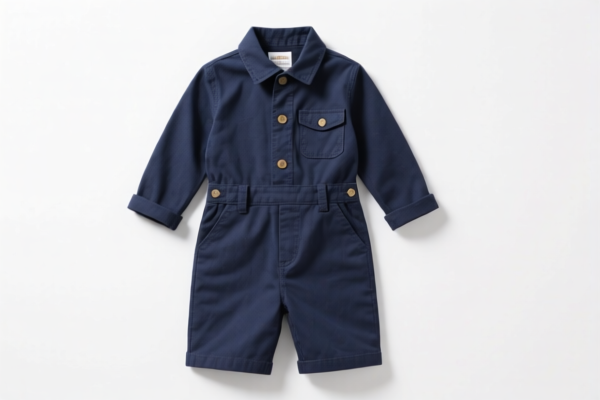
AI Analysis
Here is the comprehensive guide for Boys' Warm Jumpsuits, formatted in a professional, visually engaging Wiki style based strictly on the provided data.
👶 Boys' Warm Jumpsuit (Infant & Toddler Romper)
🌐 HS Code Reference & Customs Clearance Guide | 2026 Duty Rate Analysis | Strategic Compliance
📌 I. Product Definition: What is a "Boys' Warm Jumpsuit"?
A Boys' Warm Jumpsuit (often called a Romper, Onesie, or Coverall in the US market) is a one-piece garment primarily designed for infant or young boys. Key characteristics include: * Construction: Knitted or Woven fabric. * Function: Designed to keep the child warm (often with fleece lining or thick material). * Structure: One continuous piece covering the torso and legs, often with snap buttons at the crotch for diaper access.
⚠️ Critical Classification Nuance:
In the US Customs Tariff (HTSUS), the classification depends heavily on Fabric Composition (Cotton vs. Synthetic) and Knit vs. Woven status. Misclassification can lead to significant duty spikes due to the "Section XI" rules and Section 301/122 additional tariffs.
📦 II. HS Code Classification Matrix (Based on Provided Data)
| HS Code | Product Description | Fabric Type | Total Tax Rate | Tax Components |
|---|---|---|---|---|
| 6109.10.00.14 | Boys' Knitted Jumpsuit | Knitted (Cotton implied) | 34.0% | Base: 16.5% + Sect. 301: 7.5% + 122 Clause: 10% |
| 6111.20.60.10 | Boys' Knitted/Weaved Jumpsuit (General) | Mixed / Cotton/Synthetic | 25.6% | Base: 8.1% + Sect. 301: 7.5% + 122 Clause: 10% |
| 6111.30.50.10 | Boys' Knitted/Weaved Jumpsuit | Synthetic Fibers (Infant) | 33.5% | Base: 16.0% + Sect. 301: 7.5% + 122 Clause: 10% |
| 6114.20.00.35 | Boys' Jumpsuit (Non-Knit/Specific) | Cotton or Synthetic | 28.3% | Base: 10.8% + Sect. 301: 7.5% + 122 Clause: 10% |
| 6114.30.30.20 | Boys' Jumpsuit (Synthetic/Artificial) | Synthetic / Artificial | 32.4% | Base: 14.9% + Sect. 301: 7.5% + 122 Clause: 10% |
🔍 Key Observation:
All applicable codes include a mandatory Section 301 Surcharge of 7.5% and a Section 122 Clause Tariff of 10%. The variable is the Base Duty Rate, which ranges from 8.1% to 16.5% depending on whether the garment is knitted, woven, or made of cotton/synthetic fibers.
💰 III. Detailed Tax Breakdown & Policy Logic (2026 Standards)
🇺🇸 Applicable Jurisdiction: United States (Import from China)
🏷️ Active Tariff Regimes:
- MFN Base Duty (General): Standard tariff for apparel.
- Section 301 Tariff (Add-on): Fixed 7.5% on most Chinese textile/apparel products.
- Section 122 Clause (Add-on): Fixed 10% on specific children's apparel (often linked to "de minimis" or specific trade remedy provisions).
📊 Scenario Analysis:
Case A: High Cotton Content / Specific Knits (HS Code: 6109.10.00.14)
- Base Duty: 16.5%
- Section 301: +7.5%
- Section 122: +10%
- 🔴 Total Effective Rate: 34.0%
- Logic: High cotton content in specific knit categories often attracts higher base duties due to domestic protectionist measures.
Case B: Synthetic Blends / General Infant Wear (HS Code: 6111.30.50.10)
- Base Duty: 16.0%
- Section 301: +7.5%
- Section 122: +10%
- 🔴 Total Effective Rate: 33.5%
- Logic: "Synthetic" classification usually carries a high base duty, though slightly lower than the specific 6109 code.
Case C: The "Low Duty" Option (HS Code: 6111.20.60.10)
- Base Duty: 8.1%
- Section 301: +7.5%
- Section 122: +10%
- 🟢 Total Effective Rate: 25.6%
- Logic: This is the most cost-effective classification if the product meets the criteria (likely a specific blend or knit type). Strategy: Ensure material composition fits this specific subheading to save ~8-9% in duty.
🛠️ IV. Customs Clearance Strategy & Operational Advice
✅ 1. Documentation Checklist (Mandatory for US Entry)
To avoid delays or audits, ensure your Commercial Invoice and Packing List explicitly state: * Fabric Composition: Exact percentage (e.g., "80% Cotton, 20% Polyester"). Crucial for distinguishing between 6111.20 and 6111.30. * Construction Method: Explicitly state "Knitted" or "Woven". (61xx codes are distinct from 62xx woven codes). * Target Age Group: Must specify "Boys'" or "Infants" (ages 0-24 months) to qualify for the "122 Clause" logic if applicable. * Country of Origin: Must clearly state "Made in China" (subject to the 7.5% + 10% add-ons).
✅ 2. Declaring for Minimum Duty (The "25.6%" Strategy)
- Goal: Aim for HS Code 6111.20.60.10.
- Action: Review your supplier's Bill of Materials (BOM). If the fabric is a specific blend that fits the description for "General Boys' Romper" under 6111.20, declare accordingly.
- Warning: Do not force a lower code (e.g., claiming 6111.20 for a 100% synthetic item) as this is considered Customs Fraud. The US CBP (Customs and Border Protection) uses fiber analysis and texture inspection.
✅ 3. Handling the "122 Clause" & Section 301
- No Exemption: Currently, there are no de minimis exemptions for these textile categories under the provided data. The 7.5% + 10% surcharges are non-negotiable.
- Calculation Tip: Always calculate duties on the CIF Value (Cost + Insurance + Freight), not just the product cost.
- Formula:
Duty = (CIF Value) × (Base + 7.5% + 10%)
- Formula:
✅ 4. Red Flag Alerts (Audit Triggers)
- ❌ Vague Descriptions: "Kids Clothes" or "Baby Wear" instead of "Boys' Warm Jumpsuit, Knitted, Cotton".
- ❌ Mismatched Fabric: Invoice says "Cotton", but packing list says "Polyester".
- ❌ Woven vs. Knit Confusion: If the item is a soft, stretchy knit (common for jumpsuits), it must be in the 61 series. If declared as 62 (Woven), it may trigger a re-classification and penalty.
🚀 V. Conclusion & Cost Optimization
| HS Code | Best Use Case | Total Duty | Risk Level |
|---|---|---|---|
6109.10.00.14 |
Pure Cotton Knitted | 34.0% | Medium (High Base) |
6111.20.60.10 |
Optimized Blend | 25.6% | Lowest Cost |
6111.30.50.10 |
100% Synthetic Knit | 33.5% | High |
6114.20.00.35 |
Woven/Non-Knit Cotton | 28.3% | Medium |
6114.30.30.20 |
Woven/Non-Knit Synthetic | 32.4% | High |
💡 Final Pro Tip:
"Material is King."
If you can adjust your fabric composition slightly to fit 6111.20.60.10 (while maintaining quality), you save ~8.3% in total duties compared to pure cotton or synthetic alternatives.Action Item: Before shipping, request a Fiber Analysis Report from your factory and cross-reference it with the HTSUS 2026 text to ensure the 6111.20.60.10 classification is legally defensible.
✨ Precision Matters. One digit in the HS Code changes your profit margin by nearly $1,000 per 1,000 units. Ensure your declaration matches the physical reality of the "Boys' Warm Jumpsuit".
Customer Reviews
About HS Code Classification
The Harmonized System (HS) is an internationally standardized nomenclature developed by the World Customs Organization (WCO) to classify traded products. Over 200 countries use the HS system as the basis for customs tariffs, trade statistics, and import/export regulations.
Each HS code follows a hierarchical structure:
- Chapter (2 digits) — Broad category of goods (e.g., Chapter 84: Machinery and Mechanical Appliances)
- Heading (4 digits) — More specific grouping within the chapter
- Subheading (6 digits) — Internationally standardized breakdown, used by all WCO member countries
- National subdivisions (8-10 digits) — Country-specific extensions for further classification, such as US HTSUS 10-digit codes
Correct HS code classification is essential for smooth customs clearance, accurate duty payment, and compliance with trade regulations. Misclassification can lead to customs delays, overpayment of duties, or penalties.
When importing from CN to US, the applicable tariff rates may include:
- Most-Favored-Nation (MFN) rate — The standard duty rate applied to WTO members
- General rate — Applied to countries without trade agreements
- Trade remedy duties — Additional tariffs such as Section 301 (anti-dumping), Section 232 (national security), or countervailing duties
The information provided on this page is for reference purposes only. For official classification, please consult with your local customs authority or a licensed customs broker.