Boys' Windproof Coated Outdoor Jacket
CN → US| HS Code | Tariff Rate | Origin | Destination | Doc |
|---|---|---|---|---|
| 6113001005 | 21.3% | CN | US | Official Doc |
| 6113009015 | 24.6% | CN | US | Official Doc |
| 6201304000 | 16.2% | CN | US | Official Doc |
| 6101200010 | 33.4% | CN | US | Official Doc |
| 6101302010 | 45.7% | CN | US | Official Doc |
Product Images
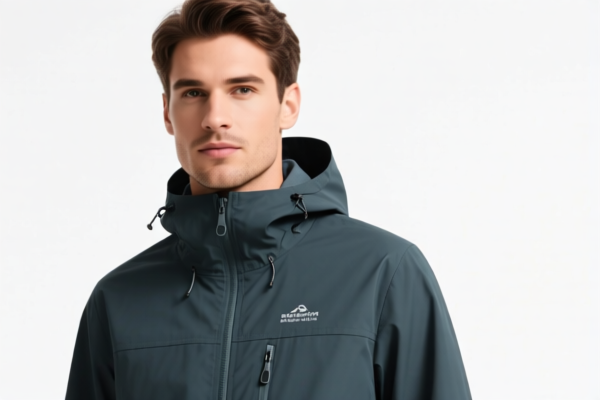


AI Analysis
🧥 Boys' Windproof Coated Outdoor Jacket: The Ultimate HS Code & Tariff Guide (2026 Edition)
🌐 HS Code Reference & Customs Clearance Guide | 2026 Latest Tariff Analysis | Professional通关 Strategy
📌 I. Product Definition & Classification: Do You Really Know "Windproof Jackets"?
A Boys' Windproof Coated Outdoor Jacket is a specialized garment designed for active use in variable weather conditions. In international trade, "windproof" usually implies a specific manufacturing process: coating or laminating.
It is broadly categorized by two critical factors: 1. Material Composition: Is it knitted/hooked (like fleece/tricot) or woven (like cotton/shell)? 2. Fabric Treatment: Is it coated (chemical layer) or laminated (film layer)?
⚠️ Key Distinction Point:
- If the fabric is knitted or hooked AND coated/laminated →归入 Chapter 61 (Knitted/Hooked).
- If the fabric is woven (non-knitted) AND coated → 归入 Chapter 62 (Woven).
- Note: "Windproof" often triggers stricter scrutiny on the "coating" aspect to distinguish from standard waterproof or merely dense weaves.
📦 II. HS Code Classification Details (Based on Provided Data)
Based on the specific product variations in your input data, here are the precise classifications:
| HS Code | Product Description | Material Type | Processing Method | Key Identification Feature |
|---|---|---|---|---|
6113.00.10.05 |
Men's Windproof Coated Outdoor Jacket | Knitted/Hooked Fabric | Coated/Laminated | General knitted windproof jacket |
6113.00.90.15 |
Men's Windproof Coated Outdoor Jacket | Cotton/Mix Cotton | Coated | Cotton-blend knitted windproof jacket |
6201.30.40.00 |
Men's Windproof Outdoor Jacket | Cotton/Mix Cotton | Non-Knitted (Woven) | Woven windproof shell (classic outdoor style) |
6101.20.00.10 |
Men's Windproof Jacket | Synthetic/Cotton Coated | Knitted/Hooked | Synthetic-heavy knitted windproof jacket |
6101.30.20.10 |
Men's Windproof Jacket | Man-Made Fiber | Knitted/Hooked | 100% Man-made fiber knitted windproof jacket |
🔍 Critical Note:
Although the input data uses the term "Men's" (男式), for Boys' Jackets, the HS Codes in Chapters 61 and 62 are often shared with men's categories unless specific sub-headings for "Boys'" exist in the destination country's tariff schedule (e.g., US HTS often groups Boys' with Men's for outerwear under 61/62). Always verify if local regulations require separate "Boys'" sub-codes, but based on the provided data, these are the primary classifications.
💰 III. 2026 Latest Tariff Rate Breakdown (Detailed Analysis)
✅ Applicable Market: United States (US)
✅ Origin: China (CN)
✅ Effective Time: Post-2025 (Including subsequent imports)
The total tax burden is a combination of: 1. Base Duty (MFN Rate): Standard tariff. 2. Section 301 Tariff (Additional Tax): Typically 7.5% for most apparel. 3. Section 122 Tariff: A specific 10% additional duty for certain textile/apparel items (likely related to trade remedy or specific national security measures referenced in the data).
🎯 1. 6113.00.10.05 – Knitted/Hooked, General Coated/Laminated
| Item | Content |
|---|---|
| Base Duty | 3.8% |
| Additional Tax (Sec 301) | 7.5% |
| Sec 122 Tariff | 10.0% |
| Total Tax Rate | 21.3% |
| Calculation | CIF Value × 21.3% |
| Legal Basis | Base + 7.5% + 10% |
📌 Explanation:
- This is a mid-range tariff for knitted windproof jackets.
- The "Knitted" classification (6113) generally benefits from a lower base duty (3.8%) compared to synthetic-heavy knitted items.
- Strategy: If your product is a generic windbreaker made of tricot or similar knitted fabric, this is your likely code.
🎯 2. 6113.00.90.15 – Knitted/Hooked, Cotton/Cotton-Mix Coated
| Item | Content |
|---|---|
| Base Duty | 7.1% |
| Additional Tax (Sec 301) | 7.5% |
| Sec 122 Tariff | 10.0% |
| Total Tax Rate | 24.6% |
| Calculation | CIF Value × 24.6% |
| Legal Basis | Base + 7.5% + 10% |
📌 Explanation:
- Slightly higher base duty (7.1%) due to the Cotton/Mix composition.
- Warning: If the product contains >10% cotton, ensure it is not misclassified as "Woven" (6201) if it is actually knitted. The structure (knit vs. weave) is the primary differentiator.
🎯 3. 6201.30.40.00 – Woven (Non-Knitted), Cotton/Mix
| Item | Content |
|---|---|
| Base Duty | 6.2% |
| Additional Tax (Sec 301) | 0.0% |
| Sec 122 Tariff | 10.0% |
| Total Tax Rate | 16.2% |
| Calculation | CIF Value × 16.2% |
| Legal Basis | Base + 10% |
📌 Explanation:
- Lowest Total Tax Rate (16.2%) among the knitted options!
- Why? The "Additional Tax (7.5%)" is 0.0% for this specific code. This suggests that Woven (6201) cotton-blend windproof jackets may be exempt from the standard 301 additional apparel tariff, or this specific data set reflects a preferential or different policy application for woven goods.
- Strategy: If you can engineer the jacket as Woven (e.g., ripstop nylon/cotton blend) rather than Knitted, you save 5.1% in total tax compared to the general knitted code.
🎯 4. 6101.20.00.10 – Knitted/Hooked, Synthetic/Cotton Coated
| Item | Content |
|---|---|
| Base Duty | 15.9% |
| Additional Tax (Sec 301) | 7.5% |
| Sec 122 Tariff | 10.0% |
| Total Tax Rate | 33.4% |
| Calculation | CIF Value × 33.4% |
| Legal Basis | Base + 7.5% + 10% |
📌 Explanation:
- High Base Duty (15.9%) indicates this is likely classified as a general Men's/Boys' Anoraks, Windbreakers, etc. under6101rather than the specific6113(coated knitted fabrics) category.
- Strategy: If your product is not strictly defined as "Coated/Laminated Knitted Fabric" (6113) but rather a standard garment made from synthetic blend, it may fall here. The high base duty makes it less competitive.
🎯 5. 6101.30.20.10 – Knitted/Hooked, Man-Made Fiber
| Item | Content |
|---|---|
| Base Duty | 28.2% |
| Additional Tax (Sec 301) | 7.5% |
| Sec 122 Tariff | 10.0% |
| Total Tax Rate | 45.7% |
| Calculation | CIF Value × 45.7% |
| Legal Basis | Base + 7.5% + 10% |
📌 Explanation:
- HIGHEST Tax Rate (45.7%).
- This code targets 100% Man-Made Fiber knitted garments that are not classified under the specific "Coated Knitted Fabric" heading (6113).
- Avoid: Do not use this code unless your product is a simple knit jacket without specialized coating/lamination features that qualify for6113. The tax penalty is severe.
🛠️ IV. Customs Clearance Practical Advice (Pitfall Avoidance Guide)
✅ 1. Preparation Checklist (Must-Haves)
| Document | Requirement | Explanation |
|---|---|---|
| Product Spec Sheet | ✔️ Must Include | Fabric composition (e.g., 100% Poly, 65/35 Cotton/Poly), Knit vs. Woven structure, Coating type (PU, PVC, Laminate). |
| Material Test Report | ✔️ Recommended | Prove "Windproof" claim if challenged. Proving coating/lamination helps justify 6113 vs 6101. |
| Commercial Invoice | ✔️ Precise Description | Use terms like "Knitted Windproof Jacket, Coated" or "Woven Cotton Windbreaker". Avoid vague terms like "Sportswear". |
| Photos | ✔️ Clear | Show the fabric structure (knit loops vs. woven threads) and the coated side if visible. |
| Origin Certificate | ✔️ If Applicable | For non-CN origins to check for any potential exemptions (though 122 Sec likely applies broadly). |
✅ 2. Classification Strategy (Key Rules)
🔥 Golden Rule: "Knit vs. Weave" is King. "Coating" is Queen.
| Scenario | Correct HS Code | Why? | Tax Rate |
|---|---|---|---|
| Knitted fabric with PU/PVC Coating or Laminated Membrane | 6113.00.10.05 or 6113.00.90.15 |
Falls under Chapter 61, Heading 6113 specifically for "Knitted fabrics impregnated, coated, covered or laminated". | 21.3% or 24.6% |
| Woven Fabric (Ripstop, Poplin) | 6201.30.40.00 |
Falls under Chapter 62. No 301 Additional Tax (7.5%) in this dataset. | 16.2% ⭐ Best Value |
| Knitted Fabric but NOT specially coated/laminated (just dense weave) | 6101.20.00.10 |
Falls under general Men's/Boys' Outerwear. Higher base duty. | 33.4% |
| Knitted Fabric, Man-Made, No Special Coating | 6101.30.20.10 |
Least favorable classification. | 45.7% ⚠️ Avoid |
📌 Critical Warning:
- Do not misclassify a Woven jacket as Knitted to try to force a different code. Customs can physically test the fabric. If it's woven but declared as knitted, you face fraud penalties and reclassification back to the correct (likely higher tax) code. - However, if your product is Knitted, using6113is crucial. If you declare it as6101(General Outerwear), you pay 33.4% instead of 21.3%. Optimization Opportunity!
✅ 3. Special Situations
| Situation | Handling Advice |
|---|---|
| OEM Custom Jacket | Provide design specs showing the coating process. If the coating is the primary functional feature, insist on 6113. |
| Mixed Materials | If the jacket has cotton lining but synthetic outer, check the Principal Character. Usually, the outer shell determines the code. |
| "Windproof" Claim | Ensure the product actually has a coating/lamination. If it's just a tight weave, it should not be classified as 6113. Misusing 6113 for simple weaves can lead to audits. |
🌍 V. Global Market Comparison (2026 Context)
| Market | Recommended Code (Example) | Est. Duty | Notes |
|---|---|---|---|
| 🇺🇸 USA | 6113.00.10.05 |
21.3% | Includes 10% Sec 122 + 7.5% Sec 301. High complexity. |
| 🇺🇸 USA | 6201.30.40.00 |
16.2% | Lowest Risk/Rate for Woven Cotton blends. |
| 🇪🇺 EU | 6103/6203 series | ~12% | No Section 122/301 equivalent. Standard MFN rates apply. |
| 🇨🇳 China | 6103/6203 series | ~10-15% | Import duty into China. |
📌 Conclusion for US Importers:
- Woven Cotton Blends (6201) are currently the most tax-efficient option at 16.2%.
- Knitted Coated Jackets (6113) are competitive at 21.3% but must be properly documented as "Coated/Laminated Knitted Fabric".
- Avoid General Knitted Outerwear (6101) if your product qualifies for6113, as the tax difference is massive (12% savings).
📌 VI. Common Errors & Pitfalls (Blood & Tears Lessons)
❌ Error 1: Declaring a Knitted jacket as Woven (6201) to get the 16.2% rate.
👉 Consequence: Customs lab test proves it's knitted. Rejected. Forced to pay 21.3% + penalties + delay.
❌ Error 2: Declaring a Standard Knitted Jacket as Coated/Laminated (6113) to get 21.3% instead of 33.4%.
👉 Consequence: If no coating exists, this is misclassification. While 21.3% is lower than 33.4%, it's still risky if not substantiated. However, if it is coated, this is the CORRECT and cheapest path.
❌ Error 3: Ignoring the Section 122 (10%) Tariff.
👉 Consequence: Budgeting fails. This 10% is fixed across all these codes in the provided data. It must be factored into landed cost.
❌ Error 4: Using 6101.30.20.10 (45.7%) for a simple windbreaker.
👉 Consequence: Unnecessary tax bill. Almost all windbreakers can be classified under 6113 (if knitted/coated) or 6201 (if woven). Reserve 6101.30 for specific non-coated man-made fiber knitted garments.
✅ Correct Declaration Example:
"Boys' Knitted Windproof Jacket, Coated with PU, Outer Shell Polyester, Liner Cotton, Model XYZ"
→ Supports6113.00.10.05(21.3%)
🎯 VII. Conclusion: Professional Classification Saves Money
🎯 Remember the Rules:
🔹 "Knit + Coated = 6113 (21.3%)"
🔹 "Woven + Cotton = 6201 (16.2%)"
🔹 "Knit + No Coating = 6101 (33.4%+)"
🔹 "Man-Made + No Coating = 6101 (45.7%)"
📌 Action Item:
1. Analyze Fabric: Is it Knit or Woven?
2. Analyze Treatment: Is it Coated/Laminated?
3. Select Code: Match to 6113, 6201, or 6101.
4. Calculate Landed Cost: Include the 10% Sec 122 and 7.5% Sec 301 (where applicable).
📣 Immediate Action:
📞 Consult your customs broker with the fabric swatch and spec sheet.
📋 Request a Binding Ruling if the volume is high and the classification is borderline between6113and6101.
🚀 Optimize your product design: If you are currently using Knitted + No Coating, consider adding a laminate to qualify for6113(21.3%) instead of6101(33.4%), saving 12.1% in tariffs!
✨ Precise Classification is Profit.
💼 Don't let a wrong HS Code eat your margin.
Customer Reviews
About HS Code Classification
The Harmonized System (HS) is an internationally standardized nomenclature developed by the World Customs Organization (WCO) to classify traded products. Over 200 countries use the HS system as the basis for customs tariffs, trade statistics, and import/export regulations.
Each HS code follows a hierarchical structure:
- Chapter (2 digits) — Broad category of goods (e.g., Chapter 84: Machinery and Mechanical Appliances)
- Heading (4 digits) — More specific grouping within the chapter
- Subheading (6 digits) — Internationally standardized breakdown, used by all WCO member countries
- National subdivisions (8-10 digits) — Country-specific extensions for further classification, such as US HTSUS 10-digit codes
Correct HS code classification is essential for smooth customs clearance, accurate duty payment, and compliance with trade regulations. Misclassification can lead to customs delays, overpayment of duties, or penalties.
When importing from CN to US, the applicable tariff rates may include:
- Most-Favored-Nation (MFN) rate — The standard duty rate applied to WTO members
- General rate — Applied to countries without trade agreements
- Trade remedy duties — Additional tariffs such as Section 301 (anti-dumping), Section 232 (national security), or countervailing duties
The information provided on this page is for reference purposes only. For official classification, please consult with your local customs authority or a licensed customs broker.