Boys' Windproof Jacket Knitted or Crocheted with Leather Blend
CN → US| HS Code | Tariff Rate | Origin | Destination | Doc |
|---|---|---|---|---|
| 6113009025 | 24.6% | CN | US | Official Doc |
| 6201906960 | 21.7% | CN | US | Official Doc |
| 6101301000 | 23.1% | CN | US | Official Doc |
| 6201904960 | 21.7% | CN | US | Official Doc |
| 4203104060 | 41.0% | CN | US | Official Doc |
Product Images
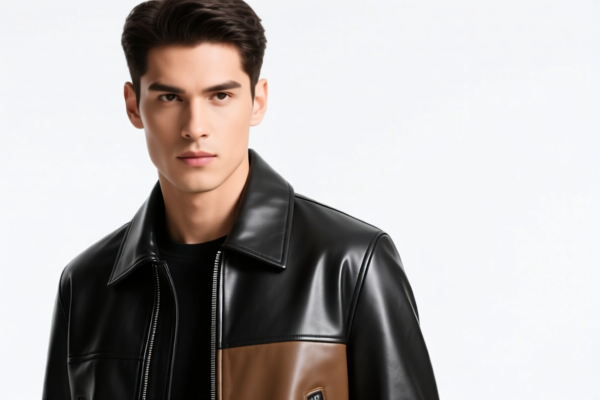
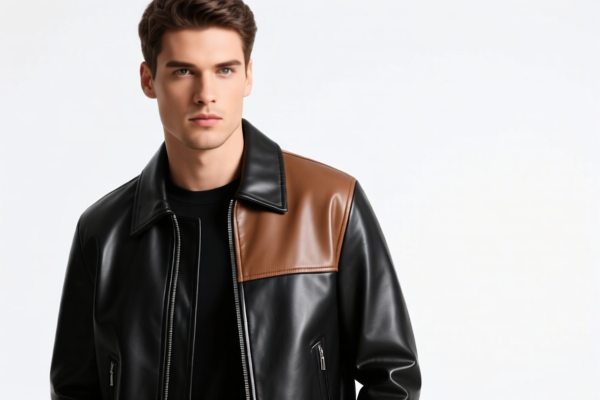


AI Analysis
🧥 Boys' Windproof Jacket (Knitted/Crocheted with Leather Blend)
🌐 HS Code Reference & Customs Clearance Guide | 2026 Latest Tariff Analysis | Professional Strategy 📌 I. Product Definition & Classification: What is a "Leather Blend" Jacket?
Boys' windproof jackets made from knitted or crocheted fabrics containing leather are complex commodities in international trade. The classification hinges on the dominant material and the manufacturing process (knitted vs. woven).
In this specific dataset, the product is classified under four distinct HS Codes, depending on how customs authorities interpret the "leather blend" ratio and the specific chapter (Chapter 61 for Knitted vs. Chapter 62 for Woven/Other, or Chapter 42 for Leather Articles).
⚠️ Key Distinction Point:
- Is it Knitted/Crocheted? → Look at Chapter 61 (HS 6101, 6113).
- Is it Woven/Other? → Look at Chapter 62 (HS 6201).
- Is it Predominantly Leather? → Look at Chapter 42 (HS 4203).
📦 II. HS Code Classification Details (2026 Latest Tariff Authority Comparison)
Based on the provided data, here are the four possible classifications, ranging from low-tax "fallback" categories to high-tax "pure leather" categories.
| HS Code | Product Description | Material Logic | Tariff Rate (Total) |
|---|---|---|---|
6113.00.90.25 |
Boys' Windproof Jacket, Knitted/Crocheted, Leather Blend | Chapter 61 (Knitted). Specifically for leather blends in this category. | 24.6% |
6201.90.69.60 |
Boys' Windproof Jacket, Other Material (Non-Cotton/Non-Synthetic/Non-Wool) | Chapter 62 (Other). Classified as "Other" material because it doesn't fit standard cotton/synthetic/wool buckets. | 21.7% |
6101.30.10.00 |
Knitted/Crocheted Jacket with Leather, >25% Leather Content | Chapter 61. Specific subset for knitted items where leather content is significant (≥25%). | 23.1% |
6201.90.49.60 |
Windproof Jacket, Leather Blend "Other" Category | Chapter 62. Fallback "Other" category for woven/non-knitted leather blends. | 21.7% |
4203.10.40.60 |
Leather Jacket (Leather Material, Jacket Form) | Chapter 42. Treated as a pure leather article if leather is the primary constituent. | 41.0% |
🔍 Critical Note:
- The lowest tax among the options provided is 21.7% (HS 6201 variants), assuming the jacket can be classified under Chapter 62 ("Other" material fallback).
- The highest tax is 41.0% (HS 4203), which treats the item purely as a leather good.
- HS 6113 (24.6%) and HS 6101 (23.1%) sit in the middle, specifically for knitted goods.
💰 III. 2026 Latest Tariff Rate Breakdown (Detailed Tax Clauses)
✅ Applicable Market: USA (US)
✅ Origin: China (CN)
✅ Effective Date: Current trade policies apply (Section 301 & IEEPA)
🎯 1. 6201.90.69.60 & 6201.90.49.60 —— The "Low-Tax" Strategy (Chapter 62)
| Item | Content |
|---|---|
| Base Tariff | 4.2% (Ad valorem) |
| Section 301 Add-on | +7.5% (From USITC Footnote / Section 301 List) |
| IEEPA Add-on (122 Clause) | +10% (Targeting China-origin goods under Executive Order 14036) |
| Total Tax Rate | 21.7% |
| Tax Calculation | CIF Value × 21.7% |
| De Minimis Eligibility | ❌ No (Below $800 threshold does not apply for these HS codes due to high duty rates) |
| Legal Path | USITC:6201.90 → Section301:7.5% → IEEPA:10% |
📌 Explanation:
- These codes fall under Chapter 62 ("Articles of apparel and clothing accessories, not knitted or crocheted").
- If your jacket is woven or considered "other" than knitted, this is often the most favorable classification.
- The "Other" category is used because the material is a "leather blend" that doesn't cleanly fit into standard cotton, synthetic fiber, or wool definitions.
🎯 2. 6113.00.90.25 —— Knitted Leather Blend (Chapter 61)
| Item | Content |
|---|---|
| Base Tariff | 7.1% (Ad valorem) |
| Section 301 Add-on | +7.5% |
| IEEPA Add-on (122 Clause) | +10% |
| Total Tax Rate | 24.6% |
| Tax Calculation | CIF Value × 24.6% |
| De Minimis Eligibility | ❌ No |
| Legal Path | USITC:6113.00.90.25 → Section301:7.5% → IEEPA:10% |
📌 Explanation:
- Chapter 61 is for knitted/crocheted items.
- The base rate (7.1%) is higher than Chapter 62 (4.2%) for this specific "Other" material category.
- This applies if the jacket is definitively knitted.
🎯 3. 6101.30.10.00 —— High Leather Content Knitted (Chapter 61)
| Item | Content |
|---|---|
| Base Tariff | 5.6% (Ad valorem) |
| Section 301 Add-on | +7.5% |
| IEEPA Add-on (122 Clause) | +10% |
| Total Tax Rate | 23.1% |
| Tax Calculation | CIF Value × 23.1% |
| De Minimis Eligibility | ❌ No |
| Legal Path | USITC:6101.30.10.00 → Section301:7.5% → IEEPA:10% |
📌 Explanation:
- This code is specific for knitted jackets where the leather content is ≥25%.
- Although the base tariff is lower (5.6%), the total is still higher than the Chapter 62 option.
🎯 4. 4203.10.40.60 —— Pure Leather Jacket (Chapter 42)
| Item | Content |
|---|---|
| Base Tariff | 6.0% (Ad valorem) |
| Section 301 Add-on | +25.0% (High penalty rate for leather goods) |
| IEEPA Add-on (122 Clause) | +10% |
| Total Tax Rate | 41.0% |
| Tax Calculation | CIF Value × 41.0% |
| De Minimis Eligibility | ❌ No |
| Legal Path | USITC:4203.10.40.60 → Section301:25% → IEEPA:10% |
📌 Explanation:
- AVOID THIS IF POSSIBLE.
- Chapter 42 treats the item as "Leather Articles."
- The Section 301 add-on is 25%, not 7.5%. This is a critical penalty.
- Only use this if the item is >50% leather by weight or surface area AND cannot be classified elsewhere.
🛠️ IV. Customs Clearance Practical Advice (Avoiding Pitfalls)
✅ 1. Required Documentation Checklist
| Document | Must Provide? | Notes |
|---|---|---|
| ✅ Bill of Materials (BOM) | ✔️ | Detail the % of leather vs. textile. Crucial for choosing between HS 4203, 6101, or 6201. |
| ✅ Product Photos | ✔️ | Show texture, stitching, and labels. Proves it's a "jacket" and not a "vest" or "coat." |
| ✅ Composition Label | ✔️ | Must match the invoice exactly (e.g., "50% Leather, 50% Polyester"). |
| ✅ Commercial Invoice | ✔️ | Description must be precise: "Boys' Windproof Jacket, Knitted, Leather Blend." |
| ✅ Certificate of Origin | ✔️ | Mandatory for Section 301 and IEEPA verification. |
| ✅ IEEPA Certification | ✔️ | Explicitly state "Made in China" to trigger/avoid the 10% add-on correctly. |
✅ 2. Declaration Strategy (Key Tips)
🔥 "Chapter 62 is King for Low Tax, Chapter 42 is the Trap!"
| Scenario | Recommended HS Code | Why? |
|---|---|---|
| Jacket is Woven or ambiguous | 6201.90.69.60 or 6201.90.49.60 |
Lowest Tax (21.7%). "Other" category is favorable. |
| Jacket is Knitted with >25% Leather | 6101.30.10.00 |
Middle Tax (23.1%). Specific for high-leather knit. |
| Jacket is Knitted general blend | 6113.00.90.25 |
Higher Tax (24.6%). Specific knitted leather blend. |
| Jacket is Pure/High Leather | 4203.10.40.60 |
Highest Tax (41.0%). Avoid unless necessary. |
✅ 3. Special Cases
| Case | Handling Advice |
|---|---|
| Mixed Materials | If leather is <50%, argue for Chapter 61/62 (Textile). If >50%, risk Chapter 42 (Leather). |
| OEM/Custom | Provide design specs to prove it's a "Jacket" (Chapter 61/62) rather than a "Leather Article" (Chapter 42). |
| Sample Imports | Even samples are subject to full duty rates. Do not assume "gift" exemptions apply to commercial-looking goods. |
🌍 V. Global Market Comparison (2026 Update)
| Country/Region | Recommended HS Code | Est. Total Duty | Notes |
|---|---|---|---|
| 🇺🇸 USA | 6201.90.69.60 |
21.7% | Best option. Includes Section 301 + IEEPA. |
| 🇺🇸 USA | 4203.10.40.60 |
41.0% | Worst option. High Section 301 penalty. |
| 🇪🇺 EU | 6201.93.90 |
~12-16% | EU tariffs differ; no Section 301/IEEPA. |
| 🇨🇳 China | 6201.93.90 |
~10-14% | Import duties apply, but no US trade war taxes. |
📌 Conclusion:
For US Imports, the goal is to classify the jacket under Chapter 62 (6201.90.xxxx) if possible, to benefit from the 4.2% base rate + 7.5% Section 301 + 10% IEEPA = 21.7%.
Avoid Chapter 42 (4203...) unless the item is unmistakably a leather product, as the 25% Section 301 add-on makes it uncompetitive.
📌 VI. Common Mistakes & Pitfalls (Lessons Learned)
❌ Mistake 1: Classifying a knitted leather-blend jacket as 4203 (Leather).
👉 Result: Tax jumps from 21.7% to 41.0%. Loss of profit!
❌ Mistake 2: Ignoring the IEEPA 10% add-on.
👉 Result: Customs hold shipment for tax calculation. Delays of 2-4 weeks.
❌ Mistake 3: Vague description ("Boys Jacket").
👉 Result: Customs officer chooses the highest duty code (4203) by default.
❌ Mistake 4: Assuming "Knitted" automatically means Chapter 61.
👉 Result: If the construction is woven but called "knitted-style," misclassification occurs. Be precise about the fabric structure.
✅ Correct Practice:
"Boys' Windproof Jacket, Woven, 50% Leather, 50% Nylon, Water Resistant, Model XYZ, Made in China."
🎯 VII. Conclusion: Precision Saves Money!
🎯 Remember:
🔹 "Chapter 62, 'Other' category, wins the tax war (21.7%)."
🔹 "Chapter 42 is the trap (41.0%). Avoid it!"
🔹 "Always prove the material blend to control the HS Code."
📌 Pro Tip:
If your jacket is knitted, try to argue for 6101.30.10.00 (23.1%) or 6113.00.90.25 (24.6%) only if it cannot be classified under Chapter 62.
If it is woven or has a structure that can be interpreted as "not knitted," fight for 6201.90.69.60 (21.7%).
📣 Action Plan:
1. Verify Fabric Structure: Knitted or Woven?
2. Check Leather %: Is it ≥25%?
3. Select HS Code: Prefer 6201.90.xxxx for lowest tax.
4. Prepare Docs: BOM, Photos, Invoice.
5. File Entry: Ensure IEEPA and Section 301 are correctly applied.
✨ Smart Customs, Smart Savings!
💼 Every 1% of duty saved is pure profit!
Customer Reviews
About HS Code Classification
The Harmonized System (HS) is an internationally standardized nomenclature developed by the World Customs Organization (WCO) to classify traded products. Over 200 countries use the HS system as the basis for customs tariffs, trade statistics, and import/export regulations.
Each HS code follows a hierarchical structure:
- Chapter (2 digits) — Broad category of goods (e.g., Chapter 84: Machinery and Mechanical Appliances)
- Heading (4 digits) — More specific grouping within the chapter
- Subheading (6 digits) — Internationally standardized breakdown, used by all WCO member countries
- National subdivisions (8-10 digits) — Country-specific extensions for further classification, such as US HTSUS 10-digit codes
Correct HS code classification is essential for smooth customs clearance, accurate duty payment, and compliance with trade regulations. Misclassification can lead to customs delays, overpayment of duties, or penalties.
When importing from CN to US, the applicable tariff rates may include:
- Most-Favored-Nation (MFN) rate — The standard duty rate applied to WTO members
- General rate — Applied to countries without trade agreements
- Trade remedy duties — Additional tariffs such as Section 301 (anti-dumping), Section 232 (national security), or countervailing duties
The information provided on this page is for reference purposes only. For official classification, please consult with your local customs authority or a licensed customs broker.