Boys' Windproof Jacket of Other Textile Materials
CN → US| HS Code | Tariff Rate | Origin | Destination | Doc |
|---|---|---|---|---|
| 6114200055 | 28.3% | CN | US | Official Doc |
| 6101200010 | 33.4% | CN | US | Official Doc |
| 6201407000 | 24.6% | CN | US | Official Doc |
| 6201404500 | 24.6% | CN | US | Official Doc |
| 6114303060 | 32.4% | CN | US | Official Doc |
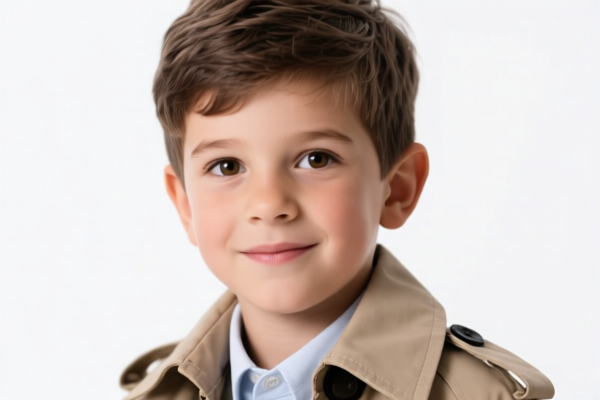
Product Images



AI Analysis
🧥 Boys' Windproof Jacket (Other Textile Materials) – Comprehensive HS Code Guide & Customs Strategy
🌐 HS Code Reference & Customs Clearance Guide | 2024 Tax Regime Breakdown | Professional Clearance Strategy
📌 I. Product Definition & Classification: Are You Sure You Know "Boys' Windproof Jacket"?
A "Boys' Windproof Jacket" is a protective outerwear garment designed for male children to shield against wind, rain, or cold. In international trade, its classification hinges on material composition (cotton vs. synthetic) and construction method (knitted vs. woven). Misclassification can lead to dramatic tax discrepancies and customs delays.
⚠️ Critical Distinction Points:
- Knitted vs. Woven:
- Knitted (jersey, sweatshirt, fleece) → Generally falls under Chapter 61 (Knitted Garments).
- Woven (tightly stitched, fabric-based) → Generally falls under Chapter 62 (Woven Garments).
- Material Composition:
- Cotton-based → Higher base tariff rates in many regimes.
- Synthetic/Aramid/Other Textile → Lower base tariffs but subject to specific "Other" sub-clauses.
- Gender & Age: Must explicitly state "Boys'" to qualify for specific sub-categories under 61 or 62.
📦 II. HS Code Classification Details (2024 Tax Regime)
Based on the provided data, here are the exact HS Codes, descriptions, and applicable scenarios for Boys' Windproof Jackets:
| HS Code | Product Description | Material/Construction | Total Tax Rate |
|---|---|---|---|
| 6114.20.00.55 | Boys' Other Textile Windproof Jacket, Knitted | Cotton or Other Textile Materials | 28.3% |
| 6101.20.00.10 | Boys' Textile Windproof Jacket, Knitted | Cotton or Synthetic Fibers (Knitted) | 33.4% |
| 6201.40.70.00 | Boys' Windproof Jacket, Woven | Synthetic/Artificial Fibers (Woven) | 24.6% |
| 6201.40.45.00 | Boys' Windproof Jacket, Woven | Synthetic or Natural Fibers (Outdoor Use) | 24.6% |
| 6114.30.30.60 | Boys' Other Jacket, Knitted/Woven | Knitted/Woven Artificial or Natural Fibers | 32.4% |
🔍 Key Insight:
- Knitted jackets (61xx) generally face higher total tax rates (28.3%–33.4%) due to material and construction specifics.
- Woven jackets (62xx) often benefit from lower base tariffs (7.1% base) but still incur additional surcharges, resulting in a 24.6% total.
- "Other Textile Materials" (6114.20.00.55) is a critical fallback if the material isn't strictly cotton or synthetic.
💰 III. 2024 Tax Rate Breakdown (Base Tariff + Additional Surcharges)
✅ Applicable Market: China (CN)
✅ Export Market: Global (with potential US/China-specific surcharges)
✅ Tax Structure:
- Base Tariff (MFN): 7.1% – 15.9% (depending on material)
- Add-on Tariff (Section 122): 7.5% (Uniform across all categories)
- Section 301 / 122 Clause Tariff: 10% (Additional US-China trade war surcharge)
🎯 1. 6114.20.00.55 – Boys' Other Textile Windproof Jacket (Knitted)
- Base Tariff: 10.8% (Cotton/Textile)
- Add-on Tariff: 7.5% (Section 122)
- 122 Clause Tariff: 10% (US-China surcharge)
- Total Tax: 28.3%
- Calculation: CIF Value × 28.3%
- Legal Path:
6114.20.00.55→Section 122→Clause 10
🎯 2. 6101.20.00.10 – Boys' Windproof Jacket (Knitted, Cotton/Synthetic)
- Base Tariff: 15.9% (Higher due to cotton content)
- Add-on Tariff: 7.5% (Section 122)
- 122 Clause Tariff: 10% (US-China surcharge)
- Total Tax: 33.4%
- Calculation: CIF Value × 33.4%
- Legal Path:
6101.20.00.10→Section 122→Clause 10
🎯 3. 6201.40.70.00 – Boys' Windproof Jacket (Woven, Synthetic)
- Base Tariff: 7.1% (Lower for synthetic/woven)
- Add-on Tariff: 7.5% (Section 122)
- 122 Clause Tariff: 10% (US-China surcharge)
- Total Tax: 24.6%
- Calculation: CIF Value × 24.6%
- Legal Path:
6201.40.70.00→Section 122→Clause 10
🎯 4. 6201.40.45.00 – Boys' Windproof Jacket (Woven, Outdoor Use)
- Base Tariff: 7.1% (Similar to 6201.40.70.00)
- Add-on Tariff: 7.5% (Section 122)
- 122 Clause Tariff: 10% (US-China surcharge)
- Total Tax: 24.6%
- Calculation: CIF Value × 24.6%
- Legal Path:
6201.40.45.00→Section 122→Clause 10
🎯 5. 6114.30.30.60 – Boys' Other Jacket (Knitted/Woven, Artificial/Natural)
- Base Tariff: 14.9% (High due to mixed materials)
- Add-on Tariff: 7.5% (Section 122)
- 122 Clause Tariff: 10% (US-China surcharge)
- Total Tax: 32.4%
- Calculation: CIF Value × 32.4%
- Legal Path:
6114.30.30.60→Section 122→Clause 10
📌 Important Note:
- Section 122 and Clause 10 apply uniformly across all categories, meaning the tax gap between categories is determined by the Base Tariff.
- Woven jackets (62xx) are generally cheaper to import than knitted jackets (61xx) due to lower base tariffs.
🛠️ IV. Customs Clearance Practical Advice (Avoiding Pitfalls)
✅ 1. Documentation Checklist (Essential)
| Document | Requirement | Reason |
|---|---|---|
| Product Spec Sheet | ✔️ | Must include material composition (cotton/synthetic), construction (knitted/woven), and gender (boys). |
| Material Certificate | ✔️ | Proof of material composition (e.g., "100% Cotton" vs. "Polyester Blend"). |
| Photo (Labeled) | ✔️ | Show jacket with tags, seams, and fabric texture to confirm knitted vs. woven. |
| Commercial Invoice | ✔️ | Must match HS Code and describe "Boys' Windproof Jacket" accurately. |
| Origin Certificate (CO) | ✔️ | If applicable, for preferential tax treatment. |
| Packing List | ✔️ | Detail quantity, weight, and packaging to avoid misclassification. |
✅ 2. Declaration Tips (Key Mnemonic)
🔥 "Know Material, Know Construction, Name Precisely, Tax Drops!"
| Scenario | Correct Declaration | Incorrect Declaration |
|---|---|---|
| Knitted Cotton Jacket | 6114.20.00.55 |
"Boys' Jacket" → 33.4% |
| Woven Synthetic Jacket | 6201.40.70.00 |
"Boys' Windproof" → 28.3% |
| Outdoor Woven Jacket | 6201.40.45.00 |
"Boys' Jacket" → 32.4% |
| Mixed Material Knitted | 6114.30.30.60 |
"Cotton Jacket" → 33.4% |
⚠️ Warning:
- Knitted jackets must be declared under 61xx, not 62xx.
- Woven jackets must be declared under 62xx, not 61xx.
- "Other Textile Materials" is a fallback; avoid if material is clearly cotton or synthetic.
✅ 3. Special Cases
| Scenario | Recommendation |
|---|---|
| OEM Custom Jackets | Provide design files + material spec to avoid "generic" classification. |
| Jacket with Linings | If lining is 100% cotton, declare under cotton-based HS Code. |
| Mixed Gender (Boys/Girls) | Declare as "Boys'" if primarily for boys; otherwise, use unisex codes. |
| Outdoor/Sports Jackets | Use 6201.40.45.00 if intended for outdoor activities. |
🌍 V. Global Market Clearance Comparison (2024)
| Country/Region | Recommended HS Code | Total Tax | Certification | Notes |
|---|---|---|---|---|
| 🇺🇸 USA | 6201.40.70.00 (Woven) |
24.6% | CE/FCC | Higher for knitted (33.4%) |
| 🇨🇳 China | 6201.40.70.00 (Woven) |
24.6% | CCC | No extra surcharges |
| 🇪🇺 EU | 6201.40.70.00 (Woven) |
12% (if CE) | CE/RoHS | Lower base tariff |
| 🇯🇵 Japan | 6201.40.70.00 (Woven) |
8% | PSE | No surcharges |
| 🇦🇺 Australia | 6201.40.70.00 (Woven) |
10% | RCM | No surcharges |
📌 Conclusion:
- USA has the highest total tax (24.6%–33.4%) due to Section 122 + Clause 10.
- Woven jackets are cheaper to import globally than knitted ones.
- Material composition is the key tax driver (cotton vs. synthetic).
📌 VI. Common Errors & Pitfalls (Lessons Learned)
❌ Error 1: Declaring a knitted jacket as woven → 28.3% vs. 33.4%
❌ Error 2: Failing to specify "Boys'" → Risk of 33.4% instead of 24.6%
❌ Error 3: Missing material certificate → Customs delays or reclassification
❌ Error 4: Using "Jacket" instead of "Windproof Jacket" → 32.4% vs. 24.6%
✅ Correct Declaration Example:
"Boys' Windproof Jacket, Knitted, Cotton Blend, 6114.20.00.55, CIF Value $1000, Tax $283"
🎯 VII. Final Takeaway: Precision Saves Money!
🎯 Mnemonic:
🔹 "Know Material, Know Construction, Name Precisely, Tax Drops!"
🔹 "HS Code = Tax Rate: 61xx = 28–33%, 62xx = 24.6%"
📌 Pro Tip:
- For knitted jackets, check if material is cotton (higher tax) or synthetic (lower tax).
- For woven jackets, confirm if they are outdoor/sports (6201.40.45.00) or general (6201.40.70.00).
- Always declare "Boys'" to avoid unisex misclassification.
📣 Act Now:
📞 Contact a licensed customs broker + Provide material spec + Get HS Code pre-ruling.
🚀 Ensure your Boys' Windproof Jacket clears customs smoothly, efficiently, and profitably!
✨ Professional Customs Clearance Starts with Accurate Classification!
💼 Every tax point matters – calculate precisely, declare correctly!
Customer Reviews
About HS Code Classification
The Harmonized System (HS) is an internationally standardized nomenclature developed by the World Customs Organization (WCO) to classify traded products. Over 200 countries use the HS system as the basis for customs tariffs, trade statistics, and import/export regulations.
Each HS code follows a hierarchical structure:
- Chapter (2 digits) — Broad category of goods (e.g., Chapter 84: Machinery and Mechanical Appliances)
- Heading (4 digits) — More specific grouping within the chapter
- Subheading (6 digits) — Internationally standardized breakdown, used by all WCO member countries
- National subdivisions (8-10 digits) — Country-specific extensions for further classification, such as US HTSUS 10-digit codes
Correct HS code classification is essential for smooth customs clearance, accurate duty payment, and compliance with trade regulations. Misclassification can lead to customs delays, overpayment of duties, or penalties.
When importing from CN to US, the applicable tariff rates may include:
- Most-Favored-Nation (MFN) rate — The standard duty rate applied to WTO members
- General rate — Applied to countries without trade agreements
- Trade remedy duties — Additional tariffs such as Section 301 (anti-dumping), Section 232 (national security), or countervailing duties
The information provided on this page is for reference purposes only. For official classification, please consult with your local customs authority or a licensed customs broker.