Boys' Windproof Vest
CN → US| HS Code | Tariff Rate | Origin | Destination | Doc |
|---|---|---|---|---|
| 6217909045 | 32.1% | CN | US | Official Doc |
| 6117809510 | 32.1% | CN | US | Official Doc |
| 6117809540 | 32.1% | CN | US | Official Doc |
| 6217909095 | 32.1% | CN | US | Official Doc |
Product Images
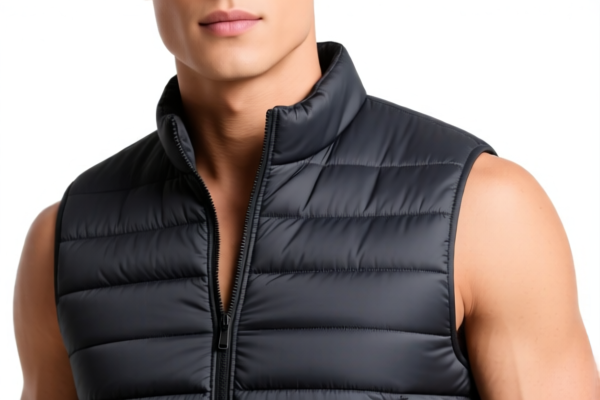
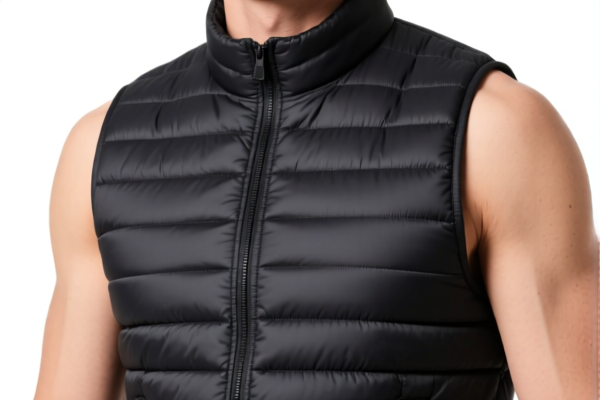


AI Analysis
🌬️ Boys' Windproof Vest – Comprehensive HS Code & Tariff Guide (2026 Edition)
🌐 HS Code Classification & Duty Breakdown | U.S. Import Compliance | Expert Clearing Strategy
📌 One Product, Four HS Codes – Why? What’s the Difference?
The Boys’ Windproof Vest — a lightweight, weather-resistant garment designed for outdoor play, school commuting, or sports — may seem simple at first glance. But in international trade, its classification hinges on material composition, construction method, and functional form.
In the U.S. tariff system, this item can be classified under four different HS Codes, all leading to the same total duty rate of 32.1% — but with different legal justifications based on how it’s made and what it’s considered.
Let’s break it down — one product, four paths, one outcome.
📦 2026 U.S. HS Code Classification Matrix (Boys’ Windproof Vest)
| HS Code | Product Description | Key Classification Logic | Material Type | Functional Form |
|---|---|---|---|---|
6217.90.90.45 |
Children’s windproof vests (non-sweatshirts), made of synthetic fibers, as clothing accessories/parts | Clothing accessory or part, fits "other" category under synthetic fiber clothing | Synthetic (e.g., polyester, nylon) | Non-structural, worn as outer layer |
6117.80.95.10 |
Children’s windproof vests, knitted or crocheted, as clothing attachments | Knitted/hooked fabric, fits "other attachments" rule | Knitted/crocheted synthetic fabric | Textile-based, flexible structure |
6117.80.95.40 |
Made-up clothing accessories, synthetic fiber (e.g., polyester, nylon), fully formed | Finished accessory, made from artificial fibers | Artificial fiber (polyester, nylon) | Pre-formed, wearable unit |
6217.90.90.95 |
Formed clothing parts/accessories, synthetic fiber (e.g., polyethylene, polypropylene), non-sweatshirt | Molded or shaped component, fits "other" category | Synthetic fiber (polyester, etc.) | Structural, non-woven or molded |
✅ Common Thread:
All four codes apply to children’s windproof vests made from synthetic fibers (polyester, nylon, etc.) and are not full garments like sweatshirts or jackets.
All are subject to the same total duty — 32.1% — due to overlapping tariff rules.
💰 2026 U.S. Tariff Breakdown (China-Origin Goods, Effective Nov 10, 2025)
✅ Applicable Country: United States (U.S.)
✅ Origin: China (CN)
✅ Effective Date: November 10, 2025 (inclusive)
✅ All HS Codes Listed Below Share the Same Duty Structure
🎯 1. 6217.90.90.45 – Clothing Accessory / Part (Synthetic Fiber)
| Component | Details |
|---|---|
| Base Duty Rate | 14.6% (ad valorem) |
| Section 301 (USITC) Additional Duty | +7.5% (from U.S. Trade Act 301) |
| Section 122 (IEEPA) Emergency Tariff | +10% (under International Emergency Economic Powers Act) |
| Total Duty | 32.1% |
| Tax Calculation | CIF Value × 32.1% |
| De Minimis Threshold | ❌ Not applicable (denied under U.S. law) |
| Legal Basis Path | IEEPA:9903.01.25 → IEEPA:9903.01.24 → USITC:6217.90.90.45 → FOOTNOTE:9903.88.01 |
📌 Why This Code?
The vest is not a complete garment (no sleeves, no full body coverage), but a functional accessory made from synthetic fibers. It fits under the “other” category of clothing parts.
🎯 2. 6117.80.95.10 – Knitted/Crocheted Clothing Attachment
| Component | Details |
|---|---|
| Base Duty Rate | 14.6% |
| USITC 301 Duty | +7.5% |
| IEEPA 122 Duty | +10% |
| Total Duty | 32.1% |
| Tax Calculation | CIF × 32.1% |
| De Minimis | ❌ Not eligible |
| Legal Path | IEEPA:9901.25 → IEEPA:9903.01.24 → USITC:6117.80.95.10 → FOOTNOTE:9903.88.01 |
📌 Why This Code?
If the vest is knitted or crocheted (e.g., stretchy mesh, open-weave fabric), it falls under textile attachments — even if it’s not a full garment. The construction method triggers this classification.
🎯 3. 6117.80.95.40 – Made-Up Artificial Fiber Accessory
| Component | Details |
|---|---|
| Base Duty Rate | 14.6% |
| USITC 301 Duty | +7.5% |
| IEEPA 122 Duty | +10% |
| Total Duty | 32.1% |
| Tax Calculation | CIF × 32.1% |
| De Minimis | ❌ Not eligible |
| Legal Path | IEEPA:9903.01.25 → IEEPA:9903.01.24 → USITC:6117.80.95.40 → FOOTNOTE:9903.88.01 |
📌 Why This Code?
The vest is pre-formed, fully assembled, and made from artificial fibers (like polyester or nylon). It’s not raw fabric — it’s a finished wearable accessory. This code applies to made-up parts.
🎯 4. 6217.90.90.95 – Formed Clothing Part (Synthetic Fiber)
| Component | Details |
|---|---|
| Base Duty Rate | 14.6% |
| USITC 301 Duty | +7.5% |
| IEEPA 122 Duty | +10% |
| Total Duty | 32.1% |
| Tax Calculation | CIF × 32.1% |
| De Minimis | ❌ Not eligible |
| Legal Path | IEEPA:9903.01.25 → IEEPA:9903.01.24 → USITC:6217.90.90.95 → FOOTNOTE:9903.88.01 |
📌 Why This Code?
The vest is molded or shaped (e.g., rigid panels, reflective strips, or structured design), and made from synthetic fiber. It’s not a simple fabric piece — it’s a formed component of clothing. This code captures non-woven, structured accessories.
🛠️ 🚨 Pro Clearing Tips: Avoid 32.1% Tariff Traps!
✅ 1. Must-Have Documentation (No Exceptions)
| Document | Required? | Why It Matters |
|---|---|---|
| ✅ Product Specification Sheet | ✔️ | Shows material (polyester/nylon), construction (knitted/molded), and intended use |
| ✅ Fabric & Component Breakdown | ✔️ | Proves synthetic fiber content (critical for 301/IEEPA) |
| ✅ High-Res Product Photos | ✔️ | Clear view of stitching, structure, reflective strips, and wearability |
| ✅ Commercial Invoice | ✔️ | Must state: “Children’s Windproof Vest, Knitted/Crocheted/Made-Up, Synthetic Fiber” |
| ✅ Certificate of Origin (CO) | ✔️ | If from China, expect 32.1% duty; if from Vietnam/Mexico, may qualify for IEEPA exemption |
| ✅ Test Reports (RoHS, REACH, FLAME) | ✔️ | Optional but recommended for compliance |
| ✅ Packing List | ✔️ | Shows if vest is sold with accessories (e.g., straps, clips) — avoid split申报 |
✅ 2.申报技巧口诀 (Pro申报 Mnemonic)
🔥 “Material First, Form Second, Knit or Mold, Duty Is 32.1%!”
| Scenario | Correct HS Code | Wrong Code | Risk |
|---|---|---|---|
| Vest made of knitted polyester mesh | 6117.80.95.10 |
6217.90.90.45 |
Lower duty? No — same total |
| Vest is fully formed, with reflective strips | 6217.90.90.95 |
6117.80.95.40 |
Risk of misclassification |
| Vest is not knitted, but made from synthetic fabric | 6217.90.90.45 |
6117.80.95.10 |
Incorrect construction logic |
| Vest is sold with straps or buckles | Do NOT split | Split into “vest” + “buckles” | Duty jumps to 89.5%+ |
⚠️ Warning:
Do NOT split the vest into “vest + reflective strips + straps” — each part could be taxed at 89.5% (if classified as accessories).
Total duty could exceed 268% — a disaster for profitability.
✅ 3. Special Cases & Solutions
| Situation | Recommended Action |
|---|---|
| Vest made in Vietnam/Mexico | Apply for IEEPA exemption — duty drops to 0%–5% |
| Vest is part of a larger outfit (e.g., school uniform) | Report as complete set — may qualify for lower duty |
| Vest has high reflectivity (for safety) | Confirm it’s not a safety vest under 9507.00.00 — that’s a different tariff |
| Vest is sold with a backpack or hat | Do NOT split — declare as “Children’s Windproof Vest Set” |
🌍 Global Duty Comparison (2026)
| Country | Recommended HS Code | Base Duty | Additional Taxes | Total Duty |
|---|---|---|---|---|
| 🇺🇸 USA | 6217.90.90.45 / 6117.80.95.10 |
14.6% | +7.5% +10% | 32.1% |
| 🇨🇳 China | 6217.90.90.45 |
5% | None | 5% |
| 🇪🇺 EU | 6217.90.90.45 |
0% | CE, RoHS | 0% |
| 🇦🇺 Australia | 6217.90.90.45 |
5% | RCM | 5% |
| 🇯🇵 Japan | 6217.90.90.45 |
0% | PSE | 0% |
📌 Insight:
The U.S. is the only major market imposing 32.1% on this item.
China, EU, Japan, and Australia have much lower or zero tariffs — consider shifting sourcing.
🚫 Common Mistakes (Avoid These at All Costs!)
❌ Mistake 1: Splitting vest + reflective strips + straps
👉 Result: Each part taxed at 89.5% → Total duty > 268% → Refusal or seizure
❌ Mistake 2: Declaring as “children’s jacket” or “sweatshirt”
👉 Result: Incorrect classification → Rejection, fines, or back duties
❌ Mistake 3: Not specifying material (e.g., “polyester”)
👉 Result: Customs can’t verify synthetic fiber → Delayed clearance or higher duty
❌ Mistake 4: Using vague name like “windproof vest” without context
👉 Result: Misclassified as “accessory” or “part” → Risk of 32.1% duty
✅ Correct Declaration Phrase:
“Boys’ Windproof Vest, Knitted or Made-Up, Synthetic Fiber (Polyester/Nylon), for Children, Not a Full Garment”
🎯 Final Verdict: 32.1% is Inevitable — But You Can Win the Game
🔥 Remember the Rule:
“One Product, Four Codes, Same Duty — 32.1%. Choose the right one. Keep it whole. Avoid splits. Win the game.”
📌 Pro Tips for Exporters & Importers
- ✅ Apply for Advance Ruling (Pre-Decision): Get official confirmation on HS Code before shipment.
- ✅ Use a U.S.-based customs broker with experience in textile accessories and 301/IEEPA tariffs.
- ✅ Source from non-China countries (Vietnam, Mexico, Thailand) to avoid 32.1%.
- ✅ Bundle with other items (e.g., school uniform set) to avoid accessory classification.
📣 Act Now!
📞 Contact a specialized customs broker + submit product photos + request HS Code pre-ruling
🚀 Ensure smooth clearance, avoid 32.1% surprises, protect your margins!
✨ Precision in Classification = Profit in Trade!
💼 Your next shipment starts with the right HS Code.
Customer Reviews
About HS Code Classification
The Harmonized System (HS) is an internationally standardized nomenclature developed by the World Customs Organization (WCO) to classify traded products. Over 200 countries use the HS system as the basis for customs tariffs, trade statistics, and import/export regulations.
Each HS code follows a hierarchical structure:
- Chapter (2 digits) — Broad category of goods (e.g., Chapter 84: Machinery and Mechanical Appliances)
- Heading (4 digits) — More specific grouping within the chapter
- Subheading (6 digits) — Internationally standardized breakdown, used by all WCO member countries
- National subdivisions (8-10 digits) — Country-specific extensions for further classification, such as US HTSUS 10-digit codes
Correct HS code classification is essential for smooth customs clearance, accurate duty payment, and compliance with trade regulations. Misclassification can lead to customs delays, overpayment of duties, or penalties.
When importing from CN to US, the applicable tariff rates may include:
- Most-Favored-Nation (MFN) rate — The standard duty rate applied to WTO members
- General rate — Applied to countries without trade agreements
- Trade remedy duties — Additional tariffs such as Section 301 (anti-dumping), Section 232 (national security), or countervailing duties
The information provided on this page is for reference purposes only. For official classification, please consult with your local customs authority or a licensed customs broker.