Boys' Winter Bathrobe (Other Materials)
CN → US| HS Code | Tariff Rate | Origin | Destination | Doc |
|---|---|---|---|---|
| 6307909891 | 24.5% | CN | US | Official Doc |
| 6307909875 | 24.5% | CN | US | Official Doc |
| 6107292000 | 26.0% | CN | US | Official Doc |
| 6208199000 | 26.2% | CN | US | Official Doc |
| 6107299000 | 23.1% | CN | US | Official Doc |
Product Images
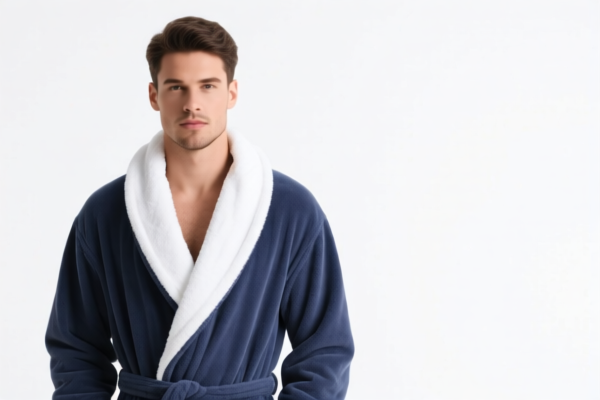
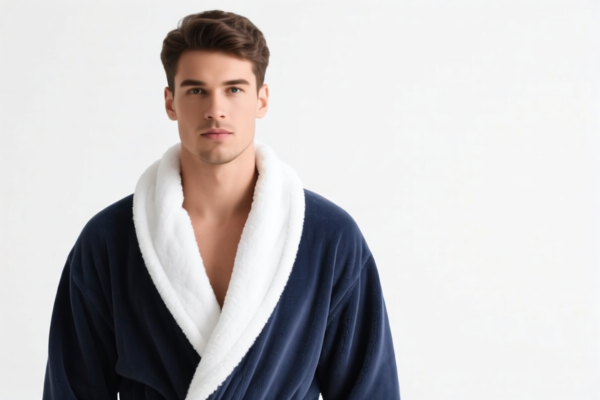
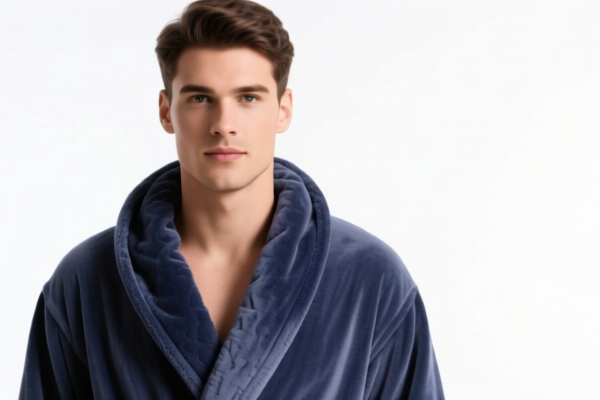
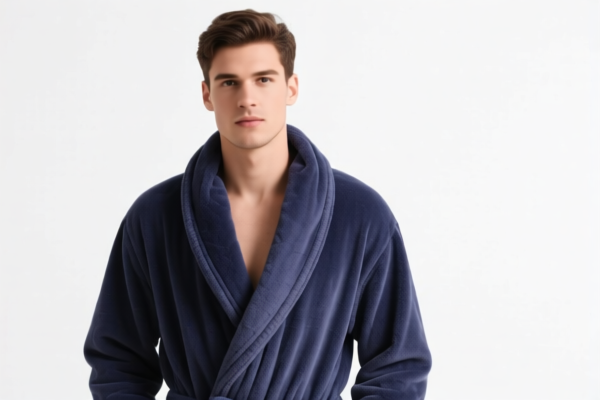
AI Analysis
👶 Boys' Winter Bathrobe (Other Materials)
🌐 HS Code Reference & Customs Clearance Guide | 2026 Latest Tariff Analysis | Professional Entry Strategies
📌 1. Product Definition & Classification: Do You Really Understand "Boys' Winter Bathrobe"?
A boys' winter bathrobe, typically made from synthetic fibers (e.g., polyester, cotton blends) or other textile materials, is a garment designed for post-bathing warmth and comfort. In international trade, its classification depends heavily on the specific fabric composition, construction method (knitted vs. woven), and intended use.
⚠️ Key Classification Criteria:
- Knitted vs. Woven: Knitted robes generally fall under Chapter 61; woven robes fall under Chapter 62.
- Material Content: If the robe contains wool, it may have different rules. Here, we focus on "Other Materials" (primarily synthetic or cotton blends).
- Function: Is it strictly a bathrobe, or does it function as pajamas/sleepwear? This distinction significantly impacts the HS code.
📦 2. HS Code Classification Details (2026 Latest Tariff Authority Comparison)
Based on the provided data for "Boys' Winter Bathrobe (Other Materials)", here are the five possible HS codes and their rationales:
| HS Code | Product Description | Applicable Scenario | Rationale from Data |
|---|---|---|---|
6307.90.98.91 |
Other made-up articles (Catch-all for "Other") | Robes that don't fit specific garment categories | "Classified as the catch-all category for other finished products" |
6307.90.98.75 |
Other face masks/accessories (Catch-all for "Other") | Less likely, but cited as "Other face masks" category | "Classified as the catch-all category for other face masks/accessories" |
6107.29.20.00 |
Pajamas, nightdresses, and similar articles (Non-wool) | Treated as sleepwear/loungewear | "Classified under non-wool pajama category" |
6208.19.90.00 |
Women's/girls' nightdresses and similar articles (Other textile materials) | Misclassification risk: Often confused with girls' wear or general textile wear | "Classified as other textile material petticoats/garments" |
6107.29.90.00 |
Pajamas, nightdresses, and similar articles (Other) | Most Likely Correct: If treated as knit sleepwear/loungewear | "Fully conforms to purpose and material characteristics" |
🔍 Key Takeaway:
- The classification hinges on whether customs authorities view the item as "Sleepwear" (6107/6208) or "Other Made-up Articles" (6307).
-6107.29.90.00is often the most defensible if the robe is knitted and clearly for lounging/sleeping.
-6307codes are backup options if the garment doesn't strictly fit pajama definitions.
💰 3. 2026 Latest Tariff Rate Breakdown (Including Surcharges, Policy Add-ons)
✅ Applicable Country: United States (US)
✅ Origin: China (CN)
✅ Effective Date: November 10, 2025 onwards (including subsequent imports)
🎯 1. 6307.90.98.91 —— Other Made-up Articles (Catch-all)
| Item | Content |
|---|---|
| Base Tariff | 7.0% |
| Section 301 Surcharge | 7.5% |
| Section 122 Tariff | 10.0% |
| Total Tax Rate | 24.5% |
| Tax Calculation | CIF Value × 24.5% |
| De Minimis Exemption | ❌ Not Applicable (High value category) |
| Legal Basis Path | Section 301: 7.5% → Section 122: 10% → Base: 7% |
📌 Explanation:
- This code is a "catch-all" for made-up textile articles not specified elsewhere.
- The 24.5% total rate is high due to the combination of base tariff and multiple surcharges.
🎯 2. 6307.90.98.75 —— Other Face Masks/Accessories (Catch-all)
| Item | Content |
|---|---|
| Base Tariff | 7.0% |
| Section 301 Surcharge | 7.5% |
| Section 122 Tariff | 10.0% |
| Total Tax Rate | 24.5% |
| Tax Calculation | CIF Value × 24.5% |
| De Minimis Exemption | ❌ Not Applicable |
| Legal Basis Path | Section 301: 7.5% → Section 122: 10% → Base: 7% |
📌 Note:
- Despite the description "face masks," this code is used as a fallback.
- Identical tax burden to6307.90.98.91.
🎯 3. 6107.29.20.00 —— Pajamas (Non-Wool)
| Item | Content |
|---|---|
| Base Tariff | 8.5% |
| Section 301 Surcharge | 7.5% |
| Section 122 Tariff | 10.0% |
| Total Tax Rate | 26.0% |
| Tax Calculation | CIF Value × 26.0% |
| De Minimis Exemption | ❌ Not Applicable |
| Legal Basis Path | Section 301: 7.5% → Section 122: 10% → Base: 8.5% |
📌 Warning:
- This code has the highest base tariff (8.5%) among the options.
- Total rate is 26.0%, making it one of the more expensive classifications.
🎯 4. 6208.19.90.00 —— Other Textile Material Petticoats/Garments
| Item | Content |
|---|---|
| Base Tariff | 8.7% |
| Section 301 Surcharge | 7.5% |
| Section 122 Tariff | 10.0% |
| Total Tax Rate | 26.2% |
| Tax Calculation | CIF Value × 26.2% |
| De Minimis Exemption | ❌ Not Applicable |
| Legal Basis Path | Section 301: 7.5% → Section 122: 10% → Base: 8.7% |
📌 Caution:
- This code is typically for woven garments and may be misapplied.
- Highest total rate at 26.2%. Avoid unless specifically required by woven construction and specific garment type.
🎯 5. 6107.29.90.00 —— Pajamas/Sleepwear (Other)
| Item | Content |
|---|---|
| Base Tariff | 5.6% |
| Section 301 Surcharge | 7.5% |
| Section 122 Tariff | 10.0% |
| Total Tax Rate | 23.1% |
| Tax Calculation | CIF Value × 23.1% |
| De Minimis Exemption | ❌ Not Applicable |
| Legal Basis Path | Section 301: 7.5% → Section 122: 10% → Base: 5.6% |
📌 Key Advantage:
- Lowest total tax rate (23.1%) among all five options.
- Best if the robe can be clearly justified as "knitted sleepwear" or "loungewear".
- Recommended for cost optimization if product description supports it.
🛠️ 4. Customs Clearance Practical Advice (Real-World Pitfall Guide)
✅ 1. Required Documentation Checklist (All Mandatory)
| Document | Required | Explanation |
|---|---|---|
| ✅ Product Specification Sheet | ✔️ | Material composition (e.g., 100% Polyester, Cotton/Poly blend), knit/weave type, weight |
| ✅ Product Photos | ✔️ | Front, back, label, tags showing "Boy's Bathrobe" or "Sleepwear" |
| ✅ Commercial Invoice | ✔️ | Clearly state "Boys' Winter Bathrobe" or "Boy's Sleepwear Robe" |
| ✅ Packing List | ✔️ | Detail quantities, weights, and dimensions |
| ✅ Origin Certificate | ✔️ | Required to confirm CN origin for surcharge calculation |
| ✅ Third-Party Test Report | ✔️ | Fiber content analysis (critical for correct HS code) |
✅ 2. Declaration Tips (Key Mantra)
🔥 "Fabric Defines Chapter, Use Defines Subheading, Name Matches Code, Tax Saves Big!"
| Scenario | Correct Declaration | Wrong Practice |
|---|---|---|
| Knitted robe, for sleep/lounging | 6107.29.90.00 (23.1%) |
Misclassify as 6208 → 26.2% |
| Woven robe, generic use | 6307.90.98.91 (24.5%) |
Try to force as pajamas → Risk of audit |
| Robe with specific "bathrobe" label | Use product name "Bathrobe" but justify as sleepwear if knit | Vague description "Textile Garment" → Delays |
| Mixed material (e.g., fleece) | Confirm % composition for Chapter 61 vs 62 | Assume based on feel |
✅ 3. Special Case Handling
| Situation | Handling Advice |
|---|---|
| OEM Custom Robes | Provide customer design specs to prove intended use |
| Robe with Hood | Still likely 6107.29.90.00 if knitted sleepwear |
| Robe with Towel Cloth | May be classified as 6307 if primarily for drying, not sleeping |
| Set with Pajamas | If sold as a set, declare as highest-rated item or split if possible |
🌍 5. Global Market Clearance Comparison (2026 Latest)
| Country/Region | Recommended HS Code | Tariff Rate | Certification | Notes |
|---|---|---|---|---|
| 🇺🇸 USA | 6107.29.90.00 |
23.1% (China) | CPSIA, ASTM | Highest risk due to 301 & 122 tariffs |
| 🇨🇳 China | 6107.29.90.00 |
5-7% | CCC (if applicable) | Lower tariffs, no surcharges |
| 🇪🇺 EU | 6107.29.90.00 |
0-12% | CE (if tech textile) | No Section 301/122 equivalents |
| 🇬🇧 UK | 6107.29.90.00 |
0-12% | UKCA | Post-Brexit rules may vary |
| 🇦🇺 Australia | 6107.29.90.00 |
5% | ACCC | Standard MFN rates |
📌 Conclusion:
- USA is the most challenging market due to layered tariffs (Base + 301 + 122).
- Optimizing HS Code to6107.29.90.00saves 1.4-3.1% compared to other options.
📌 6. Common Errors & Pitfall Guide (Lessons Learned)
❌ Error 1: Classifying all robes as 6307 (Catch-all)
👉 Consequence: Higher base tariff (7%) + surcharges → 24.5% total. Misses potential 23.1% rate.
❌ Error 2: Misidentifying knitted vs. woven
👉 Consequence: Wrong chapter (61 vs 62) → Audit, penalties, or forced reclassification.
❌ Error 3: Vague product description ("Textile Garment")
👉 Consequence: CBP issues a Request for Information (RFI) → Shipment delay.
❌ Error 4: Ignoring Section 122 Tariffs
👉 Consequence: Underpaying by 10% → Back taxes + Interest.
✅ Correct Approach:
"Boy's Knitted Bathrobe, 100% Polyester, Fleece Lined, For Sleep/Lounging, Model XYZ, Compliant with CPSIA"
🎯 7. Conclusion: Professional Declaration, Save Time, Reduce Costs!
🎯 Remember the Mantra:
🔹 "Knit = 61, Woven = 62, Sleepwear = 23.1%, Others = 24.5%+"
🔹 "Section 301 & 122 Add 17.5%, Choose Code Wisely!"
📌 Pro Tip:
If your bathrobe is knitted and intended for sleep/lounging, prioritize 6107.29.90.00 for the lowest total tax rate (23.1%).
Consider applying for a Customs Ruling if the product is unique or borderline.
📣 Immediate Action:
📞 Consult a licensed customs broker
📸 Provide clear product images and material specs
🚀 Optimize your HS code to maximize profit margins!
✨ Professional Clearance Starts with Precise Classification!
💼 Every percentage point counts in international trade!
Customer Reviews
About HS Code Classification
The Harmonized System (HS) is an internationally standardized nomenclature developed by the World Customs Organization (WCO) to classify traded products. Over 200 countries use the HS system as the basis for customs tariffs, trade statistics, and import/export regulations.
Each HS code follows a hierarchical structure:
- Chapter (2 digits) — Broad category of goods (e.g., Chapter 84: Machinery and Mechanical Appliances)
- Heading (4 digits) — More specific grouping within the chapter
- Subheading (6 digits) — Internationally standardized breakdown, used by all WCO member countries
- National subdivisions (8-10 digits) — Country-specific extensions for further classification, such as US HTSUS 10-digit codes
Correct HS code classification is essential for smooth customs clearance, accurate duty payment, and compliance with trade regulations. Misclassification can lead to customs delays, overpayment of duties, or penalties.
When importing from CN to US, the applicable tariff rates may include:
- Most-Favored-Nation (MFN) rate — The standard duty rate applied to WTO members
- General rate — Applied to countries without trade agreements
- Trade remedy duties — Additional tariffs such as Section 301 (anti-dumping), Section 232 (national security), or countervailing duties
The information provided on this page is for reference purposes only. For official classification, please consult with your local customs authority or a licensed customs broker.