Boys' knitted/crocheted set cotton sweater
CN → US| HS Code | Tariff Rate | Origin | Destination | Doc |
|---|---|---|---|---|
| 6112110030 | 32.4% | CN | US | Official Doc |
| 6117909003 | 32.1% | CN | US | Official Doc |
| 6110909067 | 23.5% | CN | US | Official Doc |
| 6110202015 | 34.0% | CN | US | Official Doc |
| 6112110010 | 32.4% | CN | US | Official Doc |
Product Images
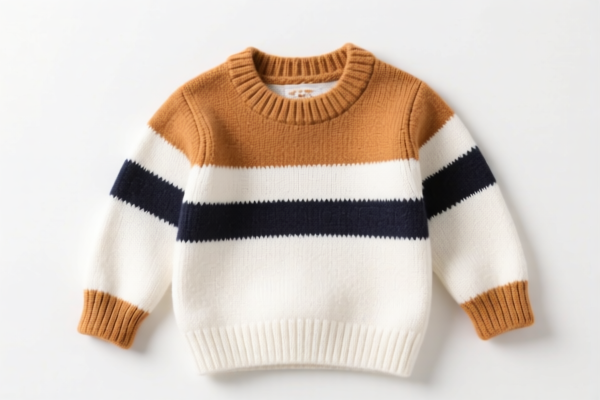


AI Analysis
🧥 Boys' Knitted/Crocheted Cotton Sweater Set
🌐 HS Code Reference & Customs Clearance Guide | 2026 Latest Tariff Analysis | Professional Clearance Strategy
📌 Part 1: Product Definition & Classification: What Exactly is a "Sweater Set"?
A "Boys' Knitted/Crocheted Cotton Sweater Set" refers to a coordinated garment ensemble, typically consisting of a sweater (top) and potentially matching bottoms (like trousers or shorts), manufactured from knitted or crocheted cotton fabric. In international trade, the classification depends heavily on whether the items are sold as a single unit (set) or separately, and the specific composition of the "set."
Key Distinctions:
Sweater Only: If the "set" is loosely interpreted or if the customs authority views the items as separate components not meeting the "GRI 3(b)" (Mixed Sets) criteria for a single functional unit, it may be classified strictly as a sweater.
Complete Casual/Sportswear Set: If the items are packaged together, intended to be worn together, and constitute a complete outfit (e.g., a sweater and matching shorts/pants), they may be classified under casual wear or sportswear provisions.
⚠️ Critical Classification Point:
- If the product is just a sweater (even if sold in a box with accessories), it falls under Chapter 61, Heading 6110 (Sweaters, pullovers, cardigans...).
- If the product is a complete set (e.g., sweater + pants/shorts) marketed as a "casual set" or "sportswear set," it may fall under Chapter 61, Heading 6112 (Track suits, swimsuits, and other articles of clothing).
📦 Part 2: HS Code Classification Details (2026 Latest Tariff Authority Cross-Reference)
Based on the provided data, here are the relevant HS Codes for cotton knitted/crocheted garments for boys/men. Note that the "Sweater Set" is most likely classified either as a Sweater (if the bottom is missing or not a full set) or as a Casual/Sportswear Set (if it includes bottoms).
| HS Code | Product Description | Application Scenario | Total Tax Rate | Tax Breakdown |
|---|---|---|---|---|
6110.90.90.67 |
Knitted/Crocheted Men's/Boys' Sweater, Cotton | Single sweater, no matching bottoms, or if classified primarily as a sweater | 23.5% | Base: 6.0%, Add. 7.5%, Section 301: 10% |
6110.20.20.15 |
Knitted/Crocheted Men's/Boys' Sweater, Cotton | Specific cotton content or variant of sweater classification | 34.0% | Base: 16.5%, Add. 7.5%, Section 301: 10% |
6112.11.00.30 |
Knitted/Crocheted Men's/Boys' Casual Wear, Cotton | Complete set (e.g., sweater + pants/shorts) marketed as "Casual Wear" | 32.4% | Base: 14.9%, Add. 7.5%, Section 301: 10% |
6112.11.00.10 |
Knitted/Crocheted Men's/Boys' Sport/Casual Wear, Cotton | Complete set marketed specifically as "Sportswear" or active casual wear | 32.4% | Base: 14.9%, Add. 7.5%, Section 301: 10% |
6117.90.90.03 |
Cotton Knitted/Crocheted Sweater Parts/Accessories | If the "set" is considered incomplete or consists mainly of sweater parts/accessories | 32.1% | Base: 14.6%, Add. 7.5%, Section 301: 10% |
🔍 Key Takeaway:
- If your product is just a sweater, the lowest rate is 23.5% (6110.90.90.67).
- If your product is a full set (sweater + pants/shorts), it likely falls under6112.11(Casual/Sportwear), with a rate of 32.4%.
- Do not misclassify a full set as a sweater to save on tax; Customs will assess the "set" as a whole, potentially applying the higher rate or penalties for misdeclaration.
💰 Part 3: 2026 Latest Tariff Rate Breakdown (Including Additional Duties)
✅ Applicable Country: United States (US)
✅ Origin: China (CN)
✅ Effective Date: 2025/2026 Tariff Regime
🎯 1. 6110.90.90.67 – Men's/Boys' Cotton Sweater (Lowest Rate for Single Sweater)
| Item | Content |
|---|---|
| Base Duty Rate | 6.0% |
| Additional Duty (USITC/301) | +7.5% |
| Section 301 Tariff | +10% |
| Total Effective Rate | 23.5% |
| Tax Calculation | CIF Value × 23.5% |
| De Minimis Exemption | ❌ Not Applicable (High-risk category for clothing) |
| Legal Basis Path | HTSUS:6110.90.90.67 → USITC Footnote 9903.88.01 → Section 301: 10% |
📌 Explanation:
- The Base Rate (6.0%) is the standard Most Favored Nation (MFN) rate for other knitted/crocheted sweaters of man-made fibers or other textiles (cotton falls here depending on specific subheading interpretation).
- The 7.5% is an additional duty often applied to certain textile categories under trade agreements or specific USITC rulings.
- The 10% is the Section 301 tariff specifically targeting Chinese-origin goods.
- Total: 23.5%. This is the most favorable rate if the item is strictly a sweater.
🎯 2. 6112.11.00.30 / 6112.11.00.10 – Men's/Boys' Cotton Casual/Sportwear Set
| Item | Content |
|---|---|
| Base Duty Rate | 14.9% |
| Additional Duty (USITC/301) | +7.5% |
| Section 301 Tariff | +10% |
| Total Effective Rate | 32.4% |
| Tax Calculation | CIF Value × 32.4% |
| De Minimis Exemption | ❌ Not Applicable |
| Legal Basis Path | HTSUS:6112.11.00 → USITC Footnote 9903.88.01 → Section 301: 10% |
📌 Explanation:
- If your "sweater set" includes matching bottoms (pants/shorts) and is sold as a unit, it is classified as "Other Wear" (Heading 6112).
- The base duty is higher (14.9%) compared to sweaters.
- Total: 32.4%. This is a significant cost increase over single sweater classification.
🎯 3. 6110.20.20.15 – Men's/Boys' Cotton Sweater (High Base Rate Variant)
| Item | Content |
|---|---|
| Base Duty Rate | 16.5% |
| Additional Duty (USITC/301) | +7.5% |
| Section 301 Tariff | +10% |
| Total Effective Rate | 34.0% |
| Tax Calculation | CIF Value × 34.0% |
| Legal Basis Path | HTSUS:6110.20.20.15 → USITC Footnote 9903.88.01 → Section 301: 10% |
📌 Explanation:
- This code may apply to sweaters with specific cotton content or construction methods that are taxed at a higher base rate.
- Total: 34.0%. Avoid this if6110.90.90.67is applicable.
🛠️ Part 4: Customs Clearance Practical Advice (Battle-Tested Pitfall Guide)
✅ 1. Documentation Checklist (Non-Negotiable)
| Document | Required | Notes |
|---|---|---|
| ✅ Product Description | ✔️ | Must clearly state: "Boys' Knitted Cotton Sweater" OR "Boys' Cotton Knitted Casual Set (Sweater + Pants)" |
| ✅ Composition Statement | ✔️ | Must specify % Cotton (e.g., "100% Cotton" or "80% Cotton/20% Polyester") |
| ✅ Product Photos | ✔️ | Clear images of the garment(s), tags, and packaging |
| ✅ Commercial Invoice | ✔️ | Must match HS Code exactly. Do not use vague terms like "Clothing Set" |
| ✅ Packing List | ✔️ | Detail items per box. If it's a set, list all components |
✅ 2. Declaration Strategy (Key Mantra)
🔥 "Single Sweater = 6110; Full Set = 6112; Be Honest or Pay!"
| Scenario | Correct Declaration | Wrong Declaration | Consequence |
|---|---|---|---|
| Just a Sweater | 6110.90.90.67 (Sweater) |
Declare as "Set" | Overpay tax (32.4% vs 23.5%) |
| Sweater + Pants Set | 6112.11.00.30 (Casual Set) |
Declare as "Sweater" | Misclassification Penalty + Back Taxes |
| Sweater + Accessories (Hat/Scarf) | 6110.90.90.67 (Sweater) |
Declare as "Set" | May still be classified as Sweater if accessories are minor, but risky |
| Sweater Parts (Sleeves, Collars) | 6117.90.90.03 (Parts) |
Declare as "Sweater" | Incorrect, leads to delays |
📌 Crucial Note:
- If you sell a sweater and matching shorts together as a "2-piece set," Customs will likely classify it under 6112.11 (Wear), not 6110 (Sweater).
- To optimize tax, if the product is only a sweater, do not include pants/shorts in the same SKU/package if you want to claim the lower 23.5% rate. Sell them as separate SKUs.
✅ 3. Special Cases & Handling
| Situation | Handling Advice |
|---|---|
| "Set" with Non-Matching Bottoms | If the bottoms are different fabric/style, declare as two separate items: Sweater (6110) + Pants (6104/6103) |
| OEM Custom Sets | Provide design specs to prove it's a "Set" or "Separate Items." |
| Mixed Material | If not 100% cotton, ensure the description matches the HS code for "Knitted/Crocheted, Other Textile Materials" |
| De Minimis (Section 321) | ❌ Not Eligible. Clothing items from China are excluded from the $800 de minimis threshold. Full duty applies. |
🌍 Part 5: Global Market Clearance Comparison (2026)
| Country/Region | Recommended HS Code | Tariff (China Origin) | Certification | Notes |
|---|---|---|---|---|
| 🇺🇸 USA | 6110.90.90.67 (Sweater) |
23.5% | No specific cert needed for basic cotton | High risk for misclassification |
| 🇺🇸 USA | 6112.11.00.30 (Set) |
32.4% | No specific cert needed | Higher tax for sets |
| 🇨🇳 China | 6110.20 / 6112.11 |
~10-15% | CCC (if applicable) | Lower base rates, no 301 tariff |
| 🇪🇺 EU | 6110.20 / 6112.11 |
12-16% | REACH, CE (if electronic) | No Section 301 equivalent |
| 🇬🇧 UK | 6110.20 / 6112.11 |
12-16% | UKCA | Post-Brexit standards apply |
📌 Conclusion:
- USA is the most expensive market due to the Section 301 10% tariff on top of base duties.
- Strategy: If possible, avoid declaring mixed sets if you can sell components separately. A single sweater at 23.5% is significantly cheaper than a set at 32.4%.
📌 Part 6: Common Mistakes & Pitfalls (Blood & Tears Lessons)
❌ Mistake 1: Declaring a "Sweater + Pants Set" as a "Sweater" (6110)
👉 Consequence: Customs audits reveal the set. Back taxes + 20% penalty + potential seizure.
❌ Mistake 2: Using "Clothing Set" as a generic description
👉 Consequence: Customs assigns a default high tariff or requires manual review, causing delays.
❌ Mistake 3: Ignoring Section 301 Tariff
👉 Consequence: Underpayment. The 10% is mandatory for China-origin goods. Do not assume it's included in base duty.
❌ Mistake 4: Assuming De Minimis ($800) applies
👉 Consequence: False. Clothing from China is excluded. You must pay duty on every shipment, regardless of value.
✅ Correct Approach:
"Boys' 100% Cotton Knitted Sweater, Model ABC, 100% Cotton, Made in China"
OR
"Boys' 2-Piece Cotton Knitted Casual Set (Sweater & Shorts), Model DEF, 100% Cotton, Made in China"
🎯 Part 7: Conclusion: Precision Classification Saves Money!
🎯 Remember the Mantra:
🔹 "Sweater Only = 6110 (23.5%)! Set = 6112 (32.4%)! Be honest, save money!"
🔹 "No De Minimis for China Clothing! Pay duty from day one!"
📌 Pro Tip:
If your product is a set, consider selling the sweater and bottoms as separate SKUs in your e-commerce store. This allows you to classify them correctly as 6110 (Sweater) and 6104/6103 (Pants/Shorts), potentially lowering the overall tax burden compared to declaring them as a single "Set" under 6112.
📣 Immediate Action:
📞 Consult a licensed customs broker for Pre-Ruling on your specific "Set" definition.
🚀 Ensure your commercial invoice matches the exact HS Code and product description.
💼 Accurate classification is your best defense against customs audits and penalties!
✨ Professional Clearance, Starts with Accurate Classification!
💼 Every Percent Saved is Pure Profit!
Customer Reviews
About HS Code Classification
The Harmonized System (HS) is an internationally standardized nomenclature developed by the World Customs Organization (WCO) to classify traded products. Over 200 countries use the HS system as the basis for customs tariffs, trade statistics, and import/export regulations.
Each HS code follows a hierarchical structure:
- Chapter (2 digits) — Broad category of goods (e.g., Chapter 84: Machinery and Mechanical Appliances)
- Heading (4 digits) — More specific grouping within the chapter
- Subheading (6 digits) — Internationally standardized breakdown, used by all WCO member countries
- National subdivisions (8-10 digits) — Country-specific extensions for further classification, such as US HTSUS 10-digit codes
Correct HS code classification is essential for smooth customs clearance, accurate duty payment, and compliance with trade regulations. Misclassification can lead to customs delays, overpayment of duties, or penalties.
When importing from CN to US, the applicable tariff rates may include:
- Most-Favored-Nation (MFN) rate — The standard duty rate applied to WTO members
- General rate — Applied to countries without trade agreements
- Trade remedy duties — Additional tariffs such as Section 301 (anti-dumping), Section 232 (national security), or countervailing duties
The information provided on this page is for reference purposes only. For official classification, please consult with your local customs authority or a licensed customs broker.