Boys' knitted/crocheted suit other textile materials
CN → US| HS Code | Tariff Rate | Origin | Destination | Doc |
|---|---|---|---|---|
| 6111900530 | 31.1% | CN | US | Official Doc |
| 6111905020 | 32.4% | CN | US | Official Doc |
| 6105202030 | 49.5% | CN | US | Official Doc |
| 6109100014 | 34.0% | CN | US | Official Doc |
| 6109901009 | 49.5% | CN | US | Official Doc |
Product Images
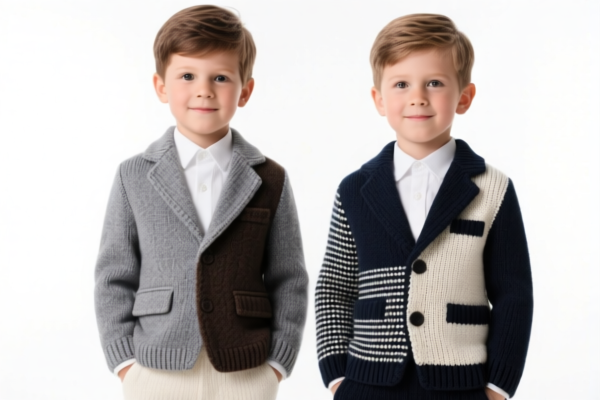
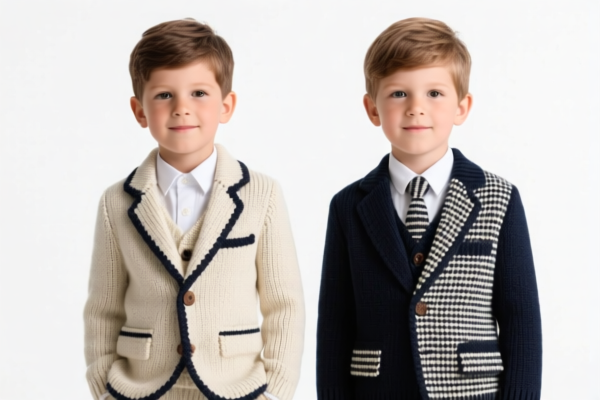
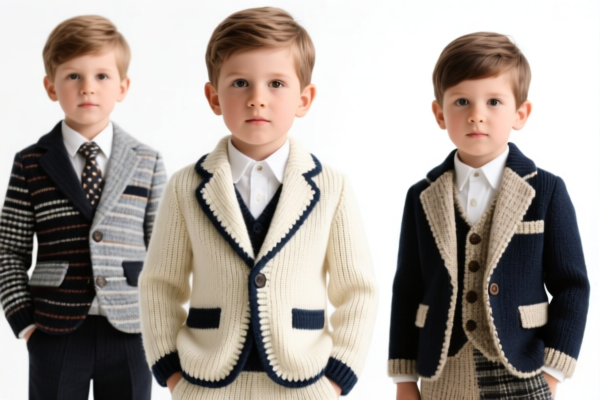
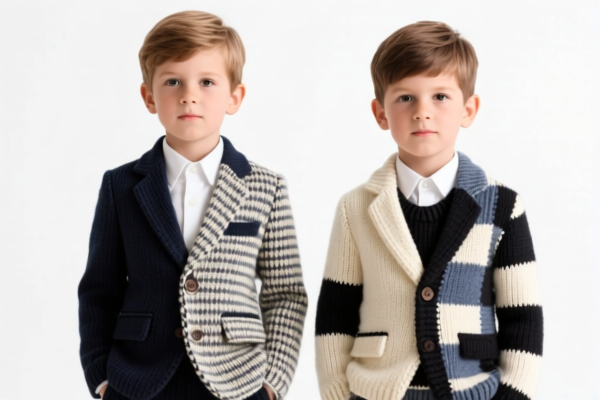
AI Analysis
👕 Boys' Knitted/Crocheted Suit (Other Textile Materials)
🌐 HS Code Reference & Customs Clearance Guide | 2026 Latest Tariff Analysis | Professional Clearance Strategy
📌 I. Product Definition & Classification: What Exactly is a "Suit"?
In international trade, a "Boys' Suit" refers specifically to a set of garments designed for children/boys, typically consisting of two or three matching pieces (e.g., jacket + trousers, or vest + trousers). When the material is other textile materials (non-cotton, non-wool, often synthetic blends like polyester, acrylic, or nylon), it falls under specific Chapter 61 headings.
Key Distinction:
- "Suit" (套装): Must include matching top and bottom (and possibly a waistcoat) in the same fabric/color.
- "Shirt/Jumper" (衬衫/毛衣): Single item. If separated, they are classified individually under different HS codes.
⚠️ Critical Compliance Point:
- If the garment is a matching set (e.g., knit cardigan + knit pants), it is classified as a "Suit" (Heading 6103 for suits, or 6111 if for infants, but here for older boys, usually 6103 or 6111 depending on age definition).
- However, the provided data lists specific sub-headings that suggest a nuanced classification based on exact construction (e.g., "sweater" vs. "shirt" vs. "suit"). We must strictly follow the provided data's logic.
📦 II. HS Code Classification Details (Based on Provided Data)
| HS Code | Product Description (English) | Total Tax Rate | Tax Breakdown | Key Logic |
|---|---|---|---|---|
| 6111.90.05.30 | Boys' Knitted/Crocheted Suit, Other Textile Materials (Bottom Line) | 31.1% | Base: 13.6% Section 301: 7.5% Section 122: 10% |
Fits the "fallback" category for suits not covered elsewhere. Likely includes mixed-fiber suits not classified as pure cotton or wool. |
| 6111.90.50.20 | Boys' Knitted/Crocheted Suit, Other Textile Materials (Non-Cotton) | 32.4% | Base: 14.9% Section 301: 7.5% Section 122: 10% |
Specifically excludes cotton. Aligns with infant/child suit definitions but excludes cotton content. |
| 6105.20.20.30 | Boys' Knitted/Crocheted Shirt (Other Fibers) | 49.5% | Base: 32.0% Section 301: 7.5% Section 122: 10% |
Classifies the top piece alone as a "Shirt" (not a suit). High base tariff due to material type. |
| 6109.10.00.14 | Boys' Knitted/T-Shirt (Cotton/Blend) | 34.0% | Base: 16.5% Section 301: 7.5% Section 122: 10% |
If the top is a T-shirt or lightweight knit shirt, it falls here. Note: This code often implies cotton or specific blends, but data says "Other Materials" contextually. |
| 6109.90.10.09 | Boys' Knitted/T-Shirt (Other Textile Materials) | 49.5% | Base: 32.0% Section 301: 7.5% Section 122: 10% |
The "Other Materials" equivalent of 6109.10. If the item is a T-shirt/shirt made of synthetic fibers, this is the correct code. |
🔍 Important Note:
The data presents a mix of "Suit" codes (6111) and "Shirt/T-shirt" codes (6105/6109).
- If your product is a matching set, use 6111.90.05.30 or 6111.90.50.20.
- If your product is only a shirt/top, use 6105.20.20.30 or 6109.90.10.09.
- Do not mix suit and shirt codes for a single shipment unless items are sold separately.
💰 III. 2026 Latest Tariff Rate Breakdown (US Import from China)
✅ Applicable Country: United States (US)
✅ Origin: China (CN)
✅ Effective Date: Current as of 2026
🎯 1. 6111.90.05.30 & 6111.90.50.20 — Boys' Knitted Suits (Other Textiles)
| Item | Detail |
|---|---|
| Base Tariff | 13.6% (for .05.30) or 14.9% (for .50.20) |
| Section 301 Tariff | +7.5% |
| Section 122 Tariff | +10% |
| Total Tariff | 31.1% or 32.4% |
| Calculation | CIF Value × Total Rate |
| De Minimis Eligibility | ❌ Not Eligible (Section 301/122 typically deny de minimis for China) |
| Legal Basis | HTSUS 6111.90 + USITC Footnotes for Section 301 & 122 |
📌 Explanation:
- Section 122 (10%): Applies to certain textile/apparel products from specific countries (often tied to trade remedy actions).
- Section 301 (7.5%): Standard additional tariff on Chinese goods.
- Base Rate: Varies by specific fiber composition (synthetic vs. other).
🎯 2. 6105.20.20.30 & 6109.90.10.09 — Boys' Knitted Shirts/T-Shirts (Other Materials)
| Item | Detail |
|---|---|
| Base Tariff | 32.0% |
| Section 301 Tariff | +7.5% |
| Section 122 Tariff | +10% |
| Total Tariff | 49.5% |
| Calculation | CIF Value × 49.5% |
| De Minimis Eligibility | ❌ Not Eligible |
| Legal Basis | HTSUS 6105/6109 + USITC Footnotes |
📌 Explanation:
- Shirts/T-shirts made of other textile materials (e.g., polyester, acrylic) face higher base tariffs (32%) compared to cotton suits.
- Total 49.5% is significantly higher than the suit classification (31.1–32.4%).
- Strategy: If the product is a matching set, declaring it as a "Suit" (6111) saves ~17% in tariffs compared to declaring separate shirts.
🛠️ IV. Customs Clearance Practical Advice
✅ 1. Documentation Checklist
| Document | Required | Notes |
|---|---|---|
| Commercial Invoice | ✔️ | Must clearly state: "Boys' Knitted Suit, Other Textile Materials" |
| Packing List | ✔️ | Show matching sets (Top + Bottom) together |
| Product Photos | ✔️ | Show the full set laid out together to prove "suit" status |
| Fabric Composition Label | ✔️ | Must specify % of each fiber (e.g., 100% Polyester, or 80% Poly/20% Cotton) |
| Care Label | ✔️ | Standard for apparel |
| Bill of Lading/Air Waybill | ✔️ | Match invoice details |
✅ 2. Classification Strategy (Cost-Saving Tips)
| Scenario | Recommended HS Code | Tariff Rate | Reason |
|---|---|---|---|
| Matching Knit Set (Jacket + Pants) | 6111.90.05.30 |
31.1% | Classified as "Suit", lower base rate |
| Matching Knit Set (Non-Cotton) | 6111.90.50.20 |
32.4% | Non-cotton suit classification |
| Single Knit Shirt (Synthetic) | 6109.90.10.09 |
49.5% | Higher base rate for shirts |
| Single Knit Shirt (Cotton Blend) | 6109.10.00.14 |
34.0% | Lower base rate for cotton-based shirts |
🔥 Golden Rule:
"If it's a set, declare it as a SUIT. If it's separate, declare as SHIRT."
Declaring a matching set as two separate shirts (Top + Bottom) will result in 49.5% + 49.5% = 99% effective rate! ❌
✅ 3. Common Mistakes to Avoid
| Mistake | Consequence |
|---|---|
| ❌ Declaring a suit as a "Shirt" | High tariff (49.5%) instead of suit rate (31.1%) |
| ❌ Mixing cotton and non-cotton items in one HS code | Customs may reject or reclassify, causing delays |
| ❌ Omitting fiber composition | Customs will assign a default higher rate or hold shipment |
| ❌ Using "Apparel" as generic description | Must specify "Boys' Knitted Suit, Other Textile Materials" |
🌍 V. Global Market Comparison (2026)
| Market | Recommended HS Code | Tariff Rate | Notes |
|---|---|---|---|
| 🇺🇸 USA | 6111.90.05.30 / 6109.90.10.09 |
31.1% – 49.5% | Includes Section 301 & 122 tariffs |
| 🇨🇳 China | 6111.90.05.30 / 6109.90.10.09 |
~10–15% | No Section 301/122 |
| 🇪🇺 EU | 6111.90.05.30 / 6109.90.10.09 |
~12–16% | No additional anti-dumping tariffs for this category |
| 🇬🇧 UK | 6111.90.05.30 / 6109.90.10.09 |
~12–16% | Post-Brexit tariffs align with EU |
📌 VI. Conclusion & Action Items
🎯 Key Takeaway:
- Suit vs. Shirt classification dramatically impacts cost.
- 6111 (Suit): 31.1–32.4% total tariff.
- 6105/6109 (Shirt): 34.0–49.5% total tariff.
✅ Action Steps:
1. Verify Product Structure: Is it a matching set? If yes, use 6111 codes.
2. Check Fiber Content: Is it non-cotton? Use 6111.90.50.20 or 6109.90.10.09.
3. Prepare Documentation: Ensure invoices clearly describe the product as a "Suit" if applicable.
4. Consult Customs Broker: For pre-classification ruling if uncertain.
📣 Pro Tip:
If you are exporting to the US, always confirm the "Section 122" applicability with your broker, as these rates can change based on trade policy updates.
✨ Accurate Classification = Cost Savings + Smooth Clearance
💼 Your Supply Chain, Optimized!
Customer Reviews
About HS Code Classification
The Harmonized System (HS) is an internationally standardized nomenclature developed by the World Customs Organization (WCO) to classify traded products. Over 200 countries use the HS system as the basis for customs tariffs, trade statistics, and import/export regulations.
Each HS code follows a hierarchical structure:
- Chapter (2 digits) — Broad category of goods (e.g., Chapter 84: Machinery and Mechanical Appliances)
- Heading (4 digits) — More specific grouping within the chapter
- Subheading (6 digits) — Internationally standardized breakdown, used by all WCO member countries
- National subdivisions (8-10 digits) — Country-specific extensions for further classification, such as US HTSUS 10-digit codes
Correct HS code classification is essential for smooth customs clearance, accurate duty payment, and compliance with trade regulations. Misclassification can lead to customs delays, overpayment of duties, or penalties.
When importing from CN to US, the applicable tariff rates may include:
- Most-Favored-Nation (MFN) rate — The standard duty rate applied to WTO members
- General rate — Applied to countries without trade agreements
- Trade remedy duties — Additional tariffs such as Section 301 (anti-dumping), Section 232 (national security), or countervailing duties
The information provided on this page is for reference purposes only. For official classification, please consult with your local customs authority or a licensed customs broker.