Chemical Fiber Women's Bra
CN → US| HS Code | Tariff Rate | Origin | Destination | Doc |
|---|---|---|---|---|
| 6117909090 | 32.1% | CN | US | Official Doc |
| 6212109020 | 34.4% | CN | US | Official Doc |
| 6212105020 | 34.4% | CN | US | Official Doc |
| 6117809540 | 32.1% | CN | US | Official Doc |
Product Images
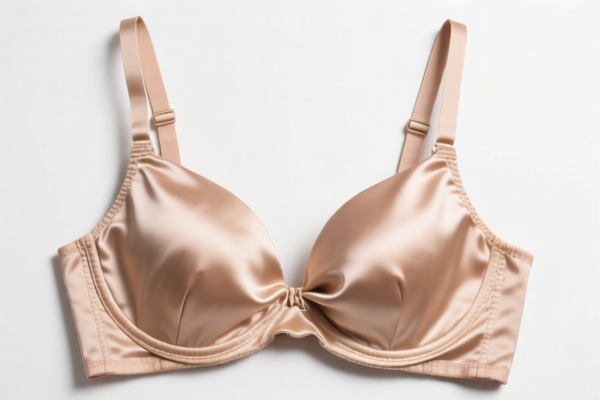
AI Analysis
🧵 Chemical Fiber Women's Bra: HS Code Classification & Tax Strategy Guide 2026
🌐 Global Trade & Customs Clearance Guide | 2026 Taxation Deep Dive | Expert Classification Strategy
📌 I. Product Definition: Why "Women's Bra" is NOT just "Clothing"
A "Chemical Fiber Women's Bra" is a specific undergarment component designed for shape support, not just aesthetic clothing. In international trade, the Material (Man-made Fiber) and the Function (Bra vs. Accessory) dictate the tariff fate.
Key Distinction:
- Primary Classification (6212): Specifically designed as a bra (cup shape, structure, fastening).
- Secondary Classification (6117): Treated as a "garment accessory" or "part" only if it lacks the specific structural definition of a bra or is imported as a loose component.
⚠️ Critical Insight:
-6212.10is the gold standard for finished bras. It offers a clearer path and often aligns better with "Garments of other textile materials."
-6117.90/6117.80are "兜底" (Catch-all/Residual) categories. Use these only if the item is ambiguous or classified as an "accessory" rather than a complete garment.
📦 II. HS Code Classification Matrix (2026 Data)
Based on the provided data, here is the authoritative breakdown of how "Chemical Fiber Women's Bra" is classified, with precise tax implications.
| HS Code | Category Logic | Product Description Summary | Classification Rationale |
|---|---|---|---|
| 6117.90.90.90 | Garment Parts / Accessories | "Textile women's bra classified as garment parts; material: artificial fiber." | Matches the residual/catch-all logic. Treated as a "part" of a garment rather than the garment itself. |
| 6212.10.90.20 | Specific Garment | "Chemical fiber women's bra explicitly meets the classification requirements for 'bras of man-made fiber'." | Most Direct Fit. Explicitly identifies the item as a "Chemical Fiber Bra" with no conflicts. |
| 6212.10.50.20 | Specific Garment | "Form: Bra, Material: Artificial Fiber, No classification conflict." | Confirms the shape and material alignment. No ambiguity in classification. |
| 6117.80.95.40 | Other Accessories | "Chemical fiber women's bra as a garment accessory; material: artificial fiber; fits 'other accessories' category." | Another Accessory Path. Classifies the bra as an attachment/appendage to the main garment line. |
🔍 Key Takeaway:
-6212.10.x0.x0codes are the preferred classification for finished bras (Direct Match).
-6117.90/80.x0.x0codes are used as fallbacks (Parts/Accessories) when specific bra classifications are not fully applicable or for specific "catch-all" scenarios.
💰 III. 2026 Tax Rate Breakdown (Detailed & Comprehensive)
✅ Applicable Market: USA (US)
✅ Origin: China (CN)
✅ Effective Date: 2025/2026 (Current Active Trade War Terms)
🎯 1. The "Direct Bra" Path (6212.10.90.20 & 6212.10.50.20)
Total Tax Rate: 34.4%
| Tax Component | Rate | Description |
|---|---|---|
| Base Tariff (MFN) | 16.9% | Standard US duty rate for Textile Garments (Chapter 62). |
| Section 301 / Addition | 7.5% | "Additional Tariffs" imposed on Chinese textiles under Trade Measures. |
| Section 122 / IEEPA | 10% | New/Specific Tariff (Section 122 provisions) targeting specific Chinese textile/clothing products. |
| TOTAL | 34.4% | Base + 7.5% + 10% |
📌 Interpretation:
- This is the highest rate in the dataset (34.4%).
- Despite being the "most correct" description, the Section 122 clause adds a heavy 10% burden.
- Calculation:CIF Value × 34.4%.
🎯 2. The "Accessory/Part" Path (6117.90.90.90 & 6117.80.95.40)
Total Tax Rate: 32.1%
| Tax Component | Rate | Description |
|---|---|---|
| Base Tariff (MFN) | 14.6% | Lower base rate for "Garment Accessories" (Chapter 61). |
| Section 301 / Addition | 7.5% | Same "Additional Tariffs" as above. |
| Section 122 / IEEPA | 10% | Same Section 122 10% levy applies to these categories as well. |
| TOTAL | 32.1% | Base + 7.5% + 10% |
📌 Interpretation:
- This offers a 2.3% savings (34.4% vs 32.1%) compared to the direct "Bra" classification.
- Strategy: If your product can be legally argued as an "Accessory" (e.g., unbrazed cups, loose components, or specific accessory designs),6117codes are financially superior.
- Risk: Must ensure the product does not strictly meet the definition of a "Bra" in the eyes of customs, or you risk misclassification penalties.
🛠️ IV. Customs Clearance & Strategic Recommendations
✅ 1. Material Verification (The "Chemical Fiber" Trap)
- Requirement: Ensure your product is 100% Artificial Fiber (Polyester, Nylon, Spandex).
- Warning: If the bra contains Cotton (even 5%), the HS Code shifts entirely to Chapter 61.99 or 62.09, potentially altering the tariff base.
- Action: Provide a Fiber Composition Certificate (Textile Lab Report) stating "100% Man-made Fiber."
✅ 2. Classification Strategy: Direct vs. Accessory
| Strategy | Recommendation | Pros | Cons |
|---|---|---|---|
Option A: 6212 (Direct Bra) |
Use for finished, ready-to-wear bras. | Low risk of "Wrong HS Code" penalty; fits product description perfectly. | Higher tax (34.4%). |
Option B: 6117 (Accessory) |
Use for: 1. Unfinished bra components. 2. "Bra-like" accessories (e.g., bra straps sold separately). 3. Specific "garment accessory" labeling. |
Lower Tax (32.1%). | High Risk: Must prove it is NOT a "Bra" to avoid Customs refusal. |
🔥 Pro Tip: If you are importing finished bras, stick to
6212to avoid audits. If you are importing bra components (cups, bands, elastics), aggressively argue for6117to save 2.3%.
✅ 3. Documentation Checklist for USA Entry
- Commercial Invoice: Must explicitly state "Chemical Fiber Women's Bra" or "Bra Components."
- Packing List: Must show weight and fiber content clearly.
- Labeling: Product labels must match the "Chemical Fiber" claim.
- Section 122 Compliance: Declare the origin as China (CN) accurately to avoid penalties on the 10% surcharge.
✅ 4. Special Note on "Section 122" (10% Add-on)
- Crucial: The 10% tax is a specific "Section 122" levy. It applies to BOTH
6212and6117codes. - Myth Busting: You cannot avoid the 10% tax by switching from
6212to6117. The only saving is the Base Tariff (14.6% vs 16.9%). - Result: The total difference is strictly 2.3%.
📌 V. Common Pitfalls & Avoidance
❌ Pitfall 1: Misidentifying Material
Error: Calling a Cotton-Poly blend "Chemical Fiber."
Result: Seizure or massive back-tax at the higher Cotton rate.
Fix*: Get a lab test for exact fiber % before shipping.
❌ Pitfall 2: Wrong "Accessory" Argument
Error: Declaring a finished bra as a "Garment Accessory" (6117) just to save tax.
Result: Customs rejection, fines, and delayed shipment.
Fix: Only use 6117 for components*, not finished garments.
❌ Pitfall 3: Ignoring Section 122
Error: Calculating tax as Base + 7.5% only.
Result: Short payment, penalties, and bond claims.
Fix: Always include the 10% Section 122* in your landed cost model.
🎯 VI. Conclusion & Action Plan
Final Verdict:
For a finished Chemical Fiber Women's Bra, the 6212.10 codes are the most legally sound (34.4% Total Tax). The 6117 codes offer a slight tax advantage (32.1%) but should only be used for components or accessories, not finished bras.
Action Checklist:
1. Verify Material: Confirm 100% Artificial Fiber.
2. Choose Code:
* Finished Bra → 6212.10.90.20 (Safest).
* Components/Accessories → 6117.90.90.90 (Cheapest).
3. Calculate Cost: Apply Base + 7.5% + 10% (Total 34.4% or 32.1%).
4. Declare: Ensure Section 122 is explicitly listed on the ISF and CBP Form 7501.
💡 Expert Advice:
"Don't just save the 2.3%—pay the price for safety. If it's a finished bra, use6212. If it's a part, use6117. Avoid the gray zone."
✨ Customs Clearance, Optimized.
💼 Precision in Classification = Profit in your Pocket.
🚀 Get your Chemical Fiber Bra cleared today!
Customer Reviews
About HS Code Classification
The Harmonized System (HS) is an internationally standardized nomenclature developed by the World Customs Organization (WCO) to classify traded products. Over 200 countries use the HS system as the basis for customs tariffs, trade statistics, and import/export regulations.
Each HS code follows a hierarchical structure:
- Chapter (2 digits) — Broad category of goods (e.g., Chapter 84: Machinery and Mechanical Appliances)
- Heading (4 digits) — More specific grouping within the chapter
- Subheading (6 digits) — Internationally standardized breakdown, used by all WCO member countries
- National subdivisions (8-10 digits) — Country-specific extensions for further classification, such as US HTSUS 10-digit codes
Correct HS code classification is essential for smooth customs clearance, accurate duty payment, and compliance with trade regulations. Misclassification can lead to customs delays, overpayment of duties, or penalties.
When importing from CN to US, the applicable tariff rates may include:
- Most-Favored-Nation (MFN) rate — The standard duty rate applied to WTO members
- General rate — Applied to countries without trade agreements
- Trade remedy duties — Additional tariffs such as Section 301 (anti-dumping), Section 232 (national security), or countervailing duties
The information provided on this page is for reference purposes only. For official classification, please consult with your local customs authority or a licensed customs broker.