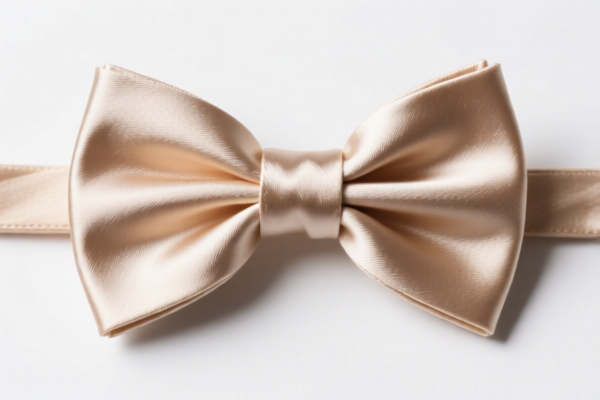
Children's Black Bow Tie
CN → US| HS Code | Tariff Rate | Origin | Destination | Doc |
|---|---|---|---|---|
| 6215100040 | 24.7% | CN | US | Official Doc |
| 6215900020 | 15.0% | CN | US | Official Doc |
Product Images


AI Analysis
🎀 Children's Black Bow Ties (小童黑色领结/方巾领)
🌐 HS Code Reference & Customs Clearance Guide | 2026 Latest Tariff Analysis | Professional Customs Strategy
📌 I. Product Definition and Classification: Do You Really Understand "Children's Black Bow Ties"?
Children's black bow ties are formal accessories designed for young wearers, typically used in school uniforms, weddings, or ceremonial occasions. In international trade, they fall under the broader category of "Ties, Bow Ties, and Cravats" (Chapter 62, Heading 6215).
The critical distinction for classification lies in the material composition: 1. Silk or Silk Waste: High-value natural fibers. 2. Other Textile Materials: Polyester, nylon, cotton, etc.
⚠️ Key Distinction:
- If the item is made of silk (or contains ≥70% silk in the outer shell) → HS Code 6215.10.00.40
- If the item is made of polyester, nylon, cotton, or other synthetic/natural fibers → HS Code 6215.90.00.20
- Note: Most common "children's black bow ties" in mass markets are made of polyester or silk blends. For pure black silk, it's rare for children's wear due to cost; polyester is dominant.
📦 II. HS Code Classification Details (2026 Latest Tariff Authority Reference)
| HS Code | Product Description | Material Requirement | Applicable Scenario |
|---|---|---|---|
6215.10.00.40 |
Ties, bow ties, cravats: Of silk or silk waste | Outer shell ≥70% silk/silk waste; Linings/interlinings <50% non-silk textile | Premium silk bow ties, high-end formal wear |
6215.90.00.20 |
Ties, bow ties, cravats: Of other textile materials | Non-silk materials (e.g., polyester, nylon, cotton, wool blends) | Common children's bow ties, school uniforms, budget-friendly formal wear |
🔍 Critical Note:
- "Other textile materials" includes 100% polyester, which is the most common material for children's bow ties due to durability and cost.
- "Silk" classification requires strict adherence to the 70% threshold in the outer shell. Blends below this threshold fall under "Other."
- Children's design does not change the HS Code classification; material determines the code.
💰 III. 2026 Latest Tariff Rate Details (Including Surtaxes & Policy Add-ons)
✅ Applicable Country: United States (US)
✅ Country of Origin: China (CN)
✅ Effective Date: From November 10, 2025 (inclusive of subsequent imports)
🎯 1. 6215.10.00.40 —— Silk or Silk Waste Bow Ties (High-End)
| Item | Content |
|---|---|
| Base Tariff | 0.0% |
| USITC Surcharge | 0.0% |
| IEEPA Surcharge | 0.0% |
| Total Tariff | 0.0% |
| Tax Calculation | CIF Value × 0.0% = $0 |
| De Minimis Eligibility | ✅ Yes (Low risk, but verify if bundled with high-tax items) |
| Legal Basis Path | 6215.10.00.40 (No footnotes for surtaxes) |
📌 Explanation:
- Silk products under this specific subheading do not attract USITC 301 tariffs or IEEPA surcharges.
- Total Tax = 0%. This is a highly favorable classification for high-value silk accessories.
- Caution: Ensure the silk content is genuinely ≥70% in the outer shell to avoid misclassification penalties.
🎯 2. 6215.90.00.20 —— Other Textile Material Bow Ties (Common Polyester/Nylon)
| Item | Content |
|---|---|
| Base Tariff | 0.0% |
| USITC Surcharge | 0.0% |
| IEEPA Surcharge | 0.0% |
| Total Tariff | 0.0% |
| Tax Calculation | CIF Value × 0.0% = $0 |
| De Minimis Eligibility | ✅ Yes |
| Legal Basis Path | 6215.90.00.20 (No footnotes for surtaxes) |
📌 Explanation:
- Most children's bow ties made of polyester, nylon, or cotton fall here.
- Total Tax = 0%. No additional surcharges apply to this category.
- This is the most common and cost-effective classification for mass-market children's accessories.
🛠️ IV. Customs Clearance Practical Advice (Battle-Tested Pitfall Avoidance)
✅ 1. Preparation Checklist (Mandatory)
| Document | Required | Description |
|---|---|---|
| ✅ Product Specification Sheet | ✔️ | Must explicitly state material composition (e.g., "100% Polyester," "100% Silk"). |
| ✅ Material Composition Declaration | ✔️ | Critical for distinguishing between 6215.10 (Silk) and 6215.90 (Other). |
| ✅ Product Photos | ✔️ | Clear images showing the bow tie, label, and any care tags indicating material. |
| ✅ Commercial Invoice | ✔️ | Describe as "Children's Black Bow Tie, [Material], [Size]" – avoid vague terms like "Accessory." |
| ✅ Packing List | ✔️ | Ensure quantities match invoice. |
✅ 2. Declaration Tips (Key Mnemonics)
🔥 "Material is King! Silk ≥70% goes to .40, Otherwise .20. Both at 0%!"
| Scenario | Correct HS Code | Common Mistake |
|---|---|---|
| 100% Polyester Bow Tie | 6215.90.00.20 |
Misclassified as Silk → Potential audit for misdeclaration |
| 100% Silk Bow Tie (≥70% shell) | 6215.10.00.40 |
Misclassified as Other → Minor issue, but .40 is more accurate for high-value |
| Silk Blend (<70% Silk in Shell) | 6215.90.00.20 |
Incorrectly claiming .40 → Penalty Risk |
| Non-Silk Lining with Silk Shell | 6215.10.00.40 |
Confusion about lining materials → Linings do not override shell content |
✅ 3. Special Cases Handling
| Scenario | Handling Advice |
|---|---|
| Mixed Materials (e.g., Silk + Polyester) | Determine the outer shell composition. If ≥70% silk, use .40. If <70%, use .20. |
| Children's Size vs. Adult Size | Size does not affect HS Code. Classification is purely material-based. |
| Gift Sets (Bow Tie + Cufflinks) | Declare separately. Bow tie gets 6215, cufflinks (metal) get 7113/7117. Do not bundle if different tax treatments apply (though both are 0% here). |
| Embroidered or Patterned Bow Ties | Still 6215.90.00.20 if non-silk. Embroidery does not change classification. |
🌍 V. Global Major Market Clearance Comparison (2026 Latest)
| Country/Region | Recommended HS Code | Tariff (China Origin) | Certification Requirements | Notes |
|---|---|---|---|---|
| 🇺🇸 United States | 6215.10.00.40 (Silk)6215.90.00.20 (Other) |
0.0% for both | None specific for textiles | No surcharges for these codes |
| 🇪🇺 European Union | 6215.10 / 6215.90 | 12% (Standard MFN) | REACH Compliance | Higher base duty in EU |
| 🇨🇳 China (Import) | 6215.10 / 6215.90 | 10-20% | CCC (if applicable) | Base duty higher than US |
| 🇬🇧 United Kingdom | 6215.10 / 6215.90 | 12% | UKCA Mark (if relevant) | Post-Brexit standards apply |
📌 Conclusion:
- USA offers 0% duty for both silk and non-silk bow ties under these specific subheadings, making it a highly competitive market for export.
- EU and China have higher base tariffs, so margin analysis is crucial.
- No surcharges apply to these codes in the US, simplifying cost calculation.
📌 VI. Common Errors & Pitfall Guide (Lessons Learned)
❌ Error 1: Misdeclaring "Silk" when it's "Polyester"
👉 Consequence: Audit for undervaluation or misclassification. Even if tax is 0% for both, accuracy is key for statistical and trade data.
❌ Error 2: Ignoring the 70% Silk Threshold
👉 Consequence: If you declare .40 but the shell is only 50% silk, CBP may reclassify to .20 or penalize for false declaration.
❌ Error 3: Using vague descriptions like "Children's Fashion Accessory"
👉 Consequence: Delay in clearance. Customs may ask for detailed material breakdown, delaying delivery.
❌ Error 4: Confusing "Cravat" with "Bow Tie"
👉 Consequence: Both fall under 6215, but ensure the product is indeed a bow tie (rectangular, tied) and not a long cravat (though both are 6215, specificity helps).
✅ Correct Practice:
"Children's Black Bow Tie, 100% Polyester, Machine Washable, Size 8-10 Years, Model BT-KID-BLK"
🎯 VII. Conclusion: Precise Classification, Smooth Clearance, Cost Efficiency!
🎯 Remember the Mantra:
🔹 "Material Dictates Code: Silk ≥70% → .40, Else → .20."
🔹 "Both Codes at 0% in US: No Surcharge, No Surprize!"
🔹 "Be Specific: 'Polyester' not 'Fabric', 'Silk' not 'Silk-like'!"
📌 Pro Tip:
- If you are exporting silk bow ties, ensure you have material test reports to prove ≥70% silk content if challenged.
- For polyester bow ties, standard mill certificates are sufficient.
- Pre-clearance consultation is recommended if dealing with mixed-material items (e.g., silk shell with cotton lining).
📣 Take Action Now:
📞 Contact a Professional Customs Broker + Provide Material Certs + Declare Accurately
🚀 Ensure Your Children's Bow Ties Clear Customs Smoothly, Profitably, and Quickly!
✨ Professional Clearance Starts with Precise Classification!
💼 Your Cost Savings Begin with Accurate HS Codes!
Customer Reviews
About HS Code Classification
The Harmonized System (HS) is an internationally standardized nomenclature developed by the World Customs Organization (WCO) to classify traded products. Over 200 countries use the HS system as the basis for customs tariffs, trade statistics, and import/export regulations.
Each HS code follows a hierarchical structure:
- Chapter (2 digits) — Broad category of goods (e.g., Chapter 84: Machinery and Mechanical Appliances)
- Heading (4 digits) — More specific grouping within the chapter
- Subheading (6 digits) — Internationally standardized breakdown, used by all WCO member countries
- National subdivisions (8-10 digits) — Country-specific extensions for further classification, such as US HTSUS 10-digit codes
Correct HS code classification is essential for smooth customs clearance, accurate duty payment, and compliance with trade regulations. Misclassification can lead to customs delays, overpayment of duties, or penalties.
When importing from CN to US, the applicable tariff rates may include:
- Most-Favored-Nation (MFN) rate — The standard duty rate applied to WTO members
- General rate — Applied to countries without trade agreements
- Trade remedy duties — Additional tariffs such as Section 301 (anti-dumping), Section 232 (national security), or countervailing duties
The information provided on this page is for reference purposes only. For official classification, please consult with your local customs authority or a licensed customs broker.