Children's Booster Seat
CN → US| HS Code | Tariff Rate | Origin | Destination | Doc |
|---|---|---|---|---|
| 9401804001 | 35.0% | CN | US | Official Doc |
| 9503000073 | 10.0% | CN | US | Official Doc |
| 9401790001 | 35.0% | CN | US | Official Doc |
| 9503000071 | 10.0% | CN | US | Official Doc |
| 8708998180 | 37.5% | CN | US | Official Doc |
Product Images
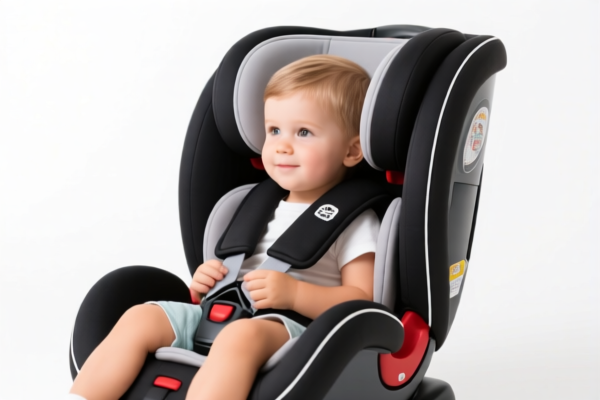
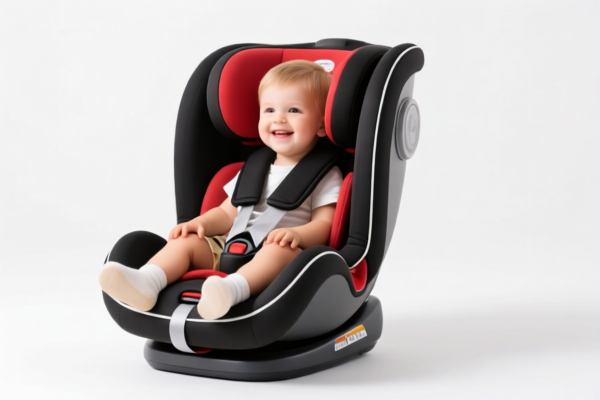
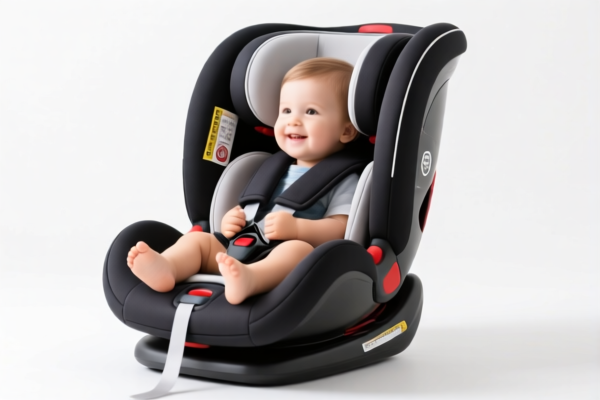
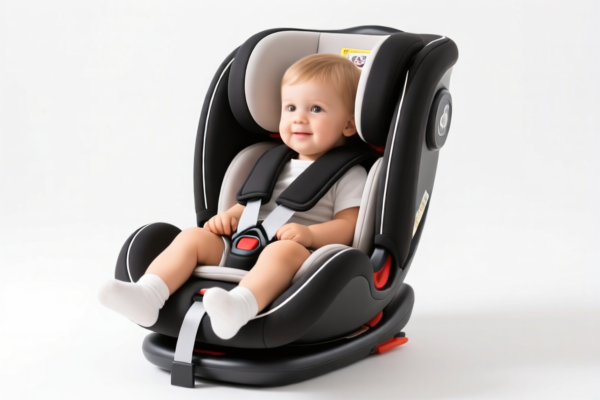
AI Analysis
🧸 Children's Booster Seat (儿童增高坐垫/座椅)
🌐 HS Code Reference & Customs Clearance Guide | 2026 Latest Tariff Analysis | Professional Entry Strategy
📌 I. Product Definition & Classification: What Exactly is a "Booster Seat"?
A Children's Booster Seat is a safety device designed to elevate a child in a vehicle so that the lap and shoulder belts fit properly. In international trade, the classification is critical because it hinges on whether the item is viewed as a Vehicle Accessory or a Child Safety/Carriage Product.
Key Distinction Logic: * Vehicle Accessory (8708): If the product is primarily marketed as a "car seat" or "automotive accessory" that attaches to vehicle seats, often involving specific car-specific mounting mechanisms. * Child Furniture/Accessory (9401/9503): If the product is primarily a "seat" or "pad" for general use, or specifically classified under infant/carriage accessories (like car seat pads or covers). * Toys/Play Equipment (9503): Less likely for safety seats, but if marketed purely as a "play seat" without safety certification, it might fall here. However, for safety booster seats, this is a risky classification.
⚠️ Critical Classification Point:
- If the item is a complete, standalone booster seat intended for vehicle use → Usually 9401 (Seats) or 8708 (Parts/Accessories).
- If the item is a pad, cushion, or cover for an existing seat → 9401 (Cushions) or 9503 (Accessories).
- Warning: Misclassifying a safety device can lead to significant delays or rejection by customs (especially in the US).
📦 II. HS Code Classification Details (Based on Provided Data)
| HS Code | Product Description | Applicability Scenario | Key Feature |
|---|---|---|---|
9401.80.40.01 |
Seat, other than those of heading 9402; parts of seats (Child Seat/Pad Category) | General purpose child seat or pad; material inferred as plastic or rubber. | Category: Seat accessory/pad. Material: Plastic/Rubber. |
9503.00.00.73 |
Toys, stuffed toys, model kits, puzzles, and games; parts and accessories thereof (Child Auxiliary Pad) | Marketed as a toy or entertainment accessory; e.g., a soft play pad for a child's room. | Category: Toy accessory. Material: Plastic/Sponge/Rubber. |
9401.79.00.01 |
Seats, with wooden frames (Child Auxiliary Seat) | Seat with a rigid frame structure (metal/plastic frame inferred); functional seat. | Category: Functional seat. Structure: Frame-based. |
9503.00.00.71 |
Toys... parts and accessories thereof (Infant Safety Equipment) | Specifically designed as infant safety equipment, part of the children's goods category. | Category: Infant safety item. Material: Plastic/Metal/Fabric. |
8708.99.81.80 |
Parts and accessories for motor vehicles (Vehicle Accessory) | Clearly identified as a car accessory/attachment, not a general seat. | Category: Auto part. Use: Vehicle-specific. |
🔍 Analysis of the Provided Data:
- The data suggests a high tax burden for most classifications due to Section 301 (25%) and IEEPA (10%) tariffs on Chinese goods.
-8708.99.81.80has the highest base tariff (2.5%) but still results in a high total of 37.5% (2.5% + 25% + 10%).
-9401classifications (Seats) have 0% base tariff but face 35% total (0% + 25% + 10%).
-9503classifications (Toys/Accessories) have 0% base tariff and only 10% total (0% + 0% + 10%) IF the 25% Section 301 tariff does not apply to this specific toy subheading. Note: The data shows 0% for Section 301 on 9503, making it the most favorable option IF the product can be legitimately classified as a toy/accessory.
💰 III. 2026 Latest Tariff Rate Breakdown (Detailed Tax Clauses)
✅ Applicable Country: United States (US)
✅ Origin: China (CN)
✅ Effective Time: Post-2025 (Current Trade War Policies)
🎯 1. 9503.00.00.73 & 9503.00.00.71 —— Toy/Accessories Category (Best Option for Tax?)
| Item | Content |
|---|---|
| Base Tariff | 0% (ad valorem) |
| Section 301 Tariff (25%) | 0% (As per provided data: "加征关税: 0.0%") |
| IEEPA Tariff (10%) | +10% (122 Clause) |
| Total Tariff | 10.0% |
| Tax Calculation | CIF Value × 10% |
| De Minimis Exemption | ❌ Unlikely (Safety devices often excluded) |
| Legal Basis | USITC:9503.00.00.73/71 → IEEPA:9903.01.24 |
📌 Explanation:
- The data indicates NO Section 301 (25%) tariff for these specific toy/accessory subheadings. This is a massive advantage compared to other categories.
- Only the IEEPA 10% tariff applies.
- Risk: Customs may reclassify a "booster seat" as a "seat" (9401) or "auto part" (8708) if it's clearly for vehicle safety, ignoring the "toy" classification.
🎯 2. 9401.80.40.01 & 9401.79.00.01 —— Seat Category
| Item | Content |
|---|---|
| Base Tariff | 0% |
| Section 301 Tariff (25%) | +25% |
| IEEPA Tariff (10%) | +10% |
| Total Tariff | 35.0% |
| Tax Calculation | CIF Value × 35% |
| Legal Basis | USITC:9401.80.40.01 / 9401.79.00.01 → IEEPA:9903.01.25 |
📌 Explanation:
- Classified as "Furniture/Seats".
- Subject to the full 35% penalty tariff (25% Section 301 + 10% IEEPA).
🎯 3. 8708.99.81.80 —— Vehicle Accessory Category
| Item | Content |
|---|---|
| Base Tariff | 2.5% |
| Section 301 Tariff (25%) | +25% |
| IEEPA Tariff (10%) | +10% |
| Total Tariff | 37.5% |
| Tax Calculation | CIF Value × 37.5% |
| Legal Basis | USITC:8708.99.81.80 → IEEPA:9903.01.25 |
📌 Explanation:
- Classified as "Auto Parts/Accessories".
- Highest total rate at 37.5% due to the 2.5% base tariff plus penalties.
🛠️ IV. Customs Clearance Practical Advice (Avoid Pitfalls)
✅ 1. Document Preparation Checklist
| Document | Mandatory? | Notes |
|---|---|---|
| ✅ Product Specification Sheet | ✔️ | Must clearly state dimensions, weight, and intended use (e.g., "for child comfort" vs. "vehicle safety"). |
| ✅ Material Composition | ✔️ | Specify if plastic, sponge, rubber, or fabric. Crucial for 9401 vs 9503 distinction. |
| ✅ Product Photos | ✔️ | Clear images of the seat, label, and any packaging. |
| ✅ Safety Certifications | ✔️ | FMVSS 213 (US) or ECE R44/04 (EU) certificates. If claimed as a "safety device," customs will scrutinize 9503 classification heavily. |
| ✅ Commercial Invoice | ✔️ | Description should be precise. Avoid "Car Safety Seat" if trying for 9503; use "Children's Seat Pad" or "Toy Accessory" only if accurate. |
| ✅ Packing List | ✔️ | Detail components (e.g., "Seat cushion only, no seatbelt harness"). |
✅ 2. Classification Strategy (Crucial!)
🔥 Rule of Thumb:
"If it's for safety, it's not a toy. If it's for comfort, it might be a seat. If it's an accessory, check the 10% rate."
| Scenario | Recommended HS Code | Reasoning |
|---|---|---|
| Soft Cushion/Pad (No rigid frame) | 9503.00.00.73 |
Can be argued as a "toy accessory" or "children's item," potentially avoiding the 25% tariff. |
| Rigid Seat with Frame | 9401.79.00.01 or 9401.80.40.01 |
Clearly a "seat," subject to 35% tariff. |
| Full Car Seat with Belt | 8708.99.81.80 |
Clearly an "auto part," subject to 37.5% tariff. |
| Infant Safety Device | 9503.00.00.71 |
If marketed as "safety equipment" but classified under toys/accessories, aim for 10% tariff. |
✅ 3. Special Considerations
| Situation | Advice |
|---|---|
| De Minimis (Section 321) | ❌ Do NOT rely on $800 de minimis exemption. Booster seats are often considered "restricted" or require CPSC/FTC compliance, making them ineligible for de minimis entry. |
| CPSC Compliance | ✅ Ensure the product meets 16 CFR Part 1017 (Children's Car Seats) or relevant safety standards. Failure to comply can lead to seizure regardless of HS Code. |
| Labeling | ✅ Labels must include manufacturer info, model number, and safety warnings. |
🌍 V. Global Market Comparison (2026)
| Country/Region | Recommended HS Code | Tariff Rate (China Origin) | Key Certification |
|---|---|---|---|
| 🇺🇸 USA | 9503.00.00.73 (if possible) |
10% (Best Case) / 35% (If 9401) | FCC (if electronic), CPSC |
| 🇨🇳 China | 9401.80.40.01 |
~5-7% | CCC (if applicable) |
| 🇪🇺 EU | 9401.80.40 |
0-3% | CE, ECE R44/04 |
| 🇬🇧 UK | 9401.80.40 |
0-3% | UKCA, ECE R44/04 |
📌 Conclusion:
- The USA imposes the heaviest tariffs.
- Key Strategy: Try to classify the product as a Toy Accessory (9503) or Children's Item to benefit from the 10% IEEPA-only tariff, avoiding the 25% Section 301 penalty.
- Risk: This requires accurate product description and potentially a Pre-Ruling from US Customs (CBP).
📌 VI. Common Mistakes & Pitfalls
❌ Mistake 1: Classifying a rigid car seat as 9503 (Toy) without justification.
👉 Consequence: Customs may reclassify as 9401 or 8708, leading to 25-27% additional tax + penalties.
❌ Mistake 2: Ignoring CPSC/FTC regulations.
👉 Consequence: Product Seizure and potential legal action, regardless of correct HS Code.
❌ Mistake 3: Assuming de minimis ($800) applies.
👉 Consequence: Entry rejected at the border; shipment held or returned.
✅ Correct Approach:
"Children's Booster Cushion, Plastic/Rubber, for Vehicle Use, Model XYZ, Certified to Safety Standards."
🎯 VII. Conclusion: Professional Classification Saves Money!
🎯 Remember the Key Takeaway:
🔹 Toys/Accessories (
9503) = 10% Total Tariff (Best Option)
🔹 Seats (9401) = 35% Total Tariff
🔹 Auto Parts (8708) = 37.5% Total Tariff
📌 Recommendation:
If your product is a cushion or pad without complex mechanical parts, argue for 9503.00.00.73 to save 25% in taxes. If it's a rigid seat, prepare for 35%. Always obtain a CBP Pre-Ruling for high-value shipments to mitigate risk.
📣 Immediate Action:
📞 Consult a licensed customs broker.
📄 Request a Binding Ruling from US Customs and Border Protection (CBP).
🚀 Ensure CPSC compliance documentation is ready for inspection.
✨ Precision in Classification, Profit in Logistics!
💼 Every 1% of tariff saved is 1% of profit kept!
Customer Reviews
About HS Code Classification
The Harmonized System (HS) is an internationally standardized nomenclature developed by the World Customs Organization (WCO) to classify traded products. Over 200 countries use the HS system as the basis for customs tariffs, trade statistics, and import/export regulations.
Each HS code follows a hierarchical structure:
- Chapter (2 digits) — Broad category of goods (e.g., Chapter 84: Machinery and Mechanical Appliances)
- Heading (4 digits) — More specific grouping within the chapter
- Subheading (6 digits) — Internationally standardized breakdown, used by all WCO member countries
- National subdivisions (8-10 digits) — Country-specific extensions for further classification, such as US HTSUS 10-digit codes
Correct HS code classification is essential for smooth customs clearance, accurate duty payment, and compliance with trade regulations. Misclassification can lead to customs delays, overpayment of duties, or penalties.
When importing from CN to US, the applicable tariff rates may include:
- Most-Favored-Nation (MFN) rate — The standard duty rate applied to WTO members
- General rate — Applied to countries without trade agreements
- Trade remedy duties — Additional tariffs such as Section 301 (anti-dumping), Section 232 (national security), or countervailing duties
The information provided on this page is for reference purposes only. For official classification, please consult with your local customs authority or a licensed customs broker.