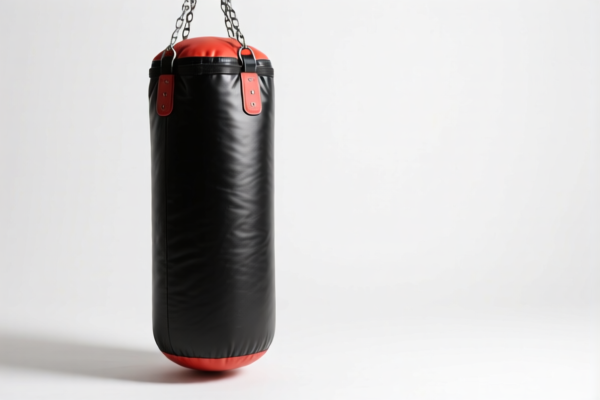
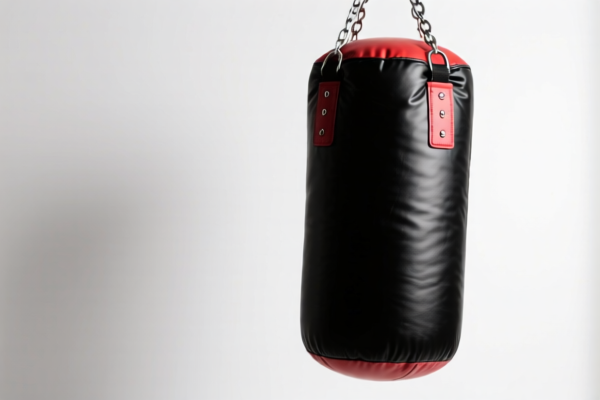
Children's Boxing Bag
CN → US| HS Code | Tariff Rate | Origin | Destination | Doc |
|---|---|---|---|---|
| 9503000013 | 10.0% | CN | US | Official Doc |
| 6307907500 | 14.3% | CN | US | Official Doc |
| 6307909891 | 24.5% | CN | US | Official Doc |
| 9503000073 | 10.0% | CN | US | Official Doc |
| 9506910030 | 22.1% | CN | US | Official Doc |
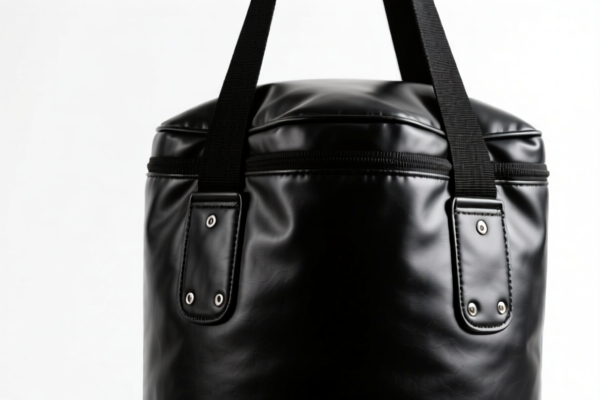
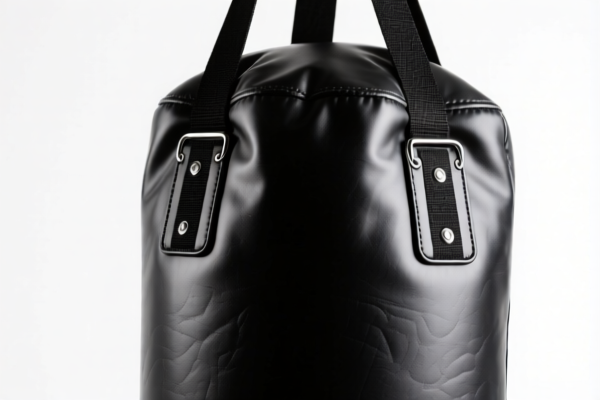
Product Images
AI Analysis
🥊 Children's Boxing Bag (Kids' Punching Bag)
🌐 HS Code Reference & Customs Clearance Guide | 2026 Latest Tariff Analysis | Professional Entry Strategy
📌 I. Product Definition & Classification: Do You Really Understand the "Children's Boxing Bag"?
A children's boxing bag is a soft, padded impact-training device designed for youth sports, play, or recreational fitness. In international trade, its classification is highly sensitive to material composition and functional designation (Toy vs. Sporting Goods vs. General Textile Article). Misclassification can lead to significant tariff discrepancies due to differing base rates and Section 122 duties.
⚠️ Key Distinction Points:
- If it mimics a ball shape or is made of inflatable/rubber/plastic → Likely a Toy or Rubber Article.
- If it is made of textile fabric (nylon, polyester, canvas) → Likely a Textile Finished Product.
- If it is strictly for sports training with synthetic leather or plastic → Likely a Sporting Good.
📦 II. HS Code Classification Details (Latest Tariff Authority Comparison)
Based on the provided data, there are 5 potential HS Codes depending on the specific material and design structure of the children's boxing bag.
| HS Code | Product Description | Material Inference | Category |
|---|---|---|---|
9503.00.00.13 |
Children's Boxing Bag, matched with hitting ball shape | Rubber or Plastic (Inflatable/Filled) | Toy / Rubber Article |
6307.90.75.00 |
Children's Boxing Bag | Textile Material | Textile Finished Product |
6307.90.98.91 |
Children's Boxing Bag | Leather, Plastic, or Fabric | General Consumer Good |
9503.00.00.73 |
Children's Boxing Bag | Leather, Plastic, or PVC | Toy / Entertainment Model |
9506.91.00.30 |
Children's Boxing Bag | Leather or Synthetic Fiber | Sporting Goods |
🔍 Critical Insight:
- The difference between9503(Toys) and9506(Sporting Goods) is crucial. Toys often have lower base tariffs but face strict safety standards.
-6307categories are for "Other Made-Up Articles" and often attract higher combined duties if not classified as toys or sports equipment.
💰 III. 2026 Latest Tariff Rate Details (Including Surcharges & Policy Additions)
✅ Applicable Country: United States (US)
✅ Origin: China (CN)
✅ Effective Time: Current trade policies (Including Section 122)
🎯 1. 9503.00.00.13 & 9503.00.00.73 —— Toy/Entertainment Model (Low Base Rate)
| Item | Content |
|---|---|
| Base Tariff | 0.0% |
| Section 301 Surcharge | 0.0% |
| Section 122 Duty | +10% |
| Total Tariff Rate | 10.0% |
| Tax Calculation | CIF Value × 10% |
| De Minimis Eligibility | ❌ No (Section 122 duties generally exclude de minimis exemptions for certain goods, or require specific compliance). Note: Check current CBP enforcement on Section 122 de minimis. |
| Legal Basis Path | HTSUS:9503.00.00.13/73 → Section 122: 10% |
📌 Explanation:
- This is the most cost-effective classification if the product is deemed a "Toy" or "Ball-like" item.
- The base tariff is 0%, and there are no Section 301 tariffs, but a mandatory 10% Section 122 duty applies.
- Risk: Must ensure the product is clearly marketed/structured as a toy or recreational item, not professional sports gear.
🎯 2. 6307.90.75.00 —— Textile Material (Medium Base Rate)
| Item | Content |
|---|---|
| Base Tariff | 4.3% |
| Section 301 Surcharge | 0.0% |
| Section 122 Duty | +10% |
| Total Tariff Rate | 14.3% |
| Tax Calculation | CIF Value × 14.3% |
| De Minimis Eligibility | ❌ No (Due to Section 122) |
| Legal Basis Path | HTSUS:6307.90.75.00 → Section 122: 10% |
📌 Explanation:
- Applies if the bag is made primarily of textile fabrics (e.g., nylon, polyester shell with foam filling).
- Slightly higher cost than toy classification but avoids potential "Toy Safety" regulatory scrutiny.
🎯 3. 9506.91.00.30 —— Sporting Goods (High Base Rate)
| Item | Content |
|---|---|
| Base Tariff | 4.6% |
| Section 301 Surcharge | +7.5% |
| Section 122 Duty | +10% |
| Steel/Aluminum/Copper Surcharge | +50% (If applicable components) |
| Total Tariff Rate | 22.1% (Base + 301 + 122) |
| Tax Calculation | CIF Value × 22.1% |
| De Minimis Eligibility | ❌ No |
| Legal Basis Path | HTSUS:9506.91.00.30 → Section 301: 7.5% → Section 122: 10% |
📌 Explanation:
- Applied if the bag is classified as Sporting Equipment (e.g., used for training/professional use).
- Significantly higher due to the 7.5% Section 301 surcharge in addition to the 10% Section 122 duty.
- Warning: If the bag contains any metal chains, rings, or frames, the 50% steel/aluminum tariff may apply to those components, drastically increasing costs.
🎯 4. 6307.90.98.91 —— General Consumer Good (Highest Base Rate)
| Item | Content |
|---|---|
| Base Tariff | 7.0% |
| Section 301 Surcharge | +7.5% |
| Section 122 Duty | +10% |
| Total Tariff Rate | 24.5% |
| Tax Calculation | CIF Value × 24.5% |
| De Minimis Eligibility | ❌ No |
| Legal Basis Path | HTSUS:6307.90.98.91 → Section 301: 7.5% → Section 122: 10% |
📌 Explanation:
- This is the least favorable classification, often used as a fallback for leather/plastic/fabric items that don't fit Toy or Sporting Goods definitions.
- Includes both 7.5% Section 301 and 10% Section 122 duties.
🛠️ IV. Customs Clearance Practical Advice (实战避坑指南)
✅ 1. Preparation Checklist (Must-Have Documents)
| Document | Required | Description |
|---|---|---|
| ✅ Product Specifications | ✔️ | Detailed list of materials (e.g., PVC outer, foam inner, steel chain). |
| ✅ Photos of Product | ✔️ | Clear images showing size, shape, and any branding. |
| ✅ Intended Use Statement | ✔️ | Clarify if it is for "Play" (Toy) or "Training" (Sporting Goods). |
| ✅ Material Breakdown | ✔️ | Percentage of textile vs. rubber vs. plastic. |
| ✅ Commercial Invoice | ✔️ | Accurate description matching the selected HS Code. |
| ✅ C-TPAT/Supply Chain Security | ✔️ | Recommended for faster clearance if applicable. |
✅ 2. Declaration Tips (Key Mnemonic)
🔥 "Toy Low, Sport High, Textile Middle, Check Metal!"
| Scenario | Recommended HS Code | Tariff Impact |
|---|---|---|
| Plastic/Rubber Ball-Shape Bag | 9503.00.00.13 |
10% (Best Cost) |
| PVC/Leather Toy-Looking Bag | 9503.00.00.73 |
10% (Best Cost) |
| Textile (Nylon/Polyester) Bag | 6307.90.75.00 |
14.3% (Moderate) |
| Sport Training Bag | 9506.91.00.30 |
22.1% (High) |
| Mixed Material/Leather Bag | 6307.90.98.91 |
24.5% (Highest) |
📌 Critical Warning:
- If you declare as a Toy (9503), ensure it complies with CPSIA (Consumer Product Safety Improvement Act) requirements.
- If you declare as Sporting Goods (9506), check for metal components. If metal parts exceed certain thresholds, the 50% steel/aluminum tariff may apply, making it extremely expensive.
✅ 3. Special Case Handling
| Scenario | Handling Advice |
|---|---|
| Bag with Metal Chain/Anchor | Avoid 9506 if possible. Metal parts trigger 50% tariffs. Use 9503 (Toy) if the chain is minor/non-structural. |
| Inflatable vs. Padded | Inflatable items are more likely to be classified as Toys (9503). Padded fabric items lean towards Textiles (6307) or Sports (9506). |
| Custom OEM Design | Provide design drawings to prove "Toy" intent if using 9503. |
| Gift Sets (Bag + Gloves) | Declare as a set. The essential character determines classification. If gloves are minor, the bag's classification may dominate. |
🌍 V. Global Market Clearance Comparison (2026 Latest)
| Country/Region | Recommended HS Code | Tariff (China Origin) | Certification Requirements | Notes |
|---|---|---|---|---|
| 🇺🇸 USA | 9503.00.00.13 |
10% (Toy) | CPSIA, ASTM F963 | Lowest tariff, but strict toy safety. |
| 🇺🇸 USA | 9506.91.00.30 |
22.1% (Sport) | None specific | Higher cost, fewer toy regulations. |
| 🇪🇺 EU | 9503.00 |
~6.5% | CE, EN71 | No Section 122 equivalent, but CE is mandatory. |
| 🇨🇳 China | 9503.00 |
~9-14% | CCC (if applicable) | Depends on exact material. |
| 🇬🇧 UK | 9503.00 |
~6.5% | UKCA, EN71 | Post-Brexit rules apply. |
📌 Conclusion:
- The US is unique in applying Section 122 (10%) uniformly, but also has Section 301 surcharges for non-toy items.
- Toys (9503) are the cheapest option for the US market at 10%, provided safety standards are met.
- Sporting Goods (9506) are expensive due to叠加 (stacking) of Section 301 and Section 122.
📌 VI. Common Mistakes & Pitfall Guide (Lessons Learned)
❌ Mistake 1: Declaring a Sporting Bag as a Toy without proper safety certs.
👉 Consequence: CBP rejection, CPSIA penalties, or product seizure.
❌ Mistake 2: Ignoring Metal Components in 9506.
👉 Consequence: 50% steel tariff applied to the whole or partial value, spiking costs by hundreds of percent.
❌ Mistake 3: Using vague descriptions like "Fitness Equipment."
👉 Consequence: CBP assigns default high-duty codes. Always specify "Children's Toy Boxing Bag" or "Youth Boxing Training Bag."
✅ Correct Approach:
"Children's Vinyl Punching Bag, 24-inch, Filled with Foam, For Play/Recreation, No Metal Chains, CPSIA Compliant."
🎯 VII. Conclusion: Professional Declaration, Cost Efficiency!
🎯 Remember the Mnemonic:
🔹 "Toy 10%, Textile 14%, Sport 22%, Metal 50%!"
🔹 "Section 122 is 10%, Section 301 is 7.5% – Don't Stack Unnecessarily!"
📌 Pro Tip:
If your boxing bag is soft, fabric-based, and clearly for children's play, strive for 9503.00.00.13 or 9503.00.00.73. This saves you 12-14.5% in duties compared to sporting good classifications. Ensure you have CPSIA test reports ready to prove it's a toy, not sports gear.
📣 Immediate Action:
📞 Contact a licensed customs broker.
📄 Submit product photos and material breakdown.
🚀 Achieve smooth clearance, lower costs, and higher profit margins!
✨ Professional Customs Clearance Starts with Accurate Classification!
💼 Every dollar saved in duty is pure profit!
Customer Reviews
About HS Code Classification
The Harmonized System (HS) is an internationally standardized nomenclature developed by the World Customs Organization (WCO) to classify traded products. Over 200 countries use the HS system as the basis for customs tariffs, trade statistics, and import/export regulations.
Each HS code follows a hierarchical structure:
- Chapter (2 digits) — Broad category of goods (e.g., Chapter 84: Machinery and Mechanical Appliances)
- Heading (4 digits) — More specific grouping within the chapter
- Subheading (6 digits) — Internationally standardized breakdown, used by all WCO member countries
- National subdivisions (8-10 digits) — Country-specific extensions for further classification, such as US HTSUS 10-digit codes
Correct HS code classification is essential for smooth customs clearance, accurate duty payment, and compliance with trade regulations. Misclassification can lead to customs delays, overpayment of duties, or penalties.
When importing from CN to US, the applicable tariff rates may include:
- Most-Favored-Nation (MFN) rate — The standard duty rate applied to WTO members
- General rate — Applied to countries without trade agreements
- Trade remedy duties — Additional tariffs such as Section 301 (anti-dumping), Section 232 (national security), or countervailing duties
The information provided on this page is for reference purposes only. For official classification, please consult with your local customs authority or a licensed customs broker.