Children's Camera
CN → US| HS Code | Tariff Rate | Origin | Destination | Doc |
|---|---|---|---|---|
| 9503000071 | 10.0% | CN | US | Official Doc |
| 8525894000 | 17.5% | CN | US | Official Doc |
| 8525895050 | 35.0% | CN | US | Official Doc |
| 9503000073 | 10.0% | CN | US | Official Doc |
| 9006590800 | 21.5% | CN | US | Official Doc |
Product Images
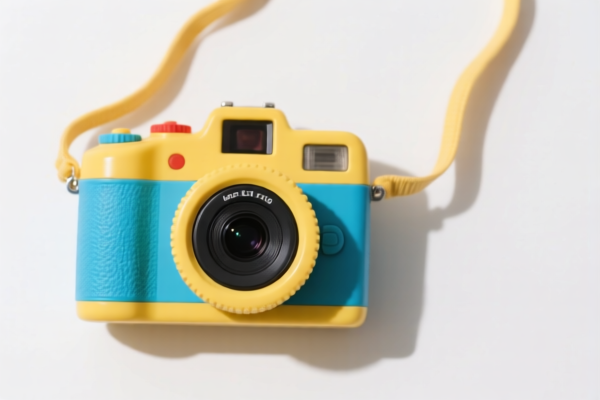
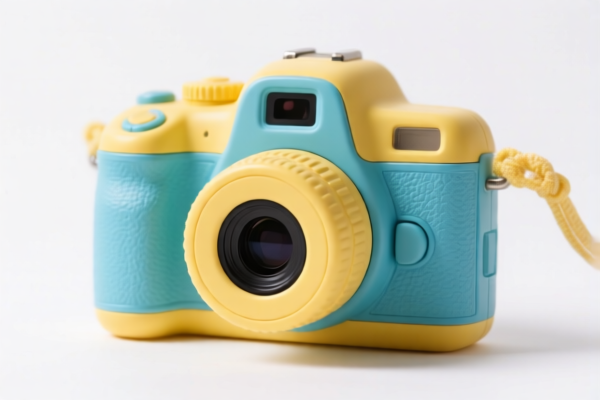
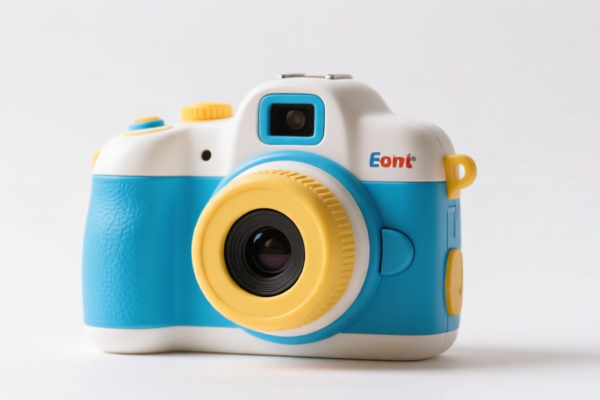
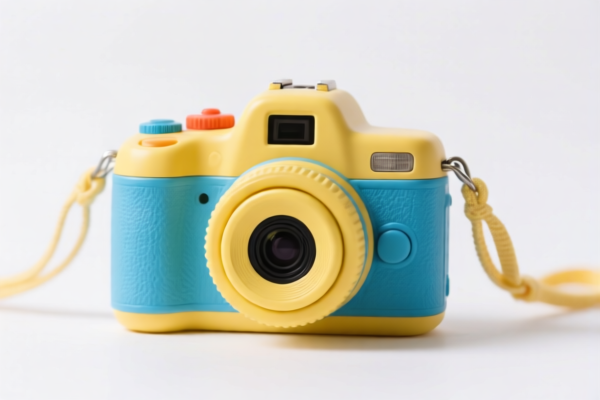
AI Analysis
📸 Children's Camera (Toys & Digital Devices)
🌐 HS Code Reference & Customs Clearance Guide | 2026 Tariff Rate Analysis | Professional Customs Strategy
📌 Part I: Product Definition & Classification: What Exactly Is a "Children's Camera"?
A "Children's Camera" is a broad term in international trade that spans two distinct categories:
1. Toy Cameras: Designed primarily for play, often featuring non-functional optics, bright colors, and durable plastic bodies. These fall under Chapter 95 (Toys).
2. Digital Imaging Devices: Cameras that function as real digital still image cameras or video cameras, even if marketed for children. These fall under Chapter 85 (Electrical Machinery/Equipment) or Chapter 90 (Optical/Medical Instruments).
⚠️ Critical Distinction Point:
- If the device has no functional imaging sensor or is clearly a novelty/play item → Classified as Toy (HS 9503).
- If the device has a functional lens and sensor capable of capturing images → Classified as Digital Camera/Camera (HS 8525 or 9006).
- Risk: Misclassifying a functional digital camera as a toy to avoid higher tariffs can lead to severe penalties, back taxes, and shipment detention.
📦 Part II: HS Code Classification Details (2026 Latest Tariff Correlation)
Based on the provided data, here are the five potential HS Codes for a "Children's Camera," ranked from Lowest Risk/Cost to Highest Cost/Risk, with specific explanations for why it might be classified under each.
| HS Code | Product Category | Why It Might Be Classified Here (Logic & Explanation) | Total Tax Rate (China Origin) |
|---|---|---|---|
9503.00.00.71 |
Toy, Electronic Type | The "Toy" Definition: The device is explicitly identified as an electronic toy in the form of a camera. Its primary purpose is child entertainment, and it is designed for children under 3 years old. It lacks serious photographic functionality. | 10.0% |
9503.00.00.73 |
Toy, Model/Replica | The "Model" Definition: This falls under scaled models and similar entertainment models. It fits the definition of a toy for children aged 3–12 years. The material is typically plastic, and it serves as a replica or playful instrument rather than a technical imaging device. | 10.0% |
9006.59.08.00 |
Digital Camera (General) | The "Catch-All" Camera: This is a general-purpose digital camera category. It is a handheld device for non-film photography. If the camera has functional lenses and sensors but doesn't fit specific high-tech subcategories, it lands here. It is considered a "residual" category for general cameras. | 21.5% |
8525.89.40.00 |
Digital Still Image Camera | The "Image Sensor" Definition: Classified under Digital Still Image Cameras. This classification applies when the device is inferred to have electronic/plastic materials and functions as a digital device for capturing static images. It emphasizes the electronic component of image capture. | 17.5% |
8525.89.50.50 |
Digital Camera (Professional/High-Tech) | The "High-Tech" Definition: This is for Digital Cameras with more advanced functionality, often aligned with video equipment properties. It implies a higher degree of electronic integration and technical capability than standard toys or basic still cameras. | 35.0% |
🔍 Key Takeaway:
- Lowest Tax (10%): If you can prove it is a toy (non-functional or for <3 years/3-12 years play).
- Highest Tax (35%): If it is classified as a sophisticated digital camera with video capabilities.
- Middle Ground:8525.89.40.00(17.5%) is common for standard kids' digital cameras that actually take photos.
💰 Part III: 2026 Latest Tariff Rate Breakdown (Including Surtaxes & Policy Add-ons)
✅ Applicable Country: United States (US)
✅ Country of Origin: China (CN)
✅ Effective Time: From November 10, 2025 onwards (including subsequent imports)
🎯 1. 9503.00.00.71 & 9503.00.00.73 —— Toy Class (Lowest Risk)
| Item | Content |
|---|---|
| Base Tariff | 0% (ad valorem) |
| USITC Surtax | 0% |
| Section 301 / IEEPA Surtax | +10% |
| Total Tax Rate | 10.0% |
| Tax Calculation | CIF Value × 10% |
| De Minimis Exemption | ❌ Not Eligible (Denied) |
| Legal Basis | IEEPA:9903.01.25 → USITC:9503.00.00.71/73 |
📌 Explanation:
- Even though toys often have lower base tariffs, they are not exempt from the Section 301/IEEPA 10% surtax.
- Advantage: This is the lowest possible tariff (10%) for a camera-like product, provided it is successfully classified as a toy.
🎯 2. 8525.89.40.00 —— Digital Still Image Camera (Mid-Low Risk)
| Item | Content |
|---|---|
| Base Tariff | 0% |
| USITC Surtax | +7.5% |
| IEEPA Surtax | +10% |
| Total Tax Rate | 17.5% |
| Tax Calculation | CIF Value × 17.5% |
| De Minimis Exemption | ❌ Not Eligible |
| Legal Basis | IEEPA:9901.25 → USITC:8525.89.40.00 |
📌 Note:
- This classification is used for functional digital cameras that capture still images.
- The USITC surtax is only 7.5% here, which is lower than the 25% applied to high-end cameras.
- Risk: Customs may challenge this if the camera has advanced features (like video recording), pushing it to8525.89.50.50.
🎯 3. 9006.59.08.00 —— General Digital Camera (Mid-High Risk)
| Item | Content |
|---|---|
| Base Tariff | 4.0% |
| USITC Surtax | +7.5% |
| IEEPA Surtax | +10% |
| Total Tax Rate | 21.5% |
| Tax Calculation | CIF Value × 21.5% |
| De Minimis Exemption | ❌ Not Eligible |
| Legal Basis | IEEPA:9901.25 → USITC:9006.59.08.00 |
📌 Note:
- This is a catch-all for digital cameras that don't fit the specific "still image" or "video" subcategories strictly.
- The base tariff is 4%, making the total higher than the8525category.
🎯 4. 8525.89.50.50 —— High-Tech Digital Camera (Highest Risk)
| Item | Content |
|---|---|
| Base Tariff | 0% |
| USITC Surtax | +25% |
| IEEPA Surtax | +10% |
| Total Tax Rate | 35.0% |
| Tax Calculation | CIF Value × 35% |
| De Minimis Exemption | ❌ Not Eligible |
| Legal Basis | IEEPA:9903.01.25 → USITC:8525.89.50.50 |
📌 Warning:
- This is the most expensive classification.
- The 25% USITC surtax is applied to cameras deemed to have advanced video/electronic functionality.
- Action: Avoid this classification for children's cameras unless they are professional-grade video cameras.
🛠️ Part IV: Customs Clearance Practical Advice (Battle-Tested Pitfall Guide)
✅ 1. Preparation Checklist (Non-negotiable)
| Document | Required | Explanation |
|---|---|---|
| ✅ Product Specification Sheet | ✔️ | Must clearly state: "Toy," "For Children Under 3/3-12," "Non-functional lens," or "Digital Still Image Camera." |
| ✅ Product Photos (Including Packaging) | ✔️ | Show bright colors, child-friendly design, and lack of professional camera interfaces (e.g., no manual focus rings). |
| ✅ Third-Party Test Report | ✔️ | ASTM F963 (US) or CPSIA compliance reports are critical for toy classification. |
| ✅ Commercial Invoice | ✔️ | Description must match the HS Code. If claiming "Toy," use "Electronic Toy Camera." |
| ✅ Packing List | ✔️ | Include batteries, cases, and accessories. Do not split them if they are part of the same unit. |
✅ 2. Declaration Strategy (Key Mantra)
🔥 "If it looks like a toy, declare it as a toy. If it takes photos, declare it as a camera. Never mix them!"
| Scenario | Correct Declaration | Incorrect Declaration | Consequence |
|---|---|---|---|
| Toy Camera (No real sensor) | 9503.00.00.71 (Toy) |
8525.89.40.00 (Camera) |
Overpaying Tax (10% vs 17.5%) |
| Functional Kids' Digital Camera | 8525.89.40.00 (Digital Still Image Camera) |
9503.00.00.71 (Toy) |
Underpayment Risk → Back taxes + Penalties |
| Professional Video Camera | 8525.89.50.50 |
8525.89.40.00 |
Severe Penalty for misclassification |
| Camera + Toy Accessories | Single line item: "Toy Camera Kit" | Splitting into "Camera" + "Toy" | Confusion → Possible audit |
✅ 3. Special Case Handling
| Situation | Handling Advice |
|---|---|
| OEM Kids' Digital Camera | Provide marketing materials showing target age group (e.g., "For ages 3+"). Emphasize "Educational Toy" if it has limited functionality. |
| Camera with Video Function | If it records video, Customs may push it to 8525.89.50.50 (35%). Mitigation: Highlight "Still Image Primary Function" and "Low Resolution" to argue for 8525.89.40.00. |
| Camera Sold as a "Doll Accessory" | If the camera is part of a dollhouse or doll set, it may still be classified under Toy (9503) if the primary function is play. |
| Pre-cut/Pre-packaged Kits | Ensure the primary use is clear. If it's a kit to build a toy camera, it's a Toy. If it's a working camera in a kit, it's a Camera. |
🌍 Part V: Global Market Comparison (2026 Latest)
| Country/Region | Recommended HS Code | Tariff (China Origin) | Certification Requirement | Notes |
|---|---|---|---|---|
| 🇺🇸 USA | 9503.00.00.71 (Toy) or 8525.89.40.00 (Camera) |
10% (Toy) or 17.5% (Camera) | CPSIA, ASTM F963, FCC (if digital) | USA has highest surtaxes. Toy classification is strongly recommended if possible. |
| 🇨🇳 China | 9503.00.00.71 |
5% | CCC (if electronic) | Low tariff, no surtax. |
| 🇪🇺 EU | 9503.00.00.71 |
0% (if Toy) | CE, EN71 | No surtax. Toy classification is optimal. |
| 🇬🇧 UK | 9503.00.00.71 |
0% (if Toy) | UKCA, EN71 | Post-Brexit, toy standards apply. |
| 🇯🇵 Japan | 9503.00.00.71 |
0% (if Toy) | PSE, JIS | No surtax. |
📌 Conclusion:
- USA is the most critical market for tariff optimization.
- Toy classification (10%) saves 7.5%–25% compared to camera classifications.
- Risk: Must provide strong evidence (CPSIA, marketing for children) to defend "Toy" classification.
📌 Part VI: Common Mistakes & Pitfalls (Lessons Learned)
❌ Mistake 1: Declaring a functional digital camera as a "Toy" to save tax.
👉 Consequence: Customs audit, 17.5%–35% back taxes + penalties.
👉 Solution: If it takes real photos, declare it as 8525.89.40.00.
❌ Mistake 2: Using professional camera terminology (e.g., "Megapixels," "Zoom Lens") for a toy.
👉 Consequence: Customs may reclassify as 8525.89.50.50 (35%).
👉 Solution: Use terms like "Novelty," "Play," "Educational," "Non-functional."
❌ Mistake 3: Ignoring CPSIA/ASTM testing for toys.
👉 Consequence: Shipment blocked at US border for safety concerns.
👉 Solution: Always include valid CPSIA compliance certificates for toy classifications.
❌ Mistake 4: Splitting the declaration into "Camera" and "Toy Case."
👉 Consequence: Higher total tax due to separate tariff rates.
👉 Solution: Declare as a single unit "Children's Toy Camera Kit."
✅ Correct Practice:
"Children's Electronic Toy Camera, Bright Pink, For Ages 3+, Includes Battery, ASTM F963 Compliant, Non-functional Lens"
🎯 Part VII: Conclusion: Precision in Classification Saves Money!
🎯 Remember the Mantra:
🔹 "Toy = 10%, Digital Still = 17.5%, Video Camera = 35%."
🔹 "If it’s for kids and plays, claim Toy. If it takes photos, claim Camera. Don’t gamble!"
📌 Pro Tip:
- If your children's camera has no real sensor or is clearly a novelty, always push for
9503.00.00.71in the USA.- If it does take photos, declare it as
8525.89.40.00to avoid the 35% rate.- Always apply for a Pre-Ruling from US CBP if the product is on the border.
📣 Immediate Action:
📞 Consult a Customs Broker + Provide Product Photos + Submit CPSIA Reports
🚀 Clear Customs Smoothly, Maximize Profit, Avoid Penalties!
✨ Professional Customs Clearance Starts with Accurate Classification!
💼 Every Cent Saved is a Cent Earned!
Customer Reviews
About HS Code Classification
The Harmonized System (HS) is an internationally standardized nomenclature developed by the World Customs Organization (WCO) to classify traded products. Over 200 countries use the HS system as the basis for customs tariffs, trade statistics, and import/export regulations.
Each HS code follows a hierarchical structure:
- Chapter (2 digits) — Broad category of goods (e.g., Chapter 84: Machinery and Mechanical Appliances)
- Heading (4 digits) — More specific grouping within the chapter
- Subheading (6 digits) — Internationally standardized breakdown, used by all WCO member countries
- National subdivisions (8-10 digits) — Country-specific extensions for further classification, such as US HTSUS 10-digit codes
Correct HS code classification is essential for smooth customs clearance, accurate duty payment, and compliance with trade regulations. Misclassification can lead to customs delays, overpayment of duties, or penalties.
When importing from CN to US, the applicable tariff rates may include:
- Most-Favored-Nation (MFN) rate — The standard duty rate applied to WTO members
- General rate — Applied to countries without trade agreements
- Trade remedy duties — Additional tariffs such as Section 301 (anti-dumping), Section 232 (national security), or countervailing duties
The information provided on this page is for reference purposes only. For official classification, please consult with your local customs authority or a licensed customs broker.