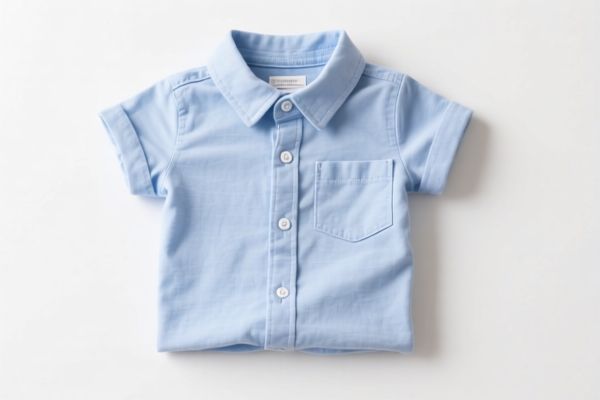
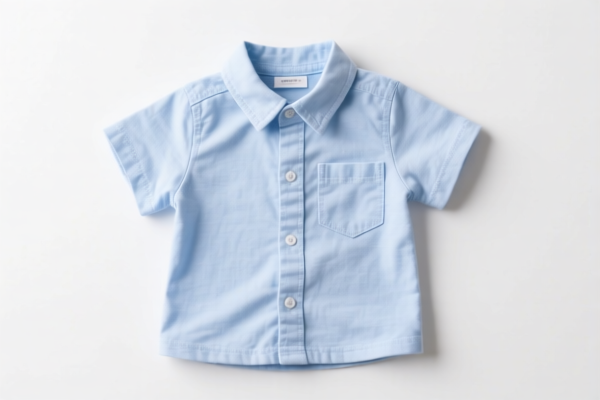
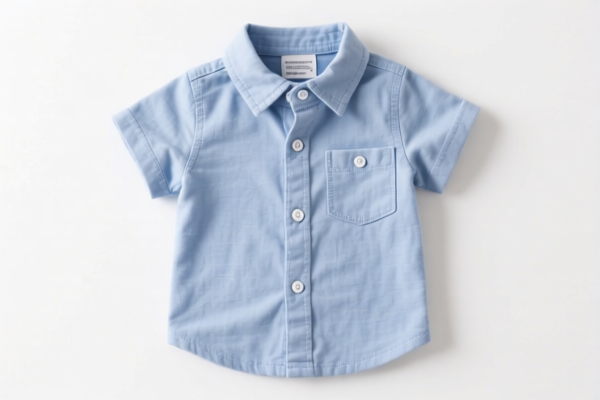
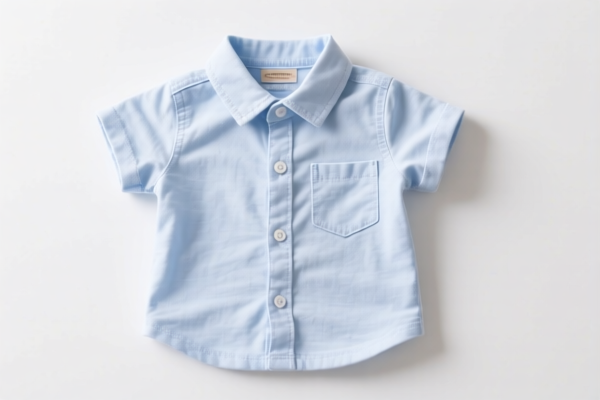
Children's Casual Cotton Shirt
CN → US| HS Code | Tariff Rate | Origin | Destination | Doc |
|---|---|---|---|---|
| 6205202031 | 37.2% | CN | US | Official Doc |
| 6205202026 | 37.2% | CN | US | Official Doc |
| 6105100010 | 29.7% | CN | US | Official Doc |
| 6105100030 | 37.2% | CN | US | Official Doc |
| 6205202067 | 37.2% | CN | US | Official Doc |
Product Images
AI Analysis
🧥 Children's Casual Cotton Shirt
🌐 HS Code Reference & Customs Clearance Guide | 2026 Latest Tariff Analysis | Professional Clearance Strategy
📌 I. Product Definition & Classification: What Exactly Is a "Children's Casual Cotton Shirt"?
A "Children's Casual Cotton Shirt" refers to woven shirts primarily designed for male children, made from cotton fabric. In international trade, the classification hinges on two critical factors:
1. Material: Must be primarily cotton.
2. Gender/Usage: Must be clearly intended for children (typically under 14 years old, often specified as "male child" in tariff headings).
⚠️ Key Distinction Points:
- If the shirt is knitted (e.g., jersey fabric), it falls under Chapter 61 (Knitted/Crocheted Apparel).
- If the shirt is woven, it falls under Chapter 62 (Non-Knitted Apparel).
- The term "Children's" is crucial. If labeled as "Unisex" or "Adult," it may be misclassified. Customs authorities strictly enforce age-based subheadings.
📦 II. HS Code Classification Details (2026 Latest Tariff Authority Comparison)
Based on the provided data, here are the valid HS Codes for Woven Cotton Shirts for Boys:
| HS Code | Product Description | Suitability | Total Tax Rate | Tax Detail Breakdown |
|---|---|---|---|---|
6205.20.20.26 |
Woven cotton boys' shirts; material and usage match classification | ✅ Fully Matches | 37.2% | Base: 19.7%, Section 301: 7.5%, Section 301 (122): 10% |
6205.20.20.31 |
Woven cotton boys' shirts; material and usage fully comply | ✅ Fully Matches | 37.2% | Base: 19.7%, Section 301: 7.5%, Section 301 (122): 10% |
6205.20.20.67 |
Woven cotton men's/boys' shirts; no exclusion items | ✅ Fully Matches | 37.2% | Base: 19.7%, Section 301: 7.5%, Section 301 (122): 10% |
6105.10.00.10 |
Knitted cotton boys'/men's shirts; material & usage match | ⚠️ Only if Knitted | 29.7% | Base: 19.7%, Section 301: 0%, Section 301 (122): 10% |
6105.10.00.30 |
Knitted cotton boys' shirts; form & usage consistent | ⚠️ Only if Knitted | 37.2% | Base: 19.7%, Section 301: 7.5%, Section 31 (122): 10% |
🔍 Critical Note:
- Woven vs. Knitted:
- If the shirt is woven (standard button-down, dress shirt style), use 6205 codes.
- If the shirt is knitted (T-shirt style, jersey, stretchy), use 6105 codes.
- Gender Specification: The term "Children's" often implies Boys' in these specific subheadings. If the shirt is truly "Unisex" and not specifically for boys, customs may still apply the boys' tariff if it's small-sized, but clarity in documentation is key.
💰 III. 2026 Latest Tariff Rate Explanation (Including Surcharges)
✅ Applicable Country: United States (US)
✅ Origin: China (CN)
✅ Effective Date: November 10, 2025, and onwards
🎯 1. Woven Cotton Shirts (HS Code 6205 Series)
Applicable Codes: 6205.20.20.26, 6205.20.20.31, 6205.20.20.67
| Item | Content |
|---|---|
| Base Tariff | 19.7% |
| Section 301 Surcharge | +7.5% |
| Section 301 (122) Surcharge | +10% |
| Total Tariff Rate | 37.2% |
| Tax Calculation | CIF Value × 37.2% |
| De Minimis Exemption | ❌ Not Applicable (Deny de minimis for this category) |
| Legal Basis | USITC Headings + Section 301 / 122 Trade Remedies |
📌 Explanation:
- Base 19.7%: Standard MFN rate for woven cotton shirts for boys.
- 7.5% Surcharge: Additional tariff under Section 301 for specific textile categories.
- 10% Surcharge: Specific tariff under Section 122 (often related to specific trade actions).
- Total 37.2%: This is a high tariff burden. Profit margins must account for this.
🎯 2. Knitted Cotton Shirts (HS Code 6105 Series)
Applicable Codes: 6105.10.00.10, 6105.10.00.30
| Item | Content |
|---|---|
| Base Tariff | 19.7% |
| Section 301 Surcharge | 0% or 7.5% (Varies by subheading) |
| Section 301 (122) Surcharge | +10% |
| Total Tariff Rate | 29.7% (for 6105.10.00.10) OR 37.2% (for 6105.10.00.30) |
| Tax Calculation | CIF Value × 29.7% or 37.2% |
| De Minimis Exemption | ❌ Not Applicable |
| Legal Basis | USITC Headings + Section 301 / 122 Trade Remedies |
📌 Explanation:
-6105.10.00.10offers a lower total rate (29.7%) because it may benefit from a 0% Section 301 surcharge in some interpretations (as per data).
-6105.10.00.30incurs the full 37.2% rate.
- Strategy: If the product is knitted, ensure it qualifies for6105.10.00.10to save 7.5% in duties.
🛠️ IV. Customs Clearance Practical Advice (Pitfall Avoidance Guide)
✅ 1. Required Documentation Checklist (All are Mandatory)
| Document | Must Provide? | Description |
|---|---|---|
| ✅ Product Specification Sheet | ✔️ | Include fabric composition (100% Cotton?), weave type (woven/knitted), size, and age range. |
| ✅ Tech Pack / Diagram | ✔️ | Clear distinction between woven and knitted structure. |
| ✅ Product Photos | ✔️ | Front, back, label, and care label showing "Made in China" and fabric content. |
| ✅ Commercial Invoice | ✔️ | Must state: "Woven Cotton Boys' Shirt" or "Knitted Cotton Boys' Shirt" with HS Code. |
| ✅ Packing List | ✔️ | Show quantity, weight, and dimensions. |
| ✅ Origin Certificate (CO) | ✔️ | If claiming any preferential rates (rare for China in this category, but always check). |
✅ 2. Declaration Tips (Key Mnemonic)
🔥 “Weave vs. Knit, Label for Age, No De Minimis, Tax is High!”
| Scenario | Correct Declaration | Wrong Practice |
|---|---|---|
| Woven Shirt | 6205.20.20.xx |
Misclassify as Knitted (6105) → Penalty for misclassification |
| Knitted Shirt | 6105.10.00.xx |
Misclassify as Woven (6205) → Potential penalty or overpayment |
| Children's Size | Explicitly state "Boys' Size" or "Age 2-5" | Label as "Unisex Adult" → Wrong HS Code, higher risk |
| Mixed Package | Declare separately if HS Codes differ | Lump sum declaration → Customs rejection |
✅ 3. Special Cases Handling
| Case | Handling Advice |
|---|---|
| OEM Private Label | Provide authorization letter if brand is foreign, but origin is China. Tariffs still apply. |
| "Unisex" Shirts | If the shirt is small-sized (child size), customs may classify it as children's. Document size explicitly. |
| Cotton Blend | If < 85% cotton, it may not qualify for these specific cotton subheadings. Ensure 100% cotton or primary cotton content. |
| De Minimis (Section 321) | ❌ NOT ELIGIBLE. Items over $800 are exempt, but Section 301/122 tariffs are applied even under de minimis for certain categories. Note: Data implies no de minimis exemption for these specific HS codes, so treat as full shipment. |
🌍 V. Global Market Clearance Comparison (2026)
| Country/Region | Recommended HS Code | Tariff (China Origin) | Certification Required | Remarks |
|---|---|---|---|---|
| 🇺🇸 USA | 6205.20.20.xx |
37.2% | None (Basic) | High tariff due to Section 301/122 |
| 🇺🇸 USA (Knitted) | 6105.10.00.10 |
29.7% | None | Cheaper option if knitted |
| 🇨🇳 China | 6205.20.20.xx |
~5-10% | CCC (if applicable) | No Section 301 |
| 🇪🇺 EU | 6205.20.xx |
12% | CE (if child care product) | No Section 301 |
| 🇬🇧 UK | 6205.20.xx |
12% | UKCA | Post-Brexit rules |
| 🇨🇦 Canada | 6205.20.xx |
12-18% | CSA | FTA may apply |
📌 Conclusion:
- USA is the most expensive market for Chinese-made cotton shirts due to Section 301 and 122 tariffs.
- Knitted shirts (6105.10.00.10) offer a 7.5% saving compared to woven shirts in the US market.
- Consider supply chain diversification (e.g., Vietnam, Bangladesh) if US market is primary, as these countries may have different tariff rates.
📌 VI. Common Mistakes & Pitfall Guide (Lessons Learned)
❌ Mistake 1: Calling a Knitted shirt a Woven shirt
👉 Consequence: Customs Audit, possible penalties, or forced re-classification.
❌ Mistake 2: Assuming De Minimis ($800) applies to all shipments
👉 Consequence: Section 301/122 tariffs still apply. Do not rely on de minimis for cost-saving without legal confirmation.
❌ Mistake 3: Ignoring Age/Gender Labeling
👉 Consequence: If a "Men's" shirt is sent in small sizes, customs may still classify it as men's (higher tax) or reject it for mislabeling.
❌ Mistake 4: Using generic "Cotton Shirt" description
👉 Consequence: Customs may assign the highest default tariff. Be specific: "Woven Cotton Boys' Shirt."
✅ Correct Declaration Example:
"Woven Cotton Boys' Shirt, 100% Cotton, Size 4T, Made in China, HS Code 6205.20.20.26"
🎯 VII. Conclusion: Precise Classification Saves Money!
🎯 Remember Mnemonic:
🔹 "Woven is 37.2%, Knitted can be 29.7%, Label 'Boys' clearly, Avoid penalties!"
🔹 "Section 301 & 122 are heavy, Plan your supply chain accordingly!"
📌 Pro Tip:
If you are shipping to the USA, and the shirt is knitted, ensure it qualifies for 6105.10.00.10 to save 7.5% in duties. If it is woven, expect 37.2%. Consider pre-ruling (Advance Ruling) from CBP to confirm your specific product's classification before shipment.
📣 Immediate Action:
📞 Contact a licensed customs broker + Provide fabric swatch (woven vs. knitted) + Request HS Code Pre-Ruling
🚀 Clear your goods smoothly, reduce costs, and boost profits!
✨ Professional Clearance Starts with Accurate Classification!
💼 Every dollar in tariff matters!
Customer Reviews
About HS Code Classification
The Harmonized System (HS) is an internationally standardized nomenclature developed by the World Customs Organization (WCO) to classify traded products. Over 200 countries use the HS system as the basis for customs tariffs, trade statistics, and import/export regulations.
Each HS code follows a hierarchical structure:
- Chapter (2 digits) — Broad category of goods (e.g., Chapter 84: Machinery and Mechanical Appliances)
- Heading (4 digits) — More specific grouping within the chapter
- Subheading (6 digits) — Internationally standardized breakdown, used by all WCO member countries
- National subdivisions (8-10 digits) — Country-specific extensions for further classification, such as US HTSUS 10-digit codes
Correct HS code classification is essential for smooth customs clearance, accurate duty payment, and compliance with trade regulations. Misclassification can lead to customs delays, overpayment of duties, or penalties.
When importing from CN to US, the applicable tariff rates may include:
- Most-Favored-Nation (MFN) rate — The standard duty rate applied to WTO members
- General rate — Applied to countries without trade agreements
- Trade remedy duties — Additional tariffs such as Section 301 (anti-dumping), Section 232 (national security), or countervailing duties
The information provided on this page is for reference purposes only. For official classification, please consult with your local customs authority or a licensed customs broker.