Children's Chemical Fiber Flannel Shirt
CN → US| HS Code | Tariff Rate | Origin | Destination | Doc |
|---|---|---|---|---|
| 6105202030 | 49.5% | CN | US | Official Doc |
| 6105202020 | 49.5% | CN | US | Official Doc |
| 6106202030 | 49.5% | CN | US | Official Doc |
| 6106202020 | 49.5% | CN | US | Official Doc |
| 6106202030 | 49.5% | CN | US | Official Doc |
Product Images
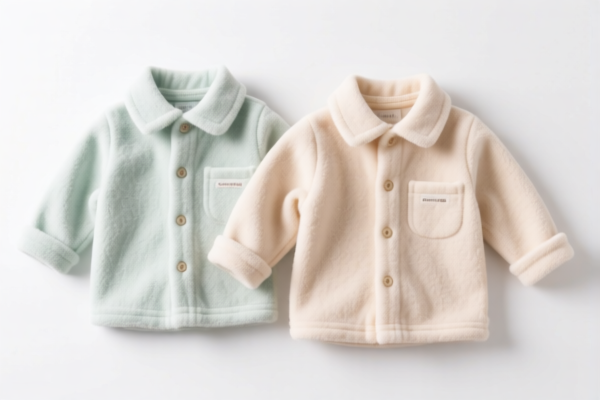
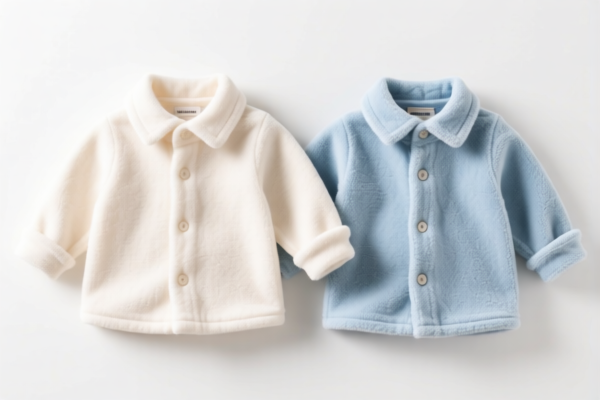
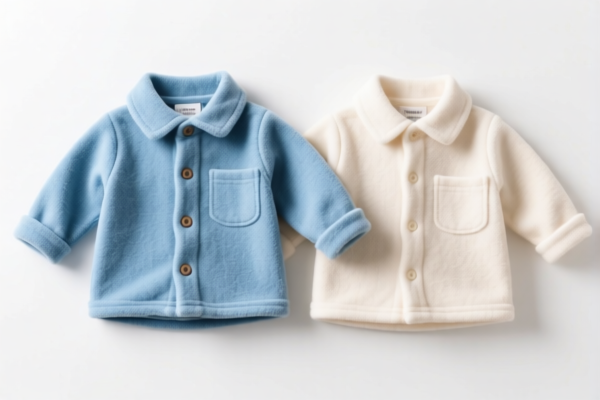
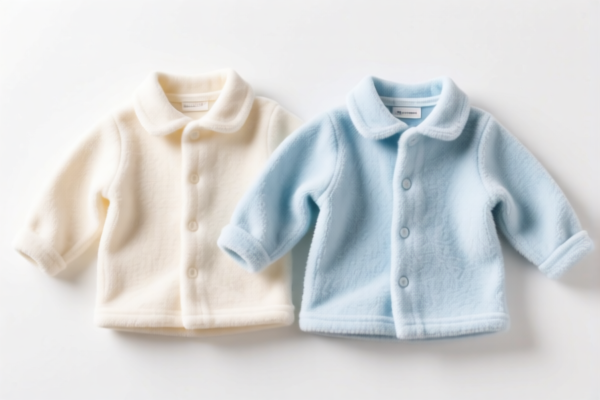
AI Analysis
👕 Children's Chemical Fiber Flannel Shirt (Kids' Shirts)
🌐 HS Code Reference & Customs Clearance Guide | 2026 Latest Tariff Analysis | Professional Strategy for US Imports
📌 I. Product Definition & Classification: Do You Know "Flannel" in Trade?
Children's Chemical Fiber Flannel Shirts are knit garments designed for kids, primarily made from man-made fibers (synthetic or artificial). In international trade, "Flannel" is not a separate HS category but a fabric finishing technique. The classification depends strictly on: 1. Material: Synthetic (Polyester/Viscose/Spandex mix) vs. Artificial Fiber (Rayon/Modal). 2. Gender: Boy's vs. Girl's (critical for tariff duty rates in many jurisdictions). 3. Construction: Knitted (most common for flannel shirts) vs. Woven.
⚠️ Key Distinction:
- Knitted Flannel: Soft, brushed surface, usually归类 under Chapter 61.
- Woven Flannel: If woven, it falls under Chapter 62 (not covered in this data).
- Material Difference: "Chemical Fiber" in the user input often lumps "Synthetic" (e.g., Polyester) and "Artificial" (e.g., Viscose). US Customs distinguishes these strictly for duty purposes.
📦 II. HS Code Classification Details (2026 Data Extraction)
Based on the provided <DATA>, all items are Knitted shirts (implied by HS 61xx). The data contains specific sub-codes for Boys and Girls, and distinguishes between Artificial and Synthetic fibers.
| HS Code | Gender | Material Type | Summary Description | Total Tax Rate |
|---|---|---|---|---|
6105.20.20.30 |
Boy (男童) | Artificial Fiber (人造纤维) | Children's shirt, artificial fiber flannel | 49.5% |
6105.20.20.20 |
Boy (男童) | Chemical Fiber/Synthetic (化纤) | Children's shirt, synthetic fiber flannel | 49.5% |
6106.20.20.30 |
Girl (女童) | Artificial Fiber (人造纤维) | Children's shirt, artificial fiber flannel | 49.5% |
6106.20.20.20 |
Girl (女童) | Chemical Fiber/Synthetic (化纤) | Children's shirt, synthetic fiber flannel | 49.5% |
6106.20.20.30 |
Girl (女童) | Artificial Fiber (人造纤维)* | Duplicate entry in data | 49.5% |
🔍 Critical Note on "Chemical Fiber" vs. "Artificial Fiber":
- In the provided data,6105.20.20.20and6106.20.20.20are labeled "化纤" (Chemical Fiber/Synthetic).
-6105.20.20.30and6106.20.20.30are labeled "人造纤维" (Artificial Fiber, e.g., Viscose/Rayon).
- Both categories carry the SAME high tariff rate in this specific dataset, but correct classification is vital for legal compliance and audit trails.
💰 III. 2026 Tariff Rate Breakdown (Detailed Tax Clauses)
✅ Applicable Country: United States (US)
✅ Origin: China (CN)
✅ Effective Time: Current Trade War Era Rates (2026)
🎯 1. Universal Tariff Structure for All Listed HS Codes
All four distinct HS codes (6105...20, 6106...20) share the exact same tax structure in the provided data.
| Tax Component | Rate | Legal/Policy Basis |
|---|---|---|
| Base Duty (MFN) | 32.0% | Standard Most Favored Nation rate for knitted shirts (HTS 6105/6106). |
| Section 301 Surcharge | 7.5% | Additional duty on Chinese goods under US Trade Act Section 301. |
| Section 122 Duty | 10.0% | "122 Clause" tariff (likely referring to specific enforcement or retroactive clauses often cited in recent enforcement actions or specific HTS footnotes for certain textile categories). |
| TOTAL RATE | 49.5% | 32.0 + 7.5 + 10.0 = 49.5% |
📌 Explanation:
- 32% Base: This is the standard US ad valorem duty for knitted boys'/girls' shirts made of man-made fibers.
- 7.5% Section 301: A significant portion of the trade war tariffs applied to apparel. Note: Some apparel items have higher Section 301 rates (up to 25%), but this specific data set cites 7.5%. Please verify with current USTR lists as rates fluctuate.
- 10% Section 122: This is the critical differentiator. Section 122 allows for higher duties (up to 50%) on imports that threaten to impair US national security or economic stability. The inclusion of this clause indicates high-risk enforcement.
- 49.5% Total: This is an extremely high landed cost factor. Margin compression will be severe.⚠️ De Minimis Exemption?
❌ NO. Items under HTS 6105/6106 with Section 301/122 duties are NOT eligible for the $800 de minimis exemption (Section 321). Full duty and tax calculation applies at entry.
🛠️ IV. Customs Clearance Practical Advice
✅ 1. Material Declaration Precision
| Component | Required Detail | Why It Matters |
|---|---|---|
| Fabric Content | Exact % (e.g., 100% Polyester, 95% Viscose/5% Spandex) | Distinguishes between 6105.20.20.20 (Synthetic) and 6105.20.20.30 (Artificial). Mislabeling can lead to penalties. |
| Fabric Type | "Flannel" or "Brushed Knit" | Confirms Chapter 61 (Knitted) vs. Chapter 62 (Woven). Flannel is a finish, not a structure, but "Knitted Flannel" is the standard descriptor. |
| Garment Type | "Shirt" (Collar, Cuffs, Buttons/Zippers) | Distinguishes from "T-shirt" (HS 6109) or "Sweater" (HS 6110). |
✅ 2. Gender Classification Strategy
- Boys' Shirts: Must use 6105 series.
- Girls' Shirts: Must use 6106 series.
- Unisex/Not Specified: US Customs may classify unisex children's shirts under the Girls' code (6106) or Boys' code depending on design details (buttons, cut). Advice: Always specify gender on invoice. If truly unisex, consult a broker, but be prepared for potential reclassification.
✅ 3. Documentation Checklist for High-Tax Clearance
| Document | Requirement |
|---|---|
| Commercial Invoice | Must clearly state: "Children's Knitted Flannel Shirt," Material %, Gender, HS Code. |
| Labeling | Care labels must match invoice material composition exactly. |
| Section 301 Exclusion | Check if any specific HTS codes currently have an exclusion (unlikely for these codes, but verify). |
| Proof of Origin | Certificate of Origin to confirm CN origin (triggers the surcharges). |
🌍 V. Cost Impact & Strategic Recommendations
💸 1. Cost Calculation Example
For a shipment with CIF Value of $10,000: - Base Duty: $3,200 - Section 301: $750 - Section 122: $1,000 - Total Tax: $4,950 (49.5%) - Landed Cost: $14,950
📌 Impact: Nearly half the value is tax. This requires significant pricing power or margin absorption.
🚀 2. Clearance Recommendations
-
Pre-Classification Ruling:
Apply for a US CBP Ruling to confirm the "122 Clause" applicability. Sometimes, if the garment is not deemed a threat, the 122% might be waived, reducing the rate to 39.5%. This is the single biggest opportunity for savings. -
Material Optimization:
If your "Chemical Fiber" is actually a blend, ensure the principal material is correctly identified. If it is 100% Polyester, it is Synthetic. If it is 100% Viscose, it is Artificial. -
Avoid "Flannel" Misclassification:
Do not describe as "Woven Flannel" if it is knitted. Woven flannel shirts (HS 6205/6206) have different duty rates. Incorrect description leads to audits and back-taxes. -
Alternative Sourcing:
Given the 49.5% tax burden, consider sourcing from non-CN countries (e.g., Vietnam, Bangladesh) which may have 0% Section 301 duties (though MFN 32% still applies). This could save 7.5% - 10% per unit, a massive competitive advantage.
📌 VI. Common Mistakes & Pitfalls
❌ Mistake 1: Assuming "Flannel" is a separate HS Code.
👉 Result: Classification error. Flannel is a fabric finish. Use the correct Knitted Shirt code.
❌ Mistake 2: Ignoring the "122 Clause".
👉 Result: Underpayment of duties. If the 10% is mandatory, failing to pay it leads to penalties and shipment delays.
❌ Mistake 3: Mixing Boys' and Girls' codes in one entry without clarity.
👉 Result: CBP may reclassify the entire shipment to the higher duty rate or request a full recount/segregation.
✅ Best Practice:
"Knitted Children's Shirt, 100% Polyester, Flannel Finish, Boys', HS 6105.20.20.20"
🎯 VII. Conclusion
The Children's Chemical Fiber Flannel Shirt is a high-tax item when imported from China to the US, with a total effective rate of 49.5% due to the combination of Base Duty (32%), Section 301 (7.5%), and Section 122 (10%).
Strategic Advice: 1. Verify the 122 Clause: Confirm if it is still actively applied to your specific HTS sub-codes. 2. Distinguish Material: Accurately label "Artificial" vs. "Synthetic" to avoid audit flags. 3. Consider Diversification: The tax burden makes CN-origin goods very expensive. Evaluate sourcing from other countries to offset the 7.5-10% surcharges.
📞 Action Item:
Contact your customs broker to request a Pre-Arrival Review on the "122 Clause" applicability for HTS 6105.20.20 and 6106.20.20. Savings of 10% are worth the legal consultation!
✨ Precision in Classification, Savings in Tariffs!
💼 Don't let 49.5% eat your profits. Optimize now!
Customer Reviews
About HS Code Classification
The Harmonized System (HS) is an internationally standardized nomenclature developed by the World Customs Organization (WCO) to classify traded products. Over 200 countries use the HS system as the basis for customs tariffs, trade statistics, and import/export regulations.
Each HS code follows a hierarchical structure:
- Chapter (2 digits) — Broad category of goods (e.g., Chapter 84: Machinery and Mechanical Appliances)
- Heading (4 digits) — More specific grouping within the chapter
- Subheading (6 digits) — Internationally standardized breakdown, used by all WCO member countries
- National subdivisions (8-10 digits) — Country-specific extensions for further classification, such as US HTSUS 10-digit codes
Correct HS code classification is essential for smooth customs clearance, accurate duty payment, and compliance with trade regulations. Misclassification can lead to customs delays, overpayment of duties, or penalties.
When importing from CN to US, the applicable tariff rates may include:
- Most-Favored-Nation (MFN) rate — The standard duty rate applied to WTO members
- General rate — Applied to countries without trade agreements
- Trade remedy duties — Additional tariffs such as Section 301 (anti-dumping), Section 232 (national security), or countervailing duties
The information provided on this page is for reference purposes only. For official classification, please consult with your local customs authority or a licensed customs broker.