Children's Clothing Accessories Thin Style
CN → US| HS Code | Tariff Rate | Origin | Destination | Doc |
|---|---|---|---|---|
| 6117809510 | 32.1% | CN | US | Official Doc |
| 6117809570 | 32.1% | CN | US | Official Doc |
| 3926209010 | 40.0% | CN | US | Official Doc |
| 6217109550 | 32.1% | CN | US | Official Doc |
| 3926909989 | 22.8% | CN | US | Official Doc |
Product Images
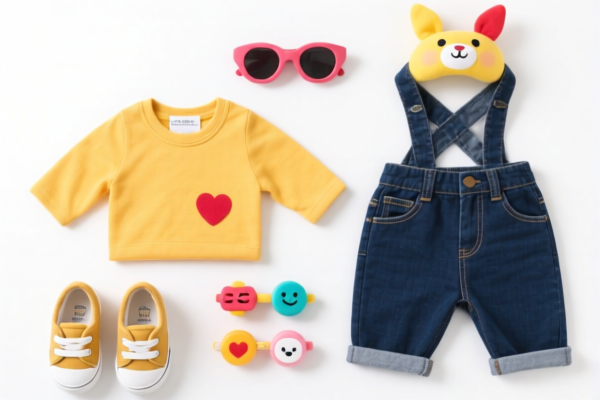
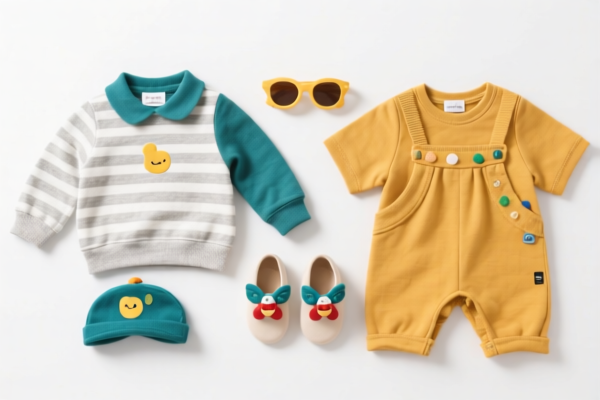
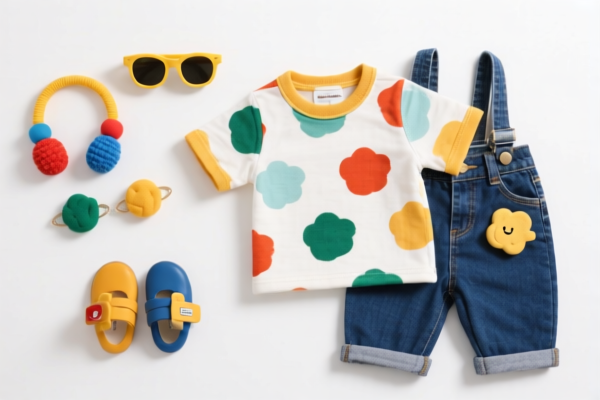
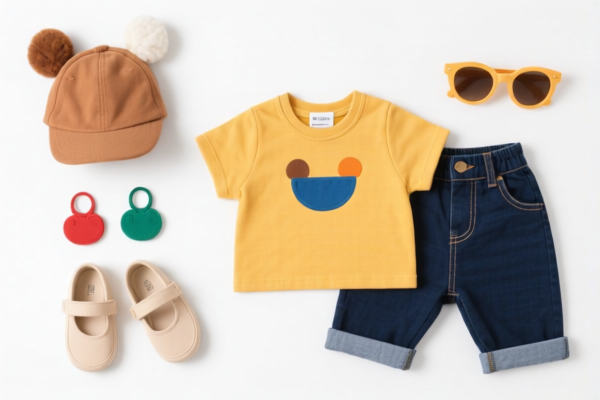
AI Analysis
🧸 Children's Clothing Accessories (Thin Style)
🌐 HS Code Reference & Customs Clearance Guide | 2026 Latest Tariff Analysis | Professional Strategy
📌 I. Product Definition & Classification: What are "Children's Clothing Accessories"?
"Children's Clothing Accessories (Thin Style)" generally refers to lightweight items used to adorn or functionalize children's garments. These are not the main clothing items (shirts, pants) themselves, but rather supplementary components or decorative pieces. Common examples include: * Fabric Trims: Thin cotton bands, lace, ribbons, or non-woven fabric strips. * Plastic/Synthetic Parts: Small plastic buckles, decorative strips, or synthetic fiber ties. * Other Accessories: Thin metal or mixed-material tags (if classified under general accessories).
⚠️ Key Classification Challenge:
The correct HS Code depends heavily on the Material Composition and Specific Form. Since the input "Thin Style" is vague, customs may interpret this differently based on inferred materials. We have identified five potential HS Codes based on common material inferences (Cotton/Fiber, Plastic, or General Other).
📦 II. HS Code Classification Details (2026 Latest Tariff Authority对照)
Based on the provided data, here are the five most likely HS Codes. Note that Tax Rates vary significantly depending on the inferred material.
| HS Code | Product Description | Material Inference | Tax Type | Total Tax Rate |
|---|---|---|---|---|
| 6117.80.95.10 | Other Made-Up Clothing Accessories, Knitted or Crocheted | Cotton or Textile Fibers (Inferred from "Thin Style" & "Accessories") |
Textile Accessory | 32.1% |
| 6117.80.95.70 | Other Made-Up Clothing Accessories, Knitted or Crocheted | Non-Cotton/Synthetic Fiber (Inferred as Man-Made Fiber) |
Textile Accessory | 32.1% |
| 6217.10.95.50 | Other Made-Up Clothing Accessories, Not Knitted or Crocheted | Cotton/Polyester/Woven (Inferred from "Thin Style" General Accessory) |
Textile Accessory | 32.1% |
| 3926.90.99.89 | Other Articles of Plastics (Not Specifically Listed) | Plastic/Synthetic (Inferred for items like plastic clips/strips) |
Plastic Article | 22.8% |
| 3926.20.90.10 | Articles of Apparel and Clothing Accessories, of Plastics | Plastic Apparel Parts (Inferred for rigid plastic accessories) |
Plastic Article | 40.0% |
🔍 Critical Distinction:
- Textile Codes (6117/6217): Apply if the item is made of fabric, cotton, or knitted/crocheted fibers. These typically incur 32.1% total tax.
- Plastic Codes (3926): Apply if the item is made of plastic (e.g., plastic buckles, decorative strips). These range from 22.8% to 40.0% depending on whether they are "general plastic articles" or "apparel accessories."
💰 III. 2026 Latest Tariff Rate Breakdown (Including Add-On Taxes)
✅ Applicable Country: United States (US)
✅ Country of Origin: China (CN)
✅ Effective Date: From November 10, 2025 (including subsequent imports)
🎯 1. Textile-Based Accessories (HS: 6117.80.95.10 / .70 & 6217.10.95.50)
| Item | Details |
|---|---|
| Product Type | Knitted/Crocheted (6117) or Woven/Other (6217) Clothing Accessories |
| Material Inference | Cotton, Synthetic Fiber, or Mixed Textiles |
| Base Tariff | 14.6% |
| Section 301 Add-On | +7.5% (China Origin) |
| IEEPA Add-On | +10.0% (China Origin) |
| Total Tax Rate | 32.1% |
| Calculation | CIF Value × 32.1% |
| De Minimis Exemption? | ❌ Not Eligible (Due to Section 301 & IEEPA) |
📌 Explanation:
- The 14.6% is the standard Most Favored Nation (MFN) rate for these textile accessories.
- The 7.5% is the additional tariff under USITC Section 301 targeting Chinese goods.
- The 10% is the additional tariff under IEEPA (International Emergency Economic Powers Act).
- Total: 32.1%. This is a high tax bracket for textiles.
🎯 2. Plastic-Based Accessories (HS: 3926.90.99.89)
| Item | Details |
|---|---|
| Product Type | Other Articles of Plastic (General) |
| Material Inference | Plastic (e.g., plastic clips, non-specific plastic trims) |
| Base Tariff | 5.3% |
| Section 301 Add-On | +7.5% |
| IEEPA Add-On | +10.0% |
| Total Tax Rate | 22.8% |
| Calculation | CIF Value × 22.8% |
| De Minimis Exemption? | ❌ Not Eligible |
📌 Explanation:
- This is the lowest tax option among the plausible codes.
- If your "Thin Style" accessory is plastic (e.g., a plastic button, buckle, or strip), this is the most cost-effective classification.
🎯 3. Plastic Apparel Accessories (HS: 3926.20.90.10)
| Item | Details |
|---|---|
| Product Type | Articles of Apparel and Clothing Accessories, of Plastics |
| Material Inference | Plastic (Specifically categorized as apparel accessory) |
| Base Tariff | 5.0% |
| Section 301 Add-On | +25.0% (Higher 301 Rate for Apparel/Accessories) |
| IEEPA Add-On | +10.0% |
| Total Tax Rate | 40.0% |
| Calculation | CIF Value × 40.0% |
| De Minimis Exemption? | ❌ Not Eligible |
📌 Explanation:
- While the base tariff is low (5.0%), the Section 301 rate is 25% (higher than the 7.5% for general plastics).
- This results in the highest total tax of 40.0%. Avoid this code if possible unless the product is strictly defined as a "plastic apparel accessory" and no other code fits.
🛠️ IV. Customs Clearance Practical Advice (Pitfall Avoidance Guide)
✅ 1. Documentation Checklist (Must-Provide)
| Document | Required? | Notes |
|---|---|---|
| Product Specification Sheet | ✔️ | Must specify Material Composition (e.g., "100% Cotton," "PP Plastic"). This is the #1 factor for HS Code accuracy. |
| Product Photos | ✔️ | Clear images of the item, showing texture and form (knitted vs. plastic). |
| Commercial Invoice | ✔️ | Must clearly state "Children's Clothing Accessories" and material. |
| Packing List | ✔️ | Details weight and quantity. |
| Material Certificate | ✔️ | If claiming plastic or cotton, a supplier certificate helps defend the HS Code. |
✅ 2. Declaration Strategy (Key Mantra)
🔥 "Material First, Form Second, Name Precise, Tax Minimizes!"
| Scenario | Recommended HS Code | Reason |
|---|---|---|
| Item is Fabric/Textile (e.g., cotton ribbon, woven trim) | 6117.80.95.10 or 6217.10.95.50 | Tax: 32.1% |
| Item is Plastic (e.g., plastic buckle, clip) | 3926.90.99.89 | Tax: 22.8% (Best Option for Plastic) |
| Item is Plastic, but labeled as "Apparel Accessory" | 3926.20.90.10 | Tax: 40.0% (Worst Option for Plastic) |
⚠️ Critical Warning:
- Do NOT declare plastic items as "Textile Accessories" to avoid the higher Section 301 rate of 25%. Customs will inspect and penalize for misclassification.
- If the item is a mix of materials (e.g., plastic buckle on a fabric strap), classify based on the essential character. Usually, the buckle (plastic) might dominate, or the strap (textile) might dominate. Provide detailed specs to justify your choice.
✅ 3. Special Cases
| Case | Handling Advice |
|---|---|
| Mixed Material (Textile + Plastic) | If the plastic part is minor (e.g., a small tag), classify as Textile (6117/6217). If the plastic part is significant (e.g., a large buckle), classify as Plastic (3926). |
| OEM/White Label | Ensure the invoice reflects the actual material, not just the brand name. |
| "Thin Style" Ambiguity | Use precise terms in the description: e.g., "Thin Cotton Ribbon" (6117) vs. "Thin Plastic Strip" (3926). |
🌍 V. Global Market Comparison (2026 Latest)
| Country/Region | Recommended HS Code | Tariff (China Origin) | Notes |
|---|---|---|---|
| 🇺🇸 USA | 3926.90.99.89 (if plastic) or 6117/6217 (if textile) | 22.8% - 32.1% | High tariffs due to Section 301 & IEEPA. |
| 🇪🇺 EU | 6117/6217 (Textile) or 3926 (Plastic) | 0% - 6% | No major trade war tariffs; lower rates. |
| 🇨🇳 China | Same HS Codes | Low/Zero | Domestic or FTA benefits. |
📌 Conclusion:
- US Market: Tariffs are high. Plastic items (3926.90.99.89) are cheaper to import than Plastic Apparel Accessories (3926.20.90.10) or Textiles (6117/6217).
- Strategy: If your product is made of plastic, ensure it is classified under 3926.90.99.89 (22.8%) rather than 3926.20.90.10 (40.0%). If it is textile, expect 32.1%.
📌 VI. Common Errors & Pitfalls (Lessons Learned)
❌ Error 1: Classifying all "Accessories" under one generic code.
👉 Consequence: Misclassification leads to audit risks, fines, and delayed shipments.
❌ Error 2: Declaring Plastic Items as Textile to Avoid High Tariffs.
👉 Consequence: Customs inspection reveals plastic material → Penalty + Back Taxes + Possible Ban.
❌ Error 3: Using "Other Accessories" (6117.80.95) for Plastic Items.
👉 Consequence: HS Code 6117 is for Knitted/Crocheted items. Plastic items do not fit → Rejection.
❌ Error 4: Ignoring the IEEPA 10% Surcharge.
👉 Consequence: Underestimating total cost by 10% → Profit Margin Erosion.
✅ Correct Practice:
"Thin Plastic Strip for Children's Clothes, Material: PP Plastic, HS Code: 3926.90.99.89"
OR
"Thin Cotton Ribbon for Children's Clothes, Material: 100% Cotton, HS Code: 6117.80.95.10"
🎯 VII. Conclusion: Professional Declaration, Cost Saving, Efficiency!
🎯 Remember the Mantra:
🔹 "Plastic General: 22.8%, Plastic Accessory: 40%, Textile: 32.1%."
🔹 "Choose the General Plastic Code (3926.90.99.89) if possible to save 7-17%!"
🔹 "HS Code Determines Life or Death of Profit Margin!"
📌 Tip:
If your "Thin Style" accessories are made of non-cotton, non-wool, non-synthetic fiber (e.g., rubber, metal, leather), other HS Codes may apply. However, based on common "thin accessories," Plastic (3926.90.99.89) is the most cost-effective option if the material allows.
📣 Immediate Action:
📞 Contact a Professional Customs Broker + Provide Material Specs + Apply for HS Code Pre-Ruling
🚀 Ensure Smooth Customs Clearance, High Efficiency, and Maximized Profits!
✨ Professional Clearance Starts with Accurate Classification!
💼 Every Cent of Your Cost Deserves to Be Calculated Precisely!
Customer Reviews
About HS Code Classification
The Harmonized System (HS) is an internationally standardized nomenclature developed by the World Customs Organization (WCO) to classify traded products. Over 200 countries use the HS system as the basis for customs tariffs, trade statistics, and import/export regulations.
Each HS code follows a hierarchical structure:
- Chapter (2 digits) — Broad category of goods (e.g., Chapter 84: Machinery and Mechanical Appliances)
- Heading (4 digits) — More specific grouping within the chapter
- Subheading (6 digits) — Internationally standardized breakdown, used by all WCO member countries
- National subdivisions (8-10 digits) — Country-specific extensions for further classification, such as US HTSUS 10-digit codes
Correct HS code classification is essential for smooth customs clearance, accurate duty payment, and compliance with trade regulations. Misclassification can lead to customs delays, overpayment of duties, or penalties.
When importing from CN to US, the applicable tariff rates may include:
- Most-Favored-Nation (MFN) rate — The standard duty rate applied to WTO members
- General rate — Applied to countries without trade agreements
- Trade remedy duties — Additional tariffs such as Section 301 (anti-dumping), Section 232 (national security), or countervailing duties
The information provided on this page is for reference purposes only. For official classification, please consult with your local customs authority or a licensed customs broker.