Children's Clothing Synthetic Fiber Other
CN → USProduct Images
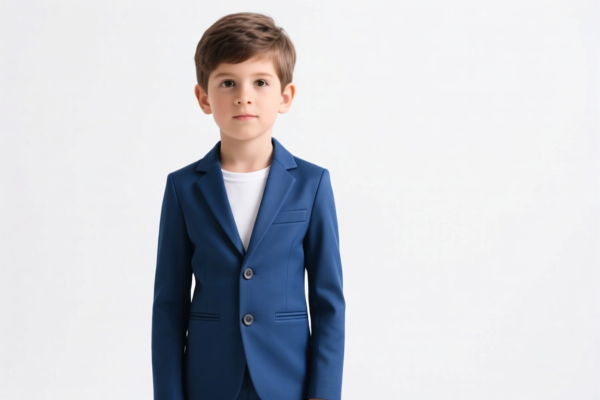
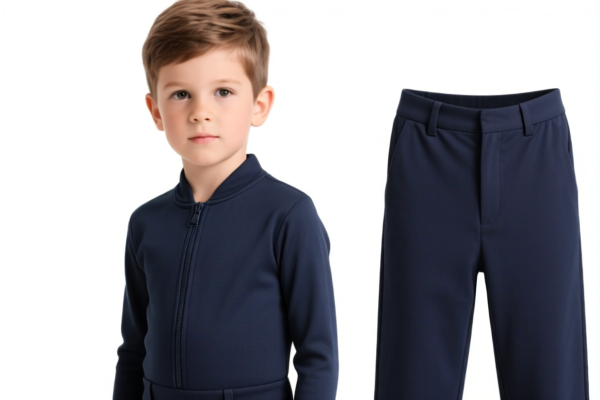
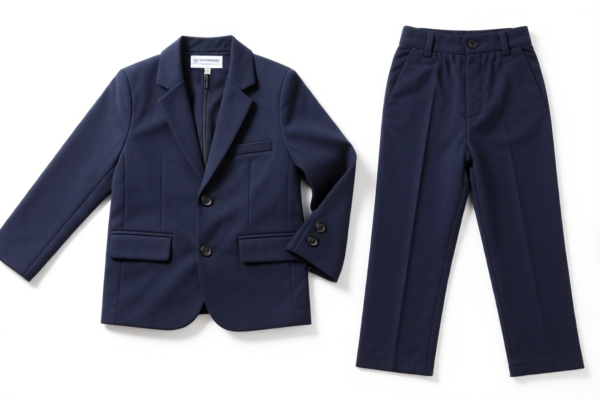
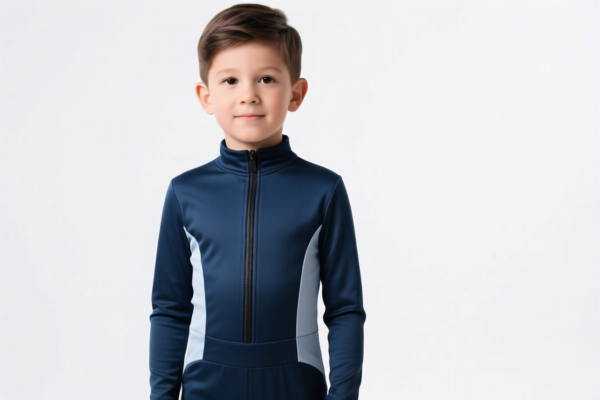
AI Analysis
👧🧒 Children's Clothing Made of Synthetic Fibers (Other)
🌐 HS Code Reference & Customs Clearance Guide | 2026 Updated Tariff Analysis | Pro-Level Import Strategy
📌 One, Product Definition & Classification: Do You Really Know "Children’s Synthetic Fiber Apparel"?
Children’s clothing made of synthetic fibers refers to garments designed for infants, toddlers, and children (typically aged 0–14) that are primarily composed of man-made fibers such as polyester, nylon, acrylic, spandex, or blends containing ≥50% synthetic content.
⚠️ Critical Distinction:
- If the fabric is ≥50% synthetic fiber (e.g., polyester, nylon, elastane), it falls under HS 6103.42.00.00
- If the garment is cotton-rich (≥50% cotton), even if blended with synthetic fibers, it belongs to HS 6103.41.00.00
- No garment with <50% synthetic fiber can be classified under this heading.
📦 Two, HS Code Classification Details (2026 Official Tariff Table)
| HS Code | Product Description | Applicable Use Case | Synthetic Fiber Content | Includes Accessories? |
|---|---|---|---|---|
6103.42.00.00 |
Children’s clothing, made of synthetic fibers, other than knitted or crocheted | T-shirts, pants, jackets, dresses, sleepwear, swimwear (non-knitted) | ≥50% synthetic | ❌ No (unless separately declared) |
6103.41.00.00 |
Children’s clothing, made of cotton, other than knitted or crocheted | Cotton-based children’s wear (e.g., denim pants, cotton shirts) | ≥50% cotton | ❌ No |
6103.49.00.00 |
Other children’s clothing (e.g., mixed fiber, not otherwise specified) | Blends with unclear fiber composition or non-standard types | Mixed or undefined | ✅ Yes (if not covered above) |
6110.20.00.00 |
Children’s knitted or crocheted garments, made of synthetic fibers | Sweatshirts, hoodies, leggings, socks, swimwear (knitted) | ≥50% synthetic | ✅ Yes (if knitted) |
6110.30.00.00 |
Children’s knitted or crocheted garments, made of cotton | Cotton knits for kids | ≥50% cotton | ✅ Yes |
6110.90.90.00 |
Other children’s garments (non-knitted, non-cotton, non-synthetic-specific) | Accessories like hats, gloves, scarves, or non-standard items | Mixed or unclear | ✅ Yes |
🔍 Key Rule:
- "Synthetic fiber" = polyester, nylon, acrylic, spandex, rayon (viscose), modacrylic, etc.
- "Other" = not covered by more specific subheadings (e.g., not swimwear, not socks, not knitted)
- Must be for children (under 14 years) — adult sizes are excluded.
💰 Three, 2026 Updated Tariff Rate Breakdown (Including附加 Taxes & Policy Add-ons)
✅ Applicable Country: United States (US)
✅ Origin: China (CN)
✅ Effective Date: November 10, 2025 (including subsequent imports)
🎯 1. 6103.42.00.00 — Children’s Non-Knitted Clothing, Synthetic Fiber (Other)
| Item | Details |
|---|---|
| Base Duty Rate | 0% (ad valorem) |
| USITC Section 301 Additional Duty | +25% (from USITC Footnote 9903.88.01) |
| IEEPA Emergency Economic Powers Act Duty | +10% (applies to goods from China/HK, effective Nov 10, 2025) |
| Total Effective Rate | 45% |
| Tax Calculation | CIF Value × 45% |
| De Minimis Threshold | ❌ Not applicable (denied under U.S. law) |
| Legal Basis Pathway | IEEPA:9903.01.25 → IEEPA:9903.01.24 → USITC:6103.42.00.00 → FOOTNOTE:9903.88.01 |
📌 Explanation:
- This is one of the highest tariff categories for children’s apparel in the U.S.
- The 45% total rate applies to all non-knitted synthetic fiber garments from China, regardless of style or design.
- Even if the item is a simple T-shirt or dress, if it’s synthetic and not knitted, it triggers this rate.
🎯 2. 6110.20.00.00 — Children’s Knitted Synthetic Fiber Garments
| Item | Details |
|---|---|
| Base Duty Rate | 0% |
| USITC Section 301 Additional Duty | +25% |
| IEEPA Additional Duty | +10% |
| Total Effective Rate | 45% |
| Tax Calculation | CIF × 45% |
| De Minimis | ❌ Not eligible |
| Legal Pathway | Same as above: IEEPA:9903.01.25 → USITC:6110.20.00.00 → FOOTNOTE:9903.88.01 |
📌 Important Note:
- Knitted items (e.g., sweatshirts, leggings, hoodies) made of ≥50% synthetic fibers are also subject to 45% — same as non-knitted.
- The type of construction (knitted vs. non-knitted) does not reduce the tariff. Only fiber content and origin matter.
🛠️ Four, Customs Clearance Best Practices (Pro Tips to Avoid Penalties)
✅ 1. Must-Have Documentation (No Exceptions!)
| Document | Required? | Why It Matters |
|---|---|---|
| ✅ Product Specification Sheet | ✔️ | Shows fiber composition, size range, intended age group |
| ✅ Fabric Composition Certificate | ✔️ | Proves ≥50% synthetic fiber (critical for classification) |
| ✅ High-Res Product Photos (with labels) | ✔️ | Clear view of tags, stitching, material texture |
| ✅ Third-Party Compliance Reports | ✔️ | ASTM F963 (toxicity), CPSIA (lead/phthalates), OEKO-TEX® |
| ✅ Commercial Invoice | ✔️ | Must state: “Children’s Clothing, Synthetic Fiber, Not Knitted” |
| ✅ Certificate of Origin (CO) | ✔️ | If from Vietnam, Mexico, or Thailand, may qualify for lower tariffs |
| ✅ Packing List | ✔️ | Shows total quantity, packaging, and item-by-item breakdown |
✅ 2.申报技巧 (Pro申报 Rules – “The 3 C’s”)
🔥 “Check Composition, Confirm Age, Clarify Construction!”
| Scenario | Correct HS Code | Common Mistake |
|---|---|---|
| Non-knitted synthetic dress (60% polyester) | 6103.42.00.00 |
Misreported as 6103.41.00.00 (cotton) → Higher tax |
| Knitted synthetic leggings (70% polyester) | 6110.20.00.00 |
Reported as 6103.42.00.00 → Wrong code, higher risk |
| Mixed fiber (45% polyester, 55% cotton) | 6103.41.00.00 |
Not synthetic → Wrong classification |
| Children’s swimwear (synthetic) | 6103.42.00.00 |
Should be 6103.42.00.00 (non-knitted) |
| Children’s socks (knitted, synthetic) | 6110.20.00.00 |
Reported as 6103.42.00.00 → Wrong |
✅ 3. Special Cases & Workarounds
| Situation | Recommended Action |
|---|---|
| OEM/White Label Garments | Provide client PO + fabric specs to avoid “non-standard” classification |
| Garments with Decorations (patches, rhinestones) | Still classified by primary material — if synthetic, use 6103.42.00.00 |
| Garments for Medical/Therapeutic Use | Can apply for “non-commercial” exemption — requires medical certification |
| Export from Vietnam/Mexico | If origin is Vietnam or Mexico, can apply for IEEPA exemption → 0% tariff |
| Garments with Recycled Synthetic Fiber | Still classified the same — no tariff reduction unless origin is non-China |
🌍 Five, Global Market Comparison (2026 Updated)
| Country/Region | Recommended HS Code | Tariff Rate | Certification Required | Notes |
|---|---|---|---|---|
| 🇺🇸 United States | 6103.42.00.00 |
45% (China origin) | CPSIA, ASTM F963, OEKO-TEX® | 45% applies to all synthetic fiber |
| 🇨🇳 China | 6103.42.00.00 |
5% | CCC, GB standards | No extra duties |
| 🇪🇺 European Union | 6103.42.00.00 |
0% (if CE compliant) | CE, REACH, Oeko-Tex® | No additional tariffs |
| 🇦🇺 Australia | 6103.42.00.00 |
5% | RCM | No extra charges |
| 🇯🇵 Japan | 6103.42.00.00 |
0% | PSE, JIS | No extra duties |
📌 Insight:
- The U.S. is the only market with 45% tariffs on children’s synthetic fiber clothing from China.
- Vietnam/Mexico origin can avoid all extra duties — consider shifting production.
📌 Six, Common Mistakes & How to Avoid Them (Real-World Lessons)
❌ Mistake 1: Reporting a knitted synthetic hoodie as 6103.42.00.00
👉 Result: Wrong code → 45% tariff + penalty
✅ Fix: Use 6110.20.00.00 — knitted items are separately classified
❌ Mistake 2: Claiming "cotton blend" without proof of ≥50% cotton
👉 Result: Classified as synthetic → 45% tariff
✅ Fix: Always provide fiber composition certificate
❌ Mistake 3: Using “children’s clothing” as the only description
👉 Result: Customs can’t determine fiber content → delayed release or seizure
✅ Fix: Use full description:
“Children’s Synthetic Fiber T-Shirt, 100% Polyester, 2–6 Years, Knitted, No Sizing Label, FCC Compliant”
❌ Mistake 4: Shipping in bulk without proper packaging list
👉 Result: Customs may suspect misdeclaration → random audit
✅ Fix: Include detailed packing list with item codes and fiber content
🎯 Seven, Conclusion: Accurate Classification = Profit Protection!
🎯 Remember the Golden Rule:
🔹 “Check the fiber, confirm the age, clarify the construction — one mistake = 45% tax!”
🔹 “Synthetic = 45% in the U.S. — unless origin is Vietnam/Mexico!”
📌 Pro Tip:
If your garments are originated in Vietnam, Mexico, Thailand, or Malaysia, you may qualify for IEEPA exemption → 0% tariff on
6103.42.00.00
✅ Action Step: Apply for Advance Ruling (Pre-Clearance) before shipping.
📣 Act Now!
📞 Contact a licensed U.S. Customs Broker + Submit product photos + Request HS Code Pre-Ruling
🚀 Ensure your children’s clothing clears customs fast, pays less tax, and hits the market on time!
✨ Precision in Classification, Power in Profit!
💼 Your next shipment starts with the right HS Code — don’t gamble with 45%!
Customer Reviews
About HS Code Classification
The Harmonized System (HS) is an internationally standardized nomenclature developed by the World Customs Organization (WCO) to classify traded products. Over 200 countries use the HS system as the basis for customs tariffs, trade statistics, and import/export regulations.
Each HS code follows a hierarchical structure:
- Chapter (2 digits) — Broad category of goods (e.g., Chapter 84: Machinery and Mechanical Appliances)
- Heading (4 digits) — More specific grouping within the chapter
- Subheading (6 digits) — Internationally standardized breakdown, used by all WCO member countries
- National subdivisions (8-10 digits) — Country-specific extensions for further classification, such as US HTSUS 10-digit codes
Correct HS code classification is essential for smooth customs clearance, accurate duty payment, and compliance with trade regulations. Misclassification can lead to customs delays, overpayment of duties, or penalties.
When importing from CN to US, the applicable tariff rates may include:
- Most-Favored-Nation (MFN) rate — The standard duty rate applied to WTO members
- General rate — Applied to countries without trade agreements
- Trade remedy duties — Additional tariffs such as Section 301 (anti-dumping), Section 232 (national security), or countervailing duties
The information provided on this page is for reference purposes only. For official classification, please consult with your local customs authority or a licensed customs broker.