Children's Coloring Book Set
CN → US| HS Code | Tariff Rate | Origin | Destination | Doc |
|---|---|---|---|---|
| 4911998000 | 17.5% | CN | US | Official Doc |
| 4903000000 | 10.0% | CN | US | Official Doc |
| 4911914040 | 17.5% | CN | US | Official Doc |
| 9503000090 | 10.0% | CN | US | Official Doc |
| 9503000073 | 10.0% | CN | US | Official Doc |
Product Images
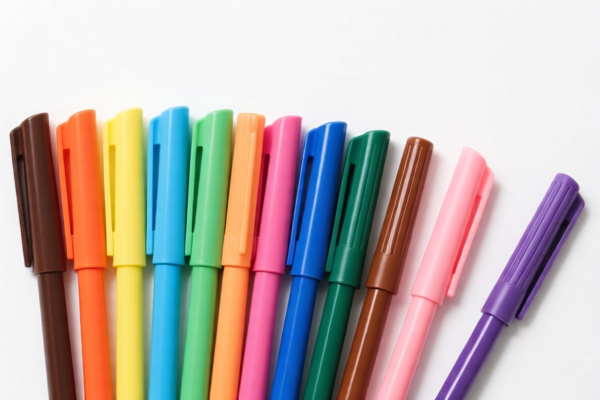
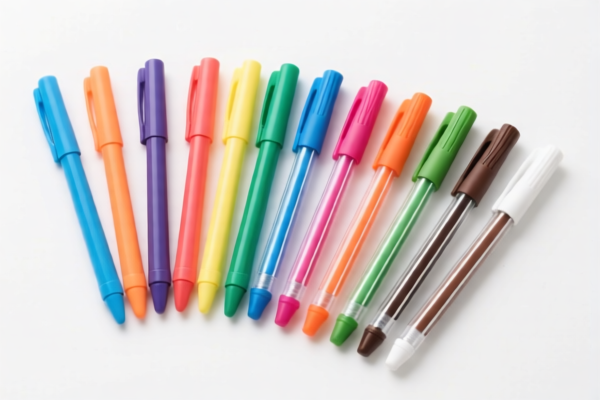
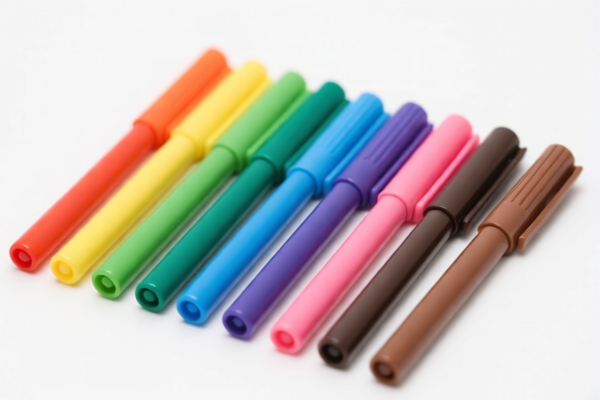

AI Analysis
🎨 Children's Coloring Book Set (涂色书套装)
🌐 HS Code Reference & Customs Clearance Guide | 2024 Latest Tariff Analysis | Professional Entry Strategies
📌 One: Product Definition & Classification: Do You Really Know "Coloring Books"?
A Children's Coloring Book Set typically includes printed paper sheets with line drawings intended for coloring, often accompanied by crayons or pencils. In international trade, its classification depends on whether it is viewed primarily as a printed publication or as a toy/educational entertainment item.
⚠️ Key Distinction Point:
- If declared strictly as "printed matter" (focusing on the paper/ink nature) → Classified under Chapter 49.
- If declared as a "toy/entertainment set" (focusing on the play/educational use for children) → Classified under Chapter 95.
📦 Two: HS Code Classification Details (2024 Latest Tariff Authority Comparison)
Based on the provided data, here are the 5 potential HS Codes with their corresponding tax details and matching logic.
| HS Code | Product Description | Matching Logic (Summary) | Total Tax Rate (US Origin CN) |
|---|---|---|---|
| 4911.99.80.00 | Other Printed Matters | ✅ Printed Matter Format: Inferred material is paper. Fits the category of "Other printed matter" with no material or use conflicts. | 17.5% |
| 4903.00.00.00 | Coloring Books | ✅ Specific Use Match: The term "Coloring Book" aligns with the classification explanation for "Coloring Books" (着色本). Fits the definition of children's drawing/coloring books. | 10.0% |
| 4911.91.40.40 | Pictures, Designs, Photos | ✅ Printed Matter (Illustrations): Falls under "Pictures/Designs". Since poster format isn't excluded, it defaults to the "Other" sub-category based on the residual principle. | 17.5% |
| 9503.00.00.90 | Other Toys | ✅ Toy Attribute: Fits the "Other" category of toys. Inferred paper material aligns with puzzles/models. No material/form conflict for this toy sub-category. | 10.0% |
| 9503.00.00.73 | Toys for Children (3-12) | ✅ Entertainment/Educational Toy: Belongs to the toy/entertainment category. Forms an extension of puzzles/models (educational aid). Fits the 3-12 age group definition. | 10.0% |
🔍 Important Note:
- Chapter 49 items generally attract higher tariffs due to Section 122 and 301 tariffs.
- Chapter 95 items (Toys) often have lower base tariffs but must strictly meet the "Toy" definition to avoid being reclassified as general merchandise.
💰 Three: 2024 Latest Tariff Rate Breakdown (Including Surtaxes & Policy Add-ons)
✅ Applicable Country: United States (US)
✅ Origin: China (CN)
✅ Key Tariff Components: Base Tariff + Section 301 Surtax + Section 122 Add-on
🎯 1. 4911.99.80.00 & 4911.91.40.40 —— Other Printed Matters
| Item | Content |
|---|---|
| Base Tariff | 0.0% (ad valorem) |
| Section 301 Surtax | +7.5% (Standard additional tariff) |
| Section 122 Tariff | +10% (Specific additional tariff for certain Chinese goods) |
| Total Effective Rate | 17.5% |
| Tax Calculation | CIF Value × 17.5% |
| De Minimis Eligibility | ❌ No (Subject to high scrutiny and surtaxes) |
| Legal Pathway | HTSUS:4911.99.80.00 → Section 301 Footnote → Section 122 Addition |
📌 Explanation:
- These codes are classified under "Other Printed Matters".
- They are subject to both the standard Section 301 surtax (7.5%) and the specific Section 122 tariff (10%).
- High Risk: Customs may scrutinize the "printed" nature vs. "toy" nature. If deemed a toy, you might save 7.5%, but if deemed printed matter, you pay the full 17.5%.
🎯 2. 4903.00.00.00 —— Coloring Books (Specific Chapter 49 Item)
| Item | Content |
|---|---|
| Base Tariff | 0.0% |
| Section 301 Surtax | 0.0% (Note: Some specific sub-categories under 4903 may be exempt from the highest tier, but verify current enforcement) |
| Section 122 Tariff | +10% |
| Total Effective Rate | 10.0% |
| Tax Calculation | CIF Value × 10.0% |
| De Minimis Eligibility | ❌ No |
| Legal Pathway | HTSUS:4903.00.00.00 → Section 122 Addition |
📌 Explanation:
- This is the most accurate "Printed Matter" code for coloring books.
- It attracts only the Section 122 tariff (10%) in the provided data, saving the 7.5% Section 301 surtax compared to other printed matters.
- Lower Cost than 4911, but still subject to 122 tariffs.
🎯 3. 9503.00.00.90 & 9503.00.00.73 —— Toys / Other Toys
| Item | Content |
|---|---|
| Base Tariff | 0.0% |
| Section 301 Surtax | 0.0% |
| Section 122 Tariff | +10% |
| Total Effective Rate | 10.0% |
| Tax Calculation | CIF Value × 10.0% |
| De Minimis Eligibility | ❌ No |
| Legal Pathway | HTSUS:9503.00.00.90/73 → Section 122 Addition |
📌 Explanation:
- Classifying as a Toy allows you to avoid the 7.5% Section 301 surtax applicable to general printed matters.
- The rate is 10.0%, same as the specific "Coloring Book" (4903) code, but the legal justification is different (Toy vs. Print).
- Risk: Customs may challenge the "Toy" classification if the set is purely paper without plastic components or complex mechanisms.
🛠️ Four: Customs Clearance Practical Advice (Avoid Pitfalls)
✅ 1. Essential Documentation Checklist
| Document | Mandatory? | Notes |
|---|---|---|
| ✅ Product Photos | ✔️ | Clear images showing the coloring book, any crayons included, and packaging. |
| ✅ Commercial Invoice | ✔️ | Description must be precise: "Children's Coloring Book Set (Paper)" or "Educational Toy Set". |
| ✅ Packing List | ✔️ | Detail contents: # of pages, type of paper, # of crayons/pencils. |
| ✅ Material Composition | ✔️ | Specify "Paper" for books, "Wood/Crayon" for tools. |
| ✅ Age Recommendation | ✔️ | Crucial for Chapter 95 classification (e.g., "For ages 3+"). |
| ✅ 3rd Party Lab Test | ✔️ | CPSIA (Consumer Product Safety Improvement Act) compliance if marketed as a toy. |
✅ 2. Classification Strategy (The Golden Rules)
🔥 "Toy Definition Wins, Paper Backup Succeeds, 122 Tariff is the Key!"
| Scenario | Recommended HS Code | Reason |
|---|---|---|
| Pure Paper Book (No plastic toys) | 4903.00.00.00 | Most accurate for "Coloring Books". Lower risk of challenge. Tax: 10%. |
| Book + Plastic Crayons/Accessories | 9503.00.00.90 or 9503.00.00.73 | The presence of plastic/coloring tools strengthens the "Toy" argument. Tax: 10%. |
| Generic Printed Sheet (No specific branding) | 4911.99.80.00 | Fallback option if "Coloring Book" isn't clear. Higher Risk. Tax: 17.5%. |
| High-Value Art Print | 4911.91.40.40 | Only if it's a design/photo sheet, not a child's activity book. Tax: 17.5%. |
📌 Critical Advice:
- Avoid4911.99.80.00if possible. It carries a 17.5% tax rate.
- Prefer4903.00.00.00or9503.xxxxfor 10.0% tax.
- The difference is 7.5% (the Section 301 surtax). On a $10,000 shipment, this is $750 savings.
✅ 3. Special Handling & Compliance
| Issue | Solution |
|---|---|
| Section 122 Tariff (10%) | Unavoidable for CN origin goods under these codes. Ensure your supplier provides accurate Country of Origin documentation. |
| CPSIA Compliance | If classifying as 9503 (Toy), you MUST comply with US toy safety standards (lead paint, small parts). Provide CPSIA Test Reports. |
| Misdeclaration Risk | Do not label "Coloring Book" as "Toy" if it has no toy-like features. Customs may reclassify and apply penalties. |
| De Minimis (Section 321) | ❌ Not Applicable. Section 122 and 301 tariffs generally exclude de minimis exemptions for Chinese goods. |
🌍 Five: Global Market Comparison (Quick Reference)
| Market | Preferred HS Code | Est. Tariff (CN Origin) | Key Requirement |
|---|---|---|---|
| 🇺🇸 USA | 4903.00.00.00 or 9503.00.00.90 |
10.0% (Base 0% + 122 10%) | CPSIA (if Toy), COO Proof |
| 🇨🇳 China | 4903.00.00.00 |
10-13% (Import Duty + VAT) | Standard Import Procedures |
| 🇪🇺 EU | 4903.00.00 |
0-3% | CE Marking (if toy) |
| 🇬🇧 UK | 4903.00.00 |
0% (Post-Brexit Free Trade) | UKCA Marking (if toy) |
📌 Conclusion:
- The US market is the most complex due to the Section 122 and 301 tariffs.
- China and EU have lower or zero base tariffs, but compliance (CE/UKCA/CPSIA) is stricter.
- For the US, accurate classification between 4903 (Print) and 9503 (Toy) can save you 7.5% in duties.
📌 Six: Common Mistakes & Pitfalls (Blood & Tears Lessons)
❌ Mistake 1: Classifying Coloring Books as 4911.99.80.00 ("Other Printed Matters")
👉 Consequence: You pay 17.5% instead of 10.0%. You lose 7.5% in pure tax.
👉 Fix: Use 4903.00.00.00 ("Coloring Books") which is a specific sub-category with lower surtax application.
❌ Mistake 2: Labeling a Paper Book as a Toy without supporting accessories
👉 Consequence: Customs rejects the Toy classification, reclassifies it as printed matter, and may impose penalties for misdeclaration.
👉 Fix: Only use 9503 if there are actual toy components (plastic crayons, pop-up mechanisms, etc.).
❌ Mistake 3: Ignoring Section 122
👉 Consequence: Surprise 10% charge at customs.
👉 Fix: Build the 10% surtax into your pricing model before importing.
❌ Mistake 4: Assuming De Minimis applies
👉 Consequence: Shipment held at border, taxes collected, delays.
👉 Fix: Treat all CN-origin coloring books as fully dutiable.
🎯 Seven: Conclusion: Precise Classification, Maximum Profit!
🎯 Remember This Mantra:
🔹 "Coloring Book is 4903, Not 4911; Toy is 9503 if it's real; Section 122 is 10%, always real!"
🔹 "Save 7.5% by choosing the right code, avoid the 4911 trap!"
📌 Pro Tip:
- If your product includes plastic crayons or stickers, strongly consider 9503 to emphasize the "Toy" aspect.
- If it's pure paper, use 4903 for the most accurate legal description.
- Always provide CPSIA reports if claiming Toy status in the US.
📣 Immediate Action:
📞 Consult your customs broker with product photos.
📝 Prepare CPSIA/Test Reports for any toy-like components.
🚀 Optimize your supply chain to handle the 10% Section 122 tariff.
✨ Professional Clearance Starts with Accurate Classification!
💼 Your Margins Depend on Every Percent!
Customer Reviews
About HS Code Classification
The Harmonized System (HS) is an internationally standardized nomenclature developed by the World Customs Organization (WCO) to classify traded products. Over 200 countries use the HS system as the basis for customs tariffs, trade statistics, and import/export regulations.
Each HS code follows a hierarchical structure:
- Chapter (2 digits) — Broad category of goods (e.g., Chapter 84: Machinery and Mechanical Appliances)
- Heading (4 digits) — More specific grouping within the chapter
- Subheading (6 digits) — Internationally standardized breakdown, used by all WCO member countries
- National subdivisions (8-10 digits) — Country-specific extensions for further classification, such as US HTSUS 10-digit codes
Correct HS code classification is essential for smooth customs clearance, accurate duty payment, and compliance with trade regulations. Misclassification can lead to customs delays, overpayment of duties, or penalties.
When importing from CN to US, the applicable tariff rates may include:
- Most-Favored-Nation (MFN) rate — The standard duty rate applied to WTO members
- General rate — Applied to countries without trade agreements
- Trade remedy duties — Additional tariffs such as Section 301 (anti-dumping), Section 232 (national security), or countervailing duties
The information provided on this page is for reference purposes only. For official classification, please consult with your local customs authority or a licensed customs broker.