Children's Diary Notebook
CN → US| HS Code | Tariff Rate | Origin | Destination | Doc |
|---|---|---|---|---|
| 9611000000 | 20.2% | CN | US | Official Doc |
| 4820200000 | 35.0% | CN | US | Official Doc |
| 4901990093 | 17.5% | CN | US | Official Doc |
| 4901990092 | 17.5% | CN | US | Official Doc |
| 4820102010 | 35.0% | CN | US | Official Doc |
| 4820102060 | 35.0% | CN | US | Official Doc |
Product Images
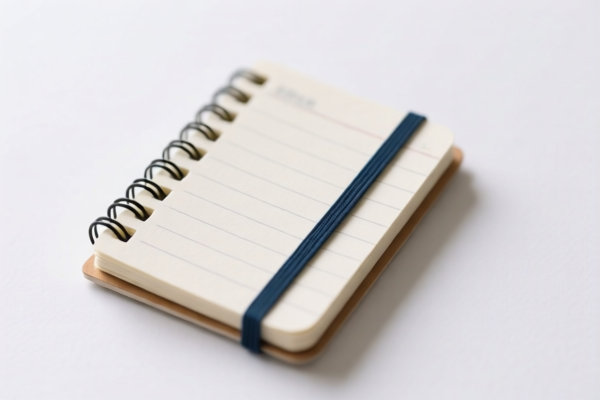
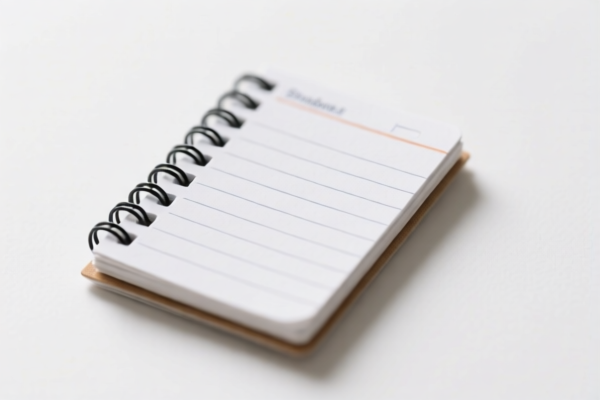
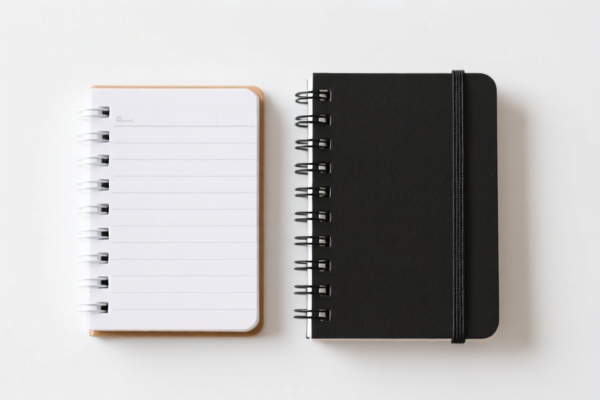

AI Analysis
📔 Children's Diary & Notebook (Paper Stationery)
🌐 HS Code Reference & Customs Clearance Guide | 2026 Latest Tariff Analysis | Strategic Classification for Stationery
📌 Part 1: Product Definition & Classification – What Exactly is a "Child's Notebook"?
A "Children's Diary Notebook" typically refers to bound paper products designed for students or children. However, in international trade (HS Code classification), the distinction between a "Notebook" and a "Diary" is critical because they fall under different sub-headings with potentially different regulatory scrutiny and tax implications.
In the context of the provided data:
1. Student Notebooks (Blank/Ruled):
- Description: Notebooks bound in paper/paperboard covers, often with pockets, containing blank or ruled sheets.
- Key Feature: General writing, schoolwork, no specific calendar/diary function.
- HS Focus: 4820.20.00.00
2. Diaries/Address Books (Bound):
- Description: Specific entries for dates, appointments, or address records. Even if marketed to children, if it has a diary structure (date pages, appointment slots), it may be classified as a diary.
- Key Feature: Structured for time-tracking or contact info.
- HS Focus: 4820.10.20.10
⚠️ Critical Distinction:
- If the product is primarily for general writing (blank pages, lined paper) → Notebook (4820.20)
- If the product is primarily for record-keeping of dates/events (calendar format, "Dear Diary" structure) → Diary (4820.10)
- Misclassification Risk: Declaring a structured Diary as a generic "Notebook" can lead to customs delays or penalties.
📦 Part 2: HS Code Classification Matrix (2026 Latest Tariff Data)
| HS Code | Product Description | Application Scenario | Key Identifier |
|---|---|---|---|
4820.20.00.00 |
Notebooks, bound in covers of paper/paperboard, for children/students, with/without pocket, containing blank or ruled sheets | School supply, sketchbook, plain diary for kids | ✅ Blank/Ruled Sheets |
4820.10.20.10 |
Diaries, notebooks, and address books, bound: Diaries and address books | Structured diary, planner, agenda for children | ✅ Diary/Address Book Structure |
4820.10.20.60 |
Diaries, notebooks, and address books, bound: Other (not diaries/address books) | Specialized notebooks bound like diaries but not strictly "diaries" | ⚠️ Catch-All for Bound Items |
🔍 Key Takeaway:
- The majority of standard "children's notebooks" fall under4820.20.00.00.
- If the item is explicitly a Diary (with dates/sections), it falls under4820.10.20.10.
- Both categories from the provided data carry a 25.0% Total Tax (US market implication).
💰 Part 3: 2026 Latest Tariff Rate Breakdown (Detailed Tax Clauses)
✅ Applicable Country: United States (US)
✅ Origin: China (CN)
✅ Effective Date: Current policy (See details below)
🎯 1. 4820.20.00.00 – Children's Notebooks (Blank/Ruled)
| Item | Content |
|---|---|
| Base Tariff Rate | 0.0% (ad valorem) |
| Additional Tariff (Section 301) | +25.0% |
| Total Tax Rate | 25.0% |
| Tax Calculation | CIF Value × 25% |
| De Minimis Exemption | ❌ Not Eligible (Standard for Section 301 goods) |
| Legal Basis Path | USITC:4820.20.00.00 → Section 301: Footnote 9903.88.01 |
📌 Explanation:
- Although the base duty for paper notebooks is 0%, the 25% Section 301 tariff applies to most paper products of Chinese origin.
- This is a flat 25% surcharge on top of the base duty.
- Total Cost Impact: High. A $100 shipment incurs $25 in additional duties.
🎯 2. 4820.10.20.10 – Diaries & Address Books (Bound)
| Item | Content |
|---|---|
| Base Tariff Rate | 0.0% (ad valorem) |
| Additional Tariff (Section 301) | +25.0% |
| Total Tax Rate | 25.0% |
| Tax Calculation | CIF Value × 25% |
| De Minimis Exemption | ❌ Not Eligible |
| Legal Basis Path | USITC:4820.10.20.10 → Section 301: Footnote 9903.88.01 |
📌 Explanation:
- Same tax structure as notebooks.
- No difference in rate between "Notebooks" and "Diaries" for US-China trade under current 2026 data.
- However, misclassification can still cause customs holds due to differing descriptive requirements.
🎯 3. 4820.10.20.60 – Other Bound Diaries/Notebooks
| Item | Content |
|---|---|
| Base Tariff Rate | 0.0% (ad valorem) |
| Additional Tariff (Section 301) | +25.0% |
| Total Tax Rate | 25.0% |
| Tax Calculation | CIF Value × 25% |
| De Minimis Exemption | ❌ Not Eligible |
📌 Note:
- This is the residual category. Use only if the item doesn't fit the standard "Diary" or "Notebook" definitions but is still a bound paper item.
🛠️ Part 4: Customs Clearance Practical Advice (Avoiding Pitfalls)
✅ 1. Required Documentation Checklist
| Document | Mandatory | Purpose |
|---|---|---|
| ✅ Commercial Invoice | ✔️ | Must clearly state: "Paper Notebooks for Children, Blank Pages, Bound" OR "Diaries for Children, Date-Recorded, Bound" |
| ✅ Product Photos | ✔️ | Show cover, interior pages (blank vs. dated), and binding type |
| ✅ Material Composition | ✔️ | Confirm cover is "paper or paperboard" (not plastic or fabric, which may change HS Code) |
| ✅ Packing List | ✔️ | Detail quantities and weights |
✅ 2. Declaration Tips (Crucial Keywords)
🔥 "Be Specific: 'Notebook' vs. 'Diary' Matters!"
| Scenario | Correct Declaration | Incorrect Declaration | Risk |
|---|---|---|---|
| Standard School Notebook | "Children's Notebooks, Blank Pages, Paper Cover, Bound" | "Stationery" or "Books" | Delayed clearance, potential reclassification |
| Diary with Date Pages | "Children's Diaries, Bound, With Date Fields" | "Notebooks" | Customs may flag for incorrect description |
| Sketchbook with Blank Pages | "Art Notebooks, Blank Pages, Paper Cover" | "Diaries" | Unnecessary scrutiny |
✅ 3. Special Cases & Handling
| Case | Handling Advice |
|---|---|
| Notebooks with Pockets | Still classified under 4820.20.00.00 if the primary function is writing. Mention "with pockets" in description but keep HS Code. |
| Plastic Cover Notebooks | ⚠️ Warning: If the cover is not paper/paperboard (e.g., PVC, plastic), it does not fall under HS 4820. It may fall under Chapter 39 (Plastics) or 4819. Re-evaluate HS Code! |
| Electronic/Smart Diaries | ❌ Excluded: These are electronic devices (Chapter 85), not paper stationery. |
| Loose-Leaf Pads | May fall under 4820.10.20.60 or different subheadings. Ensure "bound" vs. "loose" is clear. |
🌍 Part 5: Global Market Comparison (2026)
| Country/Region | Recommended HS Code | Tariff (China Origin) | Notes |
|---|---|---|---|
| 🇺🇸 USA | 4820.20.00.00 |
25.0% | Section 301 applies. No de minimis. |
| 🇨🇳 China | 4820.20.00.00 |
0%~13% (Import Duty) | VAT 13% applies. Lower entry barrier for domestic sales. |
| 🇪🇺 EU | 4820.20.00 |
0% (Generally) | Check for local VAT. No Section 301 equivalent. |
| 🇬🇧 UK | 4820.20.00 |
0%~5% | Post-Brexit rules. Generally favorable for paper goods. |
📌 Conclusion:
- The US market is the most costly for Chinese-origin paper notebooks/diaries due to the 25% Section 301 tariff.
- For other markets, paper stationery is often duty-free or low-tariff, making them more competitive.
📌 Part 6: Common Mistakes & Avoidance Guide
❌ Mistake 1: Calling a "Plastic-Covered Journal" a "Paper Notebook"
👉 Consequence: Wrong HS Code (Chapter 39 vs. 48). Customs may seize or reclassify, leading to higher duties.
✅ Fix: Check material. If cover is plastic, use Chapter 39 codes.
❌ Mistake 2: Declaring a "Diary" as a "Notebook" to avoid scrutiny
👉 Consequence: Even if taxes are the same (25%), mismatched descriptions trigger manual review.
✅ Fix: Use accurate terminology: "Diary" for dated journals, "Notebook" for blank/ruled pads.
❌ Mistake 3: Ignoring the "With Pocket" clause
👉 Consequence: Minor, but correct description helps avoid queries.
✅ Fix: Include "with pocket" in invoice description if present.
🎯 Part 7: Conclusion – Precision in Paper Products
🎯 Key Takeaway:
🔹 "Notebooks" (Blank/Ruled) =
4820.20.00.00
🔹 "Diaries" (Dated/Structured) =4820.10.20.10
🔹 Both = 25% Total Tax (US Import from China)
📌 Pro Tip:
- Always verify the cover material. If it's not paper/paperboard, you are not in Chapter 48.
- For US exports, budget for 25% duty on all paper stationery of Chinese origin.
- Use precise descriptions to speed up customs clearance.
📣 Immediate Action:
📞 Contact Your Freight Forwarder with product photos and material specs.
🚀 Confirm HS Code before shipment to avoid unexpected 25% duty surprises.
✨ Accurate Classification Saves Money!
💼 Your Paper Products Deserve Clear Skies!
📚 Every Page Counts – Make Sure Your Docs Count Too!
Customer Reviews
About HS Code Classification
The Harmonized System (HS) is an internationally standardized nomenclature developed by the World Customs Organization (WCO) to classify traded products. Over 200 countries use the HS system as the basis for customs tariffs, trade statistics, and import/export regulations.
Each HS code follows a hierarchical structure:
- Chapter (2 digits) — Broad category of goods (e.g., Chapter 84: Machinery and Mechanical Appliances)
- Heading (4 digits) — More specific grouping within the chapter
- Subheading (6 digits) — Internationally standardized breakdown, used by all WCO member countries
- National subdivisions (8-10 digits) — Country-specific extensions for further classification, such as US HTSUS 10-digit codes
Correct HS code classification is essential for smooth customs clearance, accurate duty payment, and compliance with trade regulations. Misclassification can lead to customs delays, overpayment of duties, or penalties.
When importing from CN to US, the applicable tariff rates may include:
- Most-Favored-Nation (MFN) rate — The standard duty rate applied to WTO members
- General rate — Applied to countries without trade agreements
- Trade remedy duties — Additional tariffs such as Section 301 (anti-dumping), Section 232 (national security), or countervailing duties
The information provided on this page is for reference purposes only. For official classification, please consult with your local customs authority or a licensed customs broker.