Children's Dining Chair
CN → US| HS Code | Tariff Rate | Origin | Destination | Doc |
|---|---|---|---|---|
| 9401802001 | 35.0% | CN | US | Official Doc |
| 9401710001 | 35.0% | CN | US | Official Doc |
| 3926305000 | 22.8% | CN | US | Official Doc |
| 3926909989 | 22.8% | CN | US | Official Doc |
Product Images
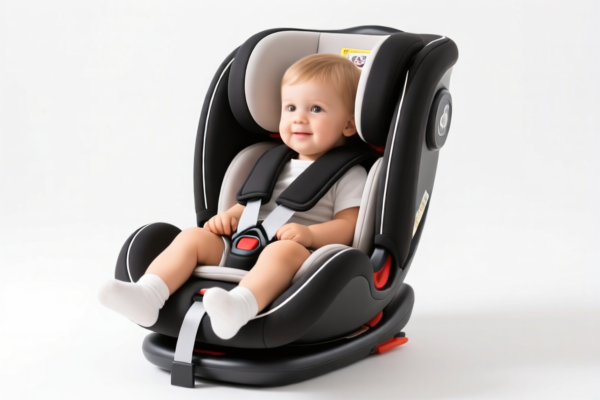


AI Analysis
🪑 Children's Dining Chair (Baby High Chair)
🌐 HS Code Reference & Clearance Guide | 2026 Tax Regime Full Analysis | Professional Customs Strategy
📌 I. Product Definition & Classification: Do You Really Know "Children's Dining Chair"?
A Children's Dining Chair (often called a Baby High Chair) is a specialized piece of furniture designed to secure infants and toddlers at table height during mealtime. In international trade, its classification depends heavily on structure (frame vs. molded), material (metal/plastic/wood), and function.
The data provided highlights three critical classification pathways based on material composition and functional intent:
- Furniture Category (Wood/Metal/Plastic Frames): Fits under 9401 (Seats).
- Plastic Component Category: Fits under 3926 (Other articles of plastics) if the structure is purely plastic or if classified as a generic plastic article.
- Composite Logic: Inference based on common market materials (reinforced/layered plastic) vs. traditional metal/wood frames.
⚠️ Critical Distinction:
- If it has a distinct metal/wood frame with soft padding → Likely 9401.71.00.01 (High Chairs).
- If it is primarily "reinforced or laminated plastic" → Likely 9401.80.20.01 (Other seats, plastic).
- If classified purely as a plastic article (non-furniture specific) → Likely 3926.30.50.00 or 3926.90.99.89.
📦 II. HS Code Classification Details (2026 Tax Regime Analysis)
Based on the provided data, here are the four potential HS Codes and their specific rationales:
| HS Code | Classification Logic | Key Material Inference | Primary Function |
|---|---|---|---|
9401.80.20.01 |
Other Seats, of Plastic | Inferred as "Reinforced or Laminated Plastic" | Matches "High Chair" function but categorized under plastic furniture. |
9401.71.00.01 |
High Chairs (Wood/Metal Frame) | Inferred as "Metal Frame + Soft Padding" | Direct match for "High Chair" definition. |
3926.30.50.00 |
Other Articles of Plastics | Inferred as "Plastic" (General) | "Plastic" logic extension; used as a "catch-all" if furniture code fails. |
3926.90.99.89 |
Other Plastic Articles | Inferred as "Plastic" (Finished Consumer Good) | Fits "Other Plastic Articles" category; no material conflict. |
🔍 Key Insight:
- Furniture Codes (9401) are generally preferred for completed chairs but carry 35% total tax.
- Plastic Codes (3926) are alternatives if the chair is deemed a "plastic article" rather than a "seat," resulting in a lower 22.8% total tax.
- Material Inference: Since the input name is generic ("Children's Dining Chair"), the classification relies on common sense inference (plastic vs. metal) to determine the tax bracket.
💰 III. 2026 Tariff Rate Breakdown (Detailed Tax Structure)
✅ Applicable Market: USA (US)
✅ Origin: China (CN)
✅ Tax Logic: Base Duty + Section 301 (Add-on) + Section 122 (Additional)
🎯 Scenario A: Furniture Classification (9401.80.20.01 & 9401.71.00.01)
Applicable to: High Chairs with Metal Frames OR Plastic Frames classified as Furniture.
| Tax Component | Rate | Legal/Policy Source | Details |
|---|---|---|---|
| Base Duty | 0.0% | General MFN Rate | No standard tariff for these seats. |
| Section 301 (Add-on) | 25.0% | Trade Act of 1974 (Section 301) | "China-specific" punitive tariff. |
| Section 122 (Add-on) | 10.0% | Section 122 of the Trade Act | Additional tariff on specific Chinese goods. |
| TOTAL TAX RATE | 35.0% | High Risk | Calculation: CIF Value × 35% |
📌 Why 35%?
Even though the base duty is 0%, the 25% (Section 301) + 10% (Section 122) penalties stack up, making these codes extremely expensive for importers.
🎯 Scenario B: Plastic Article Classification (3926.30.50.00 & 3926.90.99.89)
Applicable to: Chairs classified primarily as "Plastic Articles" rather than "Furniture Seats".
| Tax Component | Rate | Legal/Policy Source | Details |
|---|---|---|---|
| Base Duty | 5.3% | General MFN Rate | Standard tariff for plastic articles. |
| Section 301 (Add-on) | 7.5% | Trade Act of 1974 (Section 301) | Reduced punitive tariff compared to furniture. |
| Section 122 (Add-on) | 10.0% | Section 122 of the Trade Act | Same additional tariff as above. |
| TOTAL TAX RATE | 22.8% | Moderate Risk | Calculation: CIF Value × 22.8% |
📌 Why 22.8%?
By shifting the classification from "Furniture (9401)" to "Plastic Article (3926)", the Section 301 rate drops from 25% to 7.5%. This results in a 12.2% tax saving per unit.
🛠️ IV. Customs Clearance Practical Advice (Avoid Pitfalls)
✅ 1. Material Evidence is King
- The Problem: The input "Children's Dining Chair" is vague. Customs officers will demand proof of material.
- The Fix:
- For 9401: Provide Material Spec Sheets explicitly stating "Metal Frame" or "Reinforced Plastic." Include photos of the frame.
- For 3926: If claiming 3926, ensure the product is >50% plastic by volume or lacks a traditional "furniture" frame structure. Provide plastic composition reports.
✅ 2. Strategic Classification (Tax Optimization)
- Strategy: If the chair is made primarily of plastic (even with a plastic frame), argue for 3926.30.50.00 or 3926.90.99.89 to avoid the 35% "Furniture" penalty.
- Warning: Do NOT misdeclare a metal-frame chair as "plastic" without evidence. This leads to seizure, fines, and re-export orders.
✅ 3. Documentation Checklist
| Document | Purpose | Critical Detail |
|---|---|---|
| Commercial Invoice | Declare Value | Must clearly state "Children's High Chair" (Avoid vague terms like "Toy" or "Seat"). |
| Material Breakdown | Prove Classification | List % of Plastic vs. Metal vs. Wood. |
| Product Photos | Visual Proof | Show the structure (frame vs. molded). |
| Safety Certs | Compliance | ASTM F2347 (US Safety Standard) is mandatory for child products. |
| Binding Opinion | Pre-Ruling | Apply for an Advance Ruling from CBP to lock in the 22.8% rate if possible. |
✅ 4. Special "Section 122" Warning
- Section 122 (10%) applies to all listed codes in this dataset.
- No Exemptions: There is currently no "de minimis" (under $800) exemption for these high-value or specific tariff categories. Plan for full duty payment.
🌍 V. Clearance Comparison: Furniture vs. Plastic
| Feature | Furniture (9401) | Plastic Article (3926) |
|---|---|---|
| Tax Rate | 35.0% (High) | 22.8% (Lower) |
| Base Duty | 0.0% | 5.3% |
| 301 Tariff | 25.0% | 7.5% |
| 122 Tariff | 10.0% | 10.0% |
| Key Requirement | Must prove "Seat" function | Must prove "Plastic" nature |
| Risk Level | High (if misclassified) | Moderate (requires material proof) |
📌 Conclusion:
3926 is the "Golden Ticket" for plastic high chairs IF you can legally justify it. It saves 12.2% in tariffs. However, if the chair has a metal frame, 9401 is the only legal choice, and you must budget for the 35% total tax.
📌 VI. Common Errors & Pitfalls (Blood & Tears)
❌ Error 1: Declaring a Metal Frame Chair as 3926.90.99.89.
👉 Consequence: Customs audit, classification reversal, paying the difference + penalties.
✅ Fix: Accurate material declaration. If it has metal, use 9401.
❌ Error 2: Declaring a Plastic Chair as 9401.80.20.01 unnecessarily.
👉 Consequence: Paying 35% when 22.8% was available.
✅ Fix: Review the "Plastic Article" definition. If the chair is essentially a plastic mold, 3926 might be viable.
❌ Error 3: Ignoring Section 122.
👉 Consequence: Underestimating total cost by 10%.
✅ Fix: Always calculate Base + 301 + 122.
✅ Correct Declaration Template:
"Children's High Chair (High Chair), Model: [XYZ], Material: [Plastic Frame/Soft Pad], HS Code: [3926.90.99.89 or 9401.71.00.01], Origin: China."
🎯 VII. Final Verdict: How to Clear Smoothly
🎯 The Golden Rule:
"Material Dictates Code. Metal = 9401 (35%). Plastic = 3926 (22.8%). Verify, Don't Guess!"
📌 Action Plan for Importers:
1. Audit Product Specs: Is it plastic or metal?
2. Request Pre-Ruling: Ask CBP for a binding decision on 3926 eligibility to avoid surprises.
3. Budget Carefully: If classified as 9401, add 35% to your COGS. If 3926, add 22.8%.
4. Safety First: Ensure ASTM F2347 certification is included; child products face strict scrutiny regardless of HS Code.
📣 Immediate Action:
🚀 Contact a licensed Customs Broker today to review your product's material breakdown.
💡 Don't pay the 35% if you qualify for 22.8%!
✨ Smart Customs Clearance Starts with the Right Code!
💼 Save every dollar on tariffs—classify it right the first time!
Customer Reviews
About HS Code Classification
The Harmonized System (HS) is an internationally standardized nomenclature developed by the World Customs Organization (WCO) to classify traded products. Over 200 countries use the HS system as the basis for customs tariffs, trade statistics, and import/export regulations.
Each HS code follows a hierarchical structure:
- Chapter (2 digits) — Broad category of goods (e.g., Chapter 84: Machinery and Mechanical Appliances)
- Heading (4 digits) — More specific grouping within the chapter
- Subheading (6 digits) — Internationally standardized breakdown, used by all WCO member countries
- National subdivisions (8-10 digits) — Country-specific extensions for further classification, such as US HTSUS 10-digit codes
Correct HS code classification is essential for smooth customs clearance, accurate duty payment, and compliance with trade regulations. Misclassification can lead to customs delays, overpayment of duties, or penalties.
When importing from CN to US, the applicable tariff rates may include:
- Most-Favored-Nation (MFN) rate — The standard duty rate applied to WTO members
- General rate — Applied to countries without trade agreements
- Trade remedy duties — Additional tariffs such as Section 301 (anti-dumping), Section 232 (national security), or countervailing duties
The information provided on this page is for reference purposes only. For official classification, please consult with your local customs authority or a licensed customs broker.