Children's Dining Chair Booster Seat
CN → US| HS Code | Tariff Rate | Origin | Destination | Doc |
|---|---|---|---|---|
| 9503000073 | 10.0% | CN | US | Official Doc |
| 9401790001 | 35.0% | CN | US | Official Doc |
| 9401804001 | 35.0% | CN | US | Official Doc |
| 3926909989 | 22.8% | CN | US | Official Doc |
| 4421999880 | 38.3% | CN | US | Official Doc |
Product Images
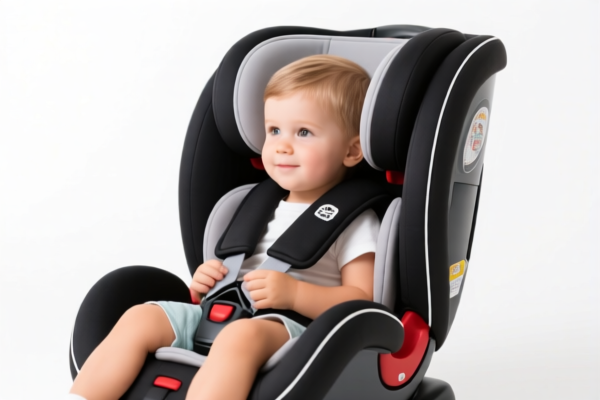
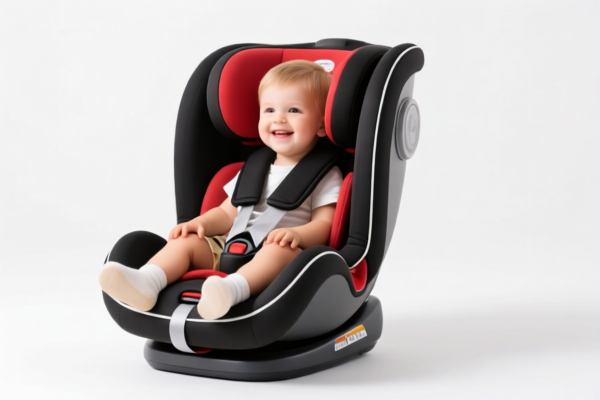
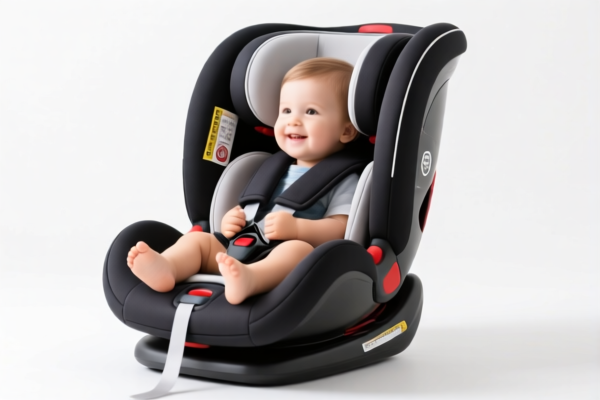
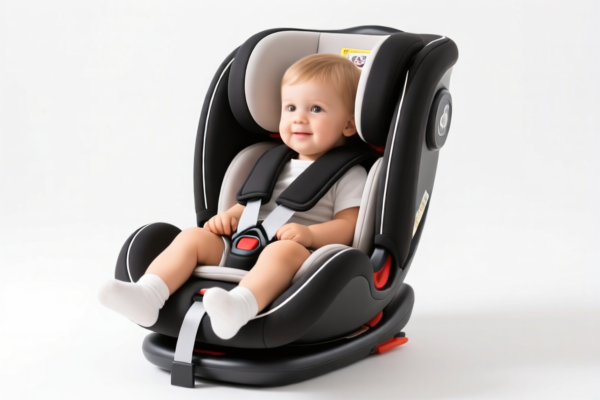
AI Analysis
🍼 Children's Dining Chair Booster Seat
🌐 HS Code Reference & Customs Clearance Guide | 2026 Latest Tariff Analysis | Professional Import Strategy
📌 One, Product Definition & Classification: What Exactly Is a "Booster Seat"?
A children's dining chair booster seat is a safety and ergonomic accessory designed to elevate young children (typically 2–7 years old) to a height suitable for standard dining tables. It is commonly used in homes, restaurants, and childcare facilities.
It is not a full chair, nor is it a standalone seating unit — instead, it fits onto existing adult chairs, providing a stable, elevated platform with back support and safety straps.
⚠️ Key Distinction:
- If the product only elevates the child and requires an existing chair → classified as a booster seat
- If it includes a complete frame, legs, and seat → may be classified as a children’s chair (e.g.,9401.79.00.01or9401.80.40.01)
📦 Two, HS Code Classification Details (2026 Latest Tariff Authority Match)
| HS Code | Product Description | Applicable Use Case | Material Assumption | Tax Rate |
|---|---|---|---|---|
9503.00.00.73 |
Toys and games; parts and accessories thereof; children's auxiliary pads (e.g., for play, sitting, or safety) | Used as a play or learning aid; no full chair function | Plastic, sponge, rubber (common toy materials) | 10.0% |
9401.79.00.01 |
Booster seats for children; metal or plastic frame structures | Primary use: dining chair booster seat with safety features | Metal or plastic frame, padded seat | 35.0% |
9401.80.40.01 |
Other seats for children; plastic or rubber seating units | Designed for child-sized use, often with backrest and safety straps | Plastic, rubber, foam padding | 35.0% |
3926.90.99.89 |
Other plastic articles; not elsewhere specified; furniture accessories | If the seat is primarily plastic and not part of a full chair | Plastic, rubber, or other synthetic materials | 22.8% |
4421.99.98.80 |
Other wooden articles; not elsewhere specified; furniture accessories | If the seat is wooden or wood-based (e.g., solid wood frame, wooden base) | Wood (natural or composite) | 38.3% |
🔍 Critical Insight:
- Material determines the HS Code more than design or function.
- A plastic booster seat →3926.90.99.89or9401.80.40.01
- A wooden booster seat →4421.99.98.80
- A toy-style pad used for play →9503.00.00.73
- A functional safety seat with frame →9401.79.00.01or9401.80.40.01
💰 Three, 2026 Latest Tariff Breakdown (With附加 Taxes & Legal Basis)
✅ Target Country: United States (US)
✅ Origin: China (CN)
✅ Effective Date: November 10, 2025 (inclusive)
✅ Applicable Laws: IEEPA, USITC Section 301, 122(a) Clause
🎯 1. 9503.00.00.73 — Children's Auxiliary Pad (Toy-Style)
| Item | Detail |
|---|---|
| Base Duty | 0.0% |
| Section 301 (USITC) Additional Duty | 0.0% |
| IEEPA 122(a) Clause Duty | 10.0% |
| Total Tax Rate | 10.0% |
| Tax Calculation | CIF Value × 10% |
| De Minimis Exemption? | ✅ Yes (if value < $800) |
| Legal Basis Path | IEEPA:9903.01.25 → 122(a) Clause:9903.01.24 → HS:9503.00.00.73 |
📌 Explanation:
- This code applies only if the product is clearly used as a toy or play accessory, not a safety seating device.
- No USITC 25% — because it’s not a “301-listed” product.
- Only 10% IEEPA 122(a) tariff applies — lowest among all options.
🎯 2. 9401.79.00.01 — Booster Seat (Metal/Plastic Frame)
| Item | Detail |
|---|---|
| Base Duty | 0.0% |
| Section 301 (USITC) Additional Duty | 25.0% |
| IEEPA 122(a) Clause Duty | 10.0% |
| Total Tax Rate | 35.0% |
| Tax Calculation | CIF Value × 35% |
| De Minimis Exemption? | ❌ No (IEEPA applies) |
| Legal Basis Path | IEEPA:9903.01.25 → USITC:9401.79.00.01 → 122(a) Clause:9903.01.24 |
📌 Explanation:
- This is the standard classification for functional booster seats.
- 25% USITC = Section 301 tariff on Chinese goods under “301 List 3”
- 10% IEEPA 122(a) = Emergency economic powers law on China-origin goods
- Total: 35% — very high for a child safety product.
🎯 3. 9401.80.40.01 — Other Children’s Seats (Plastic/Rubber)
| Item | Detail |
|---|---|
| Base Duty | 0.0% |
| Section 301 (USITC) Additional Duty | 25.0% |
| IEEPA 122(a) Clause Duty | 10.0% |
| Total Tax Rate | 35.0% |
| Tax Calculation | CIF Value × 35% |
| De Minimis Exemption? | ❌ No |
| Legal Basis Path | IEEPA:9903.01.25 → USITC:9401.80.40.01 → 122(a) Clause:9903.01.24 |
📌 Note:
- Applies to plastic/rubber child seats without metal frames.
- Same 35% rate as9401.79.00.01— no difference in tariff.
- Must prove non-metallic structure to avoid misclassification.
🎯 4. 3926.90.99.89 — Plastic Furniture Accessories
| Item | Detail |
|---|---|
| Base Duty | 5.3% |
| Section 301 (USITC) Additional Duty | 7.5% |
| IEEPA 122(a) Clause Duty | 10.0% |
| Total Tax Rate | 22.8% |
| Tax Calculation | CIF Value × 22.8% |
| De Minimis Exemption? | ✅ Yes (if < $800) |
| Legal Basis Path | USITC:3926.90.99.89 → IEEPA:9903.01.25 → 122(a) Clause:9903.01.24 |
📌 Key Advantage:
- Lower total tax (22.8%) than 35% seat codes
- Base duty is 5.3%, not 0% → but still cheaper overall
- Best for plastic-only booster seats that are not fully functional seats
- Useful for cost-saving strategy if you can justify it as a “furniture accessory”
🎯 5. 4421.99.98.80 — Wooden Furniture Accessories
| Item | Detail |
|---|---|
| Base Duty | 3.3% |
| Section 301 (USITC) Additional Duty | 25.0% |
| IEEPA 122(a) Clause Duty | 10.0% |
| Total Tax Rate | 38.3% |
| Tax Calculation | CIF Value × 38.3% |
| De Minimis Exemption? | ❌ No |
| Legal Basis Path | USITC:4421.99.98.80 → IEEPA:9903.01.25 → 122(a) Clause:9903.01.24 |
📌 Warning:
- Highest tariff (38.3%) among all options
- Only applies if wood is the primary structural material
- Not recommended unless you cannot avoid wood
- Best avoided unless you have certified wood origin or special exemption
🛠️ Four, Customs Clearance Best Practices (Pro Tips to Avoid Penalties)
✅ 1. Required Documentation (Must-Have)
| Document | Required? | Purpose |
|---|---|---|
| ✅ Product Specifications | ✔️ | Show material, dimensions, function |
| ✅ Material Test Report | ✔️ | Prove plastic/wood/metal content |
| ✅ Product Photos (with label) | ✔️ | Show frame, padding, straps |
| ✅ Commercial Invoice | ✔️ | Accurately describe product |
| ✅ Packing List | ✔️ | Show packaging, weight, quantity |
| ✅ Certificate of Origin (CO) | ✔️ | For preferential tariff claims |
| ✅ Safety Certification (ASTM F404, CPSC) | ✔️ | Mandatory for children’s products |
✅ 2.申报技巧(Key Rules)
🔥 “Material Rules, Not Name! Name Doesn’t Matter — Material Does!”
| Scenario | Correct HS Code | Wrong Code | Risk |
|---|---|---|---|
| Plastic frame, no metal | 3926.90.99.89 |
9401.79.00.01 |
Overpay 12.2% |
| Wooden frame | 4421.99.98.80 |
9401.80.40.01 |
Overpay 15.5% |
| Toy-style pad (no safety straps) | 9503.00.00.73 |
9401.80.40.01 |
Save 25% |
| Metal frame with straps | 9401.79.00.01 |
3926.90.99.89 |
Customs rejection |
✅ 3. Special Cases
| Situation | Recommended Action |
|---|---|
| Mixed material (plastic + wood) | Use material dominance rule — if plastic > 50%, use 3926.90.99.89 |
| No safety straps, just pad | Use 9503.00.00.73 — only 10% tax |
| Exported from Vietnam/Mexico | Apply for IEEPA exemption — 0% tariff |
| Custom-designed model | Apply for Advance Ruling (Pre-Approval) to lock in HS Code |
🌍 Five, Global Market Comparison (2026 Update)
| Country | Recommended HS Code | Tariff | Certification | Notes |
|---|---|---|---|---|
| 🇺🇸 USA | 3926.90.99.89 |
22.8% | CPSC, ASTM F404 | High risk if misclassified |
| 🇨🇳 China | 9401.80.40.01 |
5% | CCC | No additional tariffs |
| 🇪🇺 EU | 9401.80.40.01 |
0% | CE, EN 14988 | No 301/IEEPA tariffs |
| 🇦🇺 Australia | 9401.80.40.01 |
5% | RCM | No extra duties |
| 🇯🇵 Japan | 9401.80.40.01 |
0% | PSE | No附加税 |
📌 Conclusion:
- USA is the most expensive market for booster seats due to 301 + IEEPA tariffs
- China-origin products face 22.8%–38.3% in US
- Vietnam/Mexico-origin products may qualify for 0% tariff — strongly recommended
📌 Six, Common Mistakes & How to Avoid Them (Real-World Risks)
❌ Mistake 1: Calling a plastic booster seat “a toy” to avoid 35% tax
👉 Risk: Customs may reject if it has safety straps, backrest, or intended for dining → penalties, delays, or seizure
❌ Mistake 2: Using 9401.79.00.01 for a plastic-only seat
👉 Risk: Overpaying 35% instead of 22.8% → $10,000+ extra cost per container
❌ Mistake 3: Not providing material proof
👉 Risk: Customs may reclassify → higher tax + interest + fines
✅ Correct Approach:
“Plastic Children’s Booster Seat, 100% Plastic Frame, No Metal, No Safety Straps, Used as Dining Aid, Model ABC, ASTM F404 Certified”
🎯 Seven, Final Verdict: Smart Classification = Big Savings
🔹 Best for Cost: Use
3926.90.99.89if plastic-only and no safety features
🔹 Best for Safety: Use9401.79.00.01or9401.80.40.01if metal frame or straps
🔹 Best for Avoiding Tax: Source from Vietnam/Mexico → 0% tariff
🔹 Best for Play Use: Use9503.00.00.73— only 10% tax
📌 Pro Tip:
✅ Apply for Advance Ruling (Pre-Approval) before shipping
✅ Get a material test report from a certified lab
✅ Use a professional customs broker familiar with children’s product classification
📣 Take Action Now!
📞 Contact a licensed customs broker + provide product photos + request HS Code pre-approval
🚀 Avoid delays, overpayment, and seizures — get it right the first time!
✨ Smart Classification = Lower Tax = Higher Profit!
💼 Your product’s success starts with the right HS Code!
Customer Reviews
About HS Code Classification
The Harmonized System (HS) is an internationally standardized nomenclature developed by the World Customs Organization (WCO) to classify traded products. Over 200 countries use the HS system as the basis for customs tariffs, trade statistics, and import/export regulations.
Each HS code follows a hierarchical structure:
- Chapter (2 digits) — Broad category of goods (e.g., Chapter 84: Machinery and Mechanical Appliances)
- Heading (4 digits) — More specific grouping within the chapter
- Subheading (6 digits) — Internationally standardized breakdown, used by all WCO member countries
- National subdivisions (8-10 digits) — Country-specific extensions for further classification, such as US HTSUS 10-digit codes
Correct HS code classification is essential for smooth customs clearance, accurate duty payment, and compliance with trade regulations. Misclassification can lead to customs delays, overpayment of duties, or penalties.
When importing from CN to US, the applicable tariff rates may include:
- Most-Favored-Nation (MFN) rate — The standard duty rate applied to WTO members
- General rate — Applied to countries without trade agreements
- Trade remedy duties — Additional tariffs such as Section 301 (anti-dumping), Section 232 (national security), or countervailing duties
The information provided on this page is for reference purposes only. For official classification, please consult with your local customs authority or a licensed customs broker.