Children's Earplugs
CN → US| HS Code | Tariff Rate | Origin | Destination | Doc |
|---|---|---|---|---|
| 9021100090 | 10.0% | CN | US | Official Doc |
| 4016996050 | 37.5% | CN | US | Official Doc |
| 4016990500 | 20.9% | CN | US | Official Doc |
| 9021908100 | 10.0% | CN | US | Official Doc |
| 8543708900 | 17.5% | CN | US | Official Doc |
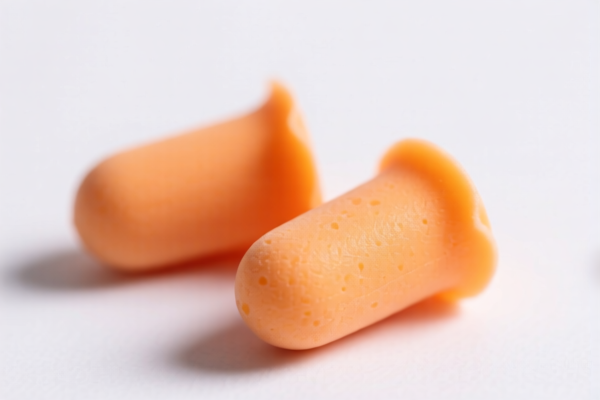
Product Images



AI Analysis
🎧 Children's Earplugs (Kids' Ear Plugs)
🌐 HS Code Reference & Customs Clearance Guide | 2026 Latest Tariff Analysis | Professional-Level Strategy
📌 I. Product Definition & Classification: What Exactly Are "Children's Earplugs"?
Children's earplugs are specialized auditory protection devices designed specifically for the smaller ear canals of minors. In international trade, they are often ambiguous because they straddle the lines between medical devices, personal protective equipment (PPE), audio accessories, and general consumer goods.
To ensure accurate customs clearance and optimal tax treatment, you must distinguish between their primary function and material composition.
⚠️ Key Distinction Point:
- If intended for medical hearing assistance or hearing protection as a medical necessity → Category 9021 (Orthopedic Appliances).
- If intended for general noise reduction in non-medical contexts (e.g., sleeping, travel) → Category 4016 (Rubber Articles) or 9021 (if considered general orthopedic).
- If they are active noise-canceling devices with audio playback → Category 8543 (Electrical Machines).
- ❌ Critical Warning: Do not misclassify simple foam/rubber earplugs as "headphones" or "medical implants."
📦 II. HS Code Classification Details (2026 Latest Tariff Alignment)
Based on the provided data, here are the five potential HS Codes for "Children's Earplugs," ranked by logical fit and tax implication.
| HS Code | Product Description | Primary Basis for Classification | Total Tax Rate (US) | Material/Usage Match |
|---|---|---|---|---|
| 9021.10.00.90 | Orthopedic Appliances: Other (Excl. Plates, Screws, etc.) | Medical/Orthopedic Fit: Used as general orthopedic appliances for hearing protection. | 10.0% | ✅ High Fit (No material conflict; general "other" category for braces/appliances) |
| 9021.90.81.00 | Orthopedic Appliances: Other (For compensating defects/disabilities) | Functional Fit: Considered an appliance for compensating auditory defects or protecting hearing. | 10.0% | ✅ High Fit (Specifically covers "appliances for compensating defects") |
| 8543.70.89.00 | Electrical Machines: Other (Audio Reproduction Equipment) | Active Function: Only applies if they are active electronic devices (e.g., Bluetooth, noise-canceling). | 17.5% | ⚠️ Conditional (Only for "Earplug Headphones" with audio playback capabilities) |
| 4016.99.05.00 | Other Rubber Articles: Other Household Items | Material + General Use: Silicone/Rubber earplugs used for household/personal protection. | 20.9% | ✅ Moderate Fit (Fits material: Rubber/Silicone; Use: Household/Personal) |
| 4016.99.60.50 | Other Rubber Articles: Other (General Purpose) | Material + General Purpose: General vulcanized rubber articles without specific medical/orthopedic claim. | 37.5% | ⚠️ Low Fit (High tax; "catch-all" for rubber goods; best avoided if medical/orthopedic classification is viable) |
🔍 Key Insight:
- Best Tax Advantage: Codes 9021.10.00.90 and 9021.90.81.00 offer the lowest total tax rate (10.0%). These classify earplugs as orthopedic/medical appliances, which is a defensible argument for hearing protection devices.
- Avoid if Possible: Code 4016.99.60.50 carries a 37.5% total tax rate. This is the "worst-case" scenario for rubber earplugs, treated as generic industrial/commercial rubber goods.
- Active vs. Passive: If the earplugs have electronics (e.g., music playing, active noise cancellation), they must go under 8543.70.89.00 (17.5%), regardless of material.
💰 III. 2026 Latest Tariff Rate Breakdown (Including Surcharges & Policy Add-ons)
✅ Applicable Country: United States (US)
✅ Origin: China (CN)
✅ Effective Date: Post-November 10, 2025 (Includes subsequent imports)
🎯 1. 9021.10.00.90 & 9021.90.81.00 — Orthopedic Appliances (Hearing Protection)
| Item | Detail |
|---|---|
| Base Tariff | 0.0% |
| Section 301 Surcharge | 0.0% |
| IEEPA Surcharge (122 Clause) | +10.0% |
| Total Tax Rate | 10.0% |
| Tax Calculation | CIF Value × 10.0% |
| De Minimis Exemption? | ❌ No (Denied due to IEEPA provisions) |
| Legal Authority Path | IEEPA:9903.01.25 → USITC:9021.10.00.90 / 9021.90.81.00 |
📌 Explanation:
- These codes benefit from a 0% base tariff and 0% Section 301 surcharge because they are classified as medical/orthopedic apparatus, which are often exempt from certain trade war penalties.
- However, the 10% IEEPA surcharge still applies to Chinese-origin goods.
- Result: Only 10% total tax, making this the most cost-effective classification for passive earplugs.
🎯 2. 8543.70.89.00 — Electrical Audio Devices (Active Earplugs)
| Item | Detail |
|---|---|
| Base Tariff | 0.0% |
| Section 301 Surcharge | +7.5% |
| IEEPA Surcharge (122 Clause) | +10.0% |
| Total Tax Rate | 17.5% |
| Tax Calculation | CIF Value × 17.5% |
| De Minimis Exemption? | ❌ No |
| Legal Authority Path | IEEPA:9903.01.24 → USITC:8543.70.89.00 → FOOTNOTE:9903.88.01 |
📌 Explanation:
- If your product is a "Children's Earplug Headphone" (with speakers), it falls under electrical machinery.
- The 7.5% Section 301 surcharge applies to many electrical components.
- Result: 17.5% total tax. Still cheaper than rubber classification, but higher than orthopedic classification.
🎯 3. 4016.99.05.00 — Rubber Household Items
| Item | Detail |
|---|---|
| Base Tariff | 3.4% |
| Section 301 Surcharge | +7.5% |
| IEEPA Surcharge (122 Clause) | +10.0% |
| Total Tax Rate | 20.9% |
| Tax Calculation | CIF Value × 20.9% |
| De Minimis Exemption? | ❌ No |
| Legal Authority Path | IEEPA:9903.01.24 → USITC:4016.99.05.00 → FOOTNOTE:9903.88.01 |
📌 Explanation:
- Suitable for silicone/rubber earplugs marketed as "household" or "personal care" items.
- Result: 20.9% total tax. Higher than orthopedic codes, so only use if orthopedic classification is rejected.
🎯 4. 4016.99.60.50 — General Rubber Articles (Worst Case)
| Item | Detail |
|---|---|
| Base Tariff | 2.5% |
| Section 301 Surcharge | +25.0% |
| IEEPA Surcharge (122 Clause) | +10.0% |
| Total Tax Rate | 37.5% |
| Tax Calculation | CIF Value × 37.5% |
| De Minimis Exemption? | ❌ No |
| Legal Authority Path | IEEPA:9903.01.25 → IEEPA:9903.01.24 → USITC:4016.99.60.50 → FOOTNOTE:9903.88.01 |
📌 Explanation:
- This is the generic "other rubber articles" category.
- The 25% Section 301 surcharge is the highest among rubber goods.
- Result: 37.5% total tax. Avoid this classification unless you have no other option. It significantly erodes profit margins.
🛠️ IV. Customs Clearance Practical Advice (Pitfall Avoidance Guide)
✅ 1. Documentation Checklist (Non-negotiable)
| Document | Required | Notes |
|---|---|---|
| ✅ Product Specification Sheet | ✔️ | Must clearly state: "Passive Noise Reduction" vs. "Active Electronic Audio." |
| ✅ Material Composition Statement | ✔️ | Specify if it is Silicone, Foam, or Rubber. Crucial for 4016 vs. 9021 classification. |
| ✅ Intended Use Statement | ✔️ | Explicitly state: "For hearing protection in children" or "For auditory comfort." |
| ✅ Product Photos | ✔️ | Include size comparison (e.g., with a child’s ear or coin) to justify "Children's" claim. |
| ✅ Commercial Invoice | ✔️ | Use precise description: "Children's Orthopedic Earplugs for Hearing Protection" OR "Children's Silicone Ear Plugs." |
| ✅ Certificate of Origin (CO) | ✔️ | Required for IEEPA surcharge determination. |
| ✅ Test Reports | ✔️ | FDA/CE certification for hearing protection levels (NRR/SNR) supports 9021 classification. |
✅ 2. Declaration Strategy (Key Mnemonic)
🔥 "Define Function First, Then Material; Medical Claim Lowers Tax!"
| Scenario | Correct HS Code | Risk if Misclassified |
|---|---|---|
| Passive Earplugs (Foam/Rubber) for hearing protection | 9021.10.00.90 or 9021.90.81.00 | Misclassifying as 4016 → Tax jumps from 10% to 37.5%! |
| Active Earplug Headphones (Bluetooth/Electronic) | 8543.70.89.00 | Misclassifying as 9021 → Seized as false declaration |
| Generic Rubber Plugs (No medical claim) | 4016.99.05.00 | Misclassifying as 9021 → Rejected; reassigned to 4016.99.60.50 (37.5%) |
| Earplugs with Earbuds (Combined) | 8543.70.89.00 | Splitting declaration → Complexity; higher overall tax |
✅ 3. Special Situations
| Situation | Recommendation |
|---|---|
| OEM for Pediatric Hospitals | Provide hospital purchase orders to support 9021 medical classification. |
| Silicone vs. Foam | Silicone is easier to classify under 4016 or 9021; Foam may be scrutinized more heavily. |
| Combined Packaging | If sold with a carrying case, declare as one unit under the primary product code. |
| Claiming "Hearing Protection" | Use technical data (NRR rating) to support the 9021 orthopedic classification. |
🌍 V. Global Market Comparison (2026 Latest)
| Country/Region | Recommended HS Code | Tax Rate (China Origin) | Certification Needed | Notes |
|---|---|---|---|---|
| 🇺🇸 USA | 9021.10.00.90 |
10.0% | FDA/CE (Optional but recommended) | Best tax rate for passive earplugs |
| 🇨🇳 China | 9021.10.00.90 |
~5-10% | CCC (if applicable) | Lower base tariff |
| 🇪🇺 EU | 9021.90.90 |
0% (if medical) | CE Medical Device | Different code structure; check EU tariff |
| 🇬🇧 UK | 9021.90.90 |
0-5% | UKCA | Post-Brexit rules may vary |
| 🇦🇺 Australia | 9021.90.90 |
5% | TGA (if medical) | Lower than US Section 301 |
📌 Conclusion:
- USA has the most complex tariff structure due to IEEPA/Section 301.
- Classification as "Orthopedic/Medical" (9021) is critical to avoid the 25-37.5% rubber surcharges.
- Active electronic earplugs are taxed at 17.5%, which is still better than generic rubber (37.5%).
📌 VI. Common Errors & Pitfalls (Lessons Learned)
❌ Error 1: Classifying passive earplugs as 4016.99.60.50
👉 Consequence: Paying 37.5% tax instead of 10%.
👉 Fix: Argue for orthopedic use (hearing protection).
❌ Error 2: Calling active earplugs "earplugs" without mentioning electronics
👉 Consequence: Customs may reclassify based on technical inspection, causing delays.
👉 Fix: Clearly state "Active Noise-Canceling Earplugs" or "Bluetooth Earplugs."
❌ Error 3: Ignoring the "Children's" aspect in description
👉 Consequence: May be flagged for safety regulations (Choking hazards, material toxicity).
👉 Fix: Include age range (e.g., "For ages 3-10") and material safety certs (Non-toxic silicone).
❌ Error 4: Using "Earphones" for passive earplugs
👉 Consequence: Classification under 8518 (Sound recording/reproducing equipment) → Different tax, potential FCC issues.
👉 Fix: Use "Earplugs" or "Hearing Protectors."
✅ Correct Approach:
"Children's Passive Hearing Protection Earplugs, Silicone Material, NRR 25dB, For Ages 4-12, Non-Electronic"
→ HS Code: 9021.10.00.90
🎯 VII. Conclusion: Precise Classification Saves 27.5% in Tax!
🎯 Remember the Mnemonic:
🔹 "Medical/Orthopedic = 10%; Electrical = 17.5%; Generic Rubber = 37.5%!"
🔹 "Don't let generic rubber labels cost you 27.5% in extra taxes!"
🔹 "HS Code is life; tax difference is thousands!"
📌 Pro Tip:
- If your earplugs are silicone, consider arguing for 9021 (Orthopedic) rather than 4016 (Rubber). Provide product brochures stating "Hearing Protection" or "Medical Grade" to support this.
- If you have electronic features, you cannot use 9021. Use 8543.70.89.00 (17.5%).
- Always apply for a Binding Ruling from US Customs (CBP) if the product is ambiguous. This provides legal certainty and avoids retroactive tax penalties.
📣 Immediate Action:
📞 Consult a licensed customs broker.
📤 Prepare technical specs highlighting hearing protection function.
🚀 Classify as 9021 if possible to minimize duty!
✨ Professional Customs Clearance Starts with Accurate Classification!
💼 Every Dollar Saved in Tax is Pure Profit!
Customer Reviews
About HS Code Classification
The Harmonized System (HS) is an internationally standardized nomenclature developed by the World Customs Organization (WCO) to classify traded products. Over 200 countries use the HS system as the basis for customs tariffs, trade statistics, and import/export regulations.
Each HS code follows a hierarchical structure:
- Chapter (2 digits) — Broad category of goods (e.g., Chapter 84: Machinery and Mechanical Appliances)
- Heading (4 digits) — More specific grouping within the chapter
- Subheading (6 digits) — Internationally standardized breakdown, used by all WCO member countries
- National subdivisions (8-10 digits) — Country-specific extensions for further classification, such as US HTSUS 10-digit codes
Correct HS code classification is essential for smooth customs clearance, accurate duty payment, and compliance with trade regulations. Misclassification can lead to customs delays, overpayment of duties, or penalties.
When importing from CN to US, the applicable tariff rates may include:
- Most-Favored-Nation (MFN) rate — The standard duty rate applied to WTO members
- General rate — Applied to countries without trade agreements
- Trade remedy duties — Additional tariffs such as Section 301 (anti-dumping), Section 232 (national security), or countervailing duties
The information provided on this page is for reference purposes only. For official classification, please consult with your local customs authority or a licensed customs broker.