Children's Felt Cloth DIY
CN → US| HS Code | Tariff Rate | Origin | Destination | Doc |
|---|---|---|---|---|
| 5609001000 | 37.9% | CN | US | Official Doc |
| 5609003000 | 39.5% | CN | US | Official Doc |
| 9503000073 | 10.0% | CN | US | Official Doc |
| 9503000071 | 10.0% | CN | US | Official Doc |
Product Images
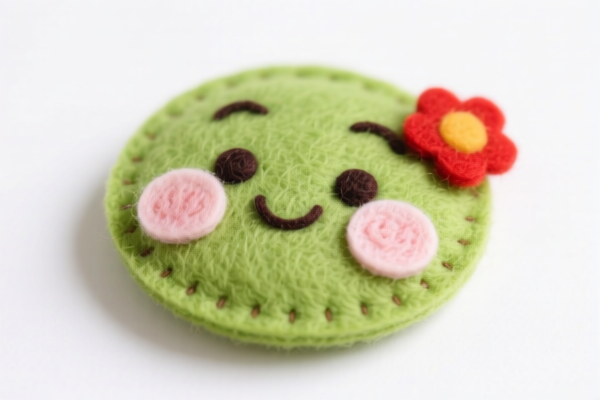
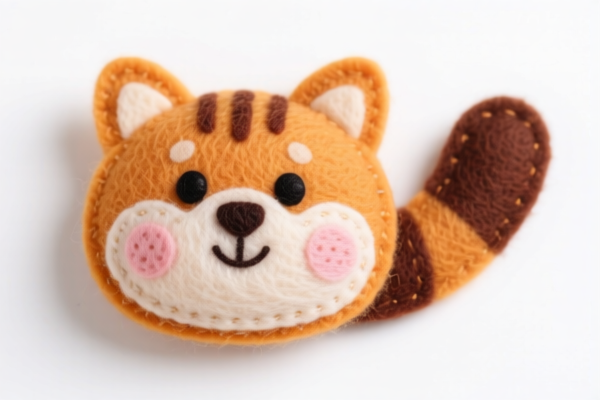
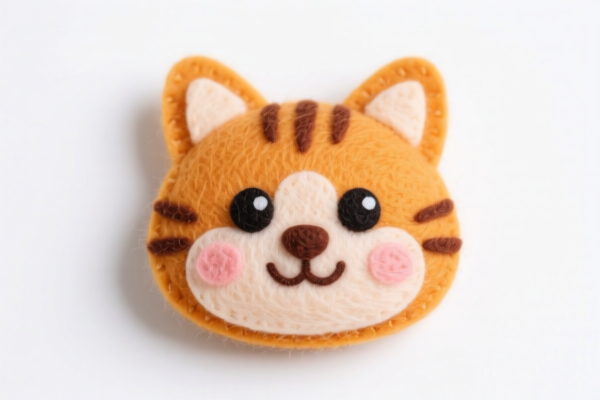
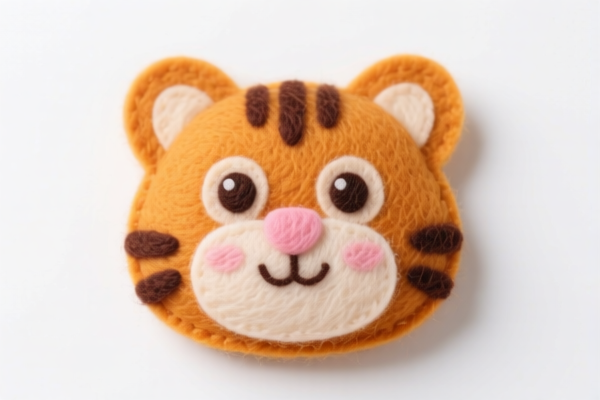
AI Analysis
🧸 Children's Felt Cloth DIY Kit
🌐 HS Code Reference & Customs Clearance Guide | 2026 Latest Tariff Analysis | Professional Entry Strategy
📌 1. Product Definition & Classification: What is a "Children's Felt Cloth DIY"?
A "Children's Felt Cloth DIY" (Do-It-Yourself) kit is typically a craft set containing pre-cut felt pieces, thread, needles, stuffing, and instructions for children to assemble toys (such as dolls, animals, or plush items).
In international trade, this product falls into a critical "Dual-Use" or "Accessory vs. Toy" categorization dilemma:
-
Scenario A: The Kit is Classified as a "Toy" If the felt pieces are primarily meant to create a doll or a toy that falls under the definition of a "Children's Product" (intended for play), it is classified under Chapter 95 (Toys).
- Key Factor: Does the final product resemble a doll or a recreational toy? Is the marketing explicitly for "play"?
-
Scenario B: The Kit is Classified as "Textile Accessories/Parts" If the felt strips or articles are considered "articles of yarn, strip, or the like" intended for crafting rather than immediate play, or if the kit is marketed strictly as a "craft supply" without a specific toy end-use, it may fall under Chapter 56 (Textile Articles).
- Key Factor: Are the items described as "articles of yarn, strip... of cotton/man-made fibers"?
⚠️ Critical Distinction: * If labeled/determined as a Toy (e.g., DIY Doll Kit): Use HS Code 9503. * If labeled as Textile Material/Accessory (e.g., Felt Craft Strips): Use HS Code 5609.
📦 2. HS Code Classification Details (Based on Provided Data)
| HS Code | Product Description | Applicable Scenario | Material |
|---|---|---|---|
9503.00.00.71 |
Toy: Tricycles, scooters, pedal cars... dolls, other toys... "Children's products" as defined in 15 U.S.C. § 2052: Under 3 years of age | Kits intended for babies/toddlers (e.g., simple plush animals, soft dolls). | Any (Toy Definition) |
9503.00.00.73 |
Toy: Tricycles, scooters, pedal cars... dolls, other toys... "Children's products" as defined in 15 U.S.C. § 2052: 3 to 12 years of age | Kits for older children (e.g., detailed dolls, character figures, puzzles). | Any (Toy Definition) |
5609.00.10.00 |
Textile Article: Articles of yarn, strip... of cotton | DIY kits where the primary component is Cotton felt strips/articles, not explicitly marketed as a final toy. | Cotton |
5609.00.30.00 |
Textile Article: Articles of yarn, strip... of man-made fibers | DIY kits where the primary component is Man-made Fiber (e.g., Polyester felt) strips/articles. | Man-made Fiber |
🔍 Key Reminder: * Toy Classification (9503): Requires compliance with 15 U.S.C. § 2052 ("Children's Products"). This triggers CPSIA requirements (tracking labels, testing certificates). * Textile Classification (5609): Treated as general textile goods. No toy-specific regulatory burden, but must prove the item is not a toy.
💰 3. 2026 Latest Tariff Rate Details
✅ Applicable Country: United States (US)
✅ Origin: China (CN)
✅ Effective Time: Current Rates (As per Provided Data)
🎯 1. Toy Classifications: 9503.00.00.71 & 9503.00.00.73
| Item | Content |
|---|---|
| Base Tariff | 0.0% |
| Additional Tariff (Section 301/Other) | 0.0% |
| Total Tax Rate | 0.0% |
| Tax Detail | Base: 0.0%, Additional: 0.0% |
| Legal Basis | Directly from HS Code 9503 data |
📌 Explanation: * Toys generally benefit from lower or zero base tariffs. * Crucially, according to the provided data, there are NO additional tariffs listed for these toy codes. This is a significant cost advantage compared to many other Chinese imports. * Regulatory Cost: While tariff is 0%, you must budget for CPSIA testing (Lead, Phthalates, etc.) and ASTM F963 compliance, which can be expensive but is mandatory for
9503toys.
🎯 2. Textile Classifications: 5609.00.10.00 (Cotton) & 5609.00.30.00 (Man-made)
| Item | Content |
|---|---|
| Base Tariff | 0.0% |
| Additional Tariff | 0.0% |
| Total Tax Rate | 0.0% |
| Tax Detail | Base: 0.0%, Additional: 0.0% |
| Legal Basis | Directly from HS Code 5609 data |
📌 Explanation: * Textile articles like felt strips also have 0.0% duty in this dataset. * Risk: If Customs determines the item is actually a Toy but was declared under
5609, you will face retroactive taxes (if any apply to toys in your specific context), penalties, and detention.
🛠️ 4. Customs Clearance Practical Advice
✅ 1. Preparation Checklist
| Document | Required | Notes |
|---|---|---|
| Product Labeling | ✅ Mandatory | Must clearly state age group (Under 3 or 3-12) if classified as Toy. |
| Tracking Label | ✅ Mandatory | For 9503 toys: Production date, batch, manufacturer info. |
| CPSIA Test Report | ✅ Mandatory | If classified as 9503, provide children’s product certificate (CPC). |
| Material Composition | ✅ Required | Specify Cotton vs. Man-made Fiber for 5609 codes. |
| Commercial Invoice | ✅ Required | Clearly describe item: e.g., "Felt DIY Doll Kit, Age 3+" or "Felt Craft Strips". |
✅ 2. Declaration Strategy
🔥 "Know Your Product: Is it Play or Craft?"
| Situation | Correct HS Code | Wrong Action | Consequence |
|---|---|---|---|
| DIY Doll/Animal Kit (Marketing says "Play with Kids") | 9503.00.00.71 (Under 3) or 9503.00.00.73 (3-12) |
Declare as 5609 (Textile) |
Detention, Penalty, Forced Repatriation |
| Craft Felt Strips (No toy intent, just material) | 5609.00.10.00 (Cotton) or 5609.00.30.00 (Man-made) |
Declare as 9503 (Toy) |
Unnecessary CPC testing costs |
| Mixed Kit (Felt + Needle + Thread for Doll) | 9503.00.00.73 (Likely Toy) |
Split declaration | Customs Rejection |
✅ 3. Special Considerations
- Age Classification:
- Under 3 (
9503.00.00.71): Stricter safety rules (small parts, choking hazards). Must have specific choking hazard warnings if not compliant. - 3-12 (
9503.00.00.73): Standard toy safety.
- Under 3 (
- Material Declaration:
- For
5609codes, misdeclaring Man-made as Cotton (or vice versa) can lead to classification disputes, even if duties are the same. Be precise.
- For
- Regulatory Burden:
- Choosing
9503means higher compliance costs (testing, labeling) but lower risk of misclassification for play items. - Choosing
5609means lower compliance costs but high risk if the product is deemed a toy by CBP.
- Choosing
🌍 5. Global Market Comparison (2026)
| Country/Region | Recommended HS Code | Tariff (China Origin) | Certification Required | Notes |
|---|---|---|---|---|
| 🇺🇸 USA | 9503.00.00.71/73 |
0.0% | CPC, ASTM F963, CPSIA | High regulatory cost, low duty. |
| 🇺🇸 USA | 5609.00.10/30 |
0.0% | None (General Textile) | Low regulatory cost, high misclassification risk. |
| 🇪🇺 EU | 9503 (Toy) |
0% - 4.7% | CE, EN71 | Different duty structure. |
| 🇨🇳 China | 9503 |
0% - 5% | CCC (if applicable) | Import duty varies. |
📌 Conclusion: * In the US, Toys (
9503) have 0% tariff but require strict compliance. * Textiles (5609) have 0% tariff and minimal compliance, but are only valid for non-toy craft materials. * Recommendation: If your DIY kit is intended for children’s play, declare it as a Toy (9503). The 0% tariff is a significant benefit, and compliance is manageable with proper testing.
📌 6. Common Errors & Pitfalls
❌ Error 1: Declaring a DIY Doll Kit as Felt Strips (5609) to avoid CPSIA.
👉 Consequence: CBP will inspect, determine it’s a toy, and assess penalties + require retroactive CPC.
❌ Error 2: Mislabeling Age Group (e.g., labeling a 3+ toy as Under 3).
👉 Consequence: Incorrect HS Code (71 vs 73), potential safety violation.
❌ Error 3: Missing Tracking Label on Toy Kits. 👉 Consequence: Refusal of Entry at US Customs.
❌ Error 4: Not specifying Material for 5609 (Cotton vs. Man-made).
👉 Consequence: Delays in classification.
✅ Correct Practice:
"Felt DIY Animal Kit, Contains Pre-cut Felt Pieces, Thread, Stuffing, Instructions. Intended for Children 3-12 Years. Compliant with ASTM F963."
🎯 7. Conclusion: Professional Declaration for Cost & Compliance
🎯 Key Takeaway:
🔹 "Toys are 0% Duty, but Cost Compliance; Textiles are 0% Duty, but Risk Misclassification." 🔹 "Choose
9503if it’s for Play. Choose5609if it’s for Craft."📌 Tip: For Children’s Felt DIY Kits, the 0% Tariff is a major advantage. Ensure you have CPSIA/CPC ready if classifying as a toy. This avoids clearance delays and penalties.
📣 Immediate Action:
📞 Consult with a Customs Broker to confirm if your specific kit is considered a "Toy" under 15 U.S.C. § 2052. 🚀 Prepare CPC Documentation early to ensure smooth entry into the US market.
✨ Professional Clearance Starts with Accurate Classification! 💼 Maximize Savings, Minimize Risk!
Customer Reviews
About HS Code Classification
The Harmonized System (HS) is an internationally standardized nomenclature developed by the World Customs Organization (WCO) to classify traded products. Over 200 countries use the HS system as the basis for customs tariffs, trade statistics, and import/export regulations.
Each HS code follows a hierarchical structure:
- Chapter (2 digits) — Broad category of goods (e.g., Chapter 84: Machinery and Mechanical Appliances)
- Heading (4 digits) — More specific grouping within the chapter
- Subheading (6 digits) — Internationally standardized breakdown, used by all WCO member countries
- National subdivisions (8-10 digits) — Country-specific extensions for further classification, such as US HTSUS 10-digit codes
Correct HS code classification is essential for smooth customs clearance, accurate duty payment, and compliance with trade regulations. Misclassification can lead to customs delays, overpayment of duties, or penalties.
When importing from CN to US, the applicable tariff rates may include:
- Most-Favored-Nation (MFN) rate — The standard duty rate applied to WTO members
- General rate — Applied to countries without trade agreements
- Trade remedy duties — Additional tariffs such as Section 301 (anti-dumping), Section 232 (national security), or countervailing duties
The information provided on this page is for reference purposes only. For official classification, please consult with your local customs authority or a licensed customs broker.