Children's Fruit Knife Toy
CN → US| HS Code | Tariff Rate | Origin | Destination | Doc |
|---|---|---|---|---|
| 3926909989 | 22.8% | CN | US | Official Doc |
| 8211924060 | 0.0% | CN | US | Official Doc |
| 8211915060 | 0.0% | CN | US | Official Doc |
| 9503000071 | 10.0% | CN | US | Official Doc |
| 9503000073 | 10.0% | CN | US | Official Doc |
Product Images
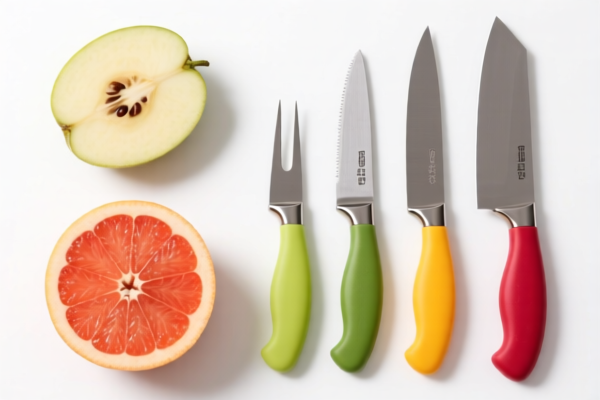
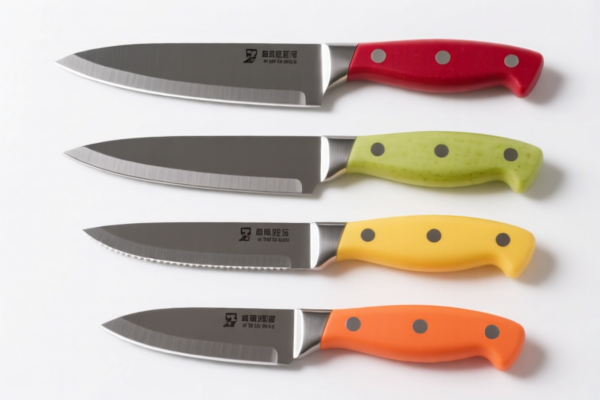
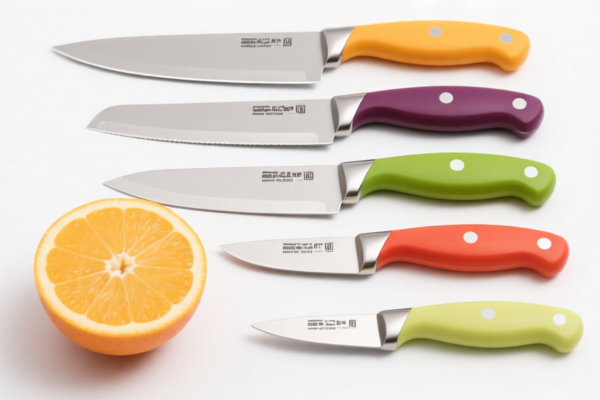
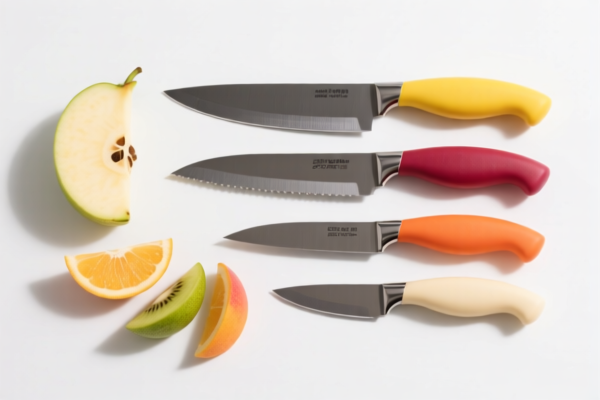
AI Analysis
🍎 Children’s Fruit Knife Toy (Plastic Play Knife for Kids)
🌐 HS Code Reference & Customs Clearance Guide | 2026 Latest Tariff Analysis | Professional Compliance Strategy
📌 I. Product Definition & Classification: What Exactly Is a "Children's Fruit Knife Toy"?
A "Children's Fruit Knife Toy" is a plastic replica of a kitchen knife designed for imaginative play, role-playing, or pretend cooking. It is not a functional cutting tool. In international trade, its classification depends heavily on whether it is marketed specifically as a toy or if it lacks the specific characteristics of a toy and is instead viewed as a plastic household item or other article of plastic.
⚠️ Key Distinction:
- If the item is clearly identifiable as a toy (bright colors, child-friendly size, marketed for play) → Chapter 95 (Toys)
- If it looks like a real kitchen utensil but is plastic, and not primarily marketed as a toy → Chapter 39 (Plastics Articles) or Chapter 82 (Tools/Knives)
- Critical Note: Even if "toy-like," customs authorities may classify it under Chapter 82 if it resembles a real tool, potentially triggering higher Section 301 tariffs.
📦 II. HS Code Classification Details (2026 Latest Tariff Regime)
| HS Code | Product Description | 适用场景 (Application) | Key Classification Reason |
|---|---|---|---|
3926.90.99.89 |
Other articles of plastic, not elsewhere specified | General plastic items, non-toy plastic replicas | Classified as "Plastic Article" due to lack of specific toy features |
8211.92.40.60 |
Knives with handles of other materials (e.g., plastic), not sharp | Plastic-handled knives, non-edged, non-functional | Classified as "Knife" (non-functional) due to shape resemblance |
8211.91.50.60 |
Fixed blade knives, other | Plastic knives with fixed blade shape | Classified as "Other Knives" due to structural similarity |
9503.00.00.71 |
Toys representing animals, human figures, or other objects | Primary Toy Classification: Children's play knives | Classified as a "Toy" due to intent, design, and marketing |
9503.00.00.73 |
Other toys (e.g., puzzle toys, construction toys) | General plastic toys not fitting other toy categories | Alternative toy classification for non-specific play items |
🔍 Important Reminder:
- Chapter 95 (Toys) offers the lowest tariff burden but requires proof that the item is primarily a toy (e.g., packaging, marketing, safety certifications for children).
- Chapter 82 & 39 may apply if the item is deemed a "utensil" or "article of plastic" rather than a toy. Be cautious: Misclassification can lead to audits, penalties, and retroactive tariffs.
💰 III. 2026 Latest Tariff Rate Breakdown (Including Surcharges & Policy Add-ons)
✅ Applicable Country: United States (US)
✅ Origin: China (CN)
✅ Effective Date: 2025年11月10日起 (From November 10, 2025, for subsequent imports)
🎯 1. 3926.90.99.89 —— Other Articles of Plastic
| Item | Content |
|---|---|
| Base Tariff | 5.3% (ad valorem) |
| Section 301 Surcharge | +7.5% |
| Section 122 Tariff | +10% |
| Total Tariff Rate | 22.8% |
| Tax Calculation | CIF Value × 22.8% |
| De Minimis Eligibility | ❌ No (deny_de_minimis for Section 301/122 items) |
| Legal Basis Path | USITC:3926.90.99.89 → Section 301:7.5% → Section 122:10% |
📌 Explanation:
- This classification applies to general plastic items not specifically designed as toys.
- 22.8% total tariff is significant but lower than some Section 82 classifications.
- Not eligible for de minimis exemption due to Section 301/122 surcharges.
🎯 2. 8211.92.40.60 —— Knives with Plastic Handles (Non-Functional)
| Item | Content |
|---|---|
| Base Tariff | 1¢ each + 4.6% (ad valorem) |
| Section 301 Surcharge | +0.0% |
| Section 122 Tariff | +10% |
| Total Tariff Rate | 1¢ each + 14.6% (4.6% + 10%) |
| Tax Calculation | (1¢ × Quantity) + (CIF Value × 14.6%) |
| De Minimis Eligibility | ❌ No |
| Legal Basis Path | USITC:8211.92.40.60 → Section 122:10% |
📌 Note:
- The "1¢ each" is a specific duty added to the ad valorem rate.
- Section 301 does NOT apply to this subheading, which is a significant advantage.
- However, Section 122 (10%) still applies, making the total rate 14.6% + 1¢/unit.
🎯 3. 8211.91.50.60 —— Fixed Blade Plastic Knives (Other Knives)
| Item | Content |
|---|---|
| Base Tariff | 0.7¢ each + 3.7% (ad valorem) |
| Section 301 Surcharge | +7.5% |
| Section 122 Tariff | +10% |
| Total Tariff Rate | 0.7¢ each + 21.2% (3.7% + 7.5% + 10%) |
| Tax Calculation | (0.7¢ × Quantity) + (CIF Value × 21.2%) |
| De Minimis Eligibility | ❌ No |
| Legal Basis Path | USITC:8211.91.50.60 → Section 301:7.5% → Section 122:10% |
📌 Warning:
- This classification triggers Section 301 (7.5%) and Section 122 (10%), resulting in a high total rate.
- The specific duty (0.7¢/unit) is minimal, but the ad valorem rate is high.
🎯 4. 9503.00.00.71 —— Children’s Toys (Plastic)
| Item | Content |
|---|---|
| Base Tariff | 0.0% |
| Section 301 Surcharge | +0.0% |
| Section 122 Tariff | +10% |
| Total Tariff Rate | 10.0% |
| Tax Calculation | CIF Value × 10.0% |
| De Minimis Eligibility | ❌ No (Section 122 applies) |
| Legal Basis Path | USITC:9503.00.00.71 → Section 122:10% |
📌 Key Advantage:
- No Base Tariff (0%) and No Section 301 Surcharge.
- Only Section 122 (10%) applies, making this the most tax-efficient classification if the item is clearly a toy.
- Critical: Must provide evidence that the item is a toy (e.g., children’s packaging, safety certifications, marketing materials).
🎯 5. 9503.00.00.73 —— Other Toys (Plastic)
| Item | Content |
|---|---|
| Base Tariff | 0.0% |
| Section 301 Surcharge | +0.0% |
| Section 122 Tariff | +10% |
| Total Tariff Rate | 10.0% |
| Tax Calculation | CIF Value × 10.0% |
| De Minimis Eligibility | ❌ No |
| Legal Basis Path | USITC:9503.00.00.73 → Section 122:10% |
📌 Note:
- Identical tariff structure to9503.00.00.71.
- Use this if the toy does not fit the "animal/human figure" description of71.
🛠️ IV. Customs Clearance Practical Advice (Expert Pitfall Avoidance Guide)
✅ 1. Documentation Checklist (Essential Items)
| Document | Required | Explanation |
|---|---|---|
| ✅ Product Specifications | ✔️ | Include dimensions, material (plastic), blade type (fixed/none), safety features |
| ✅ Product Photos | ✔️ | Clear images showing child-friendly design, packaging, and lack of sharp edges |
| ✅ Marketing Materials | ✔️ | Brochures, website screenshots, or packaging labels stating "Toy for Children" |
| ✅ Safety Certifications | ✔️ | CPC (Children’s Product Certificate), ASTM F963, CPSIA compliance |
| ✅ Commercial Invoice | ✔️ | Clearly state "Plastic Toy Knife for Children" – NOT "Kitchen Utensil" |
| ✅ Packing List | ✔️ | Detail contents to avoid confusion with real kitchen tools |
| ✅ Certificate of Origin | ✔️ | Required for origin verification and tariff calculation |
✅ 2. Declaration Tips (Key Mnemonic)
🔥 "Toy First, Tool Second; Package Matters, Tariff Drops!"
| Scenario | Correct Declaration | Wrong Approach |
|---|---|---|
| Clear Toy Design (bright colors, small size) | 9503.00.00.71 or 73 |
Misdeclaring as "Knife" → 21.2% + 0.7¢ |
| Realistic Replica (looks like real knife) | 9503.00.00.71 with strong evidence |
Misdeclaring as 8211.92.40.60 → 14.6% + 1¢ |
| Generic Plastic Item | 3926.90.99.89 |
Misdeclaring as "Toy" without proof → Risk of audit |
| Mixed Shipment (toys + real knives) | Separate Declarations | Combined declaration → Potential penalties |
✅ 3. Special Case Handling
| Scenario | Handling Advice |
|---|---|
| OEM Custom Toys | Provide client design specs and marketing materials to prove toy intent |
| Packaging with Real Utensils | If packaged with real knives, risk reclassification. Declare separately if possible |
| Age-Appropriate Labeling | Clearly mark "For Children 3+" or similar to support toy classification |
| Material Safety Data Sheet (MSDS) | Provide if requested, to confirm non-toxic, child-safe plastic |
🌍 V. Global Market Clearance Comparison (2026 Latest)
| Country/Region | Recommended HS Code | Tariff | Certification Requirements | Notes |
|---|---|---|---|---|
| 🇺🇸 United States | 9503.00.00.71 |
10% (Section 122) | CPC, ASTM F963, CPSIA | Best option for toys |
| 🇨🇳 China | 9503.00.00.71 |
0% | CCC (if applicable) | No additional surcharges |
| 🇪🇺 European Union | 9503.00.00.71 |
0% (if CE marked) | CE, EN71, REACH | No Section 301/122 equivalents |
| 🇬🇧 United Kingdom | 9503.00.00.71 |
0% | UKCA, BS EN71 | Post-Brexit standards apply |
| 🇯🇵 Japan | 9503.00.00.71 |
0% | PSE, JIS | No additional surcharges |
📌 Conclusion:
- The US is the only major market with significant additional tariffs (Section 122) on toys from China.
- China, EU, UK, and Japan have 0% base tariffs for toys, making them more cost-effective for export.
- Strategy: If targeting the US, ensure impeccable toy classification documentation to avoid higher Section 301 tariffs.
📌 VI. Common Errors & Pitfall Avoidance (Lessons Learned)
❌ Mistake 1: Declaring a "toy knife" as a "kitchen utensil" or "tool"
👉 Consequence: Tariff jumps from 10% to 21.2% + 0.7¢ → Higher costs and audits!
❌ Mistake 2: Providing vague product descriptions like "Plastic Knife"
👉 Consequence: Customs may classify under 3926 or 8211, leading to higher tariffs → Compensatory duties!
❌ Mistake 3: No safety certifications (CPC, ASTM)
👉 Consequence: Detention at customs, delays, or refusal of entry → Lost sales!
❌ Mistake 4: Packaging suggests adult use (e.g., "Kitchen Tool")
👉 Consequence: Customs rejects toy classification → Reclassification penalties!
✅ Correct Approach:
"Children’s Plastic Toy Knife, Non-Sharp, Brightly Colored, for Pretend Play, CPC Certified, Model: TK-2026, Packaged in Child-Safe Box"
🎯 VII. Conclusion: Professional Declaration Saves Money!
🎯 Remember the Mantra:
🔹 "Toy First, Tool Second; Package Matters, Tariff Drops!"
🔹 "HS Code Defines Life; 10% vs 21%, Declare Right to Thrive!"
📌 Pro Tip:
- If your toy knife originates from Vietnam, Mexico, Thailand, or Malaysia, you may be eligible for Section 301 exemptions (if applicable), reducing tariffs to 0%~5%.
- Recommendation: Apply for an Advance Ruling from US Customs to confirm HS Code classification before shipment.
📣 Immediate Action:
📞 Contact a Professional Customs Broker + Provide Product Images + Apply for HS Code Advance Ruling
🚀 Ensure Smooth Clearance, Efficient Export, and Maximized Profits!
✨ Professional Clearance Starts with Accurate Classification!
💼 Every Cent Counts – Calculate Precisely!
Customer Reviews
About HS Code Classification
The Harmonized System (HS) is an internationally standardized nomenclature developed by the World Customs Organization (WCO) to classify traded products. Over 200 countries use the HS system as the basis for customs tariffs, trade statistics, and import/export regulations.
Each HS code follows a hierarchical structure:
- Chapter (2 digits) — Broad category of goods (e.g., Chapter 84: Machinery and Mechanical Appliances)
- Heading (4 digits) — More specific grouping within the chapter
- Subheading (6 digits) — Internationally standardized breakdown, used by all WCO member countries
- National subdivisions (8-10 digits) — Country-specific extensions for further classification, such as US HTSUS 10-digit codes
Correct HS code classification is essential for smooth customs clearance, accurate duty payment, and compliance with trade regulations. Misclassification can lead to customs delays, overpayment of duties, or penalties.
When importing from CN to US, the applicable tariff rates may include:
- Most-Favored-Nation (MFN) rate — The standard duty rate applied to WTO members
- General rate — Applied to countries without trade agreements
- Trade remedy duties — Additional tariffs such as Section 301 (anti-dumping), Section 232 (national security), or countervailing duties
The information provided on this page is for reference purposes only. For official classification, please consult with your local customs authority or a licensed customs broker.