Children's Jacket
CN → US| HS Code | Tariff Rate | Origin | Destination | Doc |
|---|---|---|---|---|
| 6110909073 | 23.5% | CN | US | Official Doc |
| 6110909082 | 23.5% | CN | US | Official Doc |
| 6110909088 | 23.5% | CN | US | Official Doc |
| 6110202044 | 34.0% | CN | US | Official Doc |
| 6103398060 | 23.1% | CN | US | Official Doc |
Product Images
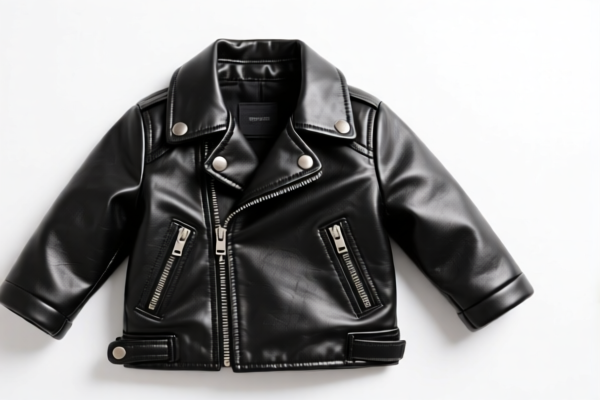
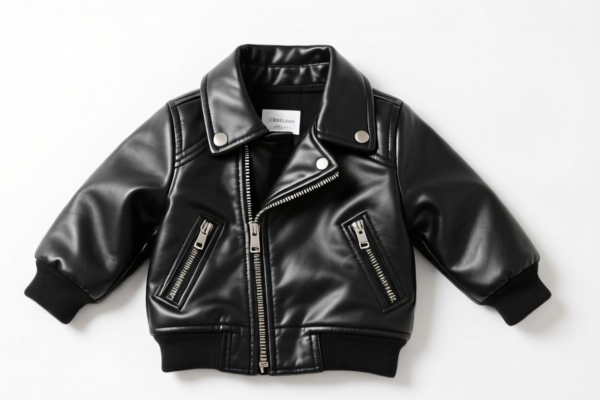
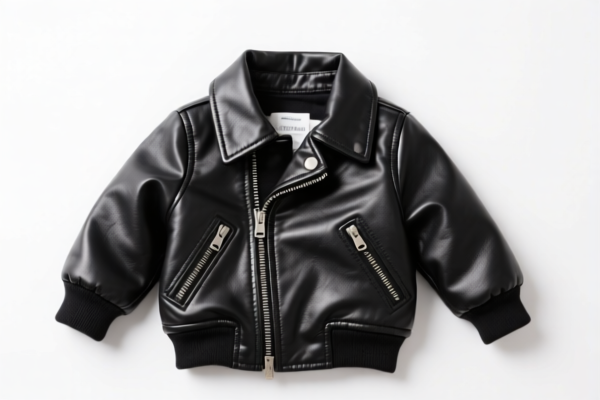
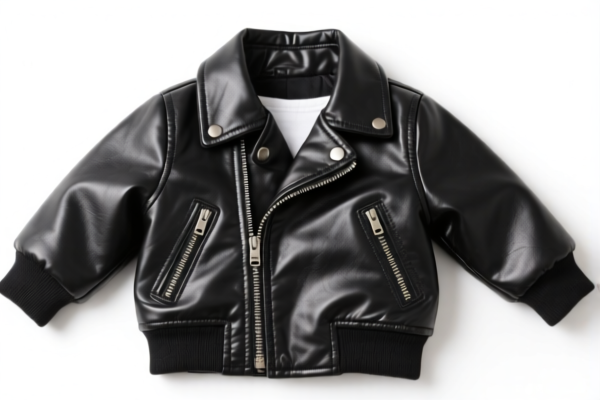
AI Analysis
👗 Kids' Jacket (Children's Outerwear for Toddlers & Youth)
🌐 HS Code Reference & Customs Clearance Guide | 2026 Latest Tariff Analysis | Professional Strategy for US Import
📌 I. Product Definition & Classification: Do You Really Understand “Children’s Jackets”?
Children’s jackets are a broad category of outerwear designed for infants, toddlers, and children. In international trade, precise classification is critical because material composition (cotton vs. synthetic) and style (knitted vs. woven, hoodie vs. suit-style) drastically change the HS Code and, consequently, the tax burden.
Based on the provided dataset, these items fall under Chapter 61 (Articles of Apparel and Clothing Accessories, Knitted or Crocheted). The key distinction lies in whether the jacket is considered a "jacket/coat," a "sweatshirt," or part of a "suit."
⚠️ Key Distinction Points:
- Material: Is it primarily cotton, synthetic fiber, or other textile materials?
- Construction: Is it knitted (flexible, stretchy) or woven (structured)? Note: All codes below (61xx) imply Knitted/Crocheted.
- Style: Does it have a hood? Is it buttoned/zipped like a suit? Is it a pullover style?
📦 II. HS Code Classification Matrix (2026 Latest Data)
| HS Code | Product Description | Style/Use Case | Material Inference | Total Tax Rate (China Origin) |
|---|---|---|---|---|
| 6110.90.90.73 | Girls’ Casual Jacket | Casual wear; matches form/usage | Non-cotton or restricted cotton fiber fabric | 23.5% |
| 6110.90.90.82 | Girls’ Casual Jacket | Girls’ category; similar to pullovers | Textile fiber | 23.5% |
| 6110.90.90.88 | Boys’ Hooded Jacket | Knitted/pullover style; Boys’ use | Textile material | 23.5% |
| 6110.20.20.44 | Boys’ Hooded Jacket | Classified as "Sweatshirt" category | Cotton or other knitted material | 34.0% |
| 6103.39.80.60 | Boys’ Hooded Jacket | Suit-style jacket/coat category | Other textile rules apply | 23.1% |
🔍 Critical Observation:
- The highest tax rate (34.0%) applies to HS Code6110.20.20.44(Boys’ Hooded Jacket classified as Sweatshirt).
- The lowest tax rate (23.1%) applies to HS Code6103.39.80.60(Boys’ Hooded Jacket classified as Suit-style).
- Most other classifications fall around 23.5%.
- Reason for Difference: The US Customs and Border Protection (CBP) uses specific rules to distinguish between "Sweatshirts" (often higher duty) and "Jackets/Coats" (often lower duty).
💰 III. 2026 Latest Tariff Rate Breakdown (Detailed Policy Analysis)
✅ Applicable Country: United States (US)
✅ Country of Origin: China (CN)
✅ Effective Date: Current US Trade Policy (Section 301 & Section 122)
🎯 1. 6110.90.90.73 & 6110.90.90.82 — Girls’ Casual Jackets
| Item | Detail |
|---|---|
| Base Duty | 6.0% |
| Section 301 Duty | 7.5% |
| Section 122 Duty | 10.0% |
| Total Effective Rate | 23.5% |
| Calculation Base | CIF Value × 23.5% |
| De Minimis Exemption | ❌ Not Applicable (Deny de minimis) |
| Legal Basis | HTSUS:6110.90.90.73 → Sec 301: Footnote 9903.88.01 → Sec 122 |
📌 Explanation:
- Base Duty (6.0%): Standard ad valorem rate for knitted girls' outerwear.
- Section 301 (7.5%): Tariffs imposed on Chinese goods under Trade Promotion Authority.
- Section 122 (10%): A specific provision allowing the President to increase duties on imports deemed to threaten domestic industry, currently applied to certain textile/apparel categories.
- Total: 6.0 + 7.5 + 10.0 = 23.5%.
🎯 2. 6110.90.90.88 — Boys’ Hooded Jacket (Knitted/Pullover Type)
| Item | Detail |
|---|---|
| Base Duty | 6.0% |
| Section 301 Duty | 7.5% |
| Section 122 Duty | 10.0% |
| Total Effective Rate | 23.5% |
| Calculation Base | CIF Value × 23.5% |
| De Minimis Exemption | ❌ Not Applicable |
| Legal Basis | HTSUS:6110.90.90.88 → Sec 301 → Sec 122 |
📌 Note: Same tax structure as Girls’ Casual Jackets. Classification as "Knitted/Pullover" keeps it in Chapter 61 with similar duty rates.
🎯 3. 6110.20.20.44 — Boys’ Hooded Jacket (Sweatshirt Category)
| Item | Detail |
|---|---|
| Base Duty | 16.5% |
| Section 301 Duty | 7.5% |
| Section 122 Duty | 10.0% |
| Total Effective Rate | 34.0% |
| Calculation Base | CIF Value × 34.0% |
| De Minimis Exemption | ❌ Not Applicable |
| Legal Basis | HTSUS:6110.20.20.44 → Sec 301 → Sec 122 |
⚠️ WARNING:
- This is the most expensive classification.
- The Base Duty is 16.5%, significantly higher than the 6.0% for other jackets.
- This often happens when a "hooded jacket" is interpreted by CBP as a "Sweatshirt" (typically cotton fleece pullovers) rather than a structured jacket.
- Strategy: Ensure your product description and design photos clearly show it is a jacket/coat (e.g., has a front closure, structured shoulders) to avoid misclassification as a sweatshirt.
🎯 4. 6103.39.80.60 — Boys’ Hooded Jacket (Suit-Style)
| Item | Detail |
|---|---|
| Base Duty | 5.6% |
| Section 301 Duty | 7.5% |
| Section 122 Duty | 10.0% |
| Total Effective Rate | 23.1% |
| Calculation Base | CIF Value × 23.1% |
| De Minimis Exemption | ❌ Not Applicable |
| Legal Basis | HTSUS:6103.39.80.60 → Sec 301 → Sec 122 |
📌 Insight:
- This is the lowest total tax rate (23.1%).
- It is classified under Chapter 61.03 (Men’s/Boys’ Suits, Ensembles, Suit-Type Jackets).
- To qualify, the jacket must mimic the cut and construction of a suit jacket (lapels, structured, formal-ish).
- Strategy: If your product has a formal look, use this code to save 0.4% compared to the 23.5% category.
🛠️ IV. Customs Clearance Practical Advice (Pitfall Avoidance Guide)
✅ 1. Documentation Checklist (Mandatory)
| Document | Required? | Notes |
|---|---|---|
| ✅ Product Specification Sheet | ✔️ | Must detail: Gender (Boys/Girls), Age Group, Material (% Cotton, % Polyester, etc.), Closure Type (Zipper/Button). |
| ✅ High-Res Photos | ✔️ | Front, Back, Inside Label, Close-up of Fabric Texture. Crucial for proving "Jacket" vs. "Sweatshirt." |
| ✅ Commercial Invoice | ✔️ | Must state: "Knitted Children’s Jacket, Boys/Girls, Model #XYZ." Do NOT use vague terms like "Clothing." |
| ✅ Packing List | ✔️ | Confirm quantity per carton. |
| ✅ Certificate of Origin | ✔️ | Required to prove Origin = China (for Section 301/122 application). |
✅ 2. Classification Strategy (Key Tips)
🔥 “Material & Cut Determine Cost! Avoid the 34% Trap!”
| Scenario | Correct HS Code | Risk if Misclassified |
|---|---|---|
| Girls’ Casual Knit Jacket | 6110.90.90.73 or .82 |
Safe at 23.5%. |
| Boys’ Hooded Jacket (Zipper/Structured) | 6110.90.90.88 |
Safe at 23.5%. |
| Boys’ Hooded Pullover (Fleece, No Zipper) | 6110.20.20.44 |
High Risk: Classified as Sweatshirt → 34.0%. |
| Boys’ Formal/Suit-Style Jacket | 6103.39.80.60 |
Best Rate: 23.1%. Must look like a suit. |
💡 Pro Tip:
- If your boys’ hooded jacket is a pullover (no front zipper), CBP may classify it as a Sweatshirt (6110.20...).
- To avoid the 34% rate, consider adding a full front zipper or ensuring the design is distinctly "jacket-like" (not just a loose pullover).
✅ 3. Special Considerations
| Issue | Recommendation |
|---|---|
| Material Composition | If the jacket is >50% cotton, it may fall under different subcategories. Be precise! |
| Section 122 Impact | The 10% Section 122 duty is additional. Do not forget it in your cost calculation. |
| De Minimis (Section 321) | ❌ DO NOT use de minimis (under $800) for these items if they are from China. CBP is actively scrutinizing textile imports under $800 for tariff evasion. |
| Pre-Ruling | For large volumes, apply for an Binding Tariff Information (BTI) or US CBP Ruling to lock in the HS Code. |
🌍 V. Global Market Comparison (2026)
| Market | Recommended HS Code | Base Duty | Additional Taxes | Total Est. Cost Impact |
|---|---|---|---|---|
| 🇺🇸 USA | 6110.90.90.88 (Example) |
6.0% | +7.5% (Sec 301) + 10% (Sec 122) | 23.5% |
| 🇨🇳 China (Import) | 6110.90.90.88 |
11.0% | None | 11.0% |
| 🇪🇺 EU | 6110.90.90 |
12% | VAT (19-21%) | ~31-33% (incl. VAT) |
| 🇬🇧 UK | 6110.90.90 |
12% | VAT (20%) | ~32% (incl. VAT) |
📌 Conclusion:
- The US has unique additional duties (Sec 301 + Sec 122) that do not exist in the EU/UK.
- China’s domestic duty is lower than the US base duty, but this is irrelevant for US exports.
- Cost Sensitivity: The 10.5% difference between the 23.1% and 34.0% rates is significant for low-margin children’s clothing.
📌 VI. Common Mistakes & Pitfalls (Lessons Learned)
❌ Mistake 1: Classifying a zippered boys’ jacket as a Sweatshirt (6110.20...)
👉 Result: Pay 34.0% instead of 23.5%. Overpayment of ~10.5%!
❌ Mistake 2: Ignoring Section 122
👉 Result: Budget based on 13.5% (6+7.5) and get hit with an unexpected 10% additional duty.
❌ Mistake 3: Vague Description “Kids’ Jacket”
👉 Result: CBP may select the highest applicable duty code or hold the shipment for further examination.
✅ Correct Approach:
“Knitted Boys’ Hooded Jacket, Zippered, 100% Polyester, Outerwear, Model XYZ”
🎯 VII. Conclusion: Precise Classification Saves Money!
🎯 Remember These Keys:
🔹 “Zippered = Jacket (Lower Tax)”
🔹 “Pullover = Sweatshirt (Higher Tax 34%)”
🔹 “Always Add 17.5% (Sec 301 + 122) to Base Duty”
🔹 “Girls’ Casual Jackets are usually 23.5%”
🔹 “Suit-Style Jackets are the Cheapest (23.1%)”
📌 Pro Tip:
If you are importing large volumes, request a CBP Ruling before shipping. A $500 ruling fee can save you tens of thousands in misclassification penalties and excess duties.
📣 Action Plan:
- Verify Material: Cotton vs. Synthetic?
- Check Closure: Zipper (Jacket) vs. Pullover (Sweatshirt)?
- Calculate Cost: Base Duty + 7.5% + 10% = Total Landed Duty.
- Document Clearly: Use precise descriptions on invoices.
✨ Professional Customs Clearance Starts with Accurate Classification!
💼 Every Percentage Point Saved is Pure Profit!
Customer Reviews
About HS Code Classification
The Harmonized System (HS) is an internationally standardized nomenclature developed by the World Customs Organization (WCO) to classify traded products. Over 200 countries use the HS system as the basis for customs tariffs, trade statistics, and import/export regulations.
Each HS code follows a hierarchical structure:
- Chapter (2 digits) — Broad category of goods (e.g., Chapter 84: Machinery and Mechanical Appliances)
- Heading (4 digits) — More specific grouping within the chapter
- Subheading (6 digits) — Internationally standardized breakdown, used by all WCO member countries
- National subdivisions (8-10 digits) — Country-specific extensions for further classification, such as US HTSUS 10-digit codes
Correct HS code classification is essential for smooth customs clearance, accurate duty payment, and compliance with trade regulations. Misclassification can lead to customs delays, overpayment of duties, or penalties.
When importing from CN to US, the applicable tariff rates may include:
- Most-Favored-Nation (MFN) rate — The standard duty rate applied to WTO members
- General rate — Applied to countries without trade agreements
- Trade remedy duties — Additional tariffs such as Section 301 (anti-dumping), Section 232 (national security), or countervailing duties
The information provided on this page is for reference purposes only. For official classification, please consult with your local customs authority or a licensed customs broker.