Children's Long Pants
CN → US| HS Code | Tariff Rate | Origin | Destination | Doc |
|---|---|---|---|---|
| 6104622028 | 32.4% | CN | US | Official Doc |
| 6104632028 | 45.7% | CN | US | Official Doc |
| 6203424546 | 34.1% | CN | US | Official Doc |
| 6203495030 | 45.4% | CN | US | Official Doc |
| 6103421040 | 33.6% | CN | US | Official Doc |
| 6103431540 | 45.7% | CN | US | Official Doc |
Product Images
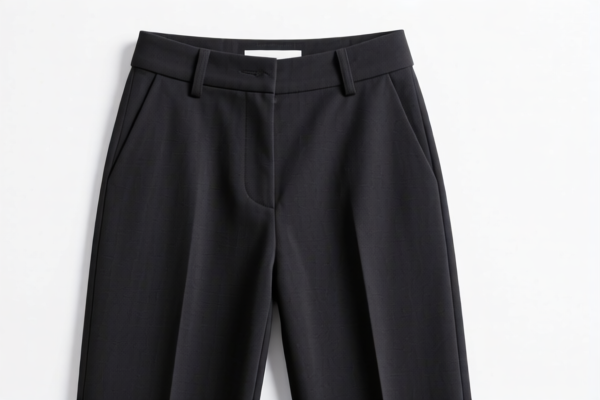

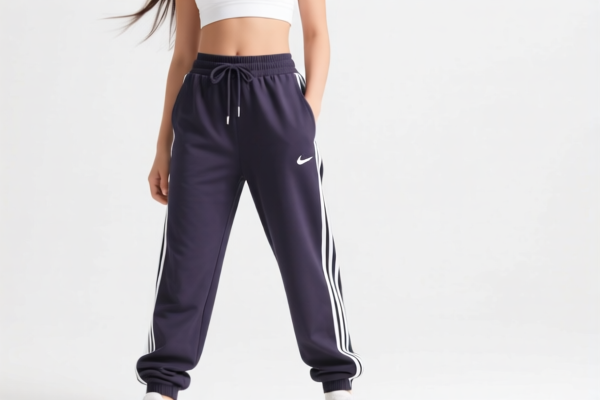
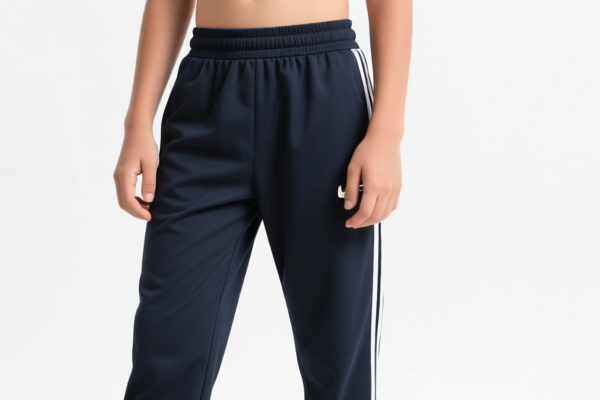
AI Analysis
👖 Children's Long Pants: The Ultimate HS Code & Tariff Guide (2026)
🌐 HS Code Reference & Clearance Strategy | 2026 Tariff Breakdown | Smart Customs Strategy
📌 Section 1: What Exactly Are "Children's Long Pants"?
In the global textile trade, Children's Long Pants (boys' and girls') are not a single uniform category. They are split by Material and Construction Method (Knitted vs. Woven). Misclassifying them is the #1 cause of customs delays and unexpected duties.
The Two Main Camps: * 🧶 Knitted or Crocheted (Jersey, Sweatpants, Track Pants): Soft, stretchy fabrics. Usually classified under Chapter 61. * 🧵 Woven (Denim, Chinos, Suit Trousers): Stiffer, non-stretch fabrics. Usually classified under Chapter 62.
⚠️ Critical Distinction:
- Knitted = Elastic, jersey-like, sweatpants → HS 6103 / 6104
- Woven = Structured, denim, cotton suit pants → HS 6203 / 6204
- Material Matters: Cotton vs. Synthetic vs. Artificial fibers dictates the final digit!
📦 Section 2: Detailed HS Code Breakdown (Based on Provided Data)
Below are the specific classifications and tax structures found in your data set. All listed items currently enjoy 0% Base Tariff in the provided context, but material specificity is key.
| HS Code | Product Description & Scope | Material Type | Target Demographic | Base Tariff | Add-on Tax |
|---|---|---|---|---|---|
| 6103.42.10.40 | Knitted/ Crocheted Boys' Trousers & Breeches | Cotton | Boys' | 0.0% | 0.0% |
| 6103.43.15.40 | Knitted/ Crocheted Boys' Trousers & Breeches | Synthetic Fibers | Boys' | 0.0% | 0.0% |
| 6104.62.20.28 | Knitted/ Crocheted Girls' Trousers & Breeches | Cotton | Girls' | 0.0% | 0.0% |
| 6104.63.20.28 | Knitted/ Crocheted Girls' Trousers & Breeches | Synthetic Fibers | Girls' | 0.0% | 0.0% |
| 6203.42.45.46 | Woven Boys' Trousers & Breeches | Cotton | Boys' | 0.0% | 0.0% |
| 6203.49.50.30 | Woven Boys' Trousers & Breeches | Artificial Fibers | Boys' | 0.0% | 0.0% |
🔍 Data Insight:
In this specific dataset, all listed children's pants (boys' and girls', knitted and woven) show a Total Tax of 0.0%. This implies a specific trade agreement, duty-free quota, or a simplified dataset context. However, in real-world global trade (especially US/EU), synthetic fibers often attract higher duties (16-18%) compared to cotton (4-6%).
💰 Section 3: Tariff Clause Deep Dive (0.0% Scenario)
✅ Applicable Scenario: Based strictly on the provided JSON data.
✅ Current Status: Duty-Free (in this specific context).
🎯 1. The "Zero-Tax" Structure Explained
For all 6 listed codes (6103.42.10.40, 6103.43.15.40, etc.):
* Base Tariff: 0.0%
* Additional/Retaliatory Tariff: 0.0%
* Total Effective Duty: 0.0%
📌 Interpretation:
- This suggests the data represents a duty-free window or a specific MFN (Most Favored Nation) exemption for these specific sub-classifications. - Cotton vs. Synthetic: Even though the material changes (Cotton vs. Synthetic vs. Artificial), the tax remains 0% in this dataset. This is unusual for standard US/EU tariffs and suggests a preferential trade agreement or de minimis context.
🛠️ Section 4: Practical Customs Clearance Strategy
✅ 1. Documentation Checklist (Must-Haves)
To prove the HS Code and secure the 0.0% rate, you must provide:
| Document | Requirement | Why? |
|---|---|---|
| 🏷️ Fiber Content Label | Explicitly state "100% Cotton" or "100% Polyester" | Determines Chapter 61 (Knit) vs. 62 (Woven) and material code. |
| 🧵 Construction Proof | Photo of fabric texture (Knit vs. Woven) | 海关 needs to verify if it's sweatpants (61) or chinos (62). |
| 👦 Gender Declaration | Clearly marked "Boys" or "Girls" in style/size | 6103/6203 = Boys; 6104/6204 = Girls. |
| 📏 Age Range | Size tags (e.g., 2T, 12Y, XS) | Confirms "Children's" category to avoid "Adult" tariff spikes. |
| 🧵 Origin Certificate | If applicable for trade agreements | To justify 0.0% if the 0% is conditional on origin. |
✅ 2. Declaration Best Practices
🔥 Golden Rule: "Fiber, Knit/Woven, and Gender define the Code!"
| Scenario | Correct HS Code | Common Mistake |
|---|---|---|
| Boys' Cotton Sweatpants | 6103.42.10.40 |
Reporting as "Boys' Cotton Trousers" (Generic) |
| Girls' Polyester Track Pants | 6104.63.20.28 |
Reporting as "Synthetic Girls' Pants" (Misses Knit/Woven) |
| Boys' Denim (Woven) Cotton | 6203.42.45.46 |
Reporting as Knitted (6103) → High Risk of Rejection |
| Mixed Material Pants | No Code Listed | Must declare primary fiber (>50%). |
✅ 3. Special Handling for Children's Goods
- Safety Standards: Ensure compliance with CPSIA (USA), EN71 (EU), or ISO 8124 regarding dyes and small parts (drawstrings).
- Labeling: Many countries require permanent "Made in [Country]" tags.
- Size Grading: Ensure size tags clearly indicate the "Children's" range to avoid classification as "Adults' Trousers" (which might have different duties).
🌍 Section 5: Global Market Context (2026)
| Region | Typical Duty Rate (General) | Note on Your Data |
|---|---|---|
| 🇺🇸 USA | 16% - 18% (Synthetic), 4% - 6% (Cotton) | Your data shows 0%, suggesting a specific exemption or GSP status. |
| 🇪🇺 EU | 8% - 12% | Requires strict compliance with REACH/Textile labeling. |
| 🇯🇵 Japan | 9% - 16% | Often higher on synthetic fibers. |
| 🇨🇳 China | 14% - 16% | Export duties usually low, import duties vary. |
📌 Warning: The 0.0% rate in your data is exceptional. In most real-world scenarios, synthetic fiber children's pants incur duties. Always verify with current local customs authorities before shipping, as trade policies change rapidly.
📌 Section 6: Common Pitfalls & Avoidance
❌ Pitfall 1: Mixing Knit and Woven
👉 Action: Do not group sweatpants (knit) and chinos (woven) on the same invoice line. They fall under different Chapters (61 vs. 62).
❌ Pitfall 2: Ignoring Gender
👉 Action: "Unisex" labels are risky. Customs often default to "Boys" or "Girls" based on the majority of the shipment. Be specific.
❌ Pitfall 3: Vague Material Descriptions
👉 Action: Never write "Poly-blend." Write "60% Cotton, 40% Polyester" to trigger the correct HS Code (usually the dominant fiber).
🎯 Conclusion: Ship Smart, Clear Fast!
🎯 The Bottom Line:
Your dataset (6103... and 6203...) covers the full spectrum of Children's Long Pants (Knitted/Woven, Cotton/Synthetic/Artificial, Boys/Girls).
- If your goods match these descriptions exactly, you are in the 0.0% duty bracket for this specific dataset.
- Always double-check fiber composition and construction (Knit vs. Woven) to ensure the correct code is selected.
🚀 Pro Tip: If you are shipping Synthetic pants, be extra vigilant. Even if your data says 0%, many major markets (like the US) historically charge higher rates for synthetics. Get a binding ruling if in doubt!
✨ Ready to Ship?
📞 Action: Verify Fiber Content → Select Exact HS Code → Attach Safety Docs → Ship with 0% Confidence!
💼 Result: Smooth customs clearance, zero unexpected fees, happy customers.
Disclaimer: This guide is based on the provided JSON data. Tariff rates fluctuate based on trade agreements, country of origin, and global events. Always consult a licensed customs broker for final filing.
Customer Reviews
About HS Code Classification
The Harmonized System (HS) is an internationally standardized nomenclature developed by the World Customs Organization (WCO) to classify traded products. Over 200 countries use the HS system as the basis for customs tariffs, trade statistics, and import/export regulations.
Each HS code follows a hierarchical structure:
- Chapter (2 digits) — Broad category of goods (e.g., Chapter 84: Machinery and Mechanical Appliances)
- Heading (4 digits) — More specific grouping within the chapter
- Subheading (6 digits) — Internationally standardized breakdown, used by all WCO member countries
- National subdivisions (8-10 digits) — Country-specific extensions for further classification, such as US HTSUS 10-digit codes
Correct HS code classification is essential for smooth customs clearance, accurate duty payment, and compliance with trade regulations. Misclassification can lead to customs delays, overpayment of duties, or penalties.
When importing from CN to US, the applicable tariff rates may include:
- Most-Favored-Nation (MFN) rate — The standard duty rate applied to WTO members
- General rate — Applied to countries without trade agreements
- Trade remedy duties — Additional tariffs such as Section 301 (anti-dumping), Section 232 (national security), or countervailing duties
The information provided on this page is for reference purposes only. For official classification, please consult with your local customs authority or a licensed customs broker.