Children's Other Fabric Casual Suit
CN → US| HS Code | Tariff Rate | Origin | Destination | Doc |
|---|---|---|---|---|
| 6209909000 | 20.3% | CN | US | Official Doc |
| 6209903020 | 32.4% | CN | US | Official Doc |
| 6111905020 | 24.9% | CN | US | Official Doc |
| 6111900530 | 31.1% | CN | US | Official Doc |
| 6209909000 | 20.3% | CN | US | Official Doc |
Product Images
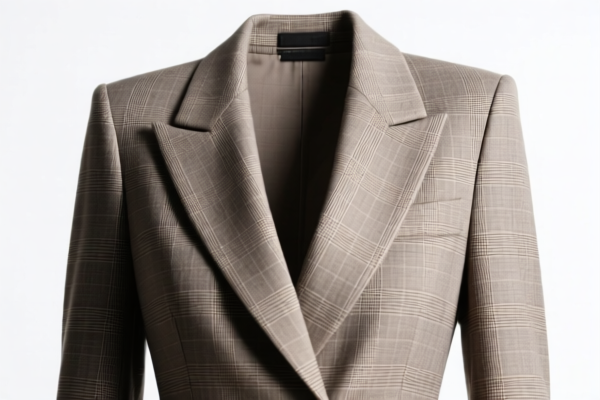

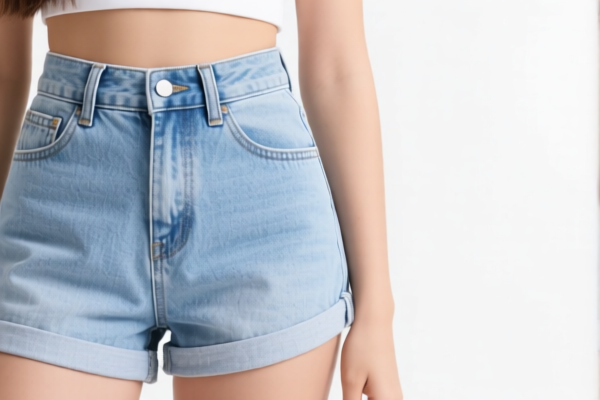
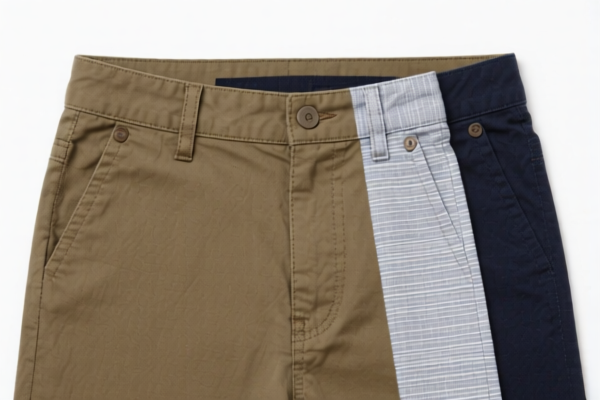
AI Analysis
👶✨ Children's "Other Fabric" Casual Suit (Children's Pajama/Play Suits)
🌐 HS Code Reference & Customs Clearance Guide | 2026 Latest Tariff Analysis | Professional Clearance Strategy
📌 I. Product Definition & Classification: Do You Really Know What You're Shipping?
The term "Children's Other Fabric Casual Suit" in the context of U.S. customs data refers specifically to Children's Pajama Sets or General Children's Wear Sets made from textile materials other than cotton, wool, silk, or synthetic fibers explicitly listed in other subheadings (often a "catch-all" category for mixed or non-specified fabrics).
In U.S. Trade Law, this category is split primarily between: 1. Knitted or Crocheted Sets (61xx series): Often used for baby/infant wear or stretchy casual suits. 2. Woven (Not Knitted) Sets (62xx series): Often used for structured pajamas or non-stretch casual wear.
⚠️ Critical Distinction: - If the suit is knitted (stretchy, T-shirt material style) and for infants → Likely 6111.90.xx. - If the suit is woven (structured, button-down, pajama style) and for older children → Likely 6209.90.xx. - Material Specificity: If the material is "Other," it avoids the lower tax rates often granted to 100% Cotton (6209.10) or specific synthetics.
📦 II. Detailed HS Code Classification Breakdown (2026 Official Tariff Schedule)
Based on the provided data, here are the four unique HS Codes applicable to "Children's Other Fabric Casual Suit," sorted by tax impact.
| HS Code | Product Description & Classification Logic | Applicable Scenario | Material/Type Specifics |
|---|---|---|---|
| 6111.90.50.20 | Infant/Child Knitted Sets Knitted/Crocheted garments for infants/children, other fabrics. |
Baby onesies, stretchy pajamas, knit casual sets. | Knitted fabric; "Other" material (not cotton/silk/wool); Baby/Child category. |
| 6111.90.05.30 | Infant/Child Other Sets (High Tax) Knitted/Crocheted garments, other types. |
Knitted suits falling into specific "Other" sub-categories not covered by 50.20. | Knitted; "Other" material; High tax bracket for infants. |
| 6209.90.30.20 | Infant/Child Woven Sets Woven garments for infants (not knitted). |
Structured baby suits, woven pajamas, non-stretch sets. | Woven fabric; "Other" material; Infant specific (highest tax). |
| 6209.90.90.00 | Children's Woven Pajamas/Other Woven garments for children (not knitted). |
Older children's pajamas, woven casual suits. | Woven fabric; "Other" material; Child (not infant) category; Lowest Tax. |
🔍 Key Clarification: - The data shows 6209.90.90.00 appearing twice with different descriptions but the same tax rate (20.3%). This indicates it is the most cost-effective option for woven children's suits. - 6209.90.30.20 is the most expensive (32.4%) because it is strictly classified for Infants with "Other" materials.
💰 III. 2026 Tariff Rate Breakdown (USA Imports from China)
✅ Origin: China (CN)
✅ Destination: United States (US)
✅ Applicable Law: Section 301 (Trade War), Section 122, and Base Tariffs.
🎯 1. The "Cheapest" Path: 6209.90.90.00 (Woven, Child, Pajama/Other)
- Description: Woven children's pajama set, other fabric materials.
- Total Tax Rate: 20.3%
- Tax Composition:
- Base Tariff: 2.8% (Low entry rate for this category).
- Section 301 (Add-on): 7.5% (Trade War tariff).
- Section 122 (Add-on): 10.0% (Additional China-specific tariff).
- Why Choose This? This is the lowest tax burden for this product type, provided the suit is woven and for children (not infants).
🎯 2. The "Moderate" Path: 6111.90.50.20 (Knitted, Infant/Child)
- Description: Knitted set, "Other" material, Baby/Child category.
- Total Tax Rate: 24.9%
- Tax Composition:
- Base Tariff: 14.9% (Higher base rate for knitted infant goods).
- Section 301 (Add-on): 0.0% (No extra trade war tariff for this specific subheading).
- Section 122 (Add-on): 10.0% (Standard additional tariff).
- Why Choose This? If the item is knitted, you avoid the 7.5% Section 301 surcharge, but the Base Tariff (14.9%) is higher than the woven base.
🎯 3. The "Expensive" Path: 6111.90.05.30 (Knitted, Infant)
- Description: Knitted set, "Other" material, specific infant category.
- Total Tax Rate: 31.1%
- Tax Composition:
- Base Tariff: 13.6%
- Section 301 (Add-on): 7.5%
- Section 122 (Add-on): 10.0%
- Why Avoid This? Higher total cost due to the combination of Base + Trade War + Section 122.
🎯 4. The "Highest" Path: 6209.90.30.20 (Woven, Infant)
- Description: Woven set, "Other" material, Infant specific.
- Total Tax Rate: 32.4%
- Tax Composition:
- Base Tariff: 14.9% (High base for infant woven goods).
- Section 301 (Add-on): 7.5%
- Section 122 (Add-on): 10.0%
- Why Avoid This? Infant products generally face higher scrutiny and base tariffs. This is the most expensive classification.
📌 Summary of Logic: - Base Tariff drives the difference between Knitted (13-15%) and Woven (2.8-15%). - Section 122 is a flat 10% for all items in this dataset. - Section 301 (7.5%) applies to Knitted items and specific Infant Woven items, but NOT to the Woven Child Pajama set (
6209.90.90.00).
🛠️ IV. Practical Customs Clearance Advice (Pitfall Avoidance Guide)
✅ 1. Documentation Checklist (Must-Haves)
| Document | Requirement | Why It Matters |
|---|---|---|
| Product Spec Sheet | Must state Fabric Type (e.g., "Polyester/Cotton Blend," "Rayon," etc.) and Knitted/Woven status. | Determines if you qualify for 61xx (Knitted) or 62xx (Woven). |
| Age Range Specification | Must explicitly state "For Children" (e.g., 2T-12T) vs. "Infant" (0-24 months). | Crucial: Classifying a child's suit as "Infant" (6209.90.30.20) jumps your tax from 20.3% to 32.4%. |
| Composition Label | Must match the HS Code definition of "Other Fabric." | Avoids classification as "Cotton" (6209.10), which has different tax rules. |
| Invoice & Packing List | Must clearly describe "Children's Pajama Set" or "Casual Suit." | "Casual Suit" is vague; "Pajama Set" is precise for 6209. |
| Country of Origin | Must be China (CN) for Section 122 application. | If shipped from Vietnam/Mexico, Section 122 might be waived (subject to new rules). |
✅ 2. Strategic Classification Tips (The "Save Money" Strategy)
🔥 Golden Rule: "Woven + Child = Low Tax; Knitted + Infant = High Tax"
| Scenario | Recommended HS Code | Expected Tax | Strategy |
|---|---|---|---|
| Woven Pajamas (Older Kids) | 6209.90.90.00 |
20.3% | Best Option. Ensure fabric is woven and size > 24 months. |
| Knitted Onesies (Babies) | 6111.90.50.20 |
24.9% | Avoid 6111.90.05.30 if possible. Know if it fits the 50.20 subheading. |
| Woven Baby Suits | 6209.90.30.20 |
32.4% | Avoid if possible. Only use if the item is strictly for infants and woven. |
| Knitted Baby Suits | 6111.90.05.30 |
31.1% | Check if it can be reclassified to 6111.90.50.20 to save 6.2%. |
✅ 3. Common Errors & Consequences
| ❌ Mistake | Consequence |
|---|---|
| Mislabeling Age: Calling a 3-year-old "Infant" | Tax jumps from 20.3% → 32.4%. You overpay 12.1% on every unit. |
| Vague Description: Just writing "Suit" | Customs may inspect and reclassify to the highest available tax rate (32.4%). |
| Ignoring Fabric Type: Saying "Other Fabric" without proof | If the fabric is actually 100% Cotton, you might be eligible for different (lower) duties, or if it's "synthetic," you might face higher scrutiny. |
| Splitting Shipments: Trying to bypass Section 122 | High Risk: CBP (Customs and Border Protection) uses AI to detect pattern evasion. Fines apply. |
🌍 V. Global Market Comparison (2026 Snapshot)
| Market | Typical HS Code for "Children's Other Fabric Suit" | Estimated Duty (China Origin) | Note |
|---|---|---|---|
| 🇺🇸 USA | 6209.90.90.00 (Woven) |
20.3% | Best for Woven Child Pajamas. High Section 122 for others. |
| 🇺🇸 USA | 6209.90.30.20 (Woven Infant) |
32.4% | Highest Tax. Avoid if possible. |
| 🇪🇺 EU | 6111.90 / 6209.90 |
~0-12% | No Section 122, but different GSP rules. |
| 🇨🇦 Canada | 6111.90 / 6209.90 |
~0% (CPTPA Free Trade) | Check CPTPA eligibility for textile goods. |
📌 Conclusion for US Imports: The 20.3% rate (
6209.90.90.00) is the sweet spot. It applies to Woven suits for Children (not infants) made of Other Fabrics. This classification avoids the heavy "Base Tariff" of 14.9% and the "Section 301" 7.5% surcharge found in other categories.
📌 VI. Final Checklist for Shippers
- Verify Material: Is it woven or knitted?
- Verify Age: Is it for an Infant (0-24mo) or Child (2+ years)?
- Calculate Savings: Choosing
6209.90.90.00over6209.90.30.20saves 12.1% per unit. - Label Accurately: "Children's Pajama Set, Woven, Other Fabric, Size 4T" is better than "Kids Suit."
- Prepare for Audit: Have the fabric composition certificate ready to prove it's "Other Fabric" (not Cotton).
✨ Professional Clearance Tip:
"Define the child's age on the invoice!
If your product is Woven and for Children (2+ years), INSIST on6209.90.90.00.
Do not let your supplier or forwarder guess the HS code. A simple "Infant" label can cost you 12.1% more in duties."
📣 Action Plan:
1. Check your product specs (Woven? Knitted? Age?).
2. Select 6209.90.90.00 if eligible (Woven Child).
3. Select 6111.90.50.20 if Knitted (Child/Infant).
4. Avoid 6209.90.30.20 unless strictly necessary (Infant Woven).
5. Prepare documentation to support the classification immediately.
🎯 Remember: In U.S. trade, Classification is King, and Tax is the Price of the Crown. Get the HS Code right, and you save thousands of dollars.
💼 Your Supply Chain, Optimized.
🚀 Clearance Made Simple.
Customer Reviews
About HS Code Classification
The Harmonized System (HS) is an internationally standardized nomenclature developed by the World Customs Organization (WCO) to classify traded products. Over 200 countries use the HS system as the basis for customs tariffs, trade statistics, and import/export regulations.
Each HS code follows a hierarchical structure:
- Chapter (2 digits) — Broad category of goods (e.g., Chapter 84: Machinery and Mechanical Appliances)
- Heading (4 digits) — More specific grouping within the chapter
- Subheading (6 digits) — Internationally standardized breakdown, used by all WCO member countries
- National subdivisions (8-10 digits) — Country-specific extensions for further classification, such as US HTSUS 10-digit codes
Correct HS code classification is essential for smooth customs clearance, accurate duty payment, and compliance with trade regulations. Misclassification can lead to customs delays, overpayment of duties, or penalties.
When importing from CN to US, the applicable tariff rates may include:
- Most-Favored-Nation (MFN) rate — The standard duty rate applied to WTO members
- General rate — Applied to countries without trade agreements
- Trade remedy duties — Additional tariffs such as Section 301 (anti-dumping), Section 232 (national security), or countervailing duties
The information provided on this page is for reference purposes only. For official classification, please consult with your local customs authority or a licensed customs broker.