Children's Other Material Underwear (Striped Fabric)
CN → US| HS Code | Tariff Rate | Origin | Destination | Doc |
|---|---|---|---|---|
| 6109908010 | 33.5% | CN | US | Official Doc |
| 6109908030 | 33.5% | CN | US | Official Doc |
| 6111909000 | 23.1% | CN | US | Official Doc |
| 6111905070 | 24.9% | CN | US | Official Doc |
| 6207199030 | 20.5% | CN | US | Official Doc |
Product Images
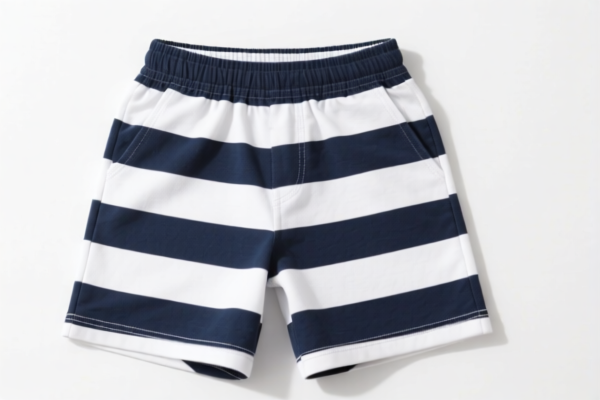
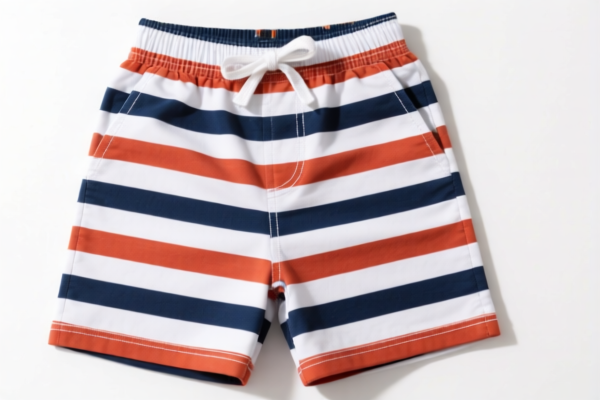
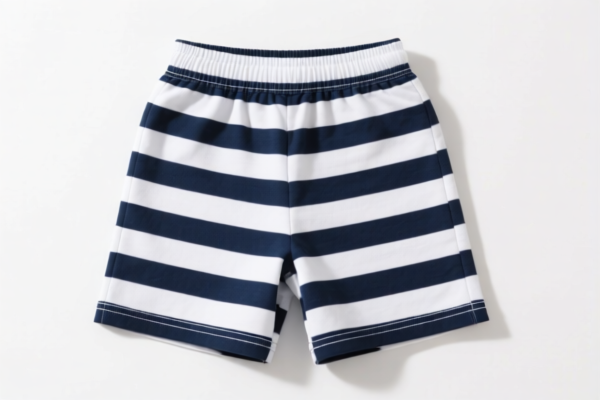
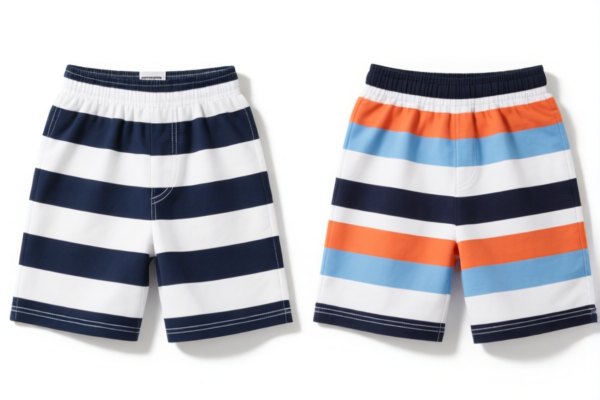
AI Analysis
👶 Children's Other Material Underwear (Striped Fabric)
🌐 HS Code Reference & Customs Clearance Guide | 2024/2025 Duty Analysis | Strategic Classification Strategy
📌 I. Product Definition & Classification: What Exactly Are We Declaring?
Children's underwear made from "other materials" (typically non-cotton synthetics, blends, or unspecified textile components) with a striped pattern. In international trade, this product falls under Chapter 61 (Knitted or Crocheted Apparel) or Chapter 62 (Non-Knitted Apparel), depending on the manufacturing process and specific sub-category.
The key challenge lies in distinguishing between: 1. General Underwear (Ch. 61/62 Subheadings 6109/6207): Basic briefs, boxers, or striped undershirts classified as "Other Textile Materials." 2. Baby/Child Specific Wear (Ch. 61 Heading 6111): Often reserved for infants' garments, but sometimes applied to children's knitwear depending on national interpretation.
⚠️ Key Distinction Point:
- If classified as General Underwear/Briefs: Use 6109 (Knitted) or 6207 (Non-Knitted). These often attract higher tariffs due to "Section 301" and "122" additional duties.
- If classified as Special Child/Baby Wear: Use 6111. This category often benefits from lower base tariffs (e.g., 5.6%), though additional duties may still apply.
- Striped Fabric: The pattern does not change the HS code directly but confirms it is a finished textile product, not raw material.
📦 II. HS Code Classification Details (2024/2025 Latest Tariff Schedule)
Based on the provided data, here are the four possible classifications with their respective duty structures:
| HS Code | Product Description (Summary) | Category Type | Key Characteristics |
|---|---|---|---|
6109.90.80.10 |
Children's other material underwear (striped fabric), shape: underwear, material: other textile materials, use: children. | Knitted Underwear | General underwear; high additional duties. |
6109.90.80.30 |
Children's other material underwear (striped fabric), shape: children's clothing, material: other textile materials, category: knit/like apparel. | Knitted Apparel | Broader "children's clothing" classification; high additional duties. |
6111.90.90.00 |
Children's other material underwear (striped fabric), belongs to baby/children's clothing, shape: knit/fabric type, material: non-specific textile materials. | Baby/Child Specific | Lower Base Duty (5.6%); often preferred if eligible. |
6111.90.50.70 |
Children's other material underwear (striped fabric), shape: children's underwear, material inferred as textile materials, fits other textile materials classification. | Children's Underwear | Mixed duty structure; moderate base duty (14.9%). |
6207.19.90.30 |
Children's other material underwear (striped fabric), use: briefs/trunks, shape: children, material inferred as other textile materials. | Non-Knitted Apparel | Lowest Total Duty (20.5%); likely non-knit. |
🔍 Critical Note:
- Codes ending in .10 and .30 under 6109 are subject to High Additional Duties (33.5% total).
- Code 6111.90.90.00 has the Lowest Base Duty (5.6%) but adds 17.5% in surcharges for a total of 23.1%.
- Code 6207.19.90.30 offers the Lowest Total Duty at 20.5%, assuming the product is non-knitted (woven).
💰 III. 2024/2025 Latest Tariff Rate Details (Including Surcharges & Policy Add-ons)
✅ Applicable Country: United States (US)
✅ Origin: China (CN)
✅ Effective Time: Current rates (2024/2025)
🎯 1. 6109.90.80.10 & 6109.90.80.30 —— General Children's Knitted Underwear/Apparel
| Item | Content |
|---|---|
| Base Duty | 16.0% |
| Section 301 (Add-on 1) | 7.5% |
| Section 122 (Add-on 2) | 10.0% |
| Total Duty Rate | 33.5% |
| Calculation Basis | CIF Value × 33.5% |
| De Minimis Exemption? | ❌ No (Most textile items from China are excluded from Section 321 de minimis benefits due to high duties) |
| Legal Basis Path | HTSUS 6109 → Section 301 Footnote → Section 122 Action |
📌 Explanation:
- These codes classify the product as standard knitted underwear/apparel.
- The 16% base duty is standard for many textiles.
- The 7.5% and 10% add-ons are punitive tariffs targeting Chinese imports.
- Total 33.5% is a significant cost burden.
🎯 2. 6111.90.90.00 —— Baby/Children's Specific Knitted Apparel
| Item | Content |
|---|---|
| Base Duty | 5.6% |
| Section 301 (Add-on 1) | 7.5% |
| Section 122 (Add-on 2) | 10.0% |
| Total Duty Rate | 23.1% |
| Calculation Basis | CIF Value × 23.1% |
| De Minimis Exemption? | ❌ No |
| Legal Basis Path | HTSUS 6111 → Section 301 Footnote → Section 122 Action |
📌 Explanation:
- This code benefits from a significantly lower base duty (5.6%) because it is classified as "baby/children's" wear, which often has preferential base rates.
- However, the add-on duties (17.5%) remain high.
- Savings: ~10.4% less than6109codes.
🎯 3. 6111.90.50.70 —— Children's Underwear (Specific Sub-category)
| Item | Content |
|---|---|
| Base Duty | 14.9% |
| Section 301 (Add-on 1) | 0.0% |
| Section 122 (Add-on 2) | 10.0% |
| Total Duty Rate | 24.9% |
| Calculation Basis | CIF Value × 24.9% |
| De Minimis Exemption? | ❌ No |
| Legal Basis Path | HTSUS 6111 → Section 122 Action |
📌 Explanation:
- This classification is unique because it appears to exempt the 7.5% Section 301 duty, possibly due to specific exclusions or interpretations for certain child underwear sub-lines.
- Total duty is 24.9%, which is higher than6111.90.90.00but lower than6109codes.
🎯 4. 6207.19.90.30 —— Children's Non-Knitted Underwear/Briefs
| Item | Content |
|---|---|
| Base Duty | 10.5% |
| Section 301 (Add-on 1) | 0.0% |
| Section 122 (Add-on 2) | 10.0% |
| Total Duty Rate | 20.5% |
| Calculation Basis | CIF Value × 20.5% |
| De Minimis Exemption? | ❌ No |
| Legal Basis Path | HTSUS 6207 → Section 122 Action |
📌 Explanation:
- LOWEST TOTAL DUTY (20.5%).
- This code applies to non-knitted (woven) children's underwear.
- It benefits from a 0% Section 301 surcharge and only a 10% Section 122 surcharge.
- Recommendation: If the product is woven (non-knit), this is the most cost-effective classification.
🛠️ IV. Customs Clearance Practical Advice (Battle-Tested Pitfall Avoidance Guide)
✅ 1. Documentation Checklist (Non-Negotiable)
| Document | Mandatory? | Description |
|---|---|---|
| ✅ Product Specification Sheet | ✔️ | Must specify: Knit vs. Woven, Material Composition (e.g., 100% Polyester, Cotton/Poly Blend), Pattern (Striped). |
| ✅ Hi-Res Photos | ✔️ | Front, Back, Tag/Label (showing composition & country of origin), Care Label. |
| ✅ Commercial Invoice | ✔️ | Clearly state "Children's Underwear" or "Children's Briefs." Avoid vague terms like "Textile Goods." |
| ✅ Packing List | ✔️ | Item count, weight, dimensions. |
| ✅ Composition Certificate | ✔️ | If material is ambiguous, a lab report helps justify "Other Textile Materials." |
✅ 2. Classification Strategy (Key Tips)
🔥 "Knit vs. Woven Decides the Rate! Check the Tag, Don't Guess!"
| Scenario | Recommended HS Code | Total Duty | Why? |
|---|---|---|---|
| Woven Fabric (e.g., poplin, twill) | 6207.19.90.30 |
20.5% | Lowest duty. No Section 301. |
| Knitted Fabric (e.g., jersey, rib) | 6111.90.90.00 |
23.1% | Lower base duty than 6109. |
| Knitted, General Underwear | 6109.90.80.10 |
33.5% | Highest duty. Avoid if possible. |
| Knitted, Specific Child Underwear | 6111.90.50.70 |
24.9% | Middle ground. |
⚠️ Critical Warning:
- If you misdeclare Woven underwear as Knitted (6109), you will pay 33.5% instead of 20.5%.
- If you misdeclare Knitted as Woven, customs may reclassify and charge penalties.
✅ 3. Special Handling Tips
| Situation | Advice |
|---|---|
| Mixed Materials (e.g., Cotton + Spandex) | Ensure the "Other Textile Material" classification is accurate. If cotton > 50%, it might fall under cotton-specific headings, which have different duties. |
| "Striped" Pattern | The pattern is a descriptive detail. It does not change the HS code but must be clearly stated in the description to avoid ambiguity. |
| Children's Size | Ensure the size range qualifies as "Children's" (usually up to size 14/16). If it fits adults, it falls under adult underwear (Ch. 61/62 subheadings 6107/6211), which may have different duty structures. |
| Section 321 (De Minimis) | Do NOT rely on $800 de minimis exemption for these items from China. Due to the 10%-33.5% duty rates, even small shipments are subject to duties and may be flagged. |
🌍 V. Global Market Comparison (2024/2025)
| Country/Region | Recommended HS Code | Est. Total Duty (China Origin) | Notes |
|---|---|---|---|
| 🇺🇸 USA | 6207.19.90.30 (Woven) |
20.5% | Best option for woven. 6109 is 33.5%. |
| 🇺🇸 USA | 6111.90.90.00 (Knit) |
23.1% | Best option for knit. |
| 🇨🇳 China (Import) | Varies | Varies | Domestic duty rates differ. Check local tariff schedule. |
| 🇪🇺 EU | 6109/6207 | ~12% | No Section 301/122 add-ons. Standard MFN rates apply. |
| 🇨🇦 Canada | Varies | ~12-15% | Similar to EU, no punitive tariffs. |
| 🇲🇽 Mexico | Varies | ~8-12% | USMCA may apply if produced in region. |
📌 Conclusion:
- The USA is the most expensive market due to Section 301 and 122 tariffs.
- Woven underwear (6207) is significantly cheaper to import into the US than knitted underwear (6109).
- If your product is knitted, consider if a slight fabric change to woven (if design allows) could save 13% in duties.
📌 VI. Common Mistakes & Pitfalls (Lessons Learned)
❌ Mistake 1: Declaring all children's underwear as 6111 to get lower base duty.
👉 Risk: Customs may reject it if the item is not strictly "baby/infant" wear or if the material doesn't fit the subheading. Result: Rejection + Delays.
❌ Mistake 2: Ignoring the "Knit vs. Woven" distinction.
👉 Risk: Misclassification leads to underpayment (if Woven declared as Knit) or overpayment (if Knit declared as Woven).
👉 Solution: Always check the garment construction. Knit = stretches (t-shirt like). Woven = structured (dress shirt like).
❌ Mistake 3: Assuming "Striped" allows for a different code.
👉 Risk: Pattern does not determine HS code. It only affects the description.
👉 Solution: Keep description clear: "Children's Striped Underwear."
❌ Mistake 4: Trying to use De Minimis ($800) for small shipments.
👉 Risk: US Customs (CBP) is cracking down on textile de minimis abuse. High-duty items are often audited.
👉 Solution: Pay duties properly. The cost of audit/penalty outweighs the duty.
🎯 VII. Conclusion: Strategic Classification for Cost Savings
🎯 Remember the Golden Rule:
🔹 "Woven is Cheaper (20.5%) than Knit (23-33.5%) in the US."
🔹 "Check the Fabric First! Knit = 61xx, Woven = 62xx."
🔹 "Stripes Don't Change Duty, But Fabric Type Does!"
📌 Pro Tip:
If you are importing Knitted underwear, try to negotiate with suppliers to use Woven Fabric (if the design permits, e.g., poplin briefs) to save 10-13% in duties.
If Knitted is mandatory, use 6111.90.90.00 (23.1%) instead of 6109 (33.5%) to save 10.4%.
📣 Immediate Action:
📞 Consult your Customs Broker: Provide fabric swatches and photos.
📄 Pre-Ruling Application: Consider applying for a binding ruling from CBP if volume is high.
🚀 Optimize Your Supply Chain: Choose6207if possible, or6111if knit. Avoid6109.
✨ Professional Clearance Starts with Accurate Classification!
💼 Every Percent of Duty Saves You Money!
Customer Reviews
About HS Code Classification
The Harmonized System (HS) is an internationally standardized nomenclature developed by the World Customs Organization (WCO) to classify traded products. Over 200 countries use the HS system as the basis for customs tariffs, trade statistics, and import/export regulations.
Each HS code follows a hierarchical structure:
- Chapter (2 digits) — Broad category of goods (e.g., Chapter 84: Machinery and Mechanical Appliances)
- Heading (4 digits) — More specific grouping within the chapter
- Subheading (6 digits) — Internationally standardized breakdown, used by all WCO member countries
- National subdivisions (8-10 digits) — Country-specific extensions for further classification, such as US HTSUS 10-digit codes
Correct HS code classification is essential for smooth customs clearance, accurate duty payment, and compliance with trade regulations. Misclassification can lead to customs delays, overpayment of duties, or penalties.
When importing from CN to US, the applicable tariff rates may include:
- Most-Favored-Nation (MFN) rate — The standard duty rate applied to WTO members
- General rate — Applied to countries without trade agreements
- Trade remedy duties — Additional tariffs such as Section 301 (anti-dumping), Section 232 (national security), or countervailing duties
The information provided on this page is for reference purposes only. For official classification, please consult with your local customs authority or a licensed customs broker.