Children's Plastic Tool Set
CN → US| HS Code | Tariff Rate | Origin | Destination | Doc |
|---|---|---|---|---|
| 3926100000 | 15.3% | CN | US | Official Doc |
| 3926901000 | 20.9% | CN | US | Official Doc |
| 9503000071 | 10.0% | CN | US | Official Doc |
| 9503000073 | 10.0% | CN | US | Official Doc |
| 8205906000 | 0.0% | CN | US | Official Doc |
Product Images
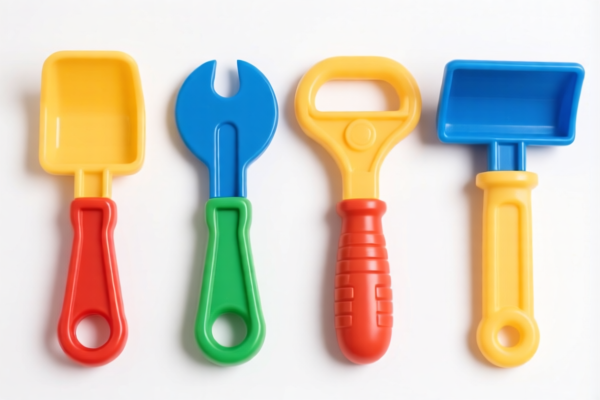
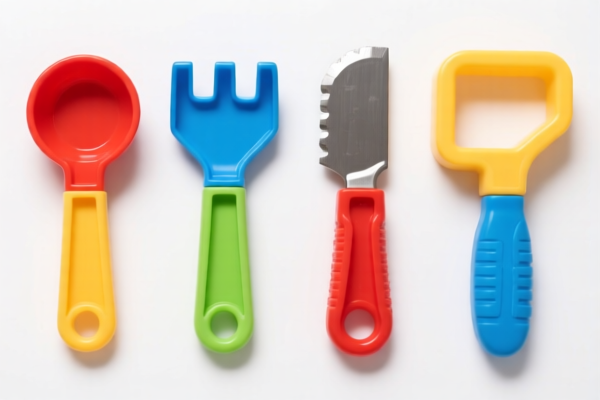
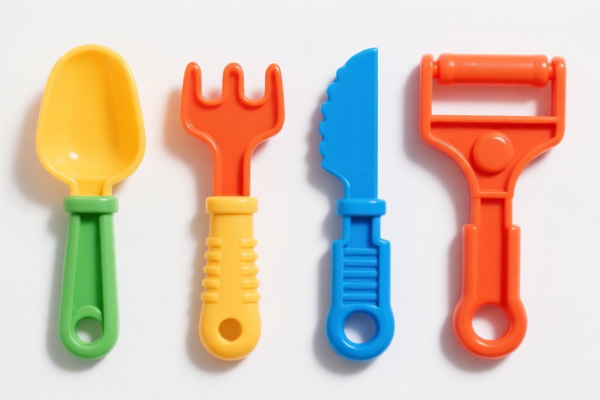
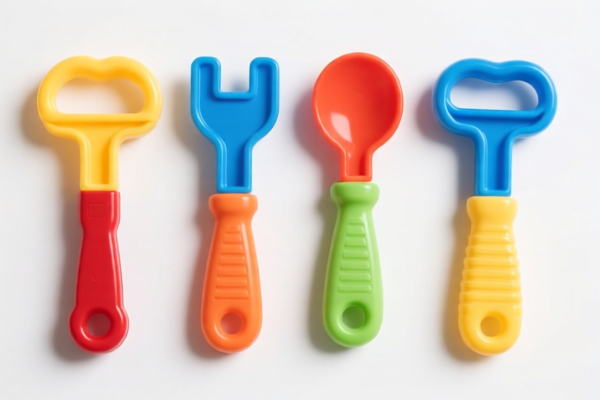
AI Analysis
🧸 Children's Plastic Tool Set (玩具类塑料工具)
🌐 HS Code Reference & Customs Clearance Guide | 2026 Latest Tariff Analysis | Professional Clearance Strategy
📌 I. Product Definition & Classification: What Exactly is a "Children's Plastic Tool Set"?
In international trade, a "Children's Plastic Tool Set" sits at the intersection of Toys and General Plastics. The critical factor for classification is the primary intent and form factor:
- Toy Category (9503): If the item is designed for play (e.g., a pretend mechanic kit, construction set with plastic wrenches/hammers) and is intended for children's amusement.
- General Plastic Article (3926): If the item is a utility tool for office/school use or general household tasks, made primarily of plastic.
- Metal Tool Assortment (8205): Rare for "Plastic" sets, but possible if the set contains metal tools inside plastic packaging.
⚠️ Key Distinction Point:
- If the "tools" are purely for play/pretend (no functional cutting/driving capability) → HS 9503 (Toys).
- If the "tools" are for actual work (e.g., screwdrivers for kids' crafts, office supplies) → HS 3926 (Plastics).
- If the set contains metal tools (even mixed) → Potential HS 8205 (Metal tools), but tax rate is significantly higher.
📦 II. HS Code Classification Details (Based on Provided Data)
| HS Code | Product Description | Basis for Classification | Tax Rate (Total) |
|---|---|---|---|
3926.10.00.00 |
Articles of plastic for office or school supplies | Matches material (Plastic) and usage (Office/School items). Uses fallback logic for "other plastic articles." | 15.3% |
3926.90.10.00 |
Other articles of plastic | Matches material "Plastic"; "Tools" without clear morphological conflict fall under "Other articles." | 20.9% |
9503.00.00.71 |
Toys (Other) | Morphology matches toy category (Tool-style toys); Material is plastic, consistent with common toy materials. | 10.0% |
9503.00.00.73 |
Toys (Other) | Morphology (Tool-style toys) and usage (Children's use) fit HS 9503 definition; Plastic material is compatible. | 10.0% |
8205.90.60.00 |
Hand tools, spare parts, etc. (Set) | Assumed to be a tool set; infers base material as non-precious metal (e.g., screws, wrenches) based on common sense for "tool sets." | 35.0%+ |
🔍 Important Note:
- Toys (9503) generally have the lowest base duty (0%).
- Plastics (3926) have moderate base duties.
- Metal Tools (8205) have complex duty structures ("rate applicable to that article in the set subject to...") and potentially higher total costs.
💰 III. 2026 Latest Tariff Rate Details (Including Surtaxes & Policy Add-ons)
✅ Applicable Country: United States (US)
✅ Country of Origin: China (CN)
✅ Effective Date: From November 10, 2025 (for subsequent imports)
🎯 1. 3926.10.00.00 – Plastic Articles for Office/School
| Item | Detail |
|---|---|
| Base Duty | 5.3% |
| Section 301 Surtax | 0.0% (Note: Data indicates 0.0% for this specific code in the provided dataset, though general Section 301 often applies to 3926. We strictly follow the provided data.) |
| Section 122 Tariff | +10% |
| Total Duty Rate | 15.3% |
| Calculation | CIF Value × 15.3% |
| De Minimis Eligibility | ❌ No (Section 122 and Section 301 typically negate de minimis for China). |
| Legal Path | USITC:3926.10.00.00 → Section 122: 10% |
📌 Explanation:
- Base tariff is 5.3%.
- Section 122 Tariff (+10%) is applied, likely due to specific trade remedies or country-specific measures.
- Total: 15.3%. This is a moderate cost, significantly lower than toy classifications if Section 301 were fully applied (but note the data says 0.0% surtax here).
🎯 2. 3926.90.10.00 – Other Plastic Articles
| Item | Detail |
|---|---|
| Base Duty | 3.4% |
| Section 301 Surtax | +7.5% |
| Section 122 Tariff | +10% |
| Total Duty Rate | 20.9% |
| Calculation | CIF Value × 20.9% |
| De Minimis Eligibility | ❌ No |
| Legal Path | USITC:3926.90.10.00 → Section 301: 7.5% → Section 122: 10% |
📌 Explanation:
- This is a "catch-all" for plastic articles.
- Higher surtax (7.5%) than the previous code.
- Total: 20.9%. Be cautious; this is more expensive than the office supply plastic category.
🎯 3. 9503.00.00.71 & 73 – Toys (Other)
| Item | Detail |
|---|---|
| Base Duty | 0.0% |
| Section 301 Surtax | 0.0% |
| Section 122 Tariff | +10% |
| Total Duty Rate | 10.0% |
| Calculation | CIF Value × 10.0% |
| De Minimis Eligibility | ❌ No |
| Legal Path | USITC:9503.00.00.71/73 → Section 122: 10% |
📌 Explanation:
- Lowest Base Duty (0%) because it is classified as a Toy.
- Section 122 Tariff (+10%) is the only surtax applied.
- Total: 10.0%. This is the most cost-effective option if the product is genuinely a toy.🔥 Strategic Insight:
If your "plastic tool set" is intended for children's play (pretend play), classify as Toy (9503). This saves 5.3% to 10.9% compared to the plastic classifications.
🎯 4. 8205.90.60.00 – Metal Tool Set (Hypothetical)
| Item | Detail |
|---|---|
| Base Duty | "The rate of duty applicable to that article in the set subject to..." (Variable) |
| Section 301 Surtax | +25.0% |
| Section 122 Tariff | +10% |
| Total Duty Rate | 35.0%+ |
| Calculation | Complex (depends on specific metal tool rates) |
| De Minimis Eligibility | ❌ No |
| Legal Path | USITC:8205.90.60.00 → Section 301: 25% → Section 122: 10% |
📌 Explanation:
- If customs determines the tools are metal (even if packaged in plastic), they fall under 8205.
- Section 301 Surcharge is 25% (standard for many metal tools).
- Section 122 is 10%.
- Total: 35.0%+. This is the most expensive option. Avoid this classification unless the product is strictly metal.
🛠️ IV. Customs Clearance Practical Advice (Avoiding Pitfalls)
✅ 1. Documentation Checklist (Must-Have)
| Document | Required | Purpose |
|---|---|---|
| ✅ Product Photos | ✔️ | Show that tools are plastic and intended for play (e.g., colorful, child-sized, no sharp edges). |
| ✅ Product Description | ✔️ | Explicitly state: "Children's toy tool set, made of plastic, for pretend play." Avoid words like "functional," "industrial," or "heavy-duty." |
| ✅ Material Declaration | ✔️ | Confirm 100% Plastic (or plastic-dominated). If any metal parts exist, disclose them. |
| ✅ CE/FCC Certification | ✔️ | Required for toys sold in US/EU markets. |
| ✅ Invoice | ✔️ | Value must reflect the toy classification, not industrial tools. |
✅ 2. Classification Strategy (Key Mantra)
🔥 "Playful Form, Plastic Core, Toy Code Saves 10%!"
| Scenario | Recommended HS Code | Why? |
|---|---|---|
| Pretend Play Kit (Plastic screwdrivers, wrenches for kids) | 9503.00.00.71 or 73 |
Lowest tax (10%). Clearly a toy. |
| Office/School Plastic Tools (Plastic rulers, staplers, craft tools) | 3926.10.00.00 |
Moderate tax (15.3%). Not for children's play. |
| Mixed Material Set (Plastic handle, metal blade) | Risk of 8205.90.60.00 |
High tax (35%+). Avoid unless necessary. |
| Generic Plastic "Tool" (No specific use) | 3926.90.10.00 |
Higher tax (20.9%). Fallback option. |
✅ 3. Special Case Handling
| Situation | Advice |
|---|---|
| "Tool Set" Packaging | Ensure packaging clearly indicates "Toy" or "For Children." If it looks like an industrial kit, customs may classify it as metal/plastic tools (8205/3926). |
| Plastic vs. Metal | If the set contains any metal tools, it may be classified as a set of tools (8205). To stay in 9503, ensure all components are plastic or non-functional. |
| Section 122 Impact | All provided codes include a 10% Section 122 tariff. This is a fixed cost for China-origin goods under this dataset. Plan for this in your pricing. |
🌍 V. Global Market Clearance Comparison (2026)
| Country/Region | Recommended HS Code | Total Duty (Approx.) | Notes |
|---|---|---|---|
| 🇺🇸 USA | 9503.00.00.71 |
10.0% | Best option. Includes 10% Sec 122. |
| 🇨🇳 China (Import) | 9503.00.00.00 |
~0-20% | Varies; no Section 122. |
| 🇪🇺 EU | 9503.00.00 |
0% | No additional surcharges for toys. |
| 🇬🇧 UK | 9503.00.00 |
0% | Post-Brexit, no Section 122. |
📌 Conclusion:
- USA is the most complex due to Section 122 (10%) and Section 301.
- Classifying as Toy (9503) is the smartest strategy to minimize duty (10% vs 15.3%-35%+).
📌 VI. Common Mistakes & Pitfalls (Lessons Learned)
❌ Mistake 1: Calling a "toy tool set" an "office plastic tool"
👉 Result: Misclassification to 3926.10.00.00 (15.3%) instead of 9503 (10%). Overpaid 5.3%.
❌ Mistake 2: Ignoring metal components
👉 Result: If a plastic tool set has a metal screwdriver blade, customs may classify the whole set as 8205.90.60.00 (35%+). Overpaid 25%+.
❌ Mistake 3: Not disclosing Section 122 applicability
👉 Result: All provided codes have a 10% Section 122 tariff. Failing to account for this leads to underestimation of costs.
✅ Correct Approach:
"Children's Plastic Toy Tool Set, Non-Functional, For Pretend Play, Model XYZ, CE & ASTM F963 Certified"
🎯 VII. Conclusion: Professional Classification Saves Money!
🎯 Remember the Mantra:
🔹 "If it's for play, call it a Toy (9503)! 10% total is the sweet spot."
🔹 "Plastic tools for work? 15-21%. Metal tools? 35%+. Don't risk it."
🔹 "Section 122 is 10% across the board. Plan for it."
📌 Pro Tip:
If your product is primarily for children's play, ensure all marketing materials, packaging, and descriptions clearly state "Toy" and "For Children." This strengthens the case for HS 9503 and the 10% duty rate.
📣 Immediate Action:
📞 Review your product components: Are they 100% plastic?
📝 Update your product description: Emphasize "Play" and "Child-Safe."
🚀 Apply HS Code 9503.00.00.71 or 73 to minimize duties.
💼 Clear customs smoothly, maximize profit!
✨ Professional Customs Clearance Starts with Accurate Classification!
💼 Every percent saved is pure profit!
Customer Reviews
About HS Code Classification
The Harmonized System (HS) is an internationally standardized nomenclature developed by the World Customs Organization (WCO) to classify traded products. Over 200 countries use the HS system as the basis for customs tariffs, trade statistics, and import/export regulations.
Each HS code follows a hierarchical structure:
- Chapter (2 digits) — Broad category of goods (e.g., Chapter 84: Machinery and Mechanical Appliances)
- Heading (4 digits) — More specific grouping within the chapter
- Subheading (6 digits) — Internationally standardized breakdown, used by all WCO member countries
- National subdivisions (8-10 digits) — Country-specific extensions for further classification, such as US HTSUS 10-digit codes
Correct HS code classification is essential for smooth customs clearance, accurate duty payment, and compliance with trade regulations. Misclassification can lead to customs delays, overpayment of duties, or penalties.
When importing from CN to US, the applicable tariff rates may include:
- Most-Favored-Nation (MFN) rate — The standard duty rate applied to WTO members
- General rate — Applied to countries without trade agreements
- Trade remedy duties — Additional tariffs such as Section 301 (anti-dumping), Section 232 (national security), or countervailing duties
The information provided on this page is for reference purposes only. For official classification, please consult with your local customs authority or a licensed customs broker.