Children's Plastic Tools
CN → US| HS Code | Tariff Rate | Origin | Destination | Doc |
|---|---|---|---|---|
| 3926100000 | 15.3% | CN | US | Official Doc |
| 3926901000 | 20.9% | CN | US | Official Doc |
| 9503000071 | 10.0% | CN | US | Official Doc |
| 9503000073 | 10.0% | CN | US | Official Doc |
Product Images
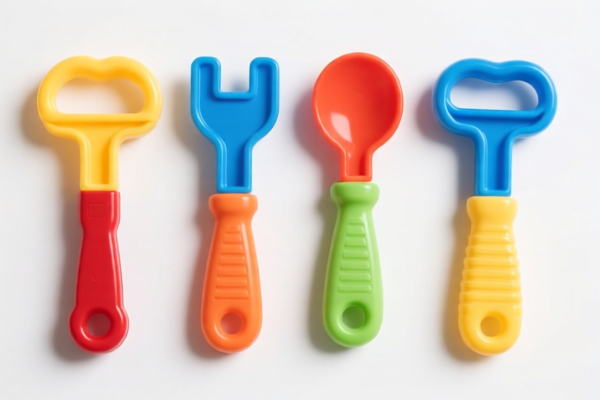
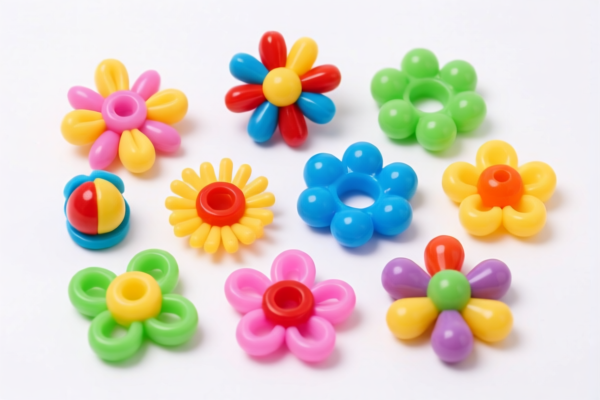
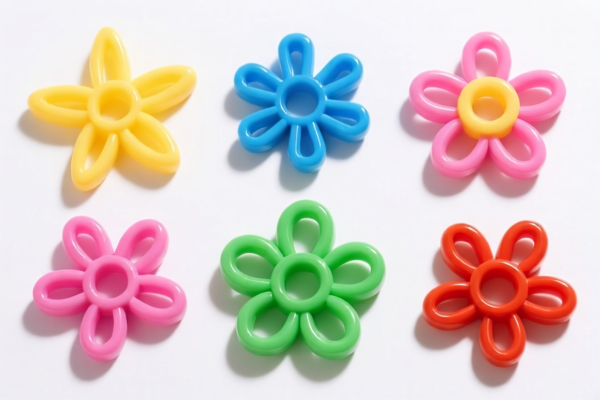
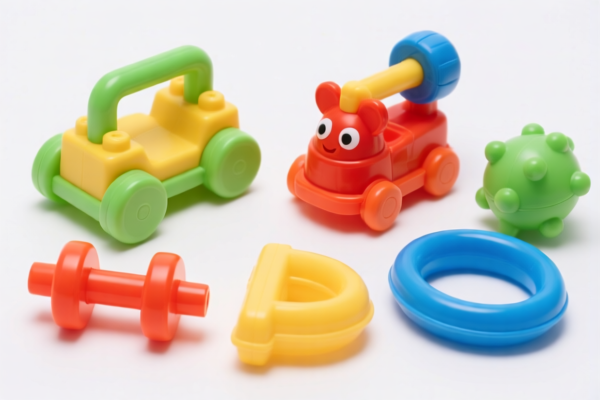
AI Analysis
🧸 Children's Plastic Tools: The Ultimate HS Code & Customs Clearance Guide (2026)
🌐 HS Code Reference & Customs Clearance Strategy | 2026 Tax Regime Analysis | Professional Classification Tactics
📌 I. Product Definition & Classification: What Exactly Are "Children's Plastic Tools"?
"Children's Plastic Tools" refer to toy replicas of real-world construction, maintenance, or household tools (e.g., hammers, screwdrivers, wrenches) designed specifically for play. They are typically made entirely of plastic, featuring bright colors, rounded edges for safety, and sometimes sound or interactive functions.
In international trade, these items face a critical classification fork: * As "Toys" (9503): If the item is clearly a toy, designed for play, and lacks functional utility for actual repair/construction. * As "Plastic Articles" (3926): If the item is marketed as a tool, lacks specific toy branding, or is a generic plastic component. * As "Office/School Supplies" (3926): If the item is sold as a utility tool for educational or office environments.
⚠️ Key Classification Pivot:
- Primary Use = Play? → Go to 9503 (Toys). Best tax rate.
- Ambiguous Use? → Risk falling into 3926 (Plastic Articles). Higher tax rate.
- Material Only? → Must strictly match plastic definitions under Chapter 39.
📦 II. HS Code Classification Matrix (2026 Tax Regime)
| HS Code | Product Description | Summary Logic | Target Audience |
|---|---|---|---|
| 9503.00.00.71 | Toy Tools (General) | Shape & Use: Fits "Toy Category" (Tool-type toys). Material (Plastic) aligns with standard toy attributes with no conflicts. | Children (Play) |
| 9503.00.00.73 | Toy Tools (Specific) | Form & Purpose: Matches 9503 definition (Children's use). Plastic material fits "Other Toys" attribute. Inferred logically. | Children (Play) |
| 3926.10.00.00 | Plastic Office/School Tools | Match: Plastic material matches "Plastic"; Use matches "Office/School/Toy Tools". Follows fallback logic for plastic articles. | Schools/General |
| 3926.90.10.00 | Other Plastic Articles | Name & Form: Explicitly includes "Plastic"; "Tools" (no shape conflict) fall under "Other Articles". | Industrial/Utility |
🔍 Critical Insight:
- 9503 Codes are the "Sweet Spot" for toys (Lowest Tax).
- 3926 Codes are the "Risk Zone" if the toy aspect isn't clearly proven.
- Tax Difference: 9503 (10%) vs. 3926 (15.3% - 20.9%).
💰 III. 2026 Tariff Rate Deep Dive (Including Add-ons & Policy Surcharges)
✅ Target Market: USA (US)
✅ Country of Origin: China (CN)
✅ Effective Date: Current 2026 Regime (Section 301 / 122 Clause)
🎯 1. 9503.00.00.71 & 9503.00.00.73 — The "Toy" Advantage
The lowest tax bracket for children's plastic tools.
| Item | Content |
|---|---|
| Base Duty Rate | 0.0% (Ad valorem) |
| Section 301 Add-on | 0.0% (No extra tariff on toys) |
| Section 122 Clause Tax | +10.0% (Specific to China origin) |
| Total Duty Rate | 10.0% |
| Tax Calculation | CIF Value × 10% |
| Legal Basis | HTS 9503 + Section 122 (China-specific surcharge) |
📌 Explanation:
- Base 0%: Toys generally enter duty-free under the standard rate.
- Section 122 (10%): This is a targeted surcharge on Chinese imports.
- Total: 10% → The most economical path.
- Crucial: Ensure packaging, marketing, and shape scream "TOY" to avoid reclassification.
🎯 2. 3926.10.00.00 — The "Office/School" Risk
Plastic tools for school/office use incur higher duties.
| Item | Content |
|---|---|
| Base Duty Rate | 5.3% |
| Section 301 Add-on | 0.0% |
| Section 122 Clause Tax | +10.0% |
| Total Duty Rate | 15.3% |
| Tax Calculation | CIF Value × 15.3% |
| Legal Basis | HTS 3926 + Section 122 |
📌 Explanation:
- Base 5.3%: Standard duty for plastic articles used in offices/schools.
- Section 122 (10%): Added surcharge applies.
- Total: 15.3% → 5.3% MORE than Toys.
🎯 3. 3926.90.10.00 — The "Other Plastic" High Risk
Generic plastic tools (non-toy) face the highest penalty.
| Item | Content |
|---|---|
| Base Duty Rate | 3.4% |
| Section 301 Add-on | +7.5% (Section 301 surcharge) |
| Section 122 Clause Tax | +10.0% |
| Total Duty Rate | 20.9% |
| Tax Calculation | CIF Value × 20.9% |
| Legal Basis | HTS 3926 + Section 301 + Section 122 |
📌 Explanation:
- Base 3.4%: Lower base rate for "Other" plastic items.
- Section 301 (7.5%): THE KILLER. This applies to many Chinese goods in "Other" categories.
- Section 122 (10%): Added surcharge.
- Total: 20.9% → Double the toy tax!
🛠️ IV. Customs Clearance Action Plan (实战避坑指南)
✅ 1. Preparation Checklist (Must-Haves)
| Document | Requirement | Why It Matters |
|---|---|---|
| Product Photos | ✔️ Critical | Must clearly show bright colors, cartoon features, safety tips, "Toy" labeling. |
| Product Specs | ✔️ | Confirm dimensions, material (100% Plastic), and lack of functional metal parts. |
| Marketing Materials | ✔️ | Brochures/Ads must explicitly state "For Play Only" or "Educational Toy". |
| Packaging Artwork | ✔️ | Golden Ticket: "Toy" must be on the front box. |
| Function Test Report | ✔️ | Proof it doesn't actually tighten bolts (to prove it's a toy). |
| Commercial Invoice | ✔️ | Description: "Children's Plastic Toy Tools (Hammer, Wrench, etc.)" |
✅ 2. Declaration Strategy (The Golden Rule)
🔥 "Call it a Toy, Pack it as a Toy, Sell it as a Toy!"
| Scenario | Recommended HS Code | Tax Rate | Outcome if Wrong |
|---|---|---|---|
| Bright Colors, "Toy" Label, No Metal | 9503.00.00.71/73 | 10% | ✅ PASS |
| Plain White, "Office Supply", No Brand | 3926.10.00.00 | 15.3% | ⚠️ Higher Cost |
| Industrial Look, No Toy Features | 3926.90.10.00 | 20.9% | ❌ Max Tax + Audit Risk |
| Mixed: Tool + Real Metal Parts | Risk of 3926 | High | ⚠️ Re-classification to Plastic |
✅ 3. Special Scenarios & Solutions
| Situation | Strategy |
|---|---|
| OEM Custom Toys | Ensure the "Toy" element is dominant. If the child can't play with it, it's a "Plastic Article". |
| "Realistic" Tools | If it looks too real (e.g., functional screwdriver), Customs may classify as 3926. Add a "Not for Construction" warning label. |
| Educational Kits | Even if for "School", if used for play, argue for 9503. Provide a curriculum showing "play-based learning". |
| Set of Tools | The whole set must be classified as a Toy Set (9503). Do not split parts into 3926. |
🌍 V. Global Market Comparison (2026)
| Region | Recommended HS Code | Total Tax (China Origin) | Key Requirement |
|---|---|---|---|
| 🇺🇸 USA | 9503.00.00.71/73 | 10.0% | Must prove "Play" function |
| 🇨🇳 China | 9503.00.00.71 | ~0% (Exempt) | Standard Toy Certification |
| 🇪🇺 EU | 9503.00 | 0% (if CE marked) | EN71 Safety Standard |
| 🇬🇧 UK | 9503.00 | 0% | UKCA Marking |
📌 Conclusion:
- USA is the only major market with significant Section 122/301 taxes.
- 9503 is the ONLY path to 10% tax. Any ambiguity pushes you to 15.3% or 20.9%.
- Documentation is your shield. If the invoice says "Toy Tools" and the box says "Play", you win.
📌 VI. Common Mistakes & Pitfalls (Lessons Learned)
❌ Mistake 1: Calling it a "Tool Set"
👉 Result: Customs thinks "Functional Tool" → Reclassifies to 3926 → Tax jumps to 15.3% or 20.9%.
✅ Fix: Always write "Toy Tools" or "Play Tools".
❌ Mistake 2: Using Real Metal in the Toy
👉 Result: Metal parts push it out of "All Plastic" → Risk of 3926.
✅ Fix: Use plastic only. If metal is necessary (e.g., for durability), declare as mixed material, but expect higher tax.
❌ Mistake 3: Generic Packaging
👉 Result: Plain box + no brand → Ambiguity → 3926.90.10.00 (20.9%).
✅ Fix: Bright colors, cartoon graphics, "Toy" logo on the box.
❌ Mistake 4: Wrong Invoice Description
👉 Result: "Plastic Wrench" → 3926.
✅ Fix: "Children's Plastic Toy Wrench (For Play)".
🎯 VII. Final Verdict: Strategic Tax Planning
🎯 The Golden Formula:
9503 (Toy) = 10%
3926 (Plastic) = 15.3% ~ 20.9%
Difference = Up to 11% Cost Savings!🔹 "Toy" Status is King: If your product is a toy, fight for 9503.
🔹 "Plastic" Status is the Trap: If it looks too functional, you pay the Section 301 + 122 penalty.
🔹 "Clarity is Currency": Your packaging and invoice must scream "CHILDREN'S TOY" to trigger the 10% rate.
📌 Pro Tip:
If you are unsure, request a Binding Tariff Information (BTI) or Ruling from US Customs before shipping. The cost of the ruling is less than 11% of your shipment value!
📣 Action Step:
📞 Verify your product photos. Do they look like toys?
📄 Update your Commercial Invoice: Use "Children's Plastic Toy Tools".
🚀 Secure the 10% Rate: Avoid the 20.9% trap!
✨ Smart Customs, Higher Margins!
💼 Don't let classification errors eat your profit!
Customer Reviews
About HS Code Classification
The Harmonized System (HS) is an internationally standardized nomenclature developed by the World Customs Organization (WCO) to classify traded products. Over 200 countries use the HS system as the basis for customs tariffs, trade statistics, and import/export regulations.
Each HS code follows a hierarchical structure:
- Chapter (2 digits) — Broad category of goods (e.g., Chapter 84: Machinery and Mechanical Appliances)
- Heading (4 digits) — More specific grouping within the chapter
- Subheading (6 digits) — Internationally standardized breakdown, used by all WCO member countries
- National subdivisions (8-10 digits) — Country-specific extensions for further classification, such as US HTSUS 10-digit codes
Correct HS code classification is essential for smooth customs clearance, accurate duty payment, and compliance with trade regulations. Misclassification can lead to customs delays, overpayment of duties, or penalties.
When importing from CN to US, the applicable tariff rates may include:
- Most-Favored-Nation (MFN) rate — The standard duty rate applied to WTO members
- General rate — Applied to countries without trade agreements
- Trade remedy duties — Additional tariffs such as Section 301 (anti-dumping), Section 232 (national security), or countervailing duties
The information provided on this page is for reference purposes only. For official classification, please consult with your local customs authority or a licensed customs broker.