Children's Pretend Play Toys
CN → US| HS Code | Tariff Rate | Origin | Destination | Doc |
|---|---|---|---|---|
| 3924905610 | 20.9% | CN | US | Official Doc |
| 3924905650 | 20.9% | CN | US | Official Doc |
| 9503000071 | 10.0% | CN | US | Official Doc |
| 9503000073 | 10.0% | CN | US | Official Doc |
| 6911108090 | 38.3% | CN | US | Official Doc |
Product Images
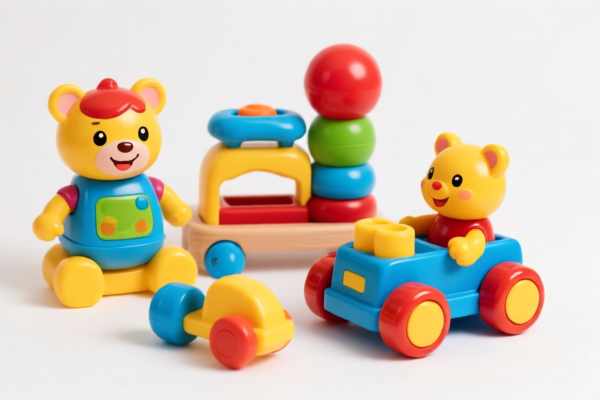
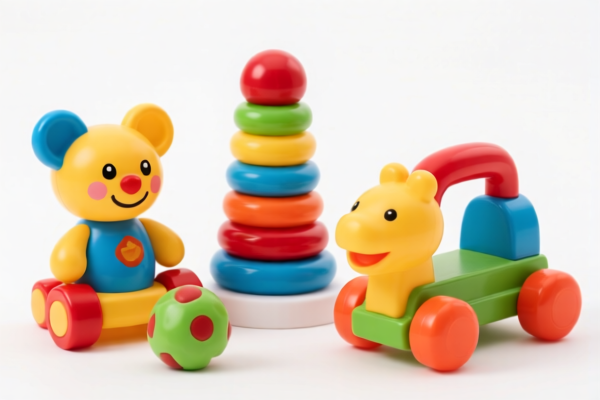
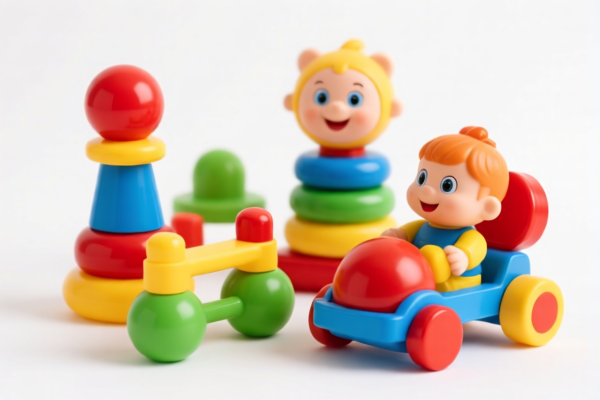
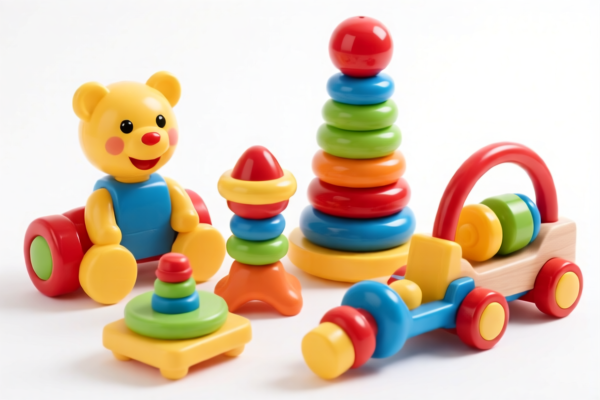
AI Analysis
🧸 Children's Pretend Play Toys (Over-the-Counter Role-Play Sets)
🌐 HS Code Reference & Customs Clearance Guide | 2026 Latest Tariff Breakdown | Professional Compliance Strategy
📌 I. Product Definition & Classification: What Are "Pretend Play Toys"?
Children's Pretend Play Toys (often referred to as "Household Playsets" or "Role-Play Kits") are interactive items designed for children to mimic adult activities (e.g., cooking, cleaning, caregiving). In international trade, the classification hinges on two critical factors: 1. Primary Material: Is it plastic, ceramic, or wood? 2. Primary Function: Is it categorized strictly as a "Toy" (Chapter 95) or a "Household Article" (Chapter 39/69)?
⚠️ Key Distinction:
- If the item is primarily designed for play and marketed as a toy, it falls under Chapter 95.
- If the item mimics a specific household good (e.g., a ceramic teapot) and the material suggests a non-toy household item, it may fall under Chapter 39 (Plastics) or Chapter 69 (Ceramics).
- Note: Customs often scrutinizes these items because misclassification can lead to significant duty differences.
📦 II. HS Code Classification Details (2026 Authoritative Mapping)
| HS Code | Product Description | Scenario & Material | Toy vs. Household Classification |
|---|---|---|---|
3924.90.56.10 |
Other plastic household articles, n.e.s. (Not Elsewhere Specified) | Plastic playsets (e.g., kitchen, cleaning sets) not primarily classified as toys due to specific material rules | ❌ Household Article (Plastics) |
3924.90.56.50 |
Other plastic household articles, n.e.s. | Plastic items inferred as household goods; fits the material profile of "other plastic household items" | ❌ Household Article (Plastics) |
9503.00.00.71 |
Dolls representing only females, whether or not dressed | Toy classification; includes dollhouses, baby dolls, and caregiving playsets | ✅ Toy (Dolls/Care) |
9503.00.00.73 |
Other toys, represented as other | Toy classification; general role-play sets (e.g., food sets, tool sets) that fit "other toys" | ✅ Toy |
6911.10.80.90 |
Other ceramic tableware, kitchenware, and toilet articles | Ceramic/Ceramic-like pretend kitchen sets (e.g., ceramic teapots, plates for play) | ❌ Household Article (Ceramics) |
🔍 Critical Reminder:
- Plastic Playsets: Often caught in a "gray area." If marketed strictly as a toy, aim for9503. However, if the material construction mimics real householdware closely, customs may default to3924.
- Ceramic Playsets: Even if sold as toys, if they are made of ceramic, they are frequently classified under Chapter 69 (6911) due to material specificity overrides.
- Dollhouse/Care Sets: These clearly fall under9503(Toys).
💰 III. 2026 Latest Tariff Rate Breakdown (Including Surtaxes)
✅ Applicable Country: United States (US)
✅ Origin: China (CN)
✅ Effective Date: Includes surcharges effective from 2025-11-10 onwards
🎯 1. 3924.90.56.10 & 3924.90.56.50 — Plastic Household Articles
| Item | Detail |
|---|---|
| Base Tariff | 3.4% (ad valorem) |
| Section 301 Surtax | 7.5% (Standard USITC Footnote) |
| Section 122 Surtax | 10% (Specific provision for certain Chinese imports) |
| Total Effective Rate | 20.9% |
| Calculation Basis | CIF Value × 20.9% |
| De Minimis Exemption? | ❌ No (Section 321 cannot be used for goods subject to Section 301/122 duties) |
| Legal Path | Base: 3.4% + 301: 7.5% + 122: 10% |
📌 Explanation:
- These codes are classified as Plastic Household Articles, not Toys.
- They attract both Section 301 (7.5%) and Section 122 (10%) surcharges on top of the base rate.
- Total Cost Impact: High. Importers must account for 20.9% total duty.
🎯 2. 9503.00.00.71 & 9503.00.00.73 — Toys (Dolls & Other Toys)
| Item | Detail |
|---|---|
| Base Tariff | 0.0% (Free) |
| Section 301 Surtax | 0.0% (Exempt/Not Applied to these specific subheadings in this dataset) |
| Section 122 Surtax | 10% (Applied to Toys from China) |
| Total Effective Rate | 10.0% |
| Calculation Basis | CIF Value × 10.0% |
| De Minimis Exemption? | ❌ No (Subject to Section 122) |
| Legal Path | Base: 0% + 301: 0% + 122: 10% |
📌 Explanation:
- These codes are classified as Toys.
- They benefit from a 0% base rate and are exempt from Section 301 in this specific classification context.
- However, they are still subject to Section 122 (10%).
- Total Cost Impact: Moderate. Importers save 10.9% compared to the plastic household classification.
🎯 3. 6911.10.80.90 — Ceramic Tableware/Kitchenware
| Item | Detail |
|---|---|
| Base Tariff | 20.8% (ad valorem) |
| Section 301 Surtax | 7.5% |
| Section 122 Surtax | 10% |
| Total Effective Rate | 38.3% |
| Calculation Basis | CIF Value × 38.3% |
| De Minimis Exemption? | ❌ No |
| Legal Path | Base: 20.8% + 301: 7.5% + 122: 10% |
📌 Explanation:
- Even if it is a "toy kitchen set," if it is made of ceramic, it falls under Chapter 69.
- Ceramics have a high base tariff (20.8%).
- Total Cost Impact: Very High. This is the most expensive classification option.
🛠️ IV. Customs Clearance Practical Advice (Avoiding Pitfalls)
✅ 1. Documentation Checklist (Mandatory)
| Document | Required? | Purpose |
|---|---|---|
| ✅ Product Photos | ✔️ | Must clearly show the item is a toy (e.g., plastic dolls, plastic food items) or ceramic. |
| ✅ Material Declaration | ✔️ | Explicitly state: "100% Plastic" or "Ceramic Body." |
| ✅ Marketing Materials | ✔️ | Brochures showing "Age Range: 3+," "Pretend Play," "Role-Play Set." |
| ✅ Component List | ✔️ | Break down parts: e.g., "Plastic pot, plastic spoon, plastic child figure." |
| ✅ Invoice Description | ✔️ | Use terms like "Plastic Pretend Play Kitchen Set" NOT "Plastic Kitchen Utensils." |
✅ 2. Classification Strategy (Key Takeaways)
🔥 "Material Matters, Function Defines!"
| Scenario | Recommended HS Code | Duty Rate | Reason |
|---|---|---|---|
| Plastic Playset (Market as Toy) | 9503.00.00.73 |
10.0% | Preferred. Lower duty. Justify as "Toy." |
| Plastic Playset (Risk of Household) | 3924.90.56.10 |
20.9% | Backup. If customs rejects Toy classification. |
| Ceramic Play Kitchen | 6911.10.80.90 |
38.3% | Unavoidable if material is ceramic. High duty. |
| Dollhouse/Doll Set | 9503.00.00.71 |
10.0% | Clearly a toy. Low duty. |
⚠️ Critical Tip:
- Avoid3924if possible. The 10.9% difference in total duty (20.9% vs 10.0%) is significant.
- Justification is Key: To use9503, you must prove the primary purpose is play, not utility. Provide photos of the item with children, marketing tags saying "For Kids," and lack of functional durability (e.g., thin plastic).
- Ceramic Warning: If your product is ceramic, there is little room to negotiate down to "Toy" status. Customs views ceramic tableware under Chapter 69 strictly. Consider switching to plastic or melamine to access9503or3924.
✅ 3. Special Case Handling
| Situation | Recommendation |
|---|---|
| Mixed Materials (Plastic parts + Ceramic pieces) | The item is usually classified by the essential character. If ceramic parts are dominant or functional, it may fall under 6911. |
| OEM/Private Label | Ensure your marketing copy explicitly states "Toy" and "For Children 3+". Avoid words like "Durable," "Realistic Kitchenware," or "Dishwasher Safe." |
| De Minimis (Section 321) | Do not rely on De Minimis. All codes listed above are subject to Section 122 or 301 surcharges, which are not exempt under Section 321. Full formal entry is required. |
🌍 V. Global Market Comparison (2026)
| Market | Preferred HS Code | Total Duty (China Origin) | Notes |
|---|---|---|---|
| 🇺🇸 USA | 9503.00.00.73 |
10.0% | Best option. Avoid 3924 (20.9%) and 6911 (38.3%). |
| 🇨🇳 China | 9503.00.00.73 |
5% | Domestic import duty. No Section 301/122. |
| 🇪🇺 EU | 9503.00.00 |
0% | Toys generally enter duty-free in EU. |
| 🇬🇧 UK | 9503.00.00 |
0% | Toys generally enter duty-free in UK. |
| 🇨🇦 Canada | 9503.00.00 |
0% | Toys generally enter duty-free in Canada. |
📌 Conclusion:
- USA is the only major market with high punitive tariffs.
- Strategy for USA: Push for9503classification. If the product is plastic, ensure it is marketed and packaged as a Toy. If it is ceramic, accept the 38.3% cost or redesign to plastic.
📌 VI. Common Errors & Pitfalls (Lessons Learned)
❌ Error 1: Using "Kitchen Set" instead of "Pretend Play Kitchen Set"
👉 Result: Customs may classify as real household goods (3924 or 6911) → Duty jumps from 10% to 20.9% or 38.3%.
❌ Error 2: Declaring Ceramic Items as "Plastic Toys"
👉 Result: Customs inspection reveals ceramic material → Reclassification + Penalties + Back Duties.
❌ Error 3: Ignoring Section 122
👉 Result: Assuming "Toys are Duty-Free" → Misses 10% Surcharge. Even toys (9503) pay 10% under Section 122 in the US.
❌ Error 4: Using De Minimis for Section 122 Goods
👉 Result: Package held by Customs → Seizure or Forced Return. Section 122 duties negate Section 321 exemption.
✅ Correct Approach:
"Plastic Pretend Play Cooking Set with Child Figure, Not for Actual Food Use, Age 3+"
🎯 VII. Conclusion: Professional Clearance, Cost Optimization
🎯 Key Takeaway:
🔹 "Plastic = Toy (10%) vs Household (20.9%) | Ceramic = Household (38.3%)"
🔹 "Section 122 Hits All: 10% Surtax on Toys, Plastics, and Ceramics from China"
🔹 "Marketing is Classification: Call it a Toy, Prove it's a Toy."
📌 Pro Tip:
- For Plastic Toys: Submit a Pre-Ruling Request to CBP to confirm
9503classification.- For Ceramic Toys: Re-evaluate material choice. Switching to Plastic saves 28.3% in duties.
📣 Immediate Action:
📞 Consult a Customs Broker to review your product photos and marketing materials.
📝 Ensure Invoice Description clearly states "Pretend Play Toy" and "Not for Food Use."
🚀 Optimize Supply Chain: Consider plastic alternatives for ceramic items to reduce US import costs.
✨ Smart Classification Saves Money!
💼 Every Percentage Point Counts in Global Trade!
Customer Reviews
About HS Code Classification
The Harmonized System (HS) is an internationally standardized nomenclature developed by the World Customs Organization (WCO) to classify traded products. Over 200 countries use the HS system as the basis for customs tariffs, trade statistics, and import/export regulations.
Each HS code follows a hierarchical structure:
- Chapter (2 digits) — Broad category of goods (e.g., Chapter 84: Machinery and Mechanical Appliances)
- Heading (4 digits) — More specific grouping within the chapter
- Subheading (6 digits) — Internationally standardized breakdown, used by all WCO member countries
- National subdivisions (8-10 digits) — Country-specific extensions for further classification, such as US HTSUS 10-digit codes
Correct HS code classification is essential for smooth customs clearance, accurate duty payment, and compliance with trade regulations. Misclassification can lead to customs delays, overpayment of duties, or penalties.
When importing from CN to US, the applicable tariff rates may include:
- Most-Favored-Nation (MFN) rate — The standard duty rate applied to WTO members
- General rate — Applied to countries without trade agreements
- Trade remedy duties — Additional tariffs such as Section 301 (anti-dumping), Section 232 (national security), or countervailing duties
The information provided on this page is for reference purposes only. For official classification, please consult with your local customs authority or a licensed customs broker.