Children's Remote Control Toy Airplane
CN → US| HS Code | Tariff Rate | Origin | Destination | Doc |
|---|---|---|---|---|
| 9503000071 | 10.0% | CN | US | Official Doc |
| 9503000073 | 10.0% | CN | US | Official Doc |
| 8802300180 | 35.0% | CN | US | Official Doc |
| 8802200160 | 35.0% | CN | US | Official Doc |
| 9503000073 | 10.0% | CN | US | Official Doc |
Product Images
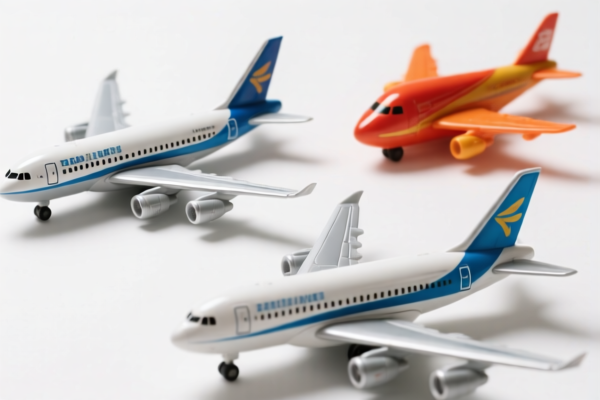
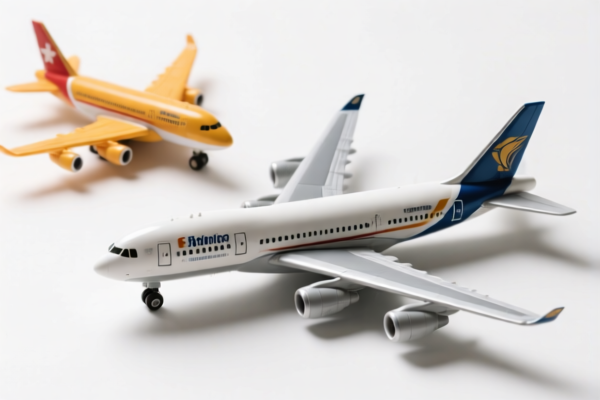
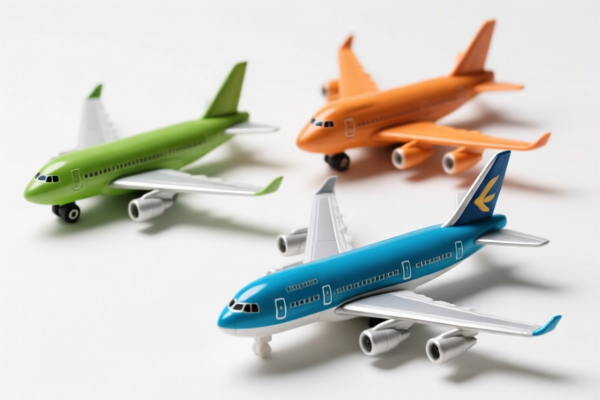
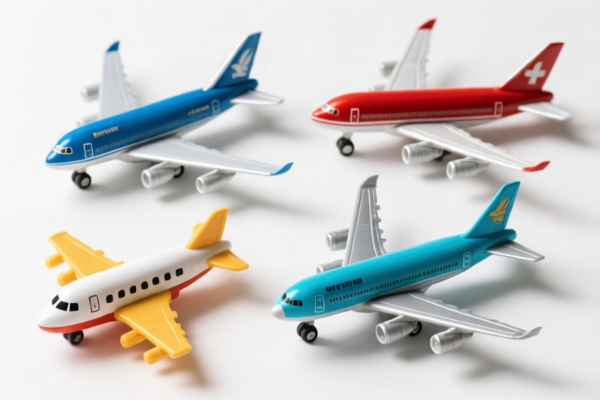
AI Analysis
🚁 Children's Remote Control Toy Airplane (RC Helicopters & Planes)
🌐 HS Code Reference & Customs Clearance Guide | 2026 Latest Tariff Analysis | Professional Entry Strategy 📌 Part I: Product Definition & Classification: What Exactly is an "RC Toy Airplane"?
Children's Remote Control (RC) Airplanes represent a unique intersection of toys and aerospace vehicles. In international trade, the classification depends heavily on the primary purpose (play vs. model collection) and physical characteristics (weight, size, material).
Category A: Pure Toys (9503 Series) - Characteristics: Small size, lightweight (often plastic), low altitude, designed strictly for children's play. - Key Feature: Classified under "Toys," regardless of the remote control function.
Category B: Models/Aerodromes (8802 Series) - Characteristics: Larger scale, higher altitude capability, often metallic or composite materials, may be considered "aerodromes" or detailed models. - Key Feature: Classified under "Aircraft/Aerodromes" if they meet specific weight/complexity thresholds, leading to significantly higher tariffs.
⚠️ Critical Distinction Point: - If the item is clearly marketed and designed as a child's toy (small, plastic, safe for play) → HS 9503 (Low Tax). - If the item is marketed as a model aircraft or aerodrome (larger, metal/composite, high-performance) → HS 8802 (High Tax).
📦 Part II: HS Code Classification Details (2026 Latest Tariff Alignment)
Based on the provided data, here are the valid HS Codes for Children's Remote Control Airplanes:
| HS Code | Product Description & Summary | Tax Rate | Tax Breakdown |
|---|---|---|---|
| 9503.00.00.71 | Children's Toy RC Airplane Meets toy usage and model classification; no material conflict. |
10.0% | Base: 0% Section 301: 0% 122 Clause: 10% |
| 9503.00.00.73 | Children's Toy RC Airplane Sub-scale or entertainment model; fits within toy category. Material: Plastic/Light Composite. |
10.0% | Base: 0% Section 301: 0% 122 Clause: 10% |
| 8802.30.01.80 | Child's Toy RC Airplane (Aerodrome) Formed as an aircraft; material inferred as plastic/metal. Matches aircraft category. |
35.0% | Base: 0% Section 301: 25% 122 Clause: 10% |
| 8802.20.01.60 | Flight Toy (Aircraft Category) Classified under "Other Aerodromes." No obvious material/use conflict. |
35.0% | Base: 0% Section 301: 25% 122 Clause: 10% |
| 9503.00.00.73 | Flight Toy (Toy Category) Toy usage; classified under "Other Toys." Material: Non-metal/Plastic. |
10.0% | Base: 0% Section 301: 0% 122 Clause: 10% |
🔍 Key Insight: - HS 9503 codes attract a 10% total tax. - HS 8802 codes attract a 35% total tax due to the additional 25% tariff. - The difference lies in whether Customs views the item as a "Toy" or an "Aircraft."
💰 Part III: 2026 Latest Tariff Rate Details (Detailed Clause Explanation)
✅ Applicable Country: USA (US) ✅ Origin: China (CN) ✅ Effective Date: As per current 2026 guidelines
🎯 1. 9503.00.00.71 & 9503.00.00.73 —— Children's Toys (Low Tariff)
| Item | Detail |
|---|---|
| Base Duty | 0.0% (Ad Valorem) |
| Section 301 Additional Duty | 0.0% (Not applicable to these specific toy subheadings in this dataset) |
| 122 Clause Duty | +10.0% |
| Total Tax Rate | 10.0% |
| Tax Calculation | CIF Value × 10% |
| De Minimis Exemption? | ❌ No (Generally denied for Chinese goods under current enforcement) |
| Legal Basis | 122 Clause applies directly to these toy categories. |
📌 Explanation: - The 10% tax is attributed to the "122 Clause." - Unlike aircraft classifications, these toy HS codes do not trigger the additional 25% Section 301 tariff in this specific data context. - This is the preferred classification for standard plastic RC toys to minimize cost.
🎯 2. 8802.30.01.80 & 8802.20.01.60 —— Aircraft/Aerodromes (High Tariff)
| Item | Detail |
|---|---|
| Base Duty | 0.0% (Ad Valorem) |
| Section 301 Additional Duty | +25.0% |
| 122 Clause Duty | +10.0% |
| Total Tax Rate | 35.0% |
| Tax Calculation | CIF Value × 35% |
| De Minimis Exemption? | ❌ No |
| Legal Basis | Section 301 + 122 Clause combined. |
📌 Explanation: - The 25% tax comes from Section 301 (US Trade Act), which heavily targets aerospace-related imports. - The 10% tax comes from the 122 Clause. - Total 35% makes this classification significantly more expensive. - Risk: If Customs determines a "toy" is actually an "aerodrome" (due to size/performance), they will reclassify it to 8802, resulting in a 25% penalty back-differential.
🛠️ Part IV: Customs Clearance Practical Advice (Avoiding Pitfalls)
✅ 1. Documentation Checklist (Non-Negotiable)
| Document | Must Provide | Note |
|---|---|---|
| ✅ Product Description | ✔️ | Clearly state "Children's Toy," "Remote Control Airplane." Avoid words like "Aircraft" or "Manned Vehicle." |
| ✅ Material Composition | ✔️ | Specify "Plastic," "Light Composite." Avoid "Metal Alloy" if possible to support Toy classification. |
| ✅ Age Recommendation | ✔️ | Must indicate "For Children" (e.g., 8+ years). Supports HS 9503. |
| ✅ Weight & Dimensions | ✔️ | Lighter/smaller items are more likely to be classified as Toys (9503). |
| ✅ Photos | ✔️ | Show the toy in a playful context, with packaging indicating "Toy." |
| ✅ Commercial Invoice | ✔️ | Describe as "RC Toy Airplane," NOT "RC Aircraft Model." |
✅ 2. Declaration Strategy (The "Toy" vs. "Aircraft" Battle)
🔥 "Play Intent is Key! If it flies, it might be a toy. If it looks like a plane, fight for 9503!"
| Scenario | Recommended HS Code | Risk Level |
|---|---|---|
| Small, plastic, <$50, marketed for kids | 9503.00.00.71 / .73 | ✅ Low Risk (10% Tax) |
| Large, metal parts, high speed, expensive | 8802.30.01.80 / .20 | ⚠️ High Risk (35% Tax) |
| "Trainer" planes for beginners (large wingspan) | Disputed | ⚠️ Medium Risk (Could be reclassified to 8802) |
📌 Critical Tip: - Avoid using the word "Aircraft" in your description if you want to stay in 9503. - Use terms like "RC Helicopter/Plane Toy," "Model Toy," "Entertainment Device." - If the product has metal frames or large wingspans, Customs may deem it an "Aerodrome" (8802). Be prepared to justify why it is a toy.
✅ 3. Special Cases
| Case | Handling Advice |
|---|---|
| Metal Frame RC Planes | High risk of 8802 classification. Provide strong evidence of "toy" use (marketing, age limit). |
| Batteries Included | Ensure Li-ion batteries are declared separately or according to DG (Dangerous Goods) rules. |
| Kits vs. Assembled | Assembled toys are easier to classify as 9503. Kits might be scrutinized more heavily. |
| Dropshipping/De Minimis | ❌ Do not rely on de minimis for Chinese RC planes. 35% tax is too high to ignore, and 10% is not exempt. |
🌍 Part V: Global Market Comparison (2026 Update)
| Region | Likely HS Code | Est. Tax (China Origin) | Notes |
|---|---|---|---|
| 🇺🇸 USA | 9503.00.00.71/73 or 8802.xxxx |
10% or 35% | Heavy Section 301 impact on 8802. |
| 🇨🇳 China | 9503.00.00.99 |
~5-7% | Lower base duties, no Section 301. |
| 🇪🇺 EU | 9503.00.70 |
0% - 4.7% | No Section 301 equivalent. CE Mark required. |
| 🇬🇧 UK | 9503.00.70 |
0% - 4.7% | Post-Brexit rules apply. UKCA Mark required. |
📌 Conclusion: - The US market is the most complex due to the 25% Section 301 tariff on aircraft-like items. - Optimization Goal: Always strive to classify under 9503 (Toy) to pay 10% instead of 35%.
📌 Part VI: Common Mistakes & Pitfalls (Lessons Learned)
❌ Mistake 1: Using "RC Aircraft" as the product name.
👉 Result: Customs likely classifies as 8802 → 35% Tax.
✅ Fix: Use "RC Toy Airplane" or "Toy Helicopter."
❌ Mistake 2: Ignoring the material. 👉 Result: Metal parts trigger "Aerodrome" classification. ✅ Fix: Emphasize "Plastic Construction" and "Lightweight."
❌ Mistake 3: Assuming all toys are exempt from tariffs. 👉 Result: Underestimating the 122 Clause tax (10%). ✅ Fix: Budget for at least 10% tax even for toys.
❌ Mistake 4: Splitting shipments to avoid scrutiny. 👉 Result: Audit risk + penalties. ✅ Fix: Clear, accurate documentation is better than hiding.
🎯 Part VII: Conclusion: Professional Declaration for Cost Efficiency
🎯 Remember the Golden Rule:
🔹 "If it's for kids, call it a Toy (9503). If it looks like a plane, call it a Toy too!" 🔹 "10% vs 35% is a 25% difference. That’s huge profit margin impact."
📌 Pro Tip: - If your RC airplane is large or metallic, consider if it truly needs to be imported into the US under HS 8802. - Can you market it more strongly as a "Desktop Model" or "Collector's Toy" to support HS 9503? - Pre-ruling: Request a Customs Ruling Letter from CBP if the product is borderline. This provides legal protection against misclassification.
📣 Immediate Action:
📞 Consult your broker with photos and material specs. 🚀 Declare accurately as "Children's RC Toy" to avoid the 35% pitfall. 💰 Save 25% by getting the right HS code!
✨ Smart Clearance, Smarter Profits! 💼 Every percentage point counts in cross-border e-commerce.
Customer Reviews
About HS Code Classification
The Harmonized System (HS) is an internationally standardized nomenclature developed by the World Customs Organization (WCO) to classify traded products. Over 200 countries use the HS system as the basis for customs tariffs, trade statistics, and import/export regulations.
Each HS code follows a hierarchical structure:
- Chapter (2 digits) — Broad category of goods (e.g., Chapter 84: Machinery and Mechanical Appliances)
- Heading (4 digits) — More specific grouping within the chapter
- Subheading (6 digits) — Internationally standardized breakdown, used by all WCO member countries
- National subdivisions (8-10 digits) — Country-specific extensions for further classification, such as US HTSUS 10-digit codes
Correct HS code classification is essential for smooth customs clearance, accurate duty payment, and compliance with trade regulations. Misclassification can lead to customs delays, overpayment of duties, or penalties.
When importing from CN to US, the applicable tariff rates may include:
- Most-Favored-Nation (MFN) rate — The standard duty rate applied to WTO members
- General rate — Applied to countries without trade agreements
- Trade remedy duties — Additional tariffs such as Section 301 (anti-dumping), Section 232 (national security), or countervailing duties
The information provided on this page is for reference purposes only. For official classification, please consult with your local customs authority or a licensed customs broker.