Children's Robe of Other Fabrics
CN → US| HS Code | Tariff Rate | Origin | Destination | Doc |
|---|---|---|---|---|
| 6201906960 | 21.7% | CN | US | Official Doc |
| 6111909000 | 23.1% | CN | US | Official Doc |
| 6111905070 | 32.4% | CN | US | Official Doc |
| 6201902960 | 20.3% | CN | US | Official Doc |
| 6110909090 | 23.5% | CN | US | Official Doc |
Product Images

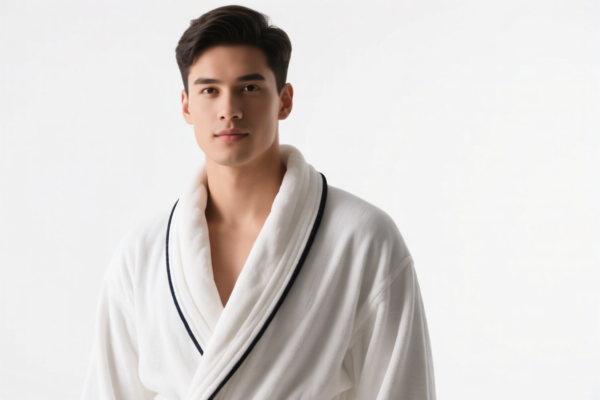
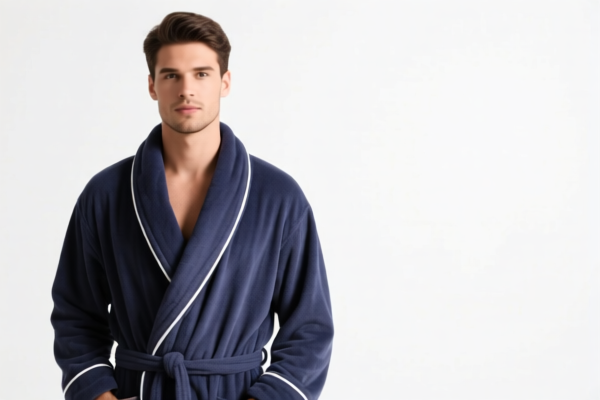
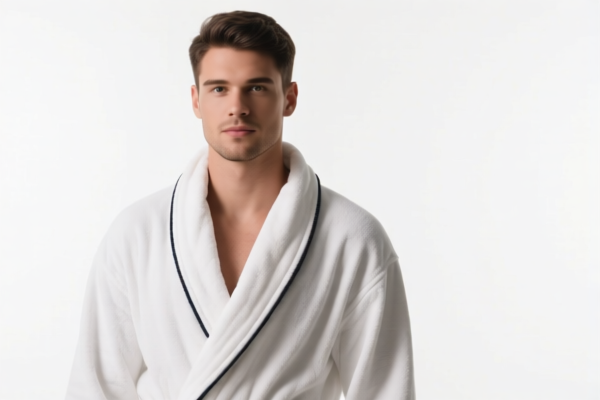
AI Analysis
👶 Children's Robe of Other Fabrics (Kids' Bathrobes/Gowns)
🌐 HS Code Reference & Customs Clearance Guide | 2026 Latest Tariff Analysis | Strategic Classification for Textiles
📌 Part 1: Product Definition & Classification Nuances
A "Children's Robe of Other Fabrics" generally refers to bathrobes, dressing gowns, or similar wrap-around garments designed for infants or children, manufactured from textile materials that are not cotton, wool, or synthetic fibers typically found in standard knitwear categories (often falling under "Other Textile Materials" such as specific blends, specialty knits, or non-standard weaves).
In international trade, the critical distinction lies in: 1. Knitted vs. Woven: Is the robe made from knitted/fabric looped together (Chapter 61) or woven threads (Chapter 62)? 2. Specific Category: Is it classified strictly as "Infant Garments" (6111) or broader "Other Children's Clothing" (6201/6110)? 3. Material Composition: "Other Fabrics" implies materials outside the primary major categories (like pure cotton or polyester), often triggering specific sub-heading codes based on composition.
⚠️ Key Classification Trap:
- Knitted/ Crocheted items usually fall under Chapter 61.
- Woven items usually fall under Chapter 62.
- "Infant" vs. "Child": Specific codes exist for infants (under certain age/size limits). If it doesn't meet the strict "Infant" definition, it falls under general children's or other apparel codes.
📦 Part 2: HS Code Classification Matrix (2026 Authorized Data)
Below is the precise mapping of your product to the provided HS Codes, with detailed tax implications based on . All these codes involve US Import Duties from China (CN), subject to additional tariffs.
| HS Code | Classification Summary | Manufacturing Method | Key Description |
|---|---|---|---|
6201.90.69.60 |
Other Woven Garments for Children (Other Textile Materials) | Woven | "Children's robe, classified as other textile material apparel" |
6111.90.90.00 |
Infant/Child Garments, Knitted/Crocheted (Other Textile Materials) | Knitted/Crocheted | "Belongs to infant/child category; other textile material" |
6111.90.50.70 |
Infant/Child Garments, Knitted/Crocheted (Other Textile Materials) | Knitted/Crocheted | "Matches garment accessories/apparel & other textile materials" |
6201.90.29.60 |
Other Woven Garments (Other Materials/Capes etc.) | Woven | "Classified as capes/like articles & other materials" |
6110.90.90.90 |
Sweaters, Pullovers & Similar Articles (Knitted/Crocheted) | Knitted/Crocheted | "Classified as knitted/crocheted apparel; other textile material" |
🔍 Critical Note:
- Chapter 61 = Knitted or Crocheted (e.g., jersey, fleece, soft knit robes).
- Chapter 62 = Woven (e.g., terry cloth woven, flannel woven).
- Chapter 6111 is specifically for Infants'. If your product is for older children (>2 years or not meeting infant size criteria), codes like6201or6110may be more appropriate, though6110is technically for sweaters/pullovers, so classification experts must verify if "robe" fits the "similar article" definition.
💰 Part 3: 2026 Tariff Rate Breakdown (USA Imports from China)
✅ Applicable Country: United States (US)
✅ Origin: China (CN)
✅ Effective Period: Current 2025-2026 Trade Regime
✅ Tariff Structure: Base Rate + Section 301 (Section 122/Trade) + Additional Tariffs
🎯 1. HS Code 6201.90.69.60 (Woven, Other Textile Materials)
Summary: Children's robe, classified as other textile material apparel.
| Component | Rate | Source |
|---|---|---|
| Base Tariff | 4.2% | Standard MFN Rate |
| Additional Tariff | 7.5% | Section 301 / Trade Adjustment |
| 122-Clause Tariff | 10.0% | Specific Section 122 Provision |
| 🔴 TOTAL EFFECTIVE RATE | 21.7% | Applied on CIF Value |
📌 Explanation:
- The 21.7% total tax is cumulative.
- Section 122 Tariff (10%) is a specific penalty/add-on often applied to certain textile/apparel items from China under recent trade enforcement clauses.
- 7.5% is the standard Section 301 add-on for many apparel categories.
🎯 2. HS Code 6111.90.90.00 (Knitted, Infant/Child Category)
Summary: Belongs to infant/child category; other textile material.
| Component | Rate | Source |
|---|---|---|
| Base Tariff | 5.6% | Standard MFN Rate |
| Additional Tariff | 7.5% | Section 301 |
| 122-Clause Tariff | 10.0% | Specific Section 122 Provision |
| 🔴 TOTAL EFFECTIVE RATE | 23.1% | Applied on CIF Value |
📌 Explanation:
- Slightly higher base rate (5.6%) due to specific infant garment sub-category.
- Same additional tariffs apply. 23.1% is the final duty burden.
🎯 3. HS Code 6111.90.50.70 (Knitted, Other Textile Materials)
Summary: Matches garment accessories/apparel & other textile materials.
| Component | Rate | Source |
|---|---|---|
| Base Tariff | 14.9% | Standard MFN Rate |
| Additional Tariff | 7.5% | Section 301 |
| 122-Clause Tariff | 10.0% | Specific Section 122 Provision |
| 🔴 TOTAL EFFECTIVE RATE | 32.4% | Applied on CIF Value |
⚠️ High Alert:
- This code has a significantly higher base tariff (14.9%), likely because it falls under a less favorable sub-heading for "Other Textile Materials" within the infant chapter.
- Total Tax: 32.4% is the highest among the options. Avoid if6111.90.90.00or6201codes are applicable.
🎯 4. HS Code 6201.90.29.60 (Woven, Capes/Other Materials)
Summary: Classified as capes/like articles & other materials.
| Component | Rate | Source |
|---|---|---|
| Base Tariff | 2.8% | Standard MFN Rate |
| Additional Tariff | 7.5% | Section 301 |
| 122-Clause Tariff | 10.0% | Specific Section 122 Provision |
| 🔴 TOTAL EFFECTIVE RATE | 20.3% | Applied on CIF Value |
📌 Explanation:
- Lowest Base Rate (2.8%) among all options.
- Total Tax: 20.3% is the most cost-effective option if the robe can be classified as a "cape-like" or generic woven garment.
- Requires strong justification that the item fits "capes/like articles" definition.
🎯 5. HS Code 6110.90.90.90 (Knitted, Sweaters/Pullovers)
Summary: Classified as knitted/crocheted apparel; other textile material.
| Component | Rate | Source |
|---|---|---|
| Base Tariff | 6.0% | Standard MFN Rate |
| Additional Tariff | 7.5% | Section 301 |
| 122-Clause Tariff | 10.0% | Specific Section 122 Provision |
| 🔴 TOTAL EFFECTIVE RATE | 23.5% | Applied on CIF Value |
📌 Explanation:
- If the robe is knitted but doesn't fit "Infant" (6111) strictly, it might be forced into "Sweaters/Pullovers" (6110) as a "similar article".
- Total Tax: 23.5%. Moderate cost, but verify if "robe" legally fits "pullover" definition in US HTSUS.
🛠️ Part 4: Customs Clearance Practical Advice (Avoiding Pitfalls)
✅ 1. Documentation Checklist (Mandatory)
| Document | Required? | Notes |
|---|---|---|
| Commercial Invoice | ✔️ | Must specify "Children's Robe", Material (e.g., "Polyester/Cotton Blend - Other Textile"), Quantity, Value |
| Packing List | ✔️ | Detail per-box contents |
| Label Photos | ✔️ | Show care label, fiber content (%), Country of Origin (Made in China) |
| Product Specification | ✔️ | Describe fabric type (Knitted/Woven), Thickness, Closure type |
| Fiber Content Statement | ✔️ | Critical for determining "Other Textile Materials" vs. Cotton/Polyester |
| HTS Code Justification | ✔️ | Provide reasoning for chosen HS Code (e.g., "Woven Terry Cloth, not strictly cotton") |
✅ 2. Classification Strategy (Cost Optimization)
🔥 Golden Rule: "Woven beats Knitted if Base Rate is Lower, but Verify Chapter 61 vs 62!"
| Scenario | Recommended HS Code | Total Tax | Why? |
|---|---|---|---|
| Best Cost (Woven) | 6201.90.29.60 |
20.3% | Lowest base rate (2.8%) + 17.5% add-ons. |
| Best Cost (Infant Knit) | 6111.90.90.00 |
23.1% | If strictly infant, better than 6111.90.50.70. |
| Avoid (High Tax Knit) | 6111.90.50.70 |
32.4% | High base rate (14.9%). Only use if no other code fits. |
| Risk (Knit Robe) | 6110.90.90.90 |
23.5% | Use only if "sweater" classification is accepted by CBP. |
✅ 3. Critical Clearance Tips
-
Define "Other Fabrics" Precisely:
- Do not just write "Other Fabrics". Specify the material (e.g., "Viscose Blend", "Polyester Microfiber", "Acrylic Knit").
- If the fabric is Cotton, these codes might be incorrect! Cotton usually has different base rates. Ensure "Other" means non-cotton/non-wool/non-silk as per HTSUS definitions.
-
Chapter 61 vs. 62 Determination:
- Check the fabric construction.
- Knitted (loops, stretchy, jersey) → Chapter 61.
- Woven (crisscross threads, stiffer, terry cloth weave) → Chapter 62.
- Misclassification here leads to immediate audits.
-
Section 122 Tariff Impact:
- All codes above include a 10% Section 122 Tariff. This is a non-negotiable add-on for these specific textile sub-headings from China. Factor this into your landed cost calculation immediately.
-
Avoid "De Minimis" Pitfalls:
- These items are NOT eligible for de minimis (Section 321) if shipped as commercial goods. They must be formally entered with duties paid.
🌍 Part 5: Global Market Insight (2026)
| Market | HS Code Trend | Key Duty Concern |
|---|---|---|
| 🇺🇸 USA | 6201.90.29.60 (Lowest Tax) |
High total tax (20.3%+); Section 122 applies. |
| 🇪🇺 EU | Similar Codes (e.g., 6111/6201) | Lower base duties (~4-12%), no Section 122. |
| 🇨🇳 China | Same Codes | Import duties for children's wear can be 8-15% depending on exact fabric. |
| 🇬🇧 UK | Post-Brexit Rules | Check UK Global Tariff; likely similar to EU pre-2020. |
📌 Part 6: Common Errors & Blood-Soaked Lessons
❌ Error 1: Assuming all "Robes" are Sweaters (6110)
👉 Consequence: If it's woven, 6110 is wrong → Penalty + Back Dues. Use 6201 for woven.
❌ Error 2: Ignoring the "Infant" Age Limit
👉 Consequence: If the robe is for a 5-year-old, 6111 (Infant) may be rejected. Use 6201 or 6110 instead.
❌ Error 3: Vague Material Description ("Other Fabric")
👉 Consequence: CBP requests info → Shipment Delayed at Port. Always specify fiber content.
❌ Error 4: Choosing 6111.90.50.70 Without Necessity
👉 Consequence: Paying 32.4% tax when 6201.90.29.60 is 20.3%. Lost Profit: 12.1%!
✅ Correct Approach:
"Children's Robe, Woven, 100% Polyester, Not Cotton, Not Wool. Size: 2-4 Years. HS Code:
6201.90.29.60. Total Duty: 20.3%."
🎯 Part 7: Conclusion & Action Plan
🎯 Final Verdict:
For Children's Robes of Other Fabrics from China to the US:
1. If Woven: Aim for 6201.90.29.60 (20.3%) or 6201.90.69.60 (21.7%).
2. If Knitted (Infant): Aim for 6111.90.90.00 (23.1%). Avoid 6111.90.50.70 (32.4%).
3. If Knitted (General): Use 6110.90.90.90 (23.5%) if acceptable.
📌 Pro Tip:
Always request a Pre-Ruling from CBP if the material or construction is ambiguous. The 122-Clause Tariff (10%) is fixed, so focus on minimizing the Base Rate by choosing the most favorable sub-heading (6201.90.29.60is the winner here).
📣 Immediate Action:
📞 Consult Customs Broker with fabric swatches.
📝 Labeling: Ensure "Made in China" and Fiber Content are prominent.
💸 Costing: Include 20.3% - 32.4% total duty in your pricing model. No exceptions for Section 122.
✨ Precision in Classification = Profit in Your Pocket!
💼 Don't let tax inefficiency wash away your margins!
Customer Reviews
About HS Code Classification
The Harmonized System (HS) is an internationally standardized nomenclature developed by the World Customs Organization (WCO) to classify traded products. Over 200 countries use the HS system as the basis for customs tariffs, trade statistics, and import/export regulations.
Each HS code follows a hierarchical structure:
- Chapter (2 digits) — Broad category of goods (e.g., Chapter 84: Machinery and Mechanical Appliances)
- Heading (4 digits) — More specific grouping within the chapter
- Subheading (6 digits) — Internationally standardized breakdown, used by all WCO member countries
- National subdivisions (8-10 digits) — Country-specific extensions for further classification, such as US HTSUS 10-digit codes
Correct HS code classification is essential for smooth customs clearance, accurate duty payment, and compliance with trade regulations. Misclassification can lead to customs delays, overpayment of duties, or penalties.
When importing from CN to US, the applicable tariff rates may include:
- Most-Favored-Nation (MFN) rate — The standard duty rate applied to WTO members
- General rate — Applied to countries without trade agreements
- Trade remedy duties — Additional tariffs such as Section 301 (anti-dumping), Section 232 (national security), or countervailing duties
The information provided on this page is for reference purposes only. For official classification, please consult with your local customs authority or a licensed customs broker.