Children's Room Safety Gate
CN → US| HS Code | Tariff Rate | Origin | Destination | Doc |
|---|---|---|---|---|
| 3925900000 | 40.3% | CN | US | Official Doc |
| 8302416080 | 88.9% | CN | US | Official Doc |
| 8302416045 | 88.9% | CN | US | Official Doc |
| 4418298060 | 39.8% | CN | US | Official Doc |
| 3925200010 | 22.8% | CN | US | Official Doc |
Product Images
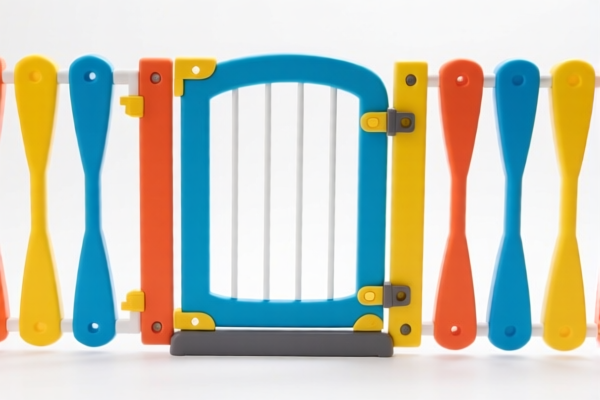
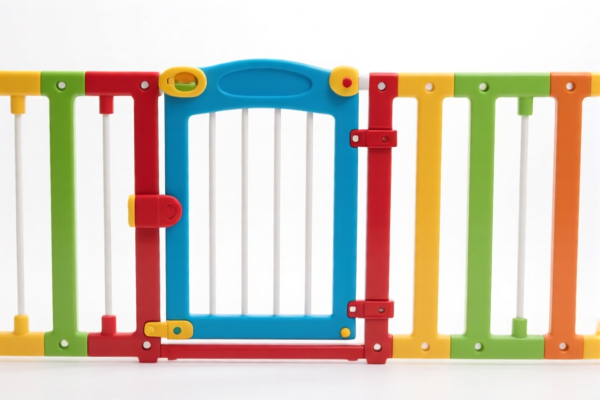
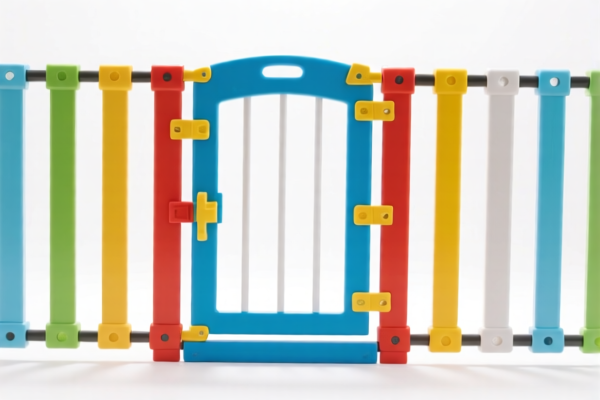
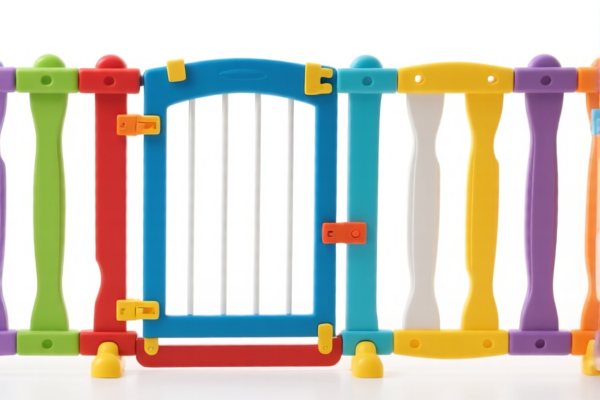
AI Analysis
🚪 Child Safety Gate (Children's Room Safety Gate)
🌐 HS Code Reference & Customs Clearance Guide | 2024-2026 Tariff Analysis | Professional Clearance Strategy
📌 I. Product Definition & Classification: What Exactly is a "Safety Gate"?
A Children's Room Safety Gate is a critical baby-proofing barrier used to restrict access to hazardous areas (stairs, kitchens, pools) or specific rooms within a home. In international trade, the classification depends heavily on material composition and function:
- Metal Gates (Steel/Aluminum/Iron): Typically classified under hardware fittings or general hardware accessories.
- Wooden Gates: Classified under woodworking products or doors/similar fixtures.
- Plastic/Composite Gates: Classified under plastic building components or general plastic articles.
⚠️ Key Distinction Point:
- If the gate is made of metal and functions as an access control or fitting for buildings → Likely 8302.41 (Base Metals Fittings).
- If the gate is made of wood and resembles a door/panel → Likely 4418.29 (Wooden Doors/Frames).
- If the gate is made of plastic and acts as a partition/building component → Likely 3925 (Plastic Building Articles).
📦 II. HS Code Classification Details (Based on Provided Data)
The following HS Codes are derived from the specific product attributes (material + function) as per the provided dataset.
| HS Code | Product Description & Material Inference | Tax Rate (Total) | Tax Breakdown |
|---|---|---|---|
3925.90.00.00 |
Plastic Safety Gate / Partition Inferred to be made of plastic materials. Classified as "Other plastic building components." |
40.3% | Base: 5.3% Added: 25.0% Section 122: 10% |
8302.41.60.80 |
Metal Safety Gate / Hardware Inferred to be metal. Classified as "Other base metal fittings and accessories for buildings." |
88.9% | Base: 3.9% Added: 25.0% Section 122: 10% Steel/Aluminum/Copper Surcharge: 50% |
8302.41.60.45 |
Metal Door/Window Fitting Intended for door access control. Classified as "Metal fittings for buildings." |
88.9% | Base: 3.9% Added: 25.0% Section 122: 10% Steel/Aluminum/Copper Surcharge: 50% |
4418.29.80.60 |
Wooden Safety Gate Inferred to be made of wood. Classified as "Other types of doors and frames." |
39.8% | Base: 4.8% Added: 25.0% Section 122: 10% |
3925.20.00.10 |
Plastic Door/Partition Component Functioning as a door or building partition made of plastic. |
22.8% | Base: 5.3% Added: 7.5% Section 122: 10% |
🔍 Critical Insight:
- Metal Gates incur the highest tariffs (88.9%) due to the 50% surcharge on steel, aluminum, or copper products under current trade regulations. - Plastic Gates vary significantly. If classified as a "door/partition" (3925.20.00.10), the added tariff is only 7.5%, resulting in a much lower total tax of 22.8%. If classified as a general "building component" (3925.90.00.00), the added tariff is 25%, totaling 40.3%.
💰 III. 2024-2026 Latest Tariff Rate Explanation
✅ Applicable Market: United States (US)
✅ Origin: China (CN)
✅ Effective Date: Current rates apply as per 2025-2026 trade updates.
🎯 1. 8302.41.60.80 & 8302.41.60.45 —— Metal Safety Gates (Steel/Aluminum)
| Item | Details |
|---|---|
| Base Duty | 3.9% |
| Section 301 Added Tariff | +25.0% |
| Section 122 Tariff | +10.0% |
| Steel/Aluminum/Copper Surcharge | +50.0% |
| Total Tax Rate | 88.9% |
| Calculation | CIF Value × 88.9% |
| De Minimis Exemption | ❌ Not Applicable (High tariff items are excluded) |
📌 Explanation:
- The 50% surcharge is the critical factor here. If your safety gate contains significant amounts of steel, aluminum, or copper, this surcharge applies regardless of the base metal classification. - This makes metal safety gates extremely expensive to import into the US from China.
🎯 2. 3925.90.00.00 —— Plastic Safety Gate (General Building Component)
| Item | Details |
|---|---|
| Base Duty | 5.3% |
| Section 301 Added Tariff | +25.0% |
| Section 122 Tariff | +10.0% |
| Total Tax Rate | 40.3% |
| Calculation | CIF Value × 40.3% |
| De Minimis Exemption | ❌ Not Applicable |
🎯 3. 3925.20.00.10 —— Plastic Safety Gate (Door/Partition Specific)
| Item | Details |
|---|---|
| Base Duty | 5.3% |
| Section 301 Added Tariff | +7.5% (Reduced rate for certain plastic building articles) |
| Section 122 Tariff | +10.0% |
| Total Tax Rate | 22.8% |
| Calculation | CIF Value × 22.8% |
| De Minimis Exemption | ❌ Not Applicable |
📌 Strategic Advantage:
- Classifying a plastic gate as a "door or similar fixture" (3925.20.00.10) rather than a generic "building component" (3925.90.00.00) can save 17.5% in tariffs.
🎯 4. 4418.29.80.60 —— Wooden Safety Gate
| Item | Details |
|---|---|
| Base Duty | 4.8% |
| Section 301 Added Tariff | +25.0% |
| Section 122 Tariff | +10.0% |
| Total Tax Rate | 39.8% |
| Calculation | CIF Value × 39.8% |
🛠️ IV. Customs Clearance Practical Advice
✅ 1. Documentation Checklist
| Document | Required | Notes |
|---|---|---|
| ✅ Product Description | ✔️ | Must specify material (Plastic/Metal/Wood) and function (Safety Gate/Barrier). |
| ✅ Material Composition Report | ✔️ | Critical for metal gates to determine if Steel/Aluminum/Copper surcharge applies. |
| ✅ Product Photos | ✔️ | Clear images showing structure, locking mechanism, and labels. |
| ✅ Commercial Invoice | ✔️ | Must match HS Code and declared value. |
| ✅ Packing List | ✔️ | Detailed weight and dimensions. |
| ✅ Safety Certifications | ✔️ | ASTM F1004 (US Standard) or EN 1930 (EU Standard). Failure to provide may lead to seizure. |
✅ 2. Declaration Tips (Key Mantras)
🔥 "Material Dictates Code, Function Determines Rate!"
| Scenario | Correct Declaration | Incorrect Declaration | Consequence |
|---|---|---|---|
| Plastic Gate | 3925.20.00.10 (Plastic Door/Partition) |
3925.90.00.00 (General Plastic) |
Missed savings of 17.5% tariff. |
| Metal Gate | 8302.41.60.80 |
Any other code | 88.9% tariff. Hard to avoid if metal. |
| Wooden Gate | 4418.29.80.60 |
4418.90 (Other) |
Potential misclassification penalty. |
| Mixed Materials | Declare primary material + function | Vague terms like "Baby Barrier" | Customs may downgrade or reclassify, causing delays. |
✅ 3. Special Considerations
| Issue | Recommendation |
|---|---|
| Mixed Material Gates | If a gate has metal hinges but plastic frames, declare as Plastic if plastic is the predominant material by weight/value to avoid the 50% metal surcharge. |
| Kit vs. Assembled | Declare as a single unit ("Safety Gate") rather than disassembled parts to avoid per-part tariff stacking. |
| Labeling | Ensure products are labeled "Safety Gate" and include age warnings to comply with CPSC (Consumer Product Safety Commission) requirements. |
🌍 V. Global Market Comparison (2024-2026)
| Market | Recommended HS Code | Est. Tariff (China Origin) | Key Compliance |
|---|---|---|---|
| 🇺🇸 USA | 3925.20.00.10 (Plastic) or 8302.41.60.80 (Metal) |
22.8% (Plastic/Door) 88.9% (Metal) |
ASTM F1004, CPSC |
| 🇨🇳 China | 9406.00.00 (Furniture) or 8302 |
Low (5-10%) | CCC (if applicable) |
| 🇪🇺 EU | 9406.00.00 (Furniture) |
0-4% | EN 1930, CE Marking |
| 🇬🇧 UK | 9406.00.00 (Furniture) |
0-4% | UKCA Marking |
📌 Conclusion:
- The USA has the most complex tariff structure for safety gates due to Section 301 and Section 122 duties.
- Metal gates are highly discouraged for US export due to the 88.9% effective rate.
- Plastic gates classified as "doors/partitions" offer the best cost efficiency (22.8%).
📌 VI. Common Mistakes & Pitfalls (Lessons Learned)
❌ Mistake 1: Declaring a metal gate as "Plastic Fitting"
👉 Consequence: Customs detects metal content → Penalty + Back Taxes + 88.9% retroactive tariff.
❌ Mistake 2: Ignoring the "Door/Partition" classification for plastic gates
👉 Consequence: Using 3925.90.00.00 instead of 3925.20.00.10 → Paying 40.3% instead of 22.8% unnecessarily.
❌ Mistake 3: Missing Safety Certifications
👉 Consequence: CPSC seizure → Product destruction or re-export.
✅ Correct Practice:
"Plastic Safety Gate, ASTM F1004 Certified, Model XYZ, Plastic Frame, Metal Latch"
🎯 VII. Conclusion: Smart Classification Saves Money
🎯 Remember the Mantra:
🔹 "Metal Gates = 89% Tax (Avoid if possible)"
🔹 "Plastic Gates as Doors = 23% Tax (Best Option)"
🔹 "Plastic Gates as General = 40% Tax (Okay)"
🔹 "Wooden Gates = 40% Tax (Moderate)"
📌 Pro Tip:
If you must ship metal gates, consider supply chain diversification (e.g., sourcing from Vietnam or Mexico) to potentially avoid US Section 301 tariffs. For plastic gates, optimize your HS Code declaration to
3925.20.00.10to save nearly 18% in taxes.
📣 Immediate Action:
📞 Consult a licensed customs broker for pre-classification ruling.
📄 Ensure all ASTM/EN safety certs are ready before shipping.
🚀 Accurate classification is the key to profitable baby product exports!
✨ Safe Shipping, Compliant Trade!
💼 Your Profit Margin Starts with Your HS Code!
Customer Reviews
About HS Code Classification
The Harmonized System (HS) is an internationally standardized nomenclature developed by the World Customs Organization (WCO) to classify traded products. Over 200 countries use the HS system as the basis for customs tariffs, trade statistics, and import/export regulations.
Each HS code follows a hierarchical structure:
- Chapter (2 digits) — Broad category of goods (e.g., Chapter 84: Machinery and Mechanical Appliances)
- Heading (4 digits) — More specific grouping within the chapter
- Subheading (6 digits) — Internationally standardized breakdown, used by all WCO member countries
- National subdivisions (8-10 digits) — Country-specific extensions for further classification, such as US HTSUS 10-digit codes
Correct HS code classification is essential for smooth customs clearance, accurate duty payment, and compliance with trade regulations. Misclassification can lead to customs delays, overpayment of duties, or penalties.
When importing from CN to US, the applicable tariff rates may include:
- Most-Favored-Nation (MFN) rate — The standard duty rate applied to WTO members
- General rate — Applied to countries without trade agreements
- Trade remedy duties — Additional tariffs such as Section 301 (anti-dumping), Section 232 (national security), or countervailing duties
The information provided on this page is for reference purposes only. For official classification, please consult with your local customs authority or a licensed customs broker.