Children's Silicone Baby Food Bowl Set
CN → US| HS Code | Tariff Rate | Origin | Destination | Doc |
|---|---|---|---|---|
| 3924104000 | 13.4% | CN | US | Official Doc |
| 3924102000 | 24.0% | CN | US | Official Doc |
Product Images
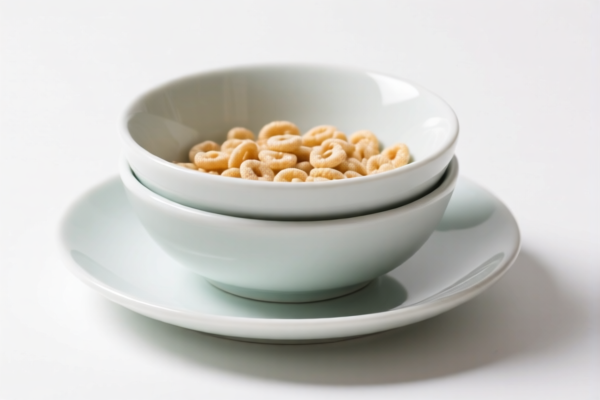
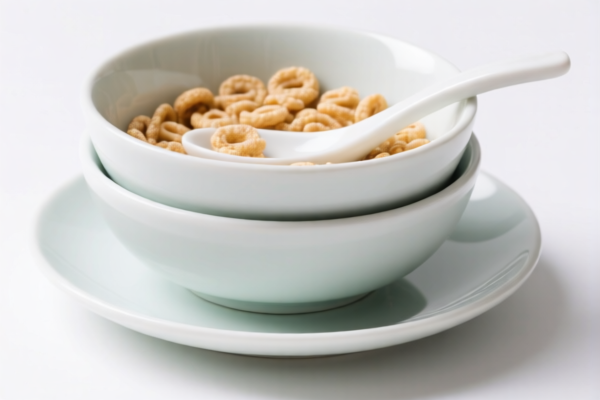
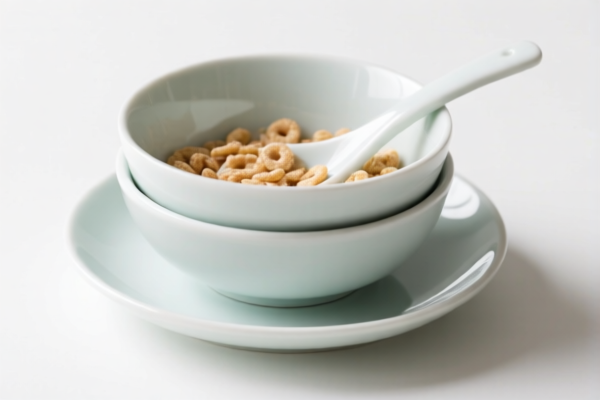
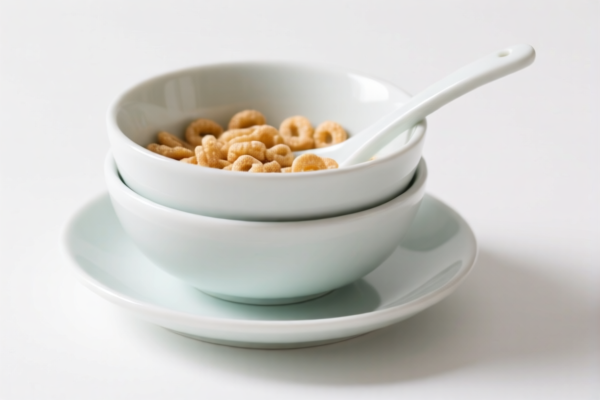
AI Analysis
🍼 Children's Silicone Baby Food Bowl Set
🌐 HS Code Reference & Customs Clearance Guide | 2026 Latest Tariff Analysis | Professional-Level Clearance Strategy
📌 I. Product Definition and Classification: Do You Really Understand "Baby Food Bowls"?
Children's Silicone Baby Food Bowl Sets are essential feeding tools designed for infants and toddlers, typically consisting of one or more bowls made from food-grade silicone, often featuring suction bases, handles, or lids. In international trade, these products fall under the category of plastic household articles, specifically within Tableware and Kitchenware.
Because silicone is chemically treated as a type of plastic for HS Code classification purposes, these items are classified under Chapter 39 (Plastics and Articles Thereof). The key distinction lies in whether the item is considered general "tableware" or if it has specific features that might alter its classification (though for standard silicone bowls, it remains firmly in tableware).
⚠️ Key Distinction:
- If the product is a silicone bowl (regardless of color, shape, or presence of a suction base) intended for serving food → Chapter 39, Heading 3924.
- If the product includes metal components (e.g., stainless steel inner layer with silicone coating) → It may be classified under Chapter 73 or 76, but pure silicone sets are 3924.
- If the product is a toilet article (e.g., bath toy bowl) → 3924.90, but food contact items are 3924.10.
📦 II. HS Code Classification Details (2026 Latest Tariff Authority Comparison)
Based on the provided , the specific HS Codes and tax rates for Children's Silicone Baby Food Bowl Sets are as follows:
| HS Code | Product Description | Application Scenario | Tax Rate (China to US) |
|---|---|---|---|
| 3924.10.40.00 | Tableware and kitchenware of plastics: Other | Generic silicone bowls without specific sub-category match, or complex sets not fitting "plates/cups" | 3.4% |
| 3924.10.20.00 | Tableware and kitchenware of plastics: Plates, cups, saucers, soup bowls, cereal bowls, sugar bowls, creamers, gravy boats, serving dishes and platters | Standard silicone baby bowls that fit the definition of "soup bowls" or "cereal bowls" | 14.0% |
🔍 Critical Analysis:
- Why Two Codes?
- 3924.10.20.00 is more specific to "bowls" (soup/cereal). If your baby food bowl is functionally equivalent to a soup bowl or cereal bowl, it likely falls here.
- 3924.10.40.00 is a residual category for "Other" tableware. If the bowl has unique features not covered by the specific list (e.g., highly specialized shaped bowls with non-standard geometry), it might be classified here.
- Tax Implication:
- The tax rate for 3924.10.20.00 is 14.0% (6.5% base + 7.5% additional).
- The tax rate for 3924.10.40.00 is 3.4% (3.4% base + 0.0% additional).
- ⚠️ Strategic Note: Classifying under 3924.10.40.00 saves 10.6% in tariffs. However, this must be justified by product design. Misclassification can lead to audits and penalties.
💰 III. 2026 Latest Tariff Rate Detailed Explanation
✅ Applicable Country: United States (US)
✅ Origin: China (CN)
✅ Effective Time: 2026 Tariff Schedule
🎯 1. 3924.10.20.00 — Plastic Tableware (Plates, Cups, Bowls, etc.)
| Item | Content |
|---|---|
| Base Tariff | 6.5% |
| Additional Tariff (Section 301) | 7.5% |
| Total Tariff | 14.0% |
| Tax Calculation | CIF Value × 14.0% |
| De Minimis Exemption | ❌ Not Eligible (De minimis threshold for China-origin goods is suspended/excluded for Section 301 goods) |
| Legal Basis Path | USITC:3924.10.20.00 → Section 301: Footnote 9903.88.01 |
📌 Explanation:
- "Base Tariff 6.5%" is the standard Most Favored Nation (MFN) rate for plastic tableware.
- "Additional Tariff 7.5%" is imposed under Section 301 of the Trade Act of 1974, targeting Chinese imports.
- Total 14.0% is significant for low-value items like baby bowls, eroding profit margins.
🎯 2. 3924.10.40.00 — Plastic Tableware (Other)
| Item | Content |
|---|---|
| Base Tariff | 3.4% |
| Additional Tariff (Section 301) | 0.0% |
| Total Tariff | 3.4% |
| Tax Calculation | CIF Value × 3.4% |
| De Minimis Exemption | ❌ Not Eligible (For similar reasons as above, depending on specific Section 301 exclusion lists) |
| Legal Basis Path | USITC:3924.10.40.00 → No Section 301 Footnote |
📌 Explanation:
- This code benefits from a lower base rate and no additional Section 301 tariff.
- Total 3.4% is highly competitive.
- Risk: If CBP determines the bowl is functionally a "soup bowl" (which falls under 3924.10.20.00), they may reclassify it, leading to back taxes + interest + penalties.
🛠️ IV. Customs Clearance Practical Advice (Real-World Pitfall Guide)
✅ 1. Documentation Checklist (Essential)
| Document | Required | Description |
|---|---|---|
| ✅ Product Specifications | ✔️ | Detailed specs: Material (Food-Grade Silicone, LFP-Free, BPA-Free), Dimensions, Weight, Suction Base Type |
| ✅ Product Photos | ✔️ | Clear images of the bowl, suction base, packaging, and any labels |
| ✅ Commercial Invoice | ✔️ | Clearly state: "Silicone Baby Food Bowl Set, HS Code: 3924.10.40.00" |
| ✅ Bill of Lading/Air Waybill | ✔️ | Standard shipping documents |
| ✅ FDA Compliance Doc | ✔️ | Proof of compliance with FDA 21 CFR 177.2600 (Silicone) for food contact |
| ✅ Labeling | ✔️ | "Made in China" label must be visible and legible |
✅ 2. Declaration Strategy (Key Tips)
🔥 "Be Precise, Justify 'Other', Avoid 'Bowl'"
| Scenario | Recommended Declaration | Risk Level |
|---|---|---|
| Standard Round Bowl | 3924.10.20.00 (14.0%) | Low Risk (Clear match) |
| Unusual Shape (e.g., Animal, Puzzle) | 3924.10.40.00 (3.4%) | Medium Risk (Need to justify why it's not a "soup bowl") |
| Set with Multiple Items | 3924.10.40.00 (3.4%) | Medium Risk (If set includes plates/cups, might be split) |
📌 Strategic Advice:
- If your product is a standard round bowl, do not attempt to classify under 3924.10.40.00 to save tax. CBP is strict on "soup bowls."
- If your product has unique shapes (e.g., a bear-shaped bowl, a bowl with compartments not fitting "soup bowl" definition), argue for 3924.10.40.00 with supporting images and design descriptions.
- Always include a "Statement of Use" in the invoice: "Intended for feeding infants, made of food-grade silicone, not a standard soup bowl."
✅ 3. Special Case Handling
| Scenario | Handling Advice |
|---|---|
| OEM/Custom Branding | Provide a license agreement if applicable, but this doesn't affect HS Code. |
| Multi-Material Set | If the set includes a plastic lid or metal utensil, split the shipment or declare as a set under the principal material (silicone). |
| FDA Issues | Ensure silicone meets FDA standards. Non-compliant products may be detained by FDA before CBP even assesses tax. |
| De Minimis (Section 321) | ❌ Not Applicable for China-origin goods under Section 301, even if value <$800. |
🌍 V. Global Market Comparison (2026 Latest)
| Country/Region | Recommended HS Code | Tariff (China Origin) | Certification Required | Notes |
|---|---|---|---|---|
| 🇺🇸 USA | 3924.10.40.00 |
3.4% | FDA 21 CFR 177.2600 | Use "Other" code if shape justifies |
| 🇺🇸 USA | 3924.10.20.00 |
14.0% | FDA 21 CFR 177.2600 | Standard for round bowls |
| 🇨🇳 China | 3924.10.40.00 |
6.5% | GB 4806.11-2016 | Import tariff, no Section 301 |
| 🇪🇺 EU | 3924.10.40.00 |
6.5% | EU Food Contact Material Regulations | No additional tariffs |
| 🇬🇧 UK | 3924.10.40.00 |
6.5% | UK Food Safety Standards | Post-Brexit rules apply |
📌 Conclusion:
- The US market has the highest variability due to Section 301 tariffs.
- EU/UK have stable, lower tariffs but strict food safety regulations.
- China has no additional tariffs but requires GB certification for export.
📌 VI. Common Mistakes & Pitfalls (Lessons Learned)
❌ Mistake 1: Classifying all silicone bowls under 3924.10.40.00 to save tax.
👉 Consequence: If CBP inspects and finds a standard "soup bowl" shape, they will reclassify to 3924.10.20.00, charging the 10.6% difference + penalties.
❌ Mistake 2: Using "Plastic" instead of "Silicone" in description.
👉 Consequence: CBP may question material authenticity. Silicone is a subset of plastic, but precise description helps avoid delays.
❌ Mistake 3: Ignoring FDA compliance.
👉 Consequence: FDA detention for non-compliant silicone (e.g., high filler content, unapproved dyes). Shipment held for weeks, storage fees accrue.
❌ Mistake 4: Declaring as "Toys" instead of "Tableware."
👉 Consequence: Wrong HS Code (e.g., 9503). CBP will reclassify, leading to delays and potential misdeclaration fines.
✅ Correct Approach:
"Silicone Baby Bowl Set, Food-Grade, LFP-Free, FDA Compliant, HS Code: 3924.10.40.00 (Other Tableware)"
🎯 VII. Conclusion: Professional Classification, Cost Optimization!
🎯 Key Takeaway:
🔹 "Shape Matters: Round Bowls = 14%, Unique Shapes = 3.4%!"
🔹 "Silicone is Plastic: Chapter 39, Not Chapter 95 (Toys)!"
🔹 "FDA Compliance is Mandatory: No Docs, No Entry!"
📌 Pro Tip:
If your product is not a standard soup/cereal bowl, provide design diagrams and usage descriptions to justify 3924.10.40.00. Consider Advance Rulings from CBP if the product shape is borderline.
📣 Immediate Action:
📞 Consult a Customs Broker + Provide Product Images + Verify FDA Compliance
🚀 Ensure smooth clearance, minimize tariffs, and maximize profit!
✨ Professional clearance starts with accurate classification!
💼 Every cent saved in tariffs is pure profit!
Customer Reviews
About HS Code Classification
The Harmonized System (HS) is an internationally standardized nomenclature developed by the World Customs Organization (WCO) to classify traded products. Over 200 countries use the HS system as the basis for customs tariffs, trade statistics, and import/export regulations.
Each HS code follows a hierarchical structure:
- Chapter (2 digits) — Broad category of goods (e.g., Chapter 84: Machinery and Mechanical Appliances)
- Heading (4 digits) — More specific grouping within the chapter
- Subheading (6 digits) — Internationally standardized breakdown, used by all WCO member countries
- National subdivisions (8-10 digits) — Country-specific extensions for further classification, such as US HTSUS 10-digit codes
Correct HS code classification is essential for smooth customs clearance, accurate duty payment, and compliance with trade regulations. Misclassification can lead to customs delays, overpayment of duties, or penalties.
When importing from CN to US, the applicable tariff rates may include:
- Most-Favored-Nation (MFN) rate — The standard duty rate applied to WTO members
- General rate — Applied to countries without trade agreements
- Trade remedy duties — Additional tariffs such as Section 301 (anti-dumping), Section 232 (national security), or countervailing duties
The information provided on this page is for reference purposes only. For official classification, please consult with your local customs authority or a licensed customs broker.