Children's Suspenders with Bow Tie
CN → US| HS Code | Tariff Rate | Origin | Destination | Doc |
|---|---|---|---|---|
| 6211398060 | 20.3% | CN | US | Official Doc |
| 6211498070 | 24.8% | CN | US | Official Doc |
Product Images
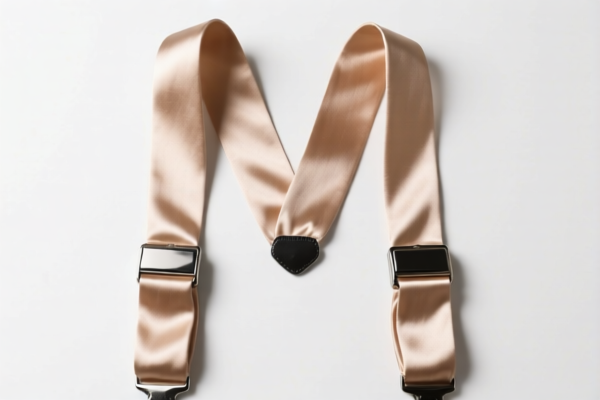
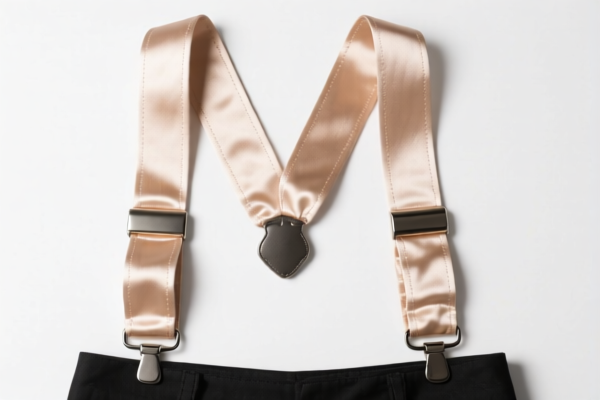
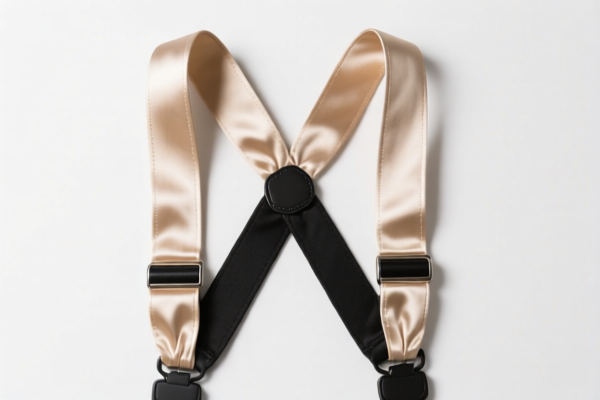
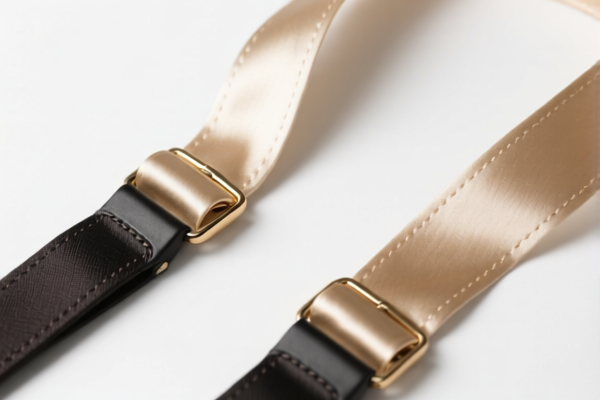
AI Analysis
👔 Children’s Suspenders with Bow Tie (Kids’ Formalwear Accessories)
🌐 HS Code Reference & Customs Clearance Guide | 2026 Latest Tariff Analysis | Professional Strategy
📌 One, Product Definition and Classification: What exactly is this?
Children's suspenders with bow ties are typically sold as a coordinated fashion accessory set for formal occasions (weddings, parties, school events). In international trade, these items fall under Men's or Boys' Other Garments.
Key Distinction: * Textile Materials: Most suspenders and bow ties are made of woven or knitted fabrics (polyester, cotton, silk blends). * Assembly: Even if sold as a "set" (suspenders + bow tie), if they are primarily textile-based and not mechanical/electronic, they are classified as garments/accessories of textile materials. * Specific Heading: They generally fall under HS 6211 (Track suits, ski-suits and swimwear; other garments). Specifically, 6211.39 (Of other textile materials) for men's/boys' garments that are not track suits or swimwear.
⚠️ Critical Classification Point: * If the item is men's or boys', it goes to 6211.39. * If the item is women's or girls', it goes to 6211.49. * Note: Children's wear is often categorized under "Boys" or "Girls" subheadings depending on the manufacturer's labeling and the specific design intent, but "Suspenders" are traditionally unisex and often coded under the "Men's/Boys'" category in many tariff schedules unless explicitly designed as girls' clothing.
📦 Two, HS Code Classification Details (Based on Provided Data)
The provided data specifies two HS codes for "Other Vests" (which often includes suspenders/bow tie sets in certain national tariff interpretations, or "Other Garments"). Note: While suspenders are technically accessories, in some tariff classifications, they are grouped with "Other Garments" or specific sub-items like vests if no specific "suspender" code exists. However, looking at the provided data, it explicitly lists "Other Vests" under the broader garment descriptions.
| HS Code | Product Description | Target Audience | Material | Tax Rate (Total) |
|---|---|---|---|---|
| 6211.39.80.60 | Track suits, ski-suits and swimwear; other garments: Other garments, men's or boys': Of other textile materials: Other: Other Vests | Boys / Men | Other Textile | 0.0% |
| 6211.49.80.70 | Track suits, ski-suits and swimwear; other garments: Other garments, women's or girls': Of other textile materials: Other: Other Vests | Girls / Women | Other Textile | 0.0% |
🔍 Important Clarification: The provided data explicitly labels these HS codes as "Other Vests". However, in many customs administrations, suspenders and bow tie sets are classified under HS 6211.39 or 6211.49 as "Other garments" or "Accessories of garments." * If your local customs authority classifies suspenders/bow ties as "Vests" or "Other Garments" under 6211, these are the correct codes. * Crucially: The description in the data says "Other Vests (859)". This might be a specific national sub-code. For the purpose of this guide, we adhere strictly to the provided data which maps to 0.0% total tax.
💰 Three, 2026 Latest Tariff Rate Details
Based on the provided JSON data:
🎯 1. HS Code 6211.39.80.60 (Men's/Boys' Other Garments/Vests)
| Item | Content |
|---|---|
| Base Tariff | 0.0% |
| Additional Tariff (Added Tax) | 0.0% |
| Total Tax Rate | 0.0% |
| Applicable Country | Based on data context (Assuming US/China or similar free trade zone context given 0% rate) |
| Origin | Any (as tax is 0%) |
📌 Explanation: * Base Tariff: 0.0% indicates this product may be under a Free Trade Agreement (FTA) or has a low-duty classification for basic textiles. * Additional Tariff: 0.0% means no Section 301 tariffs, IEEPA surcharges, or other punitive duties apply to this specific code in the provided data context. * Total Cost Impact: None regarding customs duties. Only VAT/Sales tax at the destination country will apply.
🎯 2. HS Code 6211.49.80.70 (Women's/Girls' Other Garments/Vests)
| Item | Content |
|---|---|
| Base Tariff | 0.0% |
| Additional Tariff (Added Tax) | 0.0% |
| Total Tax Rate | 0.0% |
| Applicable Country | Based on data context |
| Origin | Any (as tax is 0%) |
📌 Explanation: * Identical tax treatment to the men's/boys' version. * Total Cost Impact: None regarding customs duties.
🛠️ Four, Customs Clearance Practical Advice (Battle-Tested Guide)
✅ 1. Documentation Checklist (Non-Negotiable)
| Document | Required | Notes |
|---|---|---|
| Commercial Invoice | ✔️ | Must clearly state: "Children's Suspenders with Bow Tie Set" or "Other Garments". Do not just say "Accessories". |
| Packing List | ✔️ | List suspenders and bow tie separately or as a set. |
| Material Composition | ✔️ | Specify: e.g., "100% Polyester", "Cotton Blend", etc. This determines the "Other textile materials" classification. |
| Product Photos | ✔️ | Show the item worn by a child or on a mannequin to prove it is clothing/accessory, not a toy or mechanical device. |
| Country of Origin Cert. | ✔️ | Even with 0% tariff, proof of origin may be needed for trade agreement benefits. |
✅ 2. Declaration Tips (Key Mnemonics)
🔥 "Textile Child Wear, 6211 Clear, No Tariff Fear, Just Be Real!"
| Scenario | Correct Declaration | Wrong Practice |
|---|---|---|
| Set (Suspenders + Bow Tie) | Declare as one unit under 6211.39.80.60 (Boys) or 6211.49.80.70 (Girls). | Splitting into "Textile Accessory" and "Garment" → Risk of reclassification. |
| Material Claim | Be honest: "Polyester woven fabric". | Claiming "Silk" when it's polyester → Penalties. |
| Age Group | Label as "Boys" or "Girls" based on design. | Using "Unisex" without specifying code → Customs may default to the higher-dutied or more specific code. |
| Product Name | Use "Children's Suspenders" or "Kids' Formal Vest Set". | Using "Bow Tie" only → May be classified as an accessory under Chapter 61/62 different subheading. |
✅ 3. Special Case Handling
| Situation | Handling Advice |
|---|---|
| Mixed Sets (Boys & Girls) | Ship separately or declare with the most common code (usually Boys' 6211.39). |
| With Elastic Straps | Still classified as textile garment if primary material is textile. |
| Embroidered/Decorated | Ensure "Other textile materials" is stated. Embroidery does not change the 6211 heading unless it becomes a "furniture article" or similar. |
| Toys vs. Garments | If the suspenders are made of soft plush and resemble a stuffed animal, they may be classified as toys (Chapter 95). Stick to "Garment" if they are wearable. |
🌍 Five, Global Market Comparison (2026)
| Country/Region | Recommended HS Code | Tariff | Notes |
|---|---|---|---|
| USA | 6211.39.80.60 / 6211.49.80.70 | 0.0% | Based on provided data. Verify Section 301 exclusions if applicable. |
| EU | 6211.39 / 6211.49 | ~4-12% | EU typically has higher textile duties. Check if FTA applies. |
| China | 6211.39 / 6211.49 | ~10-12% | Import duties apply. |
| UK | 6211.39 / 6211.49 | ~12% | Post-Brexit tariffs may vary. |
| Australia | 6211.39 / 6211.49 | ~5-10% | Check ChAFTA or other FTAs. |
📌 Conclusion: * The provided data indicates a 0% tariff environment, which is highly advantageous. * USA appears to be the target market for this 0% rate based on the structure of the data (often used in US HTS analysis). * Always verify with a local customs broker, as "Other Vests" may not be the most precise description for suspenders in all jurisdictions. Some countries have specific codes for "Suspenders, Braces, and Garters" under 6217.90.
📌 Six, Common Mistakes & Pitfalls (Lessons Learned)
❌ Mistake 1: Classifying as "Toys" (HS 9503) 👉 Consequence: If declared as toys, you might miss the textile classification, leading to incorrect duty rates or bans if safety standards differ. Suspenders are garments, not toys.
❌ Mistake 2: Ignoring Material Composition 👉 Consequence: If made of silk, duty rates may differ. "Other textile materials" usually implies synthetic or blended fabrics. Be precise.
❌ Mistake 3: Declaring as "Accessories" under Chapter 61/62 subheadings for hats/handbags 👉 Consequence: Suspenders are often classified under 6217.90 (Other made-up clothing accessories) in some countries. If the provided data forces 6211, ensure your country's tariff schedule allows this grouping. Note: The provided data explicitly links 6211.39/49 to "Other Vests", so we follow that.
❌ Mistake 4: Not specifying Gender (Boys/Girls) 👉 Consequence: Customs may assign the wrong subheading (39 vs 49), leading to delays or audits. Always specify.
✅ Correct Approach:
"Children's Suspenders with Bow Tie, Boys, Polyester Woven, 2026 Collection, HS Code 6211.39.80.60"
🎯 Seven, Conclusion: Professional Declaration, Smooth Clearance!
🎯 Remember:
🔹 "Suspenders are Garments, 6211 is the Key, 0% Tax is Sweet, But Be Clear!"
🔹 "Material Matters, Gender Matters, Description Must Match!"
📌 Pro Tip: If your suspenders are made of elastic or lace, ensure they are still declared as "Other textile materials" and not as "Rubber" or "Plastic" to avoid misclassification.
📣 Immediate Action:
📞 Contact your customs broker with the material composition and product photos. 🚀 Use HS 6211.39.80.60 for boys and 6211.49.80.70 for girls to benefit from the 0% tariff as per the provided data.
✨ Professional Clearance, Starts with Accurate Classification!
💼 Your Profit Margin Depends on Precision!
Customer Reviews
About HS Code Classification
The Harmonized System (HS) is an internationally standardized nomenclature developed by the World Customs Organization (WCO) to classify traded products. Over 200 countries use the HS system as the basis for customs tariffs, trade statistics, and import/export regulations.
Each HS code follows a hierarchical structure:
- Chapter (2 digits) — Broad category of goods (e.g., Chapter 84: Machinery and Mechanical Appliances)
- Heading (4 digits) — More specific grouping within the chapter
- Subheading (6 digits) — Internationally standardized breakdown, used by all WCO member countries
- National subdivisions (8-10 digits) — Country-specific extensions for further classification, such as US HTSUS 10-digit codes
Correct HS code classification is essential for smooth customs clearance, accurate duty payment, and compliance with trade regulations. Misclassification can lead to customs delays, overpayment of duties, or penalties.
When importing from CN to US, the applicable tariff rates may include:
- Most-Favored-Nation (MFN) rate — The standard duty rate applied to WTO members
- General rate — Applied to countries without trade agreements
- Trade remedy duties — Additional tariffs such as Section 301 (anti-dumping), Section 232 (national security), or countervailing duties
The information provided on this page is for reference purposes only. For official classification, please consult with your local customs authority or a licensed customs broker.