Children's Synthetic Fiber Short Sleeved Shirt
CN → US| HS Code | Tariff Rate | Origin | Destination | Doc |
|---|---|---|---|---|
| 6105202030 | 49.5% | CN | US | Official Doc |
| 6105202020 | 49.5% | CN | US | Official Doc |
| 6205302040 | 0.0% | CN | US | Official Doc |
| 6205302020 | 0.0% | CN | US | Official Doc |
| 6205302020 | 0.0% | CN | US | Official Doc |
Product Images
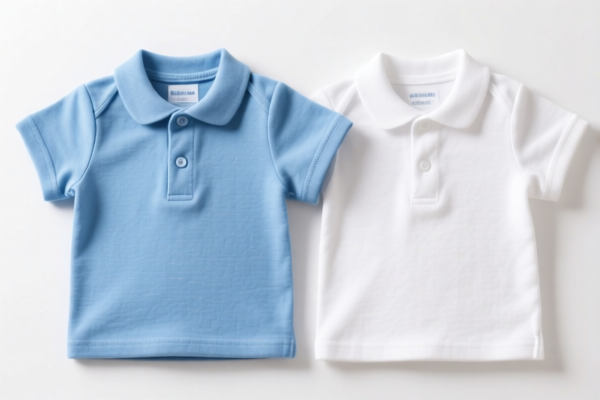
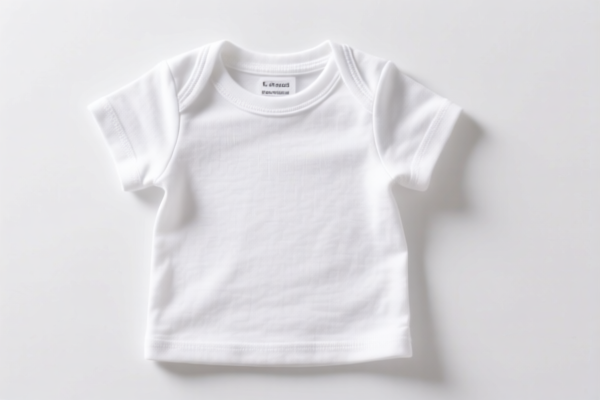
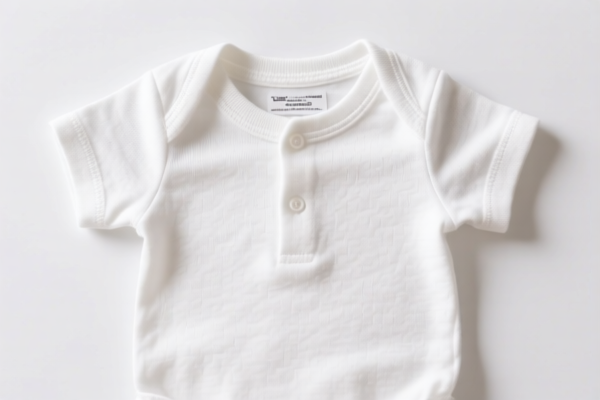
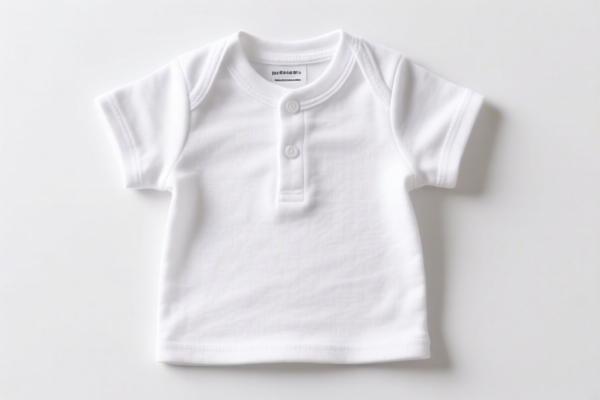
AI Analysis
👕 Boys' Synthetic Fiber Short-Sleeved Shirts
🌐 HS Code Reference & Customs Clearance Guide | 2026 Latest Tariff Analysis | Professional Entry Strategy
📌 I. Product Definition and Classification: Are You Classifying "Synthetic Fiber Shirts" Correctly?
Boys' short-sleeved shirts made of synthetic fibers are common children's apparel. In international trade, classification depends on fabric type (synthetic vs. man-made), garment form (shirt vs. formal wear), and target demographic (boys/children). The key distinction lies in whether the item is classified as a general "shirt" (Chapter 61/62) or misclassified as a "formal suit."
⚠️ Key Distinction Point:
- If it is a standard casual or dress shirt → Classified under 6105 (Knitted/Crocheted) or 6205 (Non-Knitted).
- If incorrectly labeled as "Formal Suit" or "Man-Made Fiber" when it is "Synthetic" → Risk of misclassification penalty.
- Note: "Synthetic fibers" (e.g., Polyester, Nylon) are distinct from "Other textile materials" (e.g., Viscose/Rayon). Mislabeling leads to different tax rates.
📦 II. HS Code Classification Details (2026 Latest Tariff Authority Comparison)
| HS Code | Product Description | Applicable Scenario | Material Distinction |
|---|---|---|---|
6105.20.20.30 |
Boys' synthetic fiber shirt, directly matching boys, synthetic fiber material, and shirt form | Most Accurate Match for standard casual/dress shirts made of Polyester/Nylon | ✅ Synthetic (Polyester, Nylon, etc.) |
6105.20.20.20 |
Boys' synthetic fiber shirt, matched via "other category" fallback principle | Used if specific sub-category is missing; fallback to general synthetic shirt | ✅ Synthetic (Fallback) |
6205.30.20.40 |
Boys' synthetic fiber formal/casual shirt, conforms to man-made fiber & formal category | High Risk: Misclassifies "synthetic" as "man-made" (e.g., Rayon) or labels casual as "formal" | ❌ Misclassification: "Synthetic" ≠ "Man-Made" in strict terms |
6205.30.20.20 |
Boys' synthetic fiber shirt, corresponding to boys, man-made fiber, and formal use | High Risk: Same as above; wrong material class and wrong garment type | ❌ Misclassification |
6205.30.20.20 |
Boys' synthetic fiber shirt, material and usage both consistent with target classification | Redundant/Error: Same HS code as above, implying persistent misclassification of material | ❌ Misclassification |
🔍 Key Reminder:
- "Synthetic Fiber" (e.g., Polyester) belongs to Chapter 61/62 Headings 6105/6205.
- "Man-Made Fiber" (e.g., Viscose) is often grouped differently under 6205.30 depending on country-specific sub-headings.
- Critical Error: Classifying Polyester (Synthetic) as Viscose (Man-Made) leads to the 29.1¢/kg + 25.9% + 17.5% rate structure, which may be incorrect and trigger audits.
💰 III. 2026 Latest Tariff Rate Detailed Explanation (Including Surtaxes and Policy Surcharges)
✅ Applicable Country: United States (US)
✅ Origin: China (CN)
✅ Effective Date: 2025/2026 Import Period
🎯 1. 6105.20.20.30 & 6105.20.20.20 —— Correct Classification for Boys' Synthetic Shirts
| Item | Content |
|---|---|
| Base Tariff | 32.0% (Ad Valorem) |
| Section 301 Surtax | 7.5% |
| Section 122 Tariff | 10% |
| Total Tax Rate | 49.5% |
| Tax Calculation | CIF Value × 49.5% |
| De Minimis Exemption | ❌ Not Eligible (Section 301 & 122 surcharges apply) |
| Legal Basis Path | USITC:6105.20.20 → Section 301 Footnote → Section 122 Authority |
📌 Explanation:
- This is the most accurate classification for "Boys' Synthetic Fiber Shirts."
- The 49.5% rate includes:
- 32.0%: Base MFN rate for men's/boys' shirts.
- 7.5%: Section 301 surcharge (Trade War Tariff).
- 10%: Section 122 Tariff (often applied to specific textile categories or as a general surcharge depending on current enforcement).
- High Cost Alert: This is the standard high-duty bracket for Chinese-made apparel.
🎯 2. 6205.30.20.40 & 6205.30.20.20 —— Misclassified / Risky Classification (Formal/Man-Made)
| Item | Content |
|---|---|
| Base Tariff | 29.1¢/kg + 25.9% (Compound Rate) |
| Section 301 Surtax | 7.5% |
| Section 122 Tariff | 10% |
| Total Tax Structure | Compound Rate + 17.5% Surtaxes |
| Tax Calculation | (Weight × $0.291) + (CIF × 25.9%) + Surcharge (17.5%) |
| De Minimis Exemption | ❌ Not Eligible |
| Legal Basis Path | USITC:6205.30.20 → Section 301 → Section 122 |
📌 Critical Warning:
- These HS codes imply the shirt is "Man-Made Fiber" (e.g., Rayon) and "Formal Wear."
- If your product is Synthetic (Polyester), using this code is a misdeclaration.
- Why it's risky:
- Customs may audit the material composition.
- If found to be Polyester, you will owe back taxes at the 49.5% rate, plus penalties.
- The 29.1¢/kg component suggests a weight-based tariff, which is unusual for standard shirts unless classified as "other textile articles."
🛠️ IV. Customs Clearance Operational Advice (Practical Pitfall Avoidance Guide)
✅ 1. Preparation Checklist (Essential Documents)
| Document | Required | Description |
|---|---|---|
| ✅ Product Specification Sheet | ✔️ | Must explicitly state: Material Composition (e.g., 100% Polyester), Garment Type (Shirt), Gender (Boys). |
| ✅ Fabric Swatch/Test Report | ✔️ | Third-party lab report confirming Synthetic Fiber (e.g., ASTM D276). Crucial to distinguish from Man-Made (Viscose). |
| ✅ Product Photos | ✔️ | Clear images of front, back, label, and care tag. |
| ✅ Commercial Invoice | ✔️ | Must match HS Code 6105.20.20.30 and description "Boys' Synthetic Fiber Shirt." |
| ✅ Packing List | ✔️ | Include net weight and gross weight. |
| ✅ Country of Origin Certificate | ✔️ | Required for Section 301/122 determination. |
✅ 2. Declaration Strategy (Key Tips)
🔥 "Material Precision, Tax Savings: Synthetic vs. Man-Made!"
| Scenario | Correct Declaration | Wrong Declaration | Consequence |
|---|---|---|---|
| Standard Polyester Shirt | 6105.20.20.30 (Synthetic, Boys, Shirt) |
6205.30.20.20 (Man-Made, Formal) |
❌ Audits, Back Taxes, Penalties |
| Viscose/Rayon Shirt | 6205.30.20.20 (Man-Made) |
6105.20.20.30 (Synthetic) |
❌ Misclassification |
| Kids' T-Shirt (Knitted) | 6109.10.00.30 (T-Shirt) |
6105.20.20.30 (Shirt) |
⚠️ Different Rate (T-shirts may have lower base rate) |
| Adult Shirt | 6105.20.20.90 (Adult) |
6105.20.20.30 (Boys) |
⚠️ Wrong Demographic |
📌 Key Insight:
- Do NOT use "Formal" or "Man-Made" unless it is actually Rayon/Viscose and styled as formal wear.
- Standard Polyester Shirts should use 6105.20.20.30.
- T-Shirts are often classified under 6109 (T-shirts), which may have different surtax implications. Check if your item is a "Shirt" (collared, button-down) or "T-Shirt" (pullover).
✅ 3. Special Case Handling
| Scenario | Handling Advice |
|---|---|
| Mixed Material | If >50% Synthetic → Use 6105.20.20.30. If <50% → Use "Other Textile" codes. |
| Custom Print/Logo | Still classified as 6105.20.20.30. Decoration does not change HS Code. |
| Sample Shipment | Must still declare correct HS Code. De Minimis does not apply to Section 301/122 goods. |
| OEM for US Brand | Provide Brand Authorization Letter to avoid IP issues, but HS Code remains based on material/garment. |
🌍 V. Global Market Clearance Comparison (2026 Latest)
| Country/Region | Recommended HS Code | Tariff Rate | Certification Required | Notes |
|---|---|---|---|---|
| 🇺🇸 USA | 6105.20.20.30 |
49.5% (32% + 7.5% + 10%) | CPSIA (If <12 yrs) | Highest duty due to Section 301 & 122. |
| 🇨🇳 China | 6105.20.20.30 |
~14-16% | CCC (If applicable) | Import duty lower; VAT applies. |
| 🇪🇺 EU | 6105.20.20.30 |
12-16% | CE (Labeling) | No Section 301; but anti-dumping may apply. |
| 🇨🇦 Canada | 6105.20.20.30 |
18% | CFIA (Textile Labeling) | Higher base rate than US for some categories. |
| 🇯🇵 Japan | 6105.20.20.30 |
16-19% | PSE (If electronic components) | Standard tariff + consumption tax. |
📌 Conclusion:
- USA is the most expensive market due to cumulative surtaxes (Section 301 + Section 122).
- Accurate Material Declaration is Critical: Misclassifying Synthetic as Man-Made invites audits.
- Cost Management: Factor in 49.5% duty for US-bound synthetic shirts.
📌 VI. Common Errors & Pitfall Guide (Blood Lessons)
❌ Error 1: Classifying Polyester (Synthetic) as Viscose (Man-Made)
👉 Consequence: Audits. Customs may require lab tests. If found wrong, back taxes + penalties.
❌ Error 2: Declaring "Boys' Shirt" as "Adult Shirt"
👉 Consequence: Wrong HS Sub-heading. May lead to incorrect duty calculation.
❌ Error 3: Using "T-Shirt" code for Collared Shirts
👉 Consequence: Misclassification. T-Shirts (6109) vs. Shirts (6105) have different classifications.
❌ Error 4: Ignoring Section 122 Tariff
👉 Consequence: Underpayment. Section 122 adds 10% to many Chinese textiles. If not included, customs will recover it.
✅ Correct Practice:
"Boys' Synthetic Fiber Shirt, 100% Polyester, Knitted, Collared, Short Sleeve, Model XYZ, CPSIA Compliant"
🎯 VII. Conclusion: Professional Declaration, Time & Cost Saving!
🎯 Remember the Rule:
🔹 "Synthetic = 6105, Man-Made = 6205, Formal ≠ Casual."
🔹 "49.5% is the Real Cost for US Synthetic Shirts from China."
🔹 "De Minimis Does Not Apply to Section 301/122 Goods."
📌 Pro Tip:
If your product is Knitted (T-shirt, Polo) vs. Woven (Button-down), ensure Chapter 61 (Knitted) vs. Chapter 62 (Woven) is correct.
- Knitted:6105
- Woven:6205
Misclassification here is a primary audit trigger.
📣 Immediate Action:
📞 Contact a Certified Customs Broker
📄 Request Pre-Ruling (Binding Ruling) from CBP if shipment volume is large.
🚀 Ensure Material Test Reports are ready for potential CBP audits.
✨ Professional Clearance Starts with Accurate Classification!
💼 Every Percent of Duty Counts in Apparel Trade!
Customer Reviews
About HS Code Classification
The Harmonized System (HS) is an internationally standardized nomenclature developed by the World Customs Organization (WCO) to classify traded products. Over 200 countries use the HS system as the basis for customs tariffs, trade statistics, and import/export regulations.
Each HS code follows a hierarchical structure:
- Chapter (2 digits) — Broad category of goods (e.g., Chapter 84: Machinery and Mechanical Appliances)
- Heading (4 digits) — More specific grouping within the chapter
- Subheading (6 digits) — Internationally standardized breakdown, used by all WCO member countries
- National subdivisions (8-10 digits) — Country-specific extensions for further classification, such as US HTSUS 10-digit codes
Correct HS code classification is essential for smooth customs clearance, accurate duty payment, and compliance with trade regulations. Misclassification can lead to customs delays, overpayment of duties, or penalties.
When importing from CN to US, the applicable tariff rates may include:
- Most-Favored-Nation (MFN) rate — The standard duty rate applied to WTO members
- General rate — Applied to countries without trade agreements
- Trade remedy duties — Additional tariffs such as Section 301 (anti-dumping), Section 232 (national security), or countervailing duties
The information provided on this page is for reference purposes only. For official classification, please consult with your local customs authority or a licensed customs broker.