Children's Tent
CN → US| HS Code | Tariff Rate | Origin | Destination | Doc |
|---|---|---|---|---|
| 3926909989 | 22.8% | CN | US | Official Doc |
| 6306229030 | 26.3% | CN | US | Official Doc |
| 9503000073 | 10.0% | CN | US | Official Doc |
| 9503000071 | 10.0% | CN | US | Official Doc |
| 3926907500 | 14.2% | CN | US | Official Doc |
Product Images
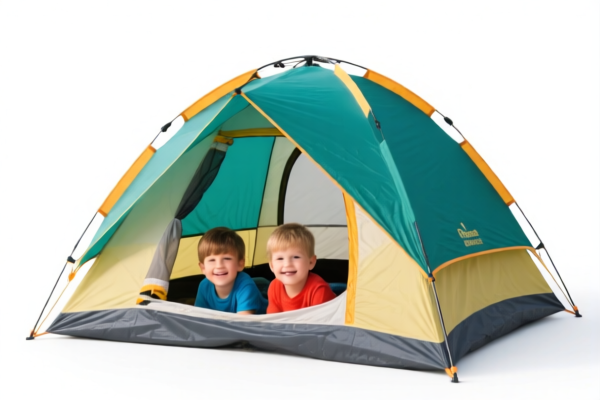
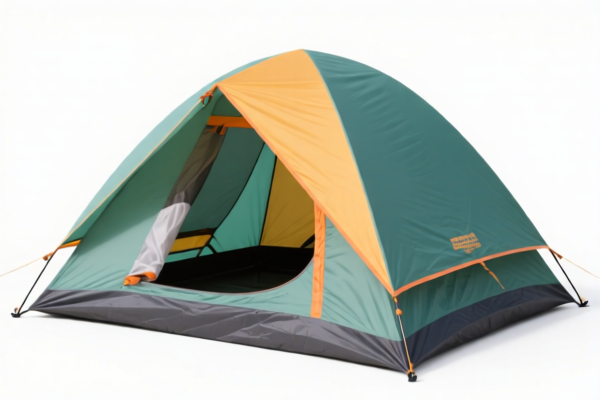
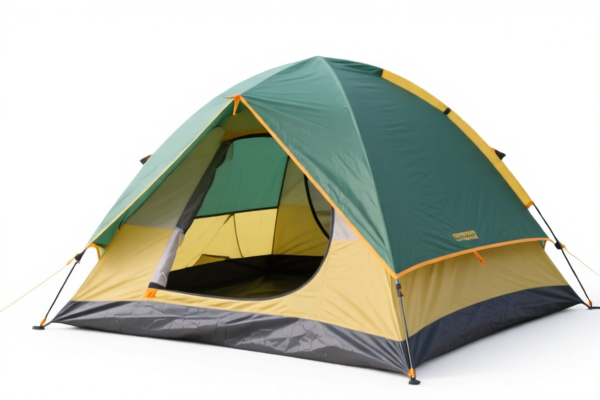
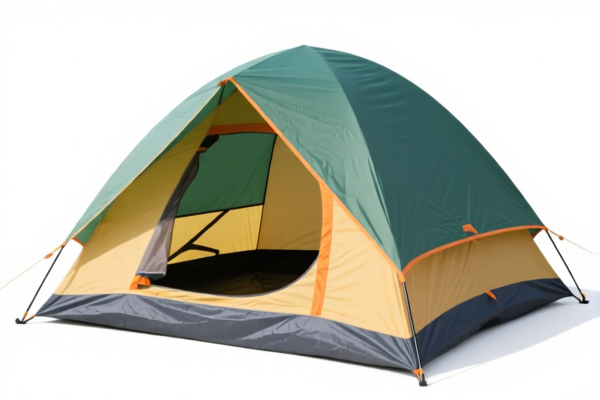
AI Analysis
🎪 Children's Tent (Children's Play Tent / Kids’ Game Tent)
🌐 HS Code Reference & Customs Clearance Guide | 2026 Updated Tariff Analysis | Expert-Level Import Strategy
📌 One, Product Definition & Classification: Do You Really Know What a “Children’s Tent” Is?
A children’s tent is a small, portable, play-oriented shelter designed primarily for indoor or outdoor recreational use by children. It often mimics the shape of a real tent but is typically made from lightweight, safe materials such as synthetic fiber fabric, plastic, or vinyl-coated textiles.
In international trade, its classification depends on purpose, material, and form, not just appearance. While it may look like a tent, its primary function as a toy often determines its HS code under the "Toys" category.
⚠️ Key Differentiation: - If used solely for play, games, or imagination → Classified as a toy (9503.00.00.71 / 9503.00.00.73)
- If used for actual outdoor sheltering (e.g., camping) → May fall under textile tents (6306.22.90.30) or plastic/foam structures (3926.90.99.89 / 3926.90.75.00)
📦 Two, HS Code Classification Details (2026 Updated Tariff Authority Match)
| HS Code | Product Description | Applicable Use Case | Material Assumption | Classification Logic |
|---|---|---|---|---|
9503.00.00.71 |
Toys for children, not otherwise specified (including play tents) | Primary use: play, imagination, games | Synthetic fiber / fabric / plastic | Matches "other toys" under 9503; no conflict with material |
9503.00.00.73 |
Other toys, not specified elsewhere; includes game tents and play structures | Children’s play tents, interactive play shelters | Fabric, plastic, or composite | Matches toy definition; common in global trade |
6306.22.90.30 |
Tents, not specified elsewhere, made of synthetic fibers | Tent-like structures used for recreation or shelter | Synthetic fiber (e.g., polyester, nylon) | Based on form and material, not purpose |
3926.90.99.89 |
Other articles of plastic, not specified elsewhere | Plastic or synthetic fiber tents not covered elsewhere | Plastic, resin, or polymer-based | "Other" category – used when no better fit exists |
3926.90.75.00 |
Other inflatable articles, including inflatable tents or play structures | Inflatable children’s play tents | Inflatable plastic or vinyl | Matches form (inflatable) and function (play) |
🔍 Critical Insight:
- Purpose > Form: If it’s clearly a play toy, even if it looks like a tent, it should be classified under 9503.
- Material is secondary: Even if made of plastic or fabric, if intended for play, it qualifies as a toy.
💰 Three, 2026 Updated Tariff Breakdown (Including Additional Duties & Legal Triggers)
✅ Target Country: United States (US)
✅ Origin: China (CN)
✅ Effective Date: November 10, 2025 (and ongoing)
🎯 1. 9503.00.00.71 — Children’s Play Tent (Toy Classification)
| Item | Details |
|---|---|
| Base Duty | 0.0% (ad valorem) |
| Section 301 (USITC) Additional Duty | 0.0% |
| Section 122 (IEEPA) Emergency Economic Powers Act Duty | 10.0% |
| Total Effective Tariff | 10.0% |
| Tax Calculation | CIF Value × 10.0% |
| De Minimis Threshold | ✅ Yes (5% threshold applies – if value ≤ 5%, duty-free entry) |
| Legal Basis Path | IEEPA:9903.01.25 → IEEPA:9903.01.24 → 9503.00.00.71 |
📌 Explanation:
- No 301 or Section 301 tariffs apply to this code – it's exempt from the 7.5% and 25% USITC duties. - Only IEEPA 10% applies due to China origin and emergency economic powers. - Highly favorable compared to other tent-like codes.
🎯 2. 9503.00.00.73 — Other Toys (Including Play Tents)
| Item | Details |
|---|---|
| Base Duty | 0.0% |
| Section 301 (USITC) Additional Duty | 0.0% |
| Section 122 (IEEPA) Duty | 10.0% |
| Total Effective Tariff | 10.0% |
| Tax Calculation | CIF Value × 10.0% |
| De Minimis | ✅ Yes (5% threshold applies) |
| Legal Basis Path | IEEPA:9903.01.25 → IEEPA:9903.01.24 → 9503.00.00.73 |
📌 Note:
- Identical to9503.00.00.71in tariff treatment. - Used when the product is not specifically listed under a subcategory but still qualifies as a toy.
🎯 3. 6306.22.90.30 — Tents of Synthetic Fibers (Non-Toy Use)
| Item | Details |
|---|---|
| Base Duty | 8.8% |
| Section 301 (USITC) Additional Duty | 7.5% |
| Section 122 (IEEPA) Duty | 10.0% |
| Total Effective Tariff | 26.3% |
| Tax Calculation | CIF Value × 26.3% |
| De Minimis | ❌ No (exceeds 5% threshold) |
| Legal Basis Path | USITC:6306.22.90.30 → FOOTNOTE:9903.88.01 → IEEPA:9903.01.24 |
📌 Warning:
- This code applies if the tent is marketed as a functional shelter, not a toy. - 26.3% total tariff is extremely high – avoid this if your product is for play only.
🎯 4. 3926.90.99.89 — Other Plastic Articles (Non-Specific)
| Item | Details |
|---|---|
| Base Duty | 5.3% |
| Section 301 (USITC) Additional Duty | 7.5% |
| Section 122 (IEEPA) Duty | 10.0% |
| Total Effective Tariff | 22.8% |
| Tax Calculation | CIF Value × 22.8% |
| De Minimis | ❌ No |
| Legal Basis Path | USITC:3926.90.99.89 → FOOTNOTE:9903.88.01 → IEEPA:9903.01.24 |
📌 When to Use:
- When the product is plastic-based, not fabric, and not clearly a toy. - Often used for plastic play structures or non-inflatable plastic tents.
🎯 5. 3926.90.75.00 — Inflatable Articles (Including Inflatable Tents)
| Item | Details |
|---|---|
| Base Duty | 4.2% |
| Section 301 (USITC) Additional Duty | 0.0% |
| Section 122 (IEEPA) Duty | 10.0% |
| Total Effective Tariff | 14.2% |
| Tax Calculation | CIF Value × 14.2% |
| De Minimis | ✅ Yes (if value ≤ 5%) |
| Legal Basis Path | IEEPA:9903.01.25 → IEEPA:9903.01.24 → 3926.90.75.00 |
📌 Best for:
- Inflatable play tents made of PVC or vinyl. - Not subject to 301 tariffs, but still has 10% IEEPA duty. - Lower than tent or plastic non-inflatable codes.
🛠️ Four, Customs Clearance Best Practices (Pro Tips to Avoid Penalties)
✅ 1. Required Documentation (Must-Have List)
| Document | Required? | Why It Matters |
|---|---|---|
| ✅ Commercial Invoice | ✔️ | Must clearly state "Children’s Play Tent – Toy Use" |
| ✅ Product Photos (Front, Back, Side, Label) | ✔️ | Prove toy-like design, no sleeping function |
| ✅ Material Certificate (Fabric/Plastic) | ✔️ | Helps confirm non-camping use |
| ✅ Safety Test Report (ASTM F963, EN71, etc.) | ✔️ | Critical for toy classification |
| ✅ Packing List | ✔️ | Show no camping gear (e.g., poles, stakes) |
| ✅ Certificate of Origin (CO) | ✔️ | Needed for IEEPA/301 duty tracking |
| ✅ Product Specification Sheet | ✔️ | Include intended age, dimensions, weight, use case |
✅ 2.申报技巧(Key Phrases to Use)
🔥 "Do Not Use for Shelter or Camping"
✅ Use in invoice and product description:
- “Designed for indoor/outdoor play, imagination, and games”
- “Not intended for overnight shelter or outdoor camping”
- “Child-safe, lightweight, non-structural play tent”🚫 Avoid:
- “Tent” without context
- “Camping” or “shelter”
- “Weatherproof” or “water-resistant” (may trigger non-toy classification)
✅ 3. Risk Mitigation: How to Avoid 26.3% Tariff
| Risk | Solution |
|---|---|
| Label says “Tent” | Add “for play only” or “toy” in small font |
| Includes poles or stakes | Remove or label as “non-essential accessories” |
| Marketing shows kids sleeping inside | Re-edit visuals to show playing, hiding, or games |
| CIF value > $1,000 | Use de minimis (5%) if possible – otherwise, pre-qualify under 9503 |
🌍 Five, Global Market Comparison (2026 Update)
| Country/Region | Recommended HS Code | Tariff Rate | Certification Required | Notes |
|---|---|---|---|---|
| 🇺🇸 USA | 9503.00.00.71 or 9503.00.00.73 |
10.0% | ASTM F963, EN71 | Best for toys |
| 🇨🇳 China | 9503.00.00.73 |
5% | CCC, RoHS | No extra tariffs |
| 🇪🇺 EU | 9503.00.00.73 |
0% (if CE) | CE, EN71 | No additional duties |
| 🇦🇺 Australia | 9503.00.00.73 |
5% | RCM | No IEEPA |
| 🇯🇵 Japan | 9503.00.00.73 |
0% | PSE | No extra duties |
📌 Takeaway:
- USA is the most sensitive to classification – toy vs. tent is critical. - All other markets treat it as a toy with low or zero tariffs.
📌 Six, Common Mistakes & How to Avoid Them (Real-World Lessons)
❌ Mistake 1: Calling it a “tent” in the invoice and product title
👉 Result: Customs may classify as 6306.22.90.30 → 26.3% tariff
✅ Fix: Use “Children’s Play Tent – Toy” or “Imaginative Play Shelter”
❌ Mistake 2: Including stakes, poles, or guy ropes
👉 Result: Suggests functional tent use → higher tariff
✅ Fix: Remove or label as “non-essential accessories” with no functional role
❌ Mistake 3: Marketing photos show kids sleeping or playing overnight
👉 Result: Triggers non-toy classification
✅ Fix: Use play, hide-and-seek, or game scenes only
❌ Mistake 4: Not providing safety test reports
👉 Result: Customs may delay or reject entry
✅ Fix: Always include ASTM F963 or EN71 certification
🎯 Seven, Final Verdict: Optimize for 10% Tax, Not 26%!
🎯 Golden Rule:
🔹 If it’s for play, call it a toy.
🔹 If it’s for shelter, call it a tent.
🔹 Never mix the two.✅ Best HS Code for Children’s Play Tent:
9503.00.00.71or9503.00.00.73
✅ Total Tariff: 10.0%
✅ De Minimis: Yes (if ≤ 5%)
✅ No 301 tariffs
✅ Global acceptance
📣 Immediate Action Required!
📞 Contact a customs broker with your product photos, specs, and invoice
🚀 Apply for HS Code Pre-Ruling (Advance Ruling) – get official confirmation before shipment
🎯 Rebrand your product label: “Play Tent – Toy for Children”
💬 Use the right keywords: “Imaginative play”, “game tent”, “children’s shelter”
✨ Pro Tip:
If your children’s tent is inflatable, use 3926.90.75.00 → 14.2% (still better than 26.3%).
📣 Your children’s tent should bring joy, not tariffs!
✅ Correct classification = 10% duty, smooth clearance, happy customers
❌ Wrong classification = 26.3% + delays + penalties
💼 Professional Customs, Precision Classification, Zero Surprises!
🚀 Let your product shine — not get stuck in customs!
Customer Reviews
About HS Code Classification
The Harmonized System (HS) is an internationally standardized nomenclature developed by the World Customs Organization (WCO) to classify traded products. Over 200 countries use the HS system as the basis for customs tariffs, trade statistics, and import/export regulations.
Each HS code follows a hierarchical structure:
- Chapter (2 digits) — Broad category of goods (e.g., Chapter 84: Machinery and Mechanical Appliances)
- Heading (4 digits) — More specific grouping within the chapter
- Subheading (6 digits) — Internationally standardized breakdown, used by all WCO member countries
- National subdivisions (8-10 digits) — Country-specific extensions for further classification, such as US HTSUS 10-digit codes
Correct HS code classification is essential for smooth customs clearance, accurate duty payment, and compliance with trade regulations. Misclassification can lead to customs delays, overpayment of duties, or penalties.
When importing from CN to US, the applicable tariff rates may include:
- Most-Favored-Nation (MFN) rate — The standard duty rate applied to WTO members
- General rate — Applied to countries without trade agreements
- Trade remedy duties — Additional tariffs such as Section 301 (anti-dumping), Section 232 (national security), or countervailing duties
The information provided on this page is for reference purposes only. For official classification, please consult with your local customs authority or a licensed customs broker.