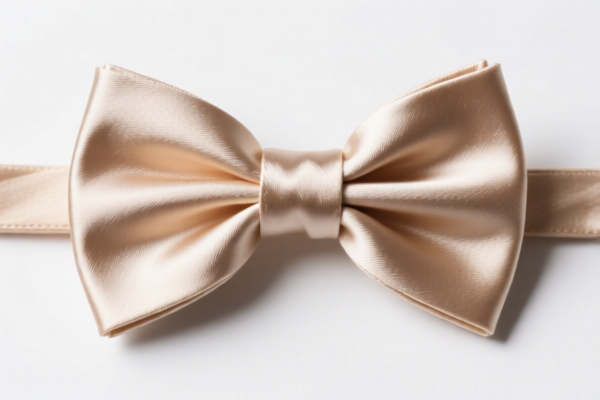
Children's Tie Bow Black
CN → US| HS Code | Tariff Rate | Origin | Destination | Doc |
|---|---|---|---|---|
| 6215100040 | 24.7% | CN | US | Official Doc |
| 6307905010 | 17.5% | CN | US | Official Doc |
| 6117808710 | 15.0% | CN | US | Official Doc |
| 6117808770 | 15.0% | CN | US | Official Doc |
| 6307905020 | 17.5% | CN | US | Official Doc |
Product Images


AI Analysis
🎀 Children's Tie Bow Black | HS Code Classification & Customs Clearance Guide
🌐 HS Code Reference & Customs Clearance Guide | 2026 Latest Tariff Analysis | Professional Customs Strategy
📌 I. Product Definition and Classification: What Exactly is a "Children's Tie Bow"?
A Black Children's Tie Bow is a formal accessory, typically worn by children for ceremonies, weddings, or school events. In international trade, its classification depends heavily on two factors: 1. Form/Structure: Is it a pre-tied bow (fixed shape) or a traditional tie that requires tying? 2. Material Composition: Is it made of silk, synthetic fibers (polyester), or cotton?
⚠️ Key Distinction:
- If it is a finished, pre-shaped bow made of silk → Classified under Headings 6215 (Ties, Cravats, Bow Ties).
- If it is a generic textile accessory or made of synthetics/cotton → May fall under Headings 6117 (Clothing Accessories) or 6307 (Other Made-up Textile Articles).
📦 II. HS Code Classification Details (2026 Latest Tariff Authority Comparison)
Based on the product name "Children's Tie Bow Black", here are the possible HS Code classifications with corresponding tax implications:
| HS Code | Product Description | Applicable Scenario | Material | Base Tariff | Additional Tariffs | Total Tax Rate |
|---|---|---|---|---|---|---|
6215.10.00.40 |
Black Tie/Bow Tie | Pre-shaped or traditional bow tie for formal wear | Silk or Silk-blend | 7.2% | 7.5% (Section 301) + 10% (Section 122) | 24.7% |
6307.90.50.10 |
Black Tie/Bow Tie | Shaped like a shoelace or decorative finished article | Polyester or Cotton | 0.0% | 7.5% (Section 301) + 10% (Section 122) | 17.5% |
6117.80.87.10 |
Black Tie/Bow Tie | Accessory for ties/bow ties | Cotton or Other | 5.0% | 0.0% (No Section 301) + 10% (Section 122) | 15.0% |
6117.80.87.70 |
Black Tie/Bow Tie | Shape matches, material unspecified (Catch-all) | Unspecified | 5.0% | 0.0% (No Section 301) + 10% (Section 122) | 15.0% |
6307.90.50.20 |
Black Tie/Bow Tie | Other made-up articles | Polyester/Silk (Non-Cotton) | 0.0% | 7.5% (Section 301) + 10% (Section 122) | 17.5% |
🔍 Key Reminder:
- Silk content triggers higher base tariffs (7.2%) but may avoid certain Section 301 surcharges if classified differently.
- Synthetic (Polyester) items often have 0% base tariff but attract Section 301 tariffs.
- Cotton items often have lower total tax rates due to no Section 301 application.
💰 III. 2026 Latest Tariff Rate Breakdown (Including Additional Taxes & Policy Surcharges)
✅ Applicable Country: United States (US)
✅ Country of Origin: China (CN)
✅ Effective Date: Post-2025 (Including subsequent imports)
🎯 1. 6215.10.00.40 —— Silk Tie/Bow Tie (Formal Wear)
| Item | Detail |
|---|---|
| Base Tariff | 7.2% (ad valorem) |
| Section 301 Surcharge | +7.5% (USITC Footnote 9903.88.01) |
| Section 122 Surcharge | +10% (Targeting China/China-made goods) |
| Total Tax Rate | 24.7% |
| Tax Calculation | CIF Value × 24.7% |
| De Minimis Exemption | ❌ Not Eligible |
| Legal Path | IEEPA:9903.01.25 → IEEPA:9903.01.24 → USITC:6215.10.00.40 → FOOTNOTE:9903.88.01 |
📌 Explanation:
- Silk formal wear is subject to both Section 301 and Section 122 tariffs.
- This is a high-cost category. Ensure the product is truly silk to avoid misclassification penalties.
🎯 2. 6307.90.50.10 —— Polyester/Cotton Tie/Bow Tie (Decorative)
| Item | Detail |
|---|---|
| Base Tariff | 0.0% |
| Section 301 Surcharge | +7.5% |
| Section 122 Surcharge | +10% |
| Total Tax Rate | 17.5% |
| Tax Calculation | CIF Value × 17.5% |
| De Minimis Exemption | ❌ Not Eligible |
| Legal Path | IEEPA:9903.01.25 → IEEPA:9903.01.24 → USITC:6307.90.50.10 → FOOTNOTE:9903.88.01 |
📌 Note:
- Even with 0% base tariff, the Section 301 + 122 tariffs make it 17.5%.
- Common for mass-produced children’s accessories.
🎯 3. 6117.80.87.10 & 6117.80.87.70 —— Cotton/Other Textile Accessories
| Item | Detail |
|---|---|
| Base Tariff | 5.0% |
| Section 301 Surcharge | 0.0% (Exempt) |
| Section 122 Surcharge | +10% |
| Total Tax Rate | 15.0% |
| Tax Calculation | CIF Value × 15.0% |
| De Minimis Exemption | ❌ Not Eligible |
| Legal Path | IEEPA:9903.01.25 → USITC:6117.80.87.10 → FOOTNOTE:9903.88.01 |
📌 Advantage:
- Lowest Total Tax Rate (15.0%) among all options.
- No Section 301 surcharge applies to cotton/knit accessories in this category.
- Recommendation: If the bow is cotton-based, classify here for maximum cost savings.
🎯 4. 6307.90.50.20 —— Other Made-Up Textile Articles
| Item | Detail |
|---|---|
| Base Tariff | 0.0% |
| Section 301 Surcharge | +7.5% |
| Section 122 Surcharge | +10% |
| Total Tax Rate | 17.5% |
| Tax Calculation | CIF Value × 17.5% |
| De Minimis Exemption | ❌ Not Eligible |
📌 Note:
- Similar to6307.90.50.10, but used if the item doesn’t fit other specific descriptions.
- Still subject to Section 301 + 122 tariffs.
🛠️ IV. Customs Clearance Practical Advice (Avoid Pitfalls)
✅ 1. Required Documentation Checklist
| Document | Mandatory? | Description |
|---|---|---|
| ✅ Product Spec Sheet | ✔️ | Must include material composition (e.g., "100% Cotton", "Polyester Blend") |
| ✅ Product Photos | ✔️ | Clear images of the bow, showing shape, label, and packaging |
| ✅ Commercial Invoice | ✔️ | Describe as "Children's Black Tie Bow, Cotton, Pre-tied" |
| ✅ Certificate of Origin | ✔️ | Required for Section 122 assessment |
| ✅ Packing List | ✔️ | Detail items per carton |
✅ 2. Declaration Tips (Key Mantra)
🔥 "Material Determines Tariff, Section 122 Applies to All!"
| Scenario | Correct HS Code | Mistake to Avoid |
|---|---|---|
| 100% Cotton Bow | 6117.80.87.10 (15.0%) |
Misclassifying as Polyester → 17.5% |
| Silk Bow | 6215.10.00.40 (24.7%) |
Claiming it's cotton to save tax → Penalty for fraud |
| Polyester Bow | 6307.90.50.10 (17.5%) |
Misclassifying as Cotton → 15.0% (Risk of audit) |
| Unspecified Material | 6117.80.87.70 (15.0%) |
Vague description "Textile Accessory" → Delay in clearance |
✅ 3. Special Cases
| Situation | Advice |
|---|---|
| Mixed Material (e.g., 80% Polyester, 20% Cotton) | Classify based on principal material. If polyester dominates, use 6307 codes (17.5%). |
| Pre-tied vs. Traditional Tie | Pre-tied bows are often classified under 6117 (Accessories), while traditional ties go to 6215 (Ties). Check USITC rulings. |
| Children’s Clothing Labeling | Ensure compliance with CPSIA (Consumer Product Safety Improvement Act) for children’s items. Provide test reports if required. |
| Brand/Logo Presence | If the bow has a branded logo, ensure trademark authorization is documented to avoid IP issues. |
🌍 V. Global Market Clearance Comparison (2026 Latest)
| Country/Region | Recommended HS Code | Tariff Rate | Certification | Notes |
|---|---|---|---|---|
| 🇺🇸 USA | 6117.80.87.10 (Cotton) |
15.0% | CPSIA | Lowest rate for cotton; 24.7% for silk |
| 🇨🇳 China | 6117.80.87.10 |
5% | CCC (if applicable) | No additional surcharges |
| 🇪🇺 EU | 6117.80.90 |
0-4% | CE | No Section 122 equivalent |
| 🇦🇺 Australia | 6117.80.00 |
5% | WELS/Labeling | Moderate tariff |
| 🇯🇵 Japan | 6117.80.00 |
0-3% | PSE | Low tariff |
📌 Conclusion:
- USA is the most complex due to Section 122 (10%) and Section 301 (7.5%) surcharges.
- Cotton-based bows are the most cost-effective for US import (15.0% total).
- Silk bows are the most expensive (24.7%).
📌 VI. Common Mistakes & Pitfalls (Lessons Learned)
❌ Mistake 1: Claiming a Polyester bow is Cotton to save 2.5%
👉 Consequence: Audit, penalty, and retroactive tax payment!
❌ Mistake 2: Using "Tie" description for a pre-tied bow
👉 Consequence: Misclassification between 6215 and 6117 → Delay in clearance.
❌ Mistake 3: Ignoring Section 122 for China-origin goods
👉 Consequence: 10% extra tax not budgeted → Profit margin erosion.
❌ Mistake 4: Not declaring material composition clearly
👉 Consequence: CBP issues a Request for Information (RFI) → Delayed delivery.
✅ Correct Declaration Example:
"Children's Black Pre-tied Bow Tie, 100% Cotton, Non-Silk, No Brand, Model CTB-001"
🎯 VII. Conclusion: Smart Classification for Cost Savings!
🎯 Remember the Mantra:
🔹 "Cotton is King (15%), Polyester is Middle (17.5%), Silk is Expensive (24.7%)."
🔹 "Section 122 hits everyone in China – Plan Ahead!"
🔹 "HS Code Determines Cost – Choose Wisely!"
📌 Pro Tip:
- If your bow is cotton-based, classify under
6117.80.87.10for the lowest total tax (15.0%).- For silk, accept the 24.7% rate or explore third-country sourcing (e.g., Vietnam, India) to avoid Section 122.
- Always provide detailed material breakdown in the commercial invoice.
📣 Immediate Action:
📞 Consult a licensed customs broker.
📄 Prepare material test reports (especially for cotton content).
🚀 Optimize your supply chain to minimize tariff impact!
✨ Professional Clearance Starts with Accurate Classification!
💼 Every Percentage Point Counts!
Customer Reviews
About HS Code Classification
The Harmonized System (HS) is an internationally standardized nomenclature developed by the World Customs Organization (WCO) to classify traded products. Over 200 countries use the HS system as the basis for customs tariffs, trade statistics, and import/export regulations.
Each HS code follows a hierarchical structure:
- Chapter (2 digits) — Broad category of goods (e.g., Chapter 84: Machinery and Mechanical Appliances)
- Heading (4 digits) — More specific grouping within the chapter
- Subheading (6 digits) — Internationally standardized breakdown, used by all WCO member countries
- National subdivisions (8-10 digits) — Country-specific extensions for further classification, such as US HTSUS 10-digit codes
Correct HS code classification is essential for smooth customs clearance, accurate duty payment, and compliance with trade regulations. Misclassification can lead to customs delays, overpayment of duties, or penalties.
When importing from CN to US, the applicable tariff rates may include:
- Most-Favored-Nation (MFN) rate — The standard duty rate applied to WTO members
- General rate — Applied to countries without trade agreements
- Trade remedy duties — Additional tariffs such as Section 301 (anti-dumping), Section 232 (national security), or countervailing duties
The information provided on this page is for reference purposes only. For official classification, please consult with your local customs authority or a licensed customs broker.