Children's Toy Kitchen
CN → US| HS Code | Tariff Rate | Origin | Destination | Doc |
|---|---|---|---|---|
| 9503000071 | 10.0% | CN | US | Official Doc |
| 9503000073 | 10.0% | CN | US | Official Doc |
| 3926901000 | 20.9% | CN | US | Official Doc |
| 3926904000 | 12.8% | CN | US | Official Doc |
Product Images
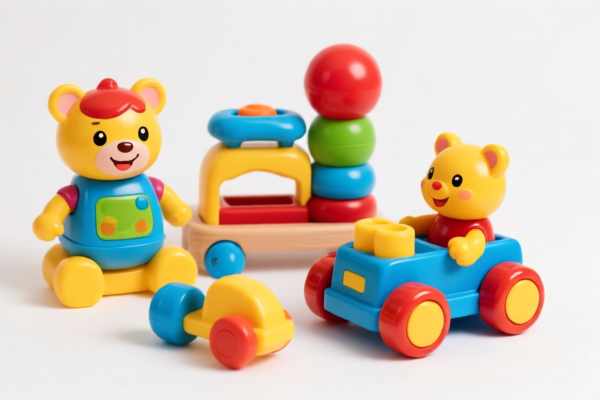
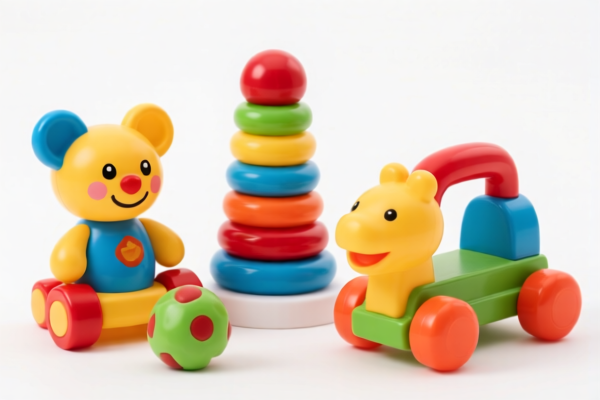
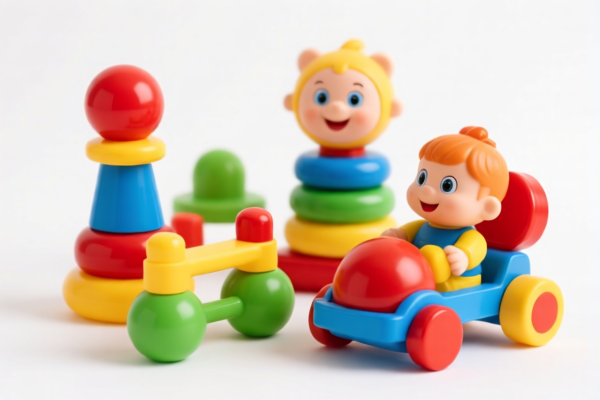
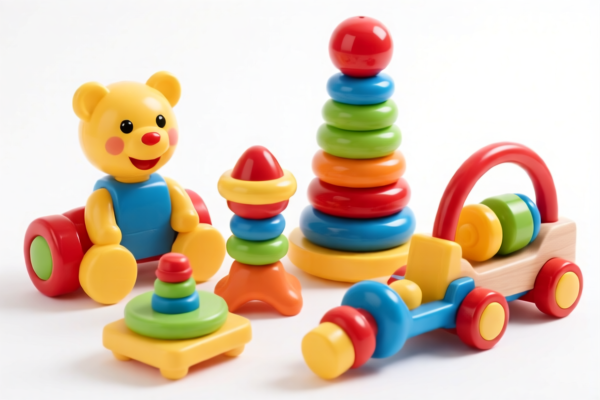
AI Analysis
🎮 Children's Toy Kitchen (Kids' Play Kitchen Sets)
🌐 HS Code Reference & Clearance Guide | 2026 Latest Tariff Analysis | Professional Clearance Strategy
📌 I. Product Definition & Classification: Do You Really Understand "Toy Kitchens"?
A Children's Toy Kitchen is a multi-functional playset designed to simulate a real kitchen environment for children. It typically includes a stove, sink, refrigerator, oven, and sometimes sound/light effects. These items are generally made of plastic, wood, or metal, and fall under the broader category of toys or plastic articles depending on their primary function and material composition.
In international trade, classification depends on whether the item is primarily viewed as a toy or as a manufactured plastic article. This distinction drastically affects the tariff rate, especially under US trade regulations.
⚠️ Key Distinction Point:
- If the item is clearly marketed and recognized as a toy (for play, amusement, or educational purposes) →归类 to Chapter 95 (Toys).
- If the item is primarily a plastic molded good without clear toy characteristics or is classified by material rather than function →归类 to Chapter 39 (Plastics).
📦 II. HS Code Classification Details (2026 Latest Tariff Authority Comparison)
| HS Code | Product Description | Applicable Scenario | Tax Rate (Total) |
|---|---|---|---|
9503.00.00.71 |
Toys, other; toys of plastic; toy kitchens classified as "other toys" | General toy kitchens, plastic or mixed material, intended for play | 10.0% |
9503.00.00.73 |
Toys, other;缩小模型及类似娱乐模型 (Scaled-down models and similar recreational models) | Realistic miniature kitchen sets, detailed models for play | 10.0% |
3926.90.10.00 |
Other articles of plastic, for household or toilet purposes, or for industrial use | Plastic toy kitchens classified primarily as plastic articles, not strictly as toys | 20.9% |
3926.90.40.00 |
Other articles of plastic, for household use | Plastic toy kitchens classified as household-use plastic items | 12.8% |
🔍 Key Insight:
- Toys (9503) generally enjoy lower base tariffs (0%) but are subject to Section 122 tariffs (10%), resulting in a 10% total.
- Plastic Articles (3926) have higher base tariffs (2.8%–3.4%) plus Section 122 (10%) and potentially additional Section 301 tariffs (7.5%), leading to 12.8%–20.9% total.
- Misclassification risk: Declaring a toy kitchen as a "plastic article" when it is clearly a toy can lead to underpayment of taxes and potential penalties. Conversely, declaring a plastic container as a toy to save tax is also non-compliant.
💰 III. 2026 Latest Tariff Rate Details (Including Additional Taxes & Policy Add-ons)
✅ Applicable Country: United States (US)
✅ Origin: China (CN)
✅ Effective Date: November 10, 2025 onwards (including subsequent imports)
🎯 1. 9503.00.00.71 —— Toy Kitchen (Other Toys)
| Item | Content |
|---|---|
| Base Tariff | 0% (ad valorem) |
| Section 122 Tariff | +10% (Under 122 Clause, targeting toys and recreational vehicles) |
| Section 301 Tariff | 0% (Toys are generally exempt from the 25% Section 301 tariff) |
| Total Tariff | 10.0% |
| Tax Calculation | CIF Value × 10% |
| De Minimis Eligibility | ❌ No (Section 122 tariffs apply to de minimis shipments) |
| Legal Basis Path | Section 122:9903.00.71 → HTSUS:9503.00.00.71 |
📌 Explanation:
- This is the most common and cost-effective classification for toy kitchens.
- The 10% total is significantly lower than the plastic article classification.
- Section 122 specifically targets toys, so this tariff is unavoidable if classified as a toy.
🎯 2. 9503.00.00.73 —— Toy Kitchen (Scaled-down Models)
| Item | Content |
|---|---|
| Base Tariff | 0% (ad valorem) |
| Section 122 Tariff | +10% |
| Section 301 Tariff | 0% |
| Total Tariff | 10.0% |
| Tax Calculation | CIF Value × 10% |
| De Minimis Eligibility | ❌ No |
| Legal Basis Path | Section 122:9903.00.73 → HTSUS:9503.00.00.73 |
📌 Note:
- This code is used for highly realistic miniature kitchen sets that resemble actual appliances.
- Tax rate is identical to9503.00.00.71. Choose based on the product's design (general toy vs. realistic model).
🎯 3. 3926.90.10.00 —— Plastic Articles (Household/Industrial Use)
| Item | Content |
|---|---|
| Base Tariff | 3.4% |
| Section 301 Tariff | +7.5% (Additional tariff on certain Chinese goods) |
| Section 122 Tariff | +10% |
| Total Tariff | 20.9% |
| Tax Calculation | CIF Value × 20.9% |
| De Minimis Eligibility | ❌ No |
| Legal Basis Path | Section 122:9926.90.10 → Section 301:9903.88.01 → HTSUS:3926.90.10.00 |
📌 Warning:
- This classification is higher risk and higher cost.
- Only use if the item cannot be reasonably classified as a toy (e.g., a plastic kitchen-themed storage box with no play features).
- Misclassification as a toy kitchen under this code is unlikely to succeed without strong justification.
🎯 4. 3926.90.40.00 —— Plastic Articles (Household Use)
| Item | Content |
|---|---|
| Base Tariff | 2.8% |
| Section 301 Tariff | 0% (Exempt from 301 in some cases, but verify current status) |
| Section 122 Tariff | +10% |
| Total Tariff | 12.8% |
| Tax Calculation | CIF Value × 12.8% |
| De Minimis Eligibility | ❌ No |
| Legal Basis Path | Section 122:9926.90.40 → HTSUS:3926.90.40.00 |
📌 Note:
- Slightly lower than3926.90.10.00due to different subheading.
- Still significantly higher than the 10% toy classification.
🛠️ IV. Clearance Practical Advice (Real-World Pitfall Avoidance Guide)
✅ 1. Required Documentation Checklist (None Can Be Omitted)
| Document | Mandatory | Description |
|---|---|---|
| ✅ Product Specifications | ✔️ | Dimensions, material (plastic/wood), power source (battery/electric), age recommendation |
| ✅ Product Photos | ✔️ | Clear images of the kitchen set, showing play features (knobs, lights, sounds) |
| ✅ Marketing Materials | ✔️ | Brochures, website screenshots showing "Toy" or "Play Kitchen" in the title |
| ✅ Commercial Invoice | ✔️ | Clearly state "Children's Toy Kitchen" or "Kids Play Kitchen Set" |
| ✅ Packing List | ✔️ | Detail contents to show it's a complete playset |
| ✅ CE/FCC/ASTM Certificates | ✔️ | Safety certifications for toys (ASTM F963, EN71, etc.) |
✅ 2. Declaration Tips (Key Mantra)
🔥 "Call it a Toy, Not a Container. Declare Play Features, Not Just Material."
| Scenario | Correct Declaration | Incorrect Practice |
|---|---|---|
| Toy Kitchen with play features | 9503.00.00.71 or 73 |
Declare as "Plastic Kitchen Set" → 20.9% |
| Kitchen-themed Storage Box (No play) | 3926.90.10.00 or 40.00 |
Declare as "Toy" → Risk of audit |
| Mixed Material (Wood + Plastic) | 9503.00.00.71 (if toy) |
Declare as "Wooden Furniture" → Wrong chapter |
| OEM Custom Toy Kitchen | Provide design drawings | Use generic "Plastic Item" description |
✅ 3. Special Cases Handling
| Scenario | Handling Advice |
|---|---|
| Toys with Electronic Features | Still classified as Toy (9503) if the primary function is play. Ensure FCC certification for electronics. |
| Wooden Toy Kitchens | If primarily for play, still 9503. Material is secondary to function. |
| Large Commercial Play Kitchens | If used in daycare centers as fixed equipment, may be classified as Furniture (9403), but for home use, stick to Toy. |
| De Minimis Shipments | Section 122 tariffs apply to de minimis. Do not assume $800 exemption saves you the 10% tax. |
🌍 V. Global Market Clearance Comparison (2026 Latest)
| Country/Region | Recommended HS Code | Tariff | Certification Requirements | Remarks |
|---|---|---|---|---|
| 🇺🇸 USA | 9503.00.00.71 |
10% | ASTM F963, CPSIA, FCC (if electronic) | Section 122 applies. Avoid plastic classification. |
| 🇨🇳 China | 9503.00.00.71 |
5% | CCC (if applicable) | No Section 122. Lower tax than US. |
| 🇪🇺 EU | 9503.00.00.90 |
4.5% | CE, EN71, REACH | No additional Section 122. |
| 🇬🇧 UK | 9503.00.00.90 |
4.5% | UKCA, EN71 | Post-Brexit rules apply. |
| 🇦🇺 Australia | 9503.00.00.90 |
5% | AS/NZS ISO 8124 | No special additional tariffs. |
📌 Conclusion:
- USA is the most complex market due to Section 122 (10%) and potential Section 301 implications if misclassified.
- EU, UK, and Australia have more straightforward, lower tariffs (~4.5%–5%) with standard toy safety certifications.
- Always prioritize the "Toy" classification for genuine play kitchens to avoid higher plastic article tariffs in the US.
📌 VI. Common Mistakes & Pitfall Avoidance (Lessons Learned)
❌ Mistake 1: Declaring a Toy Kitchen as "Plastic Kitchen Utensils"
👉 Consequence: Tax rate jumps from 10% to 20.9%. Audit risk.
❌ Mistake 2: Not declaring electronic components in Toy Kitchens
👉 Consequence: FCC violation, shipment held at customs, fines.
❌ Mistake 3: Assuming De Minimis ($800) exemption from Section 122 tariffs
👉 Consequence: Customs will assess the 10% tax even on small packages.
❌ Mistake 4: Using vague descriptions like "Plastic House"
👉 Consequence: Customs may reclassify as Plastic Article (3926) or Furniture (9403), leading to back taxes + penalties.
✅ Correct Practice:
"Children's Plastic Toy Kitchen Set with Lights and Sounds, For Ages 3+, ASTM F963 Certified, Model XYZ"
🎯 VII. Conclusion: Professional Declaration, Save Time, Reduce Costs!
🎯 Remember the Mantra:
🔹 "Toys are 10%, Plastics are 20%. Declare Play, Not Plastic!"
🔹 "Section 122 Applies to Toys, Not Just Electronics. Plan Ahead!"
📌 Pro Tip:
- If your toy kitchen is shipped from Vietnam or Mexico, check for IEEPA exemptions or USMCA preferences, which may reduce or eliminate Section 122 tariffs.
- Consider Advance Ruling from CBP to confirm your HS Code classification before shipping.
📣 Take Action Now:
📞 Contact a Professional Customs Broker + Provide Product Images + Apply for HS Code Advance Ruling
🚀 Ensure Smooth Clearance, Maximize Profits, and Stay Compliant!
✨ Professional Clearance Starts with Accurate Classification!
💼 Every Dollar Saved is a Dollar Earned!
Customer Reviews
About HS Code Classification
The Harmonized System (HS) is an internationally standardized nomenclature developed by the World Customs Organization (WCO) to classify traded products. Over 200 countries use the HS system as the basis for customs tariffs, trade statistics, and import/export regulations.
Each HS code follows a hierarchical structure:
- Chapter (2 digits) — Broad category of goods (e.g., Chapter 84: Machinery and Mechanical Appliances)
- Heading (4 digits) — More specific grouping within the chapter
- Subheading (6 digits) — Internationally standardized breakdown, used by all WCO member countries
- National subdivisions (8-10 digits) — Country-specific extensions for further classification, such as US HTSUS 10-digit codes
Correct HS code classification is essential for smooth customs clearance, accurate duty payment, and compliance with trade regulations. Misclassification can lead to customs delays, overpayment of duties, or penalties.
When importing from CN to US, the applicable tariff rates may include:
- Most-Favored-Nation (MFN) rate — The standard duty rate applied to WTO members
- General rate — Applied to countries without trade agreements
- Trade remedy duties — Additional tariffs such as Section 301 (anti-dumping), Section 232 (national security), or countervailing duties
The information provided on this page is for reference purposes only. For official classification, please consult with your local customs authority or a licensed customs broker.