Children's Toy Parts
CN → US| HS Code | Tariff Rate | Origin | Destination | Doc |
|---|---|---|---|---|
| 9503000090 | 10.0% | CN | US | Official Doc |
| 9503000073 | 10.0% | CN | US | Official Doc |
| 7616995150 | 37.5% | CN | US | Official Doc |
| 6214900090 | 28.8% | CN | US | Official Doc |
| 6214300000 | 15.3% | CN | US | Official Doc |
Product Images


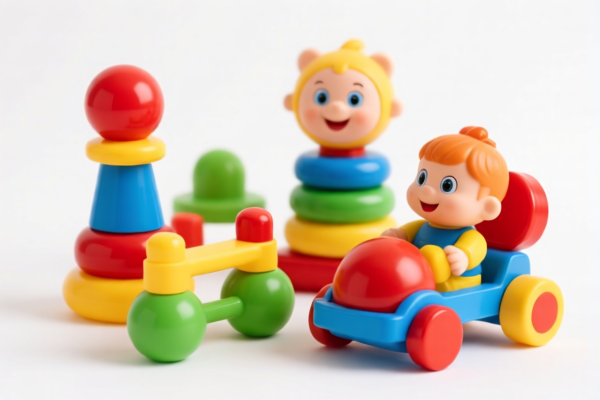
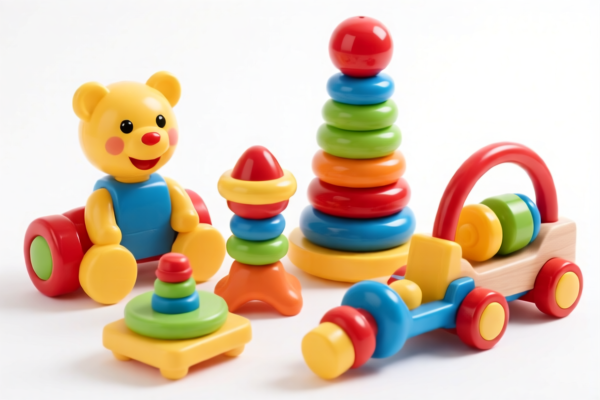
AI Analysis
🧸 Children's Toy Parts – HS Code & Tariff Guide 2026 | Expert Customs Clearance Strategy
🌐 HS Code Reference & Customs Clearance Handbook | 2026 Updated Tariff Rules | Pro-Level Import Planning
📌 I. Product Definition & Classification: What Exactly Are “Children’s Toy Parts”?
"Children’s Toy Parts" refer to components, accessories, or sub-assemblies used in the manufacturing or assembly of toys intended for children aged under 3 years or 3 to 12 years, as defined under 15 U.S.C. § 2052 (Children’s Products).
These parts are not standalone toys but are intended for integration into complete toys such as: - Tricycles, scooters, pedal cars - Doll carriages and dolls - Scale models (working or non-working) - Puzzles - Playsets and building blocks
⚠️ Critical Distinction: - If the part is designed to be used in a toy and labeled or declared by the importer as intended for children 3–12 or under 3 → Must be classified under 9503.00.00. - If the part is generic (e.g., screws, bolts, plastic clips) with no toy-specific design → May fall under other HS codes (e.g., 3926.90.99.89 or 8308.90.90.00), depending on material and function.
📦 II. HS Code Classification Breakdown (2026 Official Tariff List)
| HS Code | Product Description | Target Age Group | Key Features | Tax Status |
|---|---|---|---|---|
9503.00.00.73 |
Tricycles, scooters, pedal cars, dolls’ carriages, dolls, scale models, puzzles, and parts/accessories thereof; labeled or determined by importer as intended for use by persons aged 3 to 12 years | 3–12 years | Toy-specific design, child-safe materials | ✅ 0.0% Total Tariff |
9503.00.00.71 |
Same as above, but intended for use by persons under 3 years of age | Under 3 years | Must comply with CPSIA (Consumer Product Safety Improvement Act) | ✅ 0.0% Total Tariff |
8308.90.90.00 |
Clasps, buckles, hooks, eyelets, rivets, beads, spangles of base metal; used in clothing, footwear, jewelry, watches, leather goods, travel goods, or other made-up articles; other parts | N/A | Not toy-specific; used in accessories | ❌ 27.7% Total Tariff |
8308.90.30.00 |
Beads and spangles of base metal — not for toys, but used in fashion, crafts, or accessories | N/A | Decorative, non-toy application | ❌ 25.0% Total Tariff |
3926.90.99.89 |
Other articles of plastics (headings 3901–3914), not elsewhere specified, including non-strung beads, bugles, spangles | N/A | Generic plastic parts, not toy-specific | ❌ 12.8% Total Tariff |
3926.90.35.00 |
Beads, bugles, spangles (not strung or set) — not elsewhere specified or included; plastic, non-toy use | N/A | Craft, fashion, or industrial use | ✅ 0.0% Total Tariff |
🔍 Key Insight:
- Toy parts must be intended for children’s toys and labeled or declared as such by the importer to qualify for 0% tariff under 9503.00.00. - If the part is generic, not toy-specific, or used in fashion/accessories, it may be misclassified and face high tariffs.
💰 III. 2026 U.S. Tariff Breakdown (Detailed Tax Clause Analysis)
✅ Applicable Country: United States (US)
✅ Origin: China (CN), Vietnam (VN), Mexico (MX), etc.
✅ Effective Date: 2025–2026 (current active tariff schedule)
🎯 1. 9503.00.00.73 – Children’s Toy Parts (Ages 3–12)
| Item | Detail |
|---|---|
| Base Duty | 0.0% (ad valorem) |
| Additional Duty (USITC 301) | 0.0% |
| Total Tariff | 0.0% |
| Tax Calculation | CIF Value × 0.0% |
| De Minimis Threshold | ✅ Yes (up to $800 per shipment) |
| Legal Basis | 15 U.S.C. § 2052 (Children’s Product Definition) + HTSUS 9503.00.00.73 |
📌 Explanation:
- This code is exempt from all附加 taxes (USITC, IEEPA) if the part is intended for children’s toys and properly labeled or declared. - No additional tariffs apply — ideal for toy manufacturers and importers.
🎯 2. 9503.00.00.71 – Children’s Toy Parts (Under 3 Years)
| Item | Detail |
|---|---|
| Base Duty | 0.0% |
| Additional Duty (USITC 301) | 0.0% |
| Total Tariff | 0.0% |
| Tax Calculation | CIF × 0.0% |
| De Minimis Threshold | ✅ Yes |
| Legal Basis | 15 U.S.C. § 2052 + HTSUS 9503.00.00.71 |
📌 Note:
- Despite being for infants, this code still has 0% tariff. - However, products for under-3s must comply with CPSIA, including lead, phthalates, and choking hazard testing.
🎯 3. 8308.90.90.00 – Base Metal Parts (Clasps, Buckles, Rivets, Beads, Spangles)
| Item | Detail |
|---|---|
| Base Duty | 2.7% |
| Additional Duty (USITC 301) | 25.0% |
| Total Tariff | 27.7% |
| Tax Calculation | CIF × 27.7% |
| De Minimis Threshold | ❌ No (denied) |
| Legal Basis | HTSUS 8308.90.90.00 + USITC 301 Tariff (9903.88.01) |
📌 Explanation:
- Applies to base metal components used in clothing, jewelry, watches, leather goods, or travel goods. - Even if used in toys, if not labeled as "intended for children’s toys", it cannot be classified under 9503.00.00. - High-risk for misclassification — always verify intent.
🎯 4. 8308.90.30.00 – Beads & Spangles of Base Metal (Non-Toy Use)
| Item | Detail |
|---|---|
| Base Duty | 0.0% |
| Additional Duty (USITC 301) | 25.0% |
| Total Tariff | 25.0% |
| Tax Calculation | CIF × 25.0% |
| De Minimis Threshold | ❌ No |
| Legal Basis | HTSUS 8308.90.30.00 + USITC 301 Tariff |
📌 Warning:
- Even if plastic beads are used in toys, if not intended for children’s toys, and used in fashion/crafts, this code applies. - High tariff — must prove toy intent to avoid 25% penalty.
🎯 5. 3926.90.99.89 – Other Plastic Articles (Non-Toy Use)
| Item | Detail |
|---|---|
| Base Duty | 5.3% |
| Additional Duty (USITC 301) | 7.5% |
| Total Tariff | 12.8% |
| Tax Calculation | CIF × 12.8% |
| De Minimis Threshold | ✅ Yes (if under $800) |
| Legal Basis | HTSUS 3926.90.99.89 + USITC 301 Tariff (9903.88.01) |
📌 Note:
- Applies to plastic parts not elsewhere specified. - If not intended for toys, even if made of plastic, this code applies. - Lower than 25%, but still significant.
🎯 6. 3926.90.35.00 – Beads, Bugles, Spangles (Not Strung or Set)
| Item | Detail |
|---|---|
| Base Duty | 0.0% |
| Additional Duty (USITC 301) | 0.0% |
| Total Tariff | 0.0% |
| Tax Calculation | CIF × 0.0% |
| De Minimis Threshold | ✅ Yes |
| Legal Basis | HTSUS 3926.90.35.00 |
📌 Best Case for Plastic Beads:
- If non-toy use, not strung, not set, and not for children’s toys, this code applies. - Zero tariff — ideal for craft suppliers.
🛠️ IV. Customs Clearance Best Practices (Pro Tips to Avoid Penalties)
✅ 1. Documentation Checklist (Must-Have)
| Document | Required? | Purpose |
|---|---|---|
| ✅ Product Specification Sheet | ✔️ | Show material, size, function |
| ✅ Design/Assembly Diagrams | ✔️ | Prove toy-intended use |
| ✅ Product Photos (with labeling) | ✔️ | Show “for children 3–12” or “under 3” |
| ✅ Importer’s Declaration (Form 7501) | ✔️ | State intent: “intended for use by children 3–12” |
| ✅ Commercial Invoice | ✔️ | Clear description: “Parts for children’s toy, intended for ages 3–12” |
| ✅ Certificate of Origin (CO) | ✔️ | For preferential tariff claims |
| ✅ Test Reports (CPSIA, ASTM F963) | ✔️ | For under-3 products |
✅ 2.申报技巧 (申报口诀)
🔥 “Intent Matters, Label Matters, Declare Clearly, Tax Stays Low!”
| Scenario | Correct HS Code | Wrong Code | Risk |
|---|---|---|---|
| Plastic bead, used in toy, labeled “for kids 3–12” | 9503.00.00.73 |
3926.90.35.00 |
0% → 12.8% |
| Metal buckle, used in doll carriage, labeled “for children” | 9503.00.00.73 |
8308.90.90.00 |
0% → 27.7% |
| Beads, not for toys, used in jewelry | 3926.90.35.00 |
9503.00.00.73 |
0% → 25.0% |
| Generic plastic clip, no toy label | 3926.90.99.89 |
9503.00.00.73 |
12.8% → 0% |
✅ 3. Special Cases & Solutions
| Situation | Recommended Action |
|---|---|
| Beads used in both toys and crafts | Declare as “intended for children’s toys” to qualify for 0% tariff |
| Parts shipped with toy kits | Declare as “parts for toys” with age label |
| Parts from non-China origin (e.g., Vietnam, Mexico) | Check for USMCA or trade agreement benefits — may reduce or eliminate tariffs |
| Unclear labeling | Apply for Advance Ruling (Pre-Clearance) to avoid audit risk |
🌍 V. Global Market Comparison (2026)
| Country | Recommended HS Code | Tariff | Certification | Notes |
|---|---|---|---|---|
| 🇺🇸 USA | 9503.00.00.73 / 9503.00.00.71 |
0% | CPSIA, ASTM F963 | High compliance required |
| 🇨🇳 China | 9503.00.00.73 |
5% | CCC | No 301 tariff |
| 🇪🇺 EU | 9503.00.00 |
0% | CE, EN71 | No 301 tariff |
| 🇦🇺 Australia | 9503.00.00 |
5% | RCM | No 301 |
| 🇯🇵 Japan | 9503.00.00 |
0% | PSE | No 301 |
📌 Insight:
- Only the U.S. imposes high附加 tariffs on non-toy parts. - China-origin parts are not automatically taxed — only if misclassified.
📌 VI. Common Mistakes & How to Avoid Them (Real-World Examples)
❌ Mistake 1: Using metal beads in a doll carriage but declaring as “craft beads”
👉 Result: Taxed at 25.0% instead of 0.0% → $5,000+ in extra cost
❌ Mistake 2: Not labeling plastic parts as “intended for children 3–12”
👉 Result: Classified under 3926.90.99.89 → 12.8% tariff
❌ Mistake 3: Shipping generic plastic clips without intent declaration
👉 Result: Taxed at 12.8% — even if used in toys
✅ Correct Approach:
"Plastic Beads, 10mm, for children’s toy, intended for ages 3–12, non-toxic, CPSIA compliant, packaged with toy set"
🎯 VII. Conclusion: Precision in Classification = Profit Protection
🎯 Remember the Golden Rule:
🔹 "If it’s for a toy and labeled as such, it’s 0%."
🔹 "If it’s generic or used in fashion, it’s 12.8% or 27.7%."🚨 One misclassification can cost 25–30% more in tariffs.
📌 Pro Tip:
✅ Apply for an Advance Ruling (Pre-Clearance) if your parts are ambiguous or used across multiple applications.
✅ Use a customs broker with toy product expertise — not just any broker.
📣 Take Action Now!
📞 Contact a specialized customs broker + submit product specs + request HS Code pre-ruling
🚀 Avoid surprises, reduce costs, and ensure smooth U.S. entry!
✨ Your Toy Parts Are Only as Good as Your HS Code.
💼 Get it right — or pay the price.
Customer Reviews
About HS Code Classification
The Harmonized System (HS) is an internationally standardized nomenclature developed by the World Customs Organization (WCO) to classify traded products. Over 200 countries use the HS system as the basis for customs tariffs, trade statistics, and import/export regulations.
Each HS code follows a hierarchical structure:
- Chapter (2 digits) — Broad category of goods (e.g., Chapter 84: Machinery and Mechanical Appliances)
- Heading (4 digits) — More specific grouping within the chapter
- Subheading (6 digits) — Internationally standardized breakdown, used by all WCO member countries
- National subdivisions (8-10 digits) — Country-specific extensions for further classification, such as US HTSUS 10-digit codes
Correct HS code classification is essential for smooth customs clearance, accurate duty payment, and compliance with trade regulations. Misclassification can lead to customs delays, overpayment of duties, or penalties.
When importing from CN to US, the applicable tariff rates may include:
- Most-Favored-Nation (MFN) rate — The standard duty rate applied to WTO members
- General rate — Applied to countries without trade agreements
- Trade remedy duties — Additional tariffs such as Section 301 (anti-dumping), Section 232 (national security), or countervailing duties
The information provided on this page is for reference purposes only. For official classification, please consult with your local customs authority or a licensed customs broker.