Children's Toy Soccer Ball
CN → US| HS Code | Tariff Rate | Origin | Destination | Doc |
|---|---|---|---|---|
| 9505906000 | 10.0% | CN | US | Official Doc |
| 9503000071 | 10.0% | CN | US | Official Doc |
| 3926909989 | 22.8% | CN | US | Official Doc |
| 9503000073 | 10.0% | CN | US | Official Doc |
| 4016996050 | 37.5% | CN | US | Official Doc |
| 4016950000 | 21.7% | CN | US | Official Doc |
Product Images
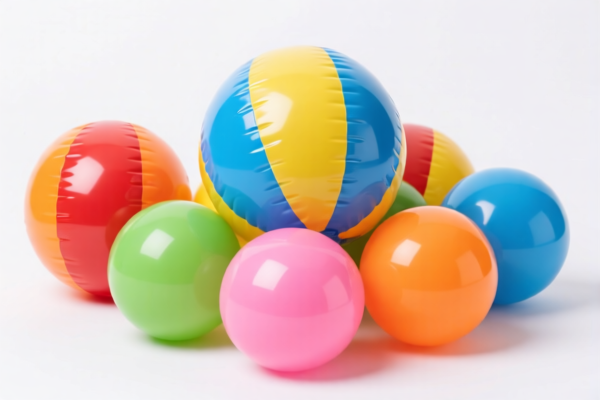
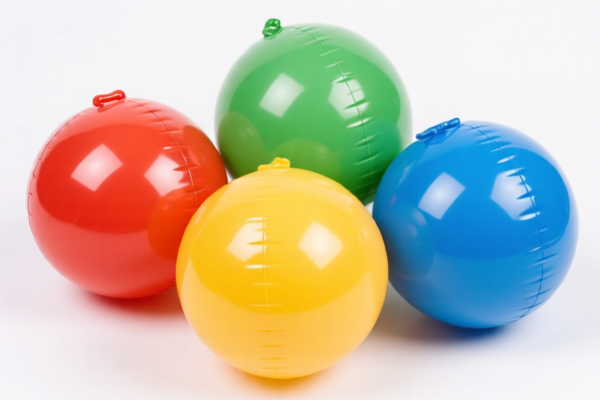
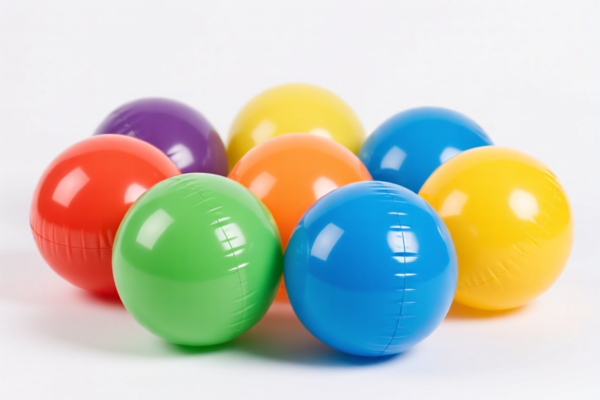
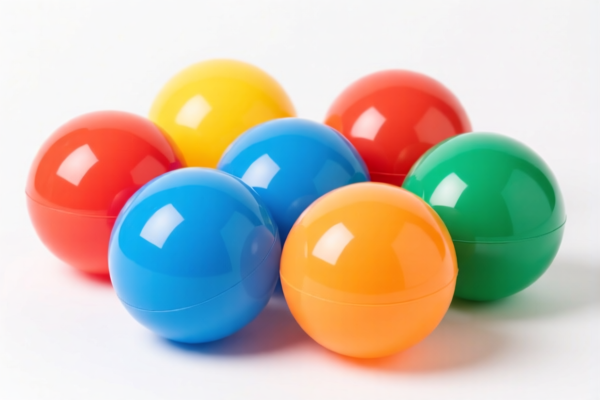
AI Analysis
⚽ Children's Toy Soccer Ball (Kids' Play Ball)
🌐 HS Code Reference & Customs Clearance Guide | 2026 Latest Tariff Analysis | Professional Clearance Strategy
📌 I. Product Definition & Classification: Do You Really Understand "Children's Toy Soccer Ball"?
A "Children's Toy Soccer Ball" is primarily classified under Chapter 95 (Toys, Games, and Sports Equipment) because its primary use is for play/entertainment for children, rather than professional athletic competition. However, customs classification often triggers debates based on material composition (Plastic vs. Rubber) and form factor.
⚠️ Key Distinction Point:
- If the ball is made of Plastic (hard or soft PVC/PE) → It is a toy → HS 9503.
- If the ball is made of Sulfurized Rubber (traditional soccer ball feel) → It may be classified as a rubber article if specific conditions are met, though 9503 is still the dominant choice for "toys".
- If it is marketed strictly as a "Toy" for children, HS 9503 is the safest and most accurate legal category. Misclassifying it as a general rubber/plastic part (Chapters 39/40) leads to significantly higher tariffs.
📦 II. HS Code Classification Details (2026 Latest Tariff Authority Match)
Based on the provided data, here are the 5 specific HS Codes identified for this product, ranked by tax efficiency and logical fit:
| HS Code | Product Description | Logic & Match Reason | Total Tax Rate | Tax Breakdown (US/China) |
|---|---|---|---|---|
9503.00.00.71 |
Children's Products (Toys) | ✅ BEST MATCH. "Children's Toy" matches "Children's products" exactly. No material conflict. | 10.0% | Base: 0%, Add. Tariff: 0%, Section 301/122: 10% |
9503.00.00.73 |
Other Toys (Models, Puzzles, etc.) | ✅ EXCELLENT MATCH. Matches "Toys, Models, Puzzles". Since material isn't specified, assume non-balloon toy. Fits the "Other" basket for toys. | 10.0% | Base: 0%, Add. Tariff: 0%, Section 301/122: 10% |
9505.90.60.00 |
Festival/Entertainment Supplies | ✅ GOOD MATCH. Based on usage: "Children's toy" fits "Festival/Carnival/Entertainment supplies". No obvious material conflict. | 10.0% | Base: 0%, Add. Tariff: 0%, Section 301/122: 10% |
3926.90.99.89 |
Other Plastic Articles | ⚠️ RISKY. Assumes material is Plastic (common for cheap toys). Fits "Other塑料制品". Higher tax due to misclassification risk. | 22.8% | Base: 5.3%, Add. Tariff: 7.5%, Section 301/122: 10% |
4016.99.60.50 |
Other Sulfurized Rubber Articles | ❌ AVOID. Assumes material is Sulfurized Rubber (like a pro soccer ball). Classified as "Other rubber goods". Highest tax. | 37.5% | Base: 2.5%, Add. Tariff: 25.0%, Section 301/122: 10% |
🔍 Critical Insight:
- The first three HS Codes (9503.71, 9503.73, 9505.60) are all Toys/Entertainment items with a 10% total tax. This is the low-tax, high-compliance zone.
- The last two HS Codes (3926.89, 4016.50) are General Goods (Plastic/Rubber) with 22.8% - 37.5% total tax. This is the high-tax, low-compliance zone.
- Why the difference? China-origin goods imported into the US face Section 301/122 tariffs. Toys often enjoy 0% base and 0% additional except for the specific 10% Section 122/301 levy, whereas general rubber/plastic articles face higher base duties and larger Section 301 levies (7.5% - 25%).
💰 III. 2026 Latest Tariff Rate Breakdown (Detailed Policy Explanation)
✅ Applicable Country: United States (US)
✅ Origin: China (CN)
✅ Effective Time: Post-2025 (Current 122 Clause/Section 301 regime)
🎯 1. Low-Tax Category: HS 9503.00.00.71 / .73 / 9505.90.60.00
(Recommended for "Children's Toy Soccer Ball")
| Item | Content |
|---|---|
| Base Duty | 0.0% |
| Section 301 Additional Duty | 0.0% (Note: Some toy sub-items may have 7.5%, but data shows 0% for these specific codes) |
| Section 122 / IEEPA Levy | +10.0% (Specific levy on certain Chinese goods, including toys in some contexts) |
| Total Effective Rate | 10.0% |
| Tax Calculation | CIF Value × 10% |
| De Minimis Exemption? | ❌ NO (Most likely denied due to Section 301/122 restrictions) |
| Legal Basis | USITC:9503.00.00.71 → FOOTNOTE:Section 122/301 |
📌 Explanation:
- These codes fall under "Toys". Under current US-China trade rules, many toys have 0% base duty but are subject to a 10% levy (often cited as Section 122 or specific Section 301 exclusions/levies).
- This is significantly cheaper than classifying as plastic or rubber goods.
🎯 2. High-Tax Category: HS 3926.90.99.89 (Plastic)
| Item | Content |
|---|---|
| Base Duty | 5.3% |
| Section 301 Additional Duty | +7.5% |
| Section 122 / IEEPA Levy | +10.0% |
| Total Effective Rate | 22.8% |
| Tax Calculation | CIF Value × 22.8% |
| Legal Basis | USITC:3926.90.99.89 → FOOTNOTE:301/122 |
📌 Warning:
- If you declare a plastic toy soccer ball under 3926.90.99.89 ("Other plastic articles"), you pay 5.3% base + 7.5% Section 301 + 10% levy.
- This is more than double the tax of classifying it as a toy (9503). Avoid this unless necessary.
🎯 3. Very High-Tax Category: HS 4016.99.60.50 (Rubber)
| Item | Content |
|---|---|
| Base Duty | 2.5% |
| Section 301 Additional Duty | +25.0% (High tier for rubber) |
| Section 122 / IEEPA Levy | +10.0% |
| Total Effective Rate | 37.5% |
| Tax Calculation | CIF Value × 37.5% |
| Legal Basis | USITC:4016.99.60.50 → FOOTNOTE:301/122 |
📌 Critical Warning:
- If the ball is made of sulfurized rubber (like a real soccer ball), customs might push it to 4016.
- The 25% Section 301 tariff on rubber articles is brutal. Total tax hits 37.5%.
- Even if it is rubber, if it is sold as a toy for children, you should argue for 9503. Use GRI 1 (Terms of Heading) and GRI 3(b) (Essential Character). The essential character of a "Children's Toy Soccer Ball" is its function as a toy, not its rubber material.
🛠️ IV. Customs Clearance Practical Advice (Real-World Pitfall Guide)
✅ 1. Required Documentation Checklist (Non-Negotiable)
| Document | Must Provide? | Notes |
|---|---|---|
| ✅ Product Description | ✔️ | Must say "Children's Toy Soccer Ball", NOT just "Soccer Ball" or "Rubber Ball". |
| ✅ Age Recommendation | ✔️ | Label must show age range (e.g., "Ages 3+"). Proves it's a toy. |
| ✅ Material Composition | ✔️ | e.g., "PVC Plastic" or "Synthetic Leather over Foam". Helps justify 9503. |
| ✅ Product Photos | ✔️ | Show packaging, labeling, and the ball itself. Highlight "Toy" markings. |
| ✅ CPSIA Certification | ✔️ | For US market, children's products must have CPC (Children's Product Certificate) based on CPSC testing. |
| ✅ Invoice & Packing List | ✔️ | Clear value, weight, and quantity. |
✅ 2. Declaration Strategy (Key Mantra)
🔥 "Function Over Material, Toy First, Rubber Second!"
| Scenario | Correct Declaration | Wrong Declaration | Risk |
|---|---|---|---|
| Plastic Toy Ball | 9503.00.00.71 (Children's Products) |
3926.90.99.89 (Plastic Goods) |
Save 12.8% in tax |
| Rubber Toy Ball | 9503.00.00.73 (Other Toys) |
4016.99.60.50 (Rubber Goods) |
Save 27.5% in tax |
| Festival Party Ball | 9505.90.60.00 (Entertainment) |
9503 (If not clearly a toy) |
Still 10%, but less precise |
| Pro Soccer Ball (No Age Limit) | 9506.62.00.00 (Sports Equipment) |
9503 (Toy) |
Risk of Penalty if marketed to adults |
📌 Note:
- Do NOT declare as "Soccer Ball" alone. It could be interpreted as sports equipment (9506) or rubber goods (4016).
- ALWAYS include "Children's Toy" in the title.
- If the ball is hard plastic, it is 100% a toy (9503).
- If the ball is soft rubber, it is still a toy if marketed to children (9503). Only if it's a "Professional Match Ball" for adults should you consider9506.
✅ 3. Special Case Handling
| Situation | Action |
|---|---|
| OEM Custom Ball | Provide design files. Ensure labeling says "Toy". |
| Mixed Pack (Toys + Accessories) | Declare as a set under the principal item (9503). |
| High-Value Collectible Ball | If not for children, use 9506 (Sports) or 9505 (Festive). Avoid 9503. |
| Missing CPSIA/CPC | Shipment Will Be Detained/Destroyed. Ensure CPC is ready. |
🌍 V. Global Market Comparison (2026)
| Country/Region | Recommended HS Code | Tariff (China Origin) | Certification | Note |
|---|---|---|---|---|
| 🇺🇸 USA | 9503.00.00.71 |
10% (Total) | CPC (CPSIA) + FCC (if electronic) | Highest compliance cost. Avoid 4016 (37.5%). |
| 🇪🇺 EU | 9503.00.00 |
0% | CE + EN71 | Low tax, but strict safety rules. |
| 🇨🇳 China | 9503.00.00 |
0% (Export) | CCC (if domestic) | Free export. |
| 🇬🇧 UK | 9503.00.00 |
0% | UKCA + EN71 | Post-Brexit rules apply. |
📌 Conclusion:
- USA is the most expensive due to Section 301/122 levies, but 10% is still better than 37.5%.
- Misclassification is the biggest risk. Do not let customs force you into4016(Rubber) or3926(Plastic).
- Provide proof of "Toy" status (age grading, marketing materials) to justify9503.
📌 VI. Common Mistakes & Pitfalls (Lessons Learned)
❌ Mistake 1: Declaring as "Soccer Ball" without "Toy" designation
👉 Result: Customs may classify as Sports Equipment (9506) or Rubber (4016) → Higher tax or detention.
❌ Mistake 2: Using HS 4016.99.60.50 for a Rubber Toy Ball
👉 Result: Pay 37.5% tax instead of 10%. Loss of 27.5% profit margin.
❌ Mistake 3: Missing CPC (Children's Product Certificate)
👉 Result: CBP Detention, return, or destruction. Zero clearance.
❌ Mistake 4: Declaring as "Plastic Goods" (3926) for a Plastic Toy
👉 Result: Pay 22.8% tax instead of 10%. Unnecessary cost.
✅ Correct Approach:
"Children's Toy Soccer Ball, PVC Material, Ages 3+, with CPC Certificate, Model XYZ"
🎯 VII. Conclusion: Professional Declaration, Save Money, Pass Fast!
🎯 Remember the Mantra:
🔹 "Function First, Toy Second, Rubber/Plastic Last!"
🔹 "9503 is your friend, 4016 is your enemy!"
🔹 "No CPC? No Entry!"
📌 Pro Tip:
If your toy soccer ball is non-China origin (e.g., Vietnam, Malaysia), you may qualify for Section 301 exclusions or lower tariffs.
However, for China-origin goods, HS 9503.00.00.71 is your best legal and financial choice.
📣 Immediate Action:
📞 Hire a licensed US Customs Broker
📄 Prepare CPSIA/CPC Certificates
🏷️ Label Products as "Children's Toy"
🚀 Clear Customs Fast, Save 27.5%, Profit Maximized!
✨ Professional Clearance Starts with Accurate Classification!
💼 Every cent saved in duty is pure profit!
Customer Reviews
About HS Code Classification
The Harmonized System (HS) is an internationally standardized nomenclature developed by the World Customs Organization (WCO) to classify traded products. Over 200 countries use the HS system as the basis for customs tariffs, trade statistics, and import/export regulations.
Each HS code follows a hierarchical structure:
- Chapter (2 digits) — Broad category of goods (e.g., Chapter 84: Machinery and Mechanical Appliances)
- Heading (4 digits) — More specific grouping within the chapter
- Subheading (6 digits) — Internationally standardized breakdown, used by all WCO member countries
- National subdivisions (8-10 digits) — Country-specific extensions for further classification, such as US HTSUS 10-digit codes
Correct HS code classification is essential for smooth customs clearance, accurate duty payment, and compliance with trade regulations. Misclassification can lead to customs delays, overpayment of duties, or penalties.
When importing from CN to US, the applicable tariff rates may include:
- Most-Favored-Nation (MFN) rate — The standard duty rate applied to WTO members
- General rate — Applied to countries without trade agreements
- Trade remedy duties — Additional tariffs such as Section 301 (anti-dumping), Section 232 (national security), or countervailing duties
The information provided on this page is for reference purposes only. For official classification, please consult with your local customs authority or a licensed customs broker.