Children's Toys
CN → US| HS Code | Tariff Rate | Origin | Destination | Doc |
|---|---|---|---|---|
| 9503000073 | 10.0% | CN | US | Official Doc |
| 9503000071 | 10.0% | CN | US | Official Doc |
| 3926909989 | 22.8% | CN | US | Official Doc |
| 3926903500 | 16.5% | CN | US | Official Doc |
| 7326908688 | 87.9% | CN | US | Official Doc |
Product Images
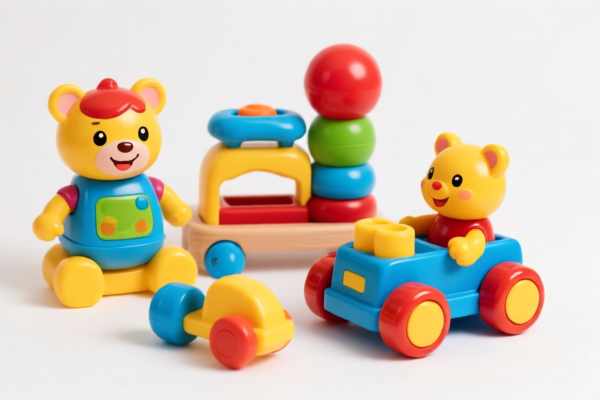
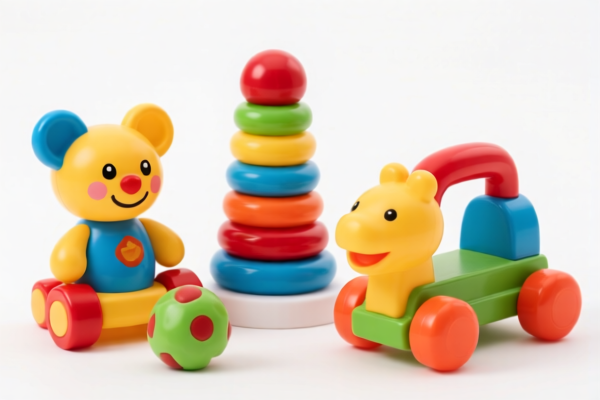
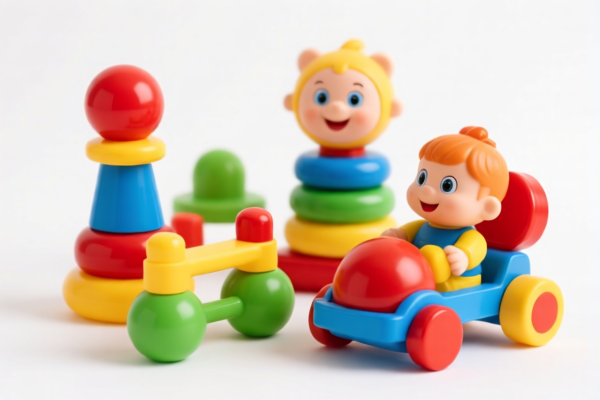
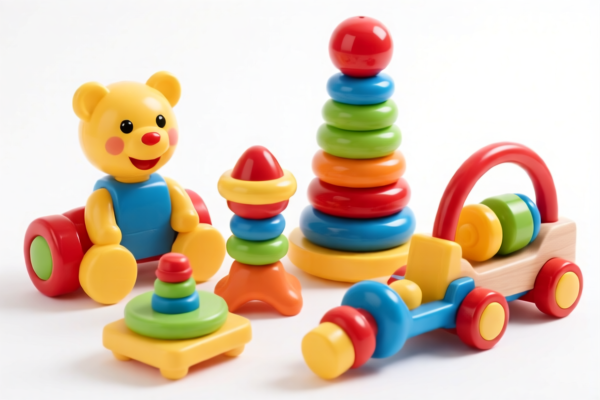
AI Analysis
🧸 Children's Toys (Accessories & Parts)
🌐 HS Code Reference & Clearance Guide | 2026 Latest Tariff Analysis | Professional Clearance Strategy
📌 I. Product Definition & Classification: Do You Really Understand "Children's Toy Accessories"?
Children's toy accessories are components, parts, or attachments designed specifically for children's play items. In international trade, the classification depends heavily on material, function, and whether they are specifically designed for toys versus general use.
Key Distinction Points: - Specific for Toys: If the part is exclusively used in children's toys (e.g., doll limbs, train tracks, puzzle pieces), it should ideally fall under Chapter 95 (Toys). - General Purpose/Non-Specific: If the part is generic (e.g., plastic fittings, metal hinges, generic connectors) and not uniquely shaped for a specific toy, customs may classify it under its material chapter (e.g., Chapter 39 for Plastics, Chapter 73 for Iron/Steel).
⚠️ Critical Compliance Warning:
- Misclassifying general plastic/metal parts as "Toy Parts" can lead to underpayment of duties (if toy rates are lower) or rejection if the item is deemed "general purpose."
- Conversely, classifying specific toy parts under general categories may result in higher tariffs depending on the base rate and additional sanctions.
📦 II. HS Code Classification Details (2026 Latest Tariff Authority Reference)
Based on the provided data, the following HS Codes are identified for Children's Toy Accessories, categorized by material and classification logic:
| HS Code | Product Description & Classification Logic | Material/Type |
|---|---|---|
9503.00.00.73 |
Children's Toy Accessories: Matches "Parts and Accessories" definition for Chapter 95. | Specific Toy Parts |
9503.00.00.71 |
Children's Toy Accessories: Parts/Accessories for "Children's Products" (Toys). | Specific Toy Parts |
3926.90.99.89 |
Plastic Toys Accessories: Inferred as general塑料制品 (Plastic Products) under residual category. No material conflict. | Plastic (General) |
3926.90.35.00 |
Plastic Toys Accessories: Inferred to be plastic, fits "Other Plastic Articles" residual category. | Plastic (General) |
7326.90.86.88 |
Metal Toys Accessories: Material inferred as metal, fits "Other" category for metal manufactures. | Metal (Steel/Aluminum/Copper) |
🔍 Key Insight:
- HS 9503 codes are for specific toy parts. They generally have lower base tariffs (0%) but may still be subject to additional US sanctions.
- HS 3926 & 7326 codes are for general material classifications. They apply if the accessory is not uniquely designed for toys or if customs determines it is a general-purpose component. These often carry higher base tariffs and significant additional sanctions.
💰 III. 2026 Latest Tariff Rate Breakdown (Including Surcharges & Policy Add-ons)
✅ Applicable Country: United States (US)
✅ Origin: China (CN)
✅ Effective Date: 2025/2026 (Current Sanctions Apply)
🎯 1. 9503.00.00.73 & 9503.00.00.71 — Specific Children's Toy Parts
These codes classify items specifically as "Parts and Accessories" of toys.
| Item | Content |
|---|---|
| Base Tariff | 0% (Ad Valorem) |
| Section 301 Surtax | 0% (No additional 25% tax for these specific codes under current data) |
| Section 122 Surtax | +10% (Targeting Chinese products) |
| Total Tax Rate | 10.0% |
| Calculation | CIF Value × 10% |
| Legal Basis | 9503.00.00.73/71 → Section 122: 10% |
📌 Explanation:
- These are the most favorable codes for toy accessories.
- Base tariff is 0%, meaning you only pay the 10% Section 122 surcharge.
- Crucial: You must prove the item is a specific part of a toy (e.g., a unique doll head, a specific train wheel) to qualify for this lower rate.
🎯 2. 3926.90.99.89 — General Plastic Accessories (Residual Category)
Applied when the accessory is plastic but not specifically classified under toy parts, or when it is a general plastic article.
| Item | Content |
|---|---|
| Base Tariff | 5.3% |
| Section 301 Surtax | +7.5% |
| Section 122 Surtax | +10% |
| Total Tax Rate | 22.8% |
| Calculation | CIF Value × 22.8% |
| Legal Basis | 3926.90.99.89 → Base: 5.3% + 301: 7.5% + 122: 10% |
📌 Explanation:
- Higher base rate due to plastic material classification.
- Subject to Section 301 (7.5%) and Section 122 (10%).
- Risk: If customs reclassifies your "toy plastic part" as a "general plastic article," costs jump from 10% to 22.8%.
🎯 3. 3926.90.35.00 — Other Plastic Articles
Another plastic classification, likely for different shapes or forms within plastic goods.
| Item | Content |
|---|---|
| Base Tariff | 6.5% |
| Section 301 Surtax | 0% |
| Section 122 Surtax | +10% |
| Total Tax Rate | 16.5% |
| Calculation | CIF Value × 16.5% |
| Legal Basis | 3926.90.35.00 → Base: 6.5% + 122: 10% |
📌 Explanation:
- No Section 301 surcharge, but higher base (6.5%).
- Total 16.5% is still significantly higher than the 10% for specific toy parts.
🎯 4. 7326.90.86.88 — Metal Parts (Steel/Aluminum/Copper)
Applied when the accessory is made of metal (steel, aluminum, copper, etc.).
| Item | Content |
|---|---|
| Base Tariff | 2.9% |
| Section 301 Surtax | +25.0% |
| Section 122 Surtax | +10% |
| Steel/Aluminum/Copper Surcharge | +50% (Additional sanction for metals) |
| Total Tax Rate | 87.9% |
| Calculation | CIF Value × 87.9% |
| Legal Basis | 7326.90.86.88 → Base: 2.9% + 301: 25% + 122: 10% + Metals: 50% |
📌 WARNING:
- This is the highest risk code.
- Metal toy accessories (e.g., metal figurines, metal gears, metal tracks) are subject to Section 301 (25%), Section 122 (10%), AND a 50% surcharge for Steel/Aluminum/Copper.
- Total 87.9% can erase most profit margins.
- Strategy: If possible, reclassify as plastic or ensure the item is definitively classified under Chapter 95 (if specific to toys) to avoid metal surcharges. Note: The data shows7326is used, implying it is classified as metal goods, not toy parts.
🛠️ IV. Practical Clearance Advice (Avoiding Pitfalls)
✅ 1. Documentation Checklist (Mandatory)
| Document | Required | Purpose |
|---|---|---|
| Product Description | ✔️ | Must specify "Part of [Specific Toy]" for HS 9503. Avoid generic "Plastic Part." |
| Material Composition | ✔️ | Clearly state if plastic, metal, etc. Critical for HS 39 vs. HS 73. |
| Design Drawings/Sketches | ✔️ | Prove uniqueness. If it's a standard screw/nut, it's NOT a toy part. |
| Commercial Invoice | ✔️ | Itemize as "Toy Accessory: [Name]" not "Plastic Fittings." |
| Origin Certificate | ✔️ | Confirm China origin to anticipate 122/301 taxes. |
| Photos of Product + Toy | ✔️ | Show how the part attaches to the toy. |
✅ 2. Classification Strategy (Key Tips)
| Scenario | Recommended HS Code | Risk |
|---|---|---|
| Unique Toy Part (e.g., Doll head, Train wheel) | 9503.00.00.73 or 9503.00.00.71 |
Low Risk, Low Tax (10%) |
| Generic Plastic Clip/Bolt | 3926.90.99.89 |
Medium Risk, Medium Tax (22.8%) |
| Generic Metal Hinge/Screw | 7326.90.86.88 |
High Risk, Very High Tax (87.9%) |
🔥 Pro Tip:
- Avoid Metal if possible. If your toy accessory is metal, try to prove it is specifically designed for a toy to argue for HS 9503 classification, which may exempt it from the 50% metal surcharge. However, note that the provided data shows7326for metal, implying no exemption was applied in that instance. Always consult a customs broker for advance rulings.
- Be Specific in Description: "Plastic Connector for LEGO-Compatible Brick" is better than "Plastic Connector."
✅ 3. Special Considerations
- Section 122 (10%): Applies to all Chinese-origin goods under this analysis. Budget for this regardless of HS code.
- Section 301: Applies to plastics and metals but not to the specific toy parts (
9503) in the provided data. This is a major saving. - Metal Surcharge (50%): Only applies to steel, aluminum, copper. If your metal part is brass or zinc, verify if this surcharge still applies (data suggests yes for "Steel, Aluminum, Copper").
🌍 V. Global Market Comparison (2026)
| Country | Recommended HS Code | Tariff (China Origin) | Notes |
|---|---|---|---|
| 🇺🇸 USA | 9503.00.00.73 |
10% (Toy Part) 7326.90.86.88: 87.9% (Metal) |
Highest compliance risk. Strict on toy vs. general part classification. |
| 🇨🇳 China | 9503.00.00 |
~5-10% | Domestic tax varies. |
| 🇪🇺 EU | 9503.00 |
0% (Often) | No Section 301/122. Lower tax if classified as toys. |
| 🇯🇵 Japan | 9503.00 |
0-4.3% | No additional sanctions. |
📌 Conclusion:
- USA is the most complex market due to Section 301, 122, and Metal Surcharges.
- Classification as "Toy Part" (HS 9503) is critical to avoid high metal/plastic surcharges.
- Metal accessories are the most expensive to import into the US (87.9%).
📌 VI. Common Errors & Pitfalls (Blood Lessons)
❌ Error 1: Calling a metal screw a "Toy Part" to avoid taxes.
👉 Consequence: Customs rejects it as a general metal good → 87.9% tax + penalties.
❌ Error 2: Using generic descriptions like "Plastic Part" for a unique doll limb.
👉 Consequence: Classified as 3926 → 22.8% tax instead of 10%. Missed savings!
❌ Error 3: Ignoring Section 122 (10%).
👉 Consequence: Under-declaring duties → Audit & Back Taxes.
✅ Correct Practice:
"Doll Head Accessory, PVC Plastic, Non-Functional, For Use With [Brand] Doll, Model ABC"
🎯 VII. Conclusion: Precision Saves Money!
🎯 Remember:
🔹 "Toy Specific = 10%. Plastic General = 22.8%. Metal General = 87.9%!"
🔹 "Describe the function, not just the material."
🔹 "Metal accessories are tax traps. Avoid or justify carefully."
📌 Tip:
- For metal toy parts, consider if they can be plastic-coated or redesigned to be classified as plastic or toy parts to avoid the 50% metal surcharge.
- Always request a Binding Tariff Information (BTI) or US Customs Ruling for high-value shipments.
📣 Act Now:
📞 Contact a licensed customs broker.
🚀 Get an Advance Ruling for your specific toy accessories.
💰 Save up to 77.9% on metal parts by proper classification!
✨ Smart Clearance, Start with Accurate Classification!
💼 Your Margins Depend on It!
Customer Reviews
About HS Code Classification
The Harmonized System (HS) is an internationally standardized nomenclature developed by the World Customs Organization (WCO) to classify traded products. Over 200 countries use the HS system as the basis for customs tariffs, trade statistics, and import/export regulations.
Each HS code follows a hierarchical structure:
- Chapter (2 digits) — Broad category of goods (e.g., Chapter 84: Machinery and Mechanical Appliances)
- Heading (4 digits) — More specific grouping within the chapter
- Subheading (6 digits) — Internationally standardized breakdown, used by all WCO member countries
- National subdivisions (8-10 digits) — Country-specific extensions for further classification, such as US HTSUS 10-digit codes
Correct HS code classification is essential for smooth customs clearance, accurate duty payment, and compliance with trade regulations. Misclassification can lead to customs delays, overpayment of duties, or penalties.
When importing from CN to US, the applicable tariff rates may include:
- Most-Favored-Nation (MFN) rate — The standard duty rate applied to WTO members
- General rate — Applied to countries without trade agreements
- Trade remedy duties — Additional tariffs such as Section 301 (anti-dumping), Section 232 (national security), or countervailing duties
The information provided on this page is for reference purposes only. For official classification, please consult with your local customs authority or a licensed customs broker.