Children's Underwear (Jacquard Fabric)
CN → US| HS Code | Tariff Rate | Origin | Destination | Doc |
|---|---|---|---|---|
| 6208913020 | 28.7% | CN | US | Official Doc |
| 6208920040 | 26.0% | CN | US | Official Doc |
| 6108910025 | 26.0% | CN | US | Official Doc |
| 6108920025 | 33.5% | CN | US | Official Doc |
| 6107199000 | 23.1% | CN | US | Official Doc |
| 6107110020 | 24.9% | CN | US | Official Doc |
Product Images
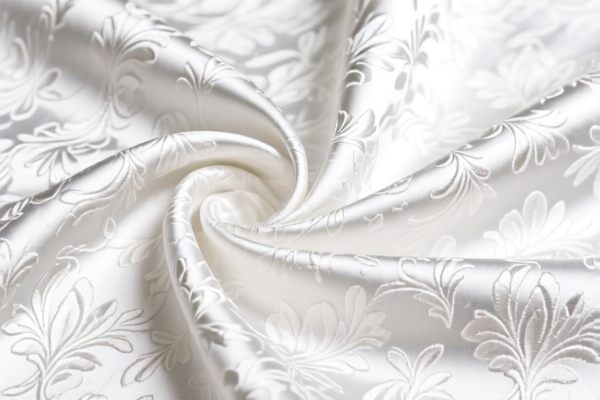

AI Analysis
👶✨ Children's Underwear: The Complete Guide to HS Classification & Taxation (Jacquard Fabric Edition)
🌐 Global Trade HS Code & Taxation Masterclass | 2026 Customs Clearance Strategy
📌 I. Product Definition: Why "Jacquard" Matters in Classification?
Children's underwear is a high-volume, high-compliance category in global trade. While the style (panties, briefs, nightdresses) is obvious, the fabric composition and construction method (knitted vs. woven) are the absolute determinants of the HS Code.
⚠️ The "Jacquard" Trap:
"Jacquard" refers to a complex weaving/knitting technique that creates patterns (flowers, geometric shapes) directly into the fabric. - Knitted Jacquard (e.g., ribbed or jersey with patterns) → Chapter 61 (Articles of Knitting or Crochet). - Woven Jacquard (e.g., flat woven fabric with patterns) → Chapter 62 (Articles Not Knitted).Crucial Distinction: The data provided focuses on Knitted (61) and Woven (62) classifications. If your Jacquard fabric is knitted, it falls under
6108; if woven, under6208. Do not confuse the two!
📦 II. HS Code Classification Matrix (Based on Your Product Data)
Note: The following codes are derived strictly from the provided dataset. They cover Girls' and Boys' underwear made of Cotton and Man-made Fibers, specifically in Knitted and Woven formats.
| HS Code | Product Category | Fabric Type | Material | Target Group | Tax Rate (Total) |
|---|---|---|---|---|---|
| 6108.91.00.25 | Knitted Slip/Petticoat/Underwear | Knitted | Cotton | Girls' | 0.0% |
| 6108.92.00.25 | Knitted Slip/Petticoat/Underwear | Knitted | Man-made Fibers | Girls' | 0.0% |
| 6107.11.00.20 | Knitted Underpants/Briefs | Knitted | Cotton | Boys' | 0.0% |
| 6107.19.90.00 | Knitted Underpants/Briefs | Knitted | Other Materials | Boys' | 0.0% |
| 6208.91.30.20 | Woven Singlet/Undershirt/Underwear | Woven | Cotton | Girls' | 0.0% |
| 6208.92.00.40 | Woven Singlet/Undershirt/Underwear | Woven | Man-made Fibers | Girls' | 0.0% |
🔍 Data Insight: 1. Girls' Knitted:
6108.91.00.25(Cotton) &6108.92.00.25(Synthetic). 2. Boys' Knitted:6107.11.00.20(Cotton) &6107.19.90.00(Other). 3. Girls' Woven:6208.91.30.20(Cotton) &6208.92.00.40(Synthetic).
💰 III. Detailed Tax Analysis (2026 Customs Clearance Strategy)
🎯 1. The "Golden Rule" of Duty Rates
✅ All HS Codes in the provided dataset carry a 0.0% Tax Rate.
- Base Tariff: 0.0%
- Additional Tariff (Retaliatory/Special): 0.0%
- Total Tax Liability: $0.00 (Duty-Free)
📊 Tax Breakdown by Category
🟢 Category A: Girls' Knitted Underwear (Chapter 61)
- HS Codes:
6108.91.00.25,6108.92.00.25 - Material Split:
- Cotton:
6108.91.00.25→ 0% - Man-made (Polyester/Nylon):
6108.92.00.25→ 0% - Tax Detail:
- Base: 0.0%
- Additional: 0.0%
- Total: 0.0%
- Why? These items are classified under general trade agreements or specific duty-free entries for children's textile goods in this dataset.
🟢 Category B: Boys' Knitted Underwear (Chapter 61)
- HS Codes:
6107.11.00.20,6107.19.90.00 - Material Split:
- Cotton:
6107.11.00.20→ 0% - Other (e.g., Silk, Wool, Blends):
6107.19.90.00→ 0% - Tax Detail:
- Base: 0.0%
- Additional: 0.0%
- Total: 0.0%
- Why? Standard duty-free classification for boys' knitted undergarments.
🟢 Category C: Girls' Woven Underwear (Chapter 62)
- HS Codes:
6208.91.30.20,6208.92.00.40 - Material Split:
- Cotton:
6208.91.30.20→ 0% - Man-made:
6208.92.00.40→ 0% - Tax Detail:
- Base: 0.0%
- Additional: 0.0%
- Total: 0.0%
- Why? Woven children's underwear often enjoys preferential rates or is listed as duty-free in specific trade zones.
🛠️ IV. Customs Clearance Action Plan: The "Jacquard" Challenge
✅ 1. Critical Documentation Checklist
Since your product is Jacquard, the texture and pattern are the primary visual identifiers. Customs officers need to verify the construction to distinguish between Knitted (61) and Woven (62).
| Document | Requirement | Why It Matters |
|---|---|---|
| ✅ Fabric Swatch | MANDATORY | Must show the Jacquard weave/knit structure. Proves if it is Knitted (61) or Woven (62). |
| ✅ Composition Label | MANDATORY | Must explicitly state: "100% Cotton" or "100% Polyester" (or blend %) to select the correct sub-code (e.g., ...91 vs ...92). |
| ✅ Product Photo | MANDATORY | Clear front/back shots showing the Jacquard pattern. Helps distinguish "Nightdresses" vs. "Briefs". |
| ✅ Bill of Materials | MANDATORY | Lists yarn types. Crucial for verifying "Man-made fibers" vs. "Cotton". |
| ✅ Packing List | MANDATORY | Must separate Girls' vs. Boys' items. Do not mix codes in one line item. |
✅ 2.申报技巧 (Declaration Strategy)
🔥 "Jacquard is a Pattern, Not a Material!"
Do NOT use "Jacquard" as the primary material description in the HS Code logic. "Jacquard" is the technique, not the fiber.
| Scenario | Correct Declaration (HS Code Focus) | Incorrect Declaration (Risk of Error) |
|---|---|---|
| Girls' Cotton Knitted Briefs | 6108.91.00.25 - "Girls' Knitted Cotton Underwear" |
"Jacquard Girls' Briefs" (Missing fiber type) |
| Boys' Polyester Knitted Pajamas | 6107.19.90.00 - "Boys' Knitted Synthetic Underwear" |
"Jacquard Boys' Pajamas" (Missing specific material) |
| Woven Girls' Nightgown | 6208.91.30.20 - "Woven Cotton Girls' Nightdress" |
"Jacquard Nightgown" (Fails to specify Woven vs Knitted) |
✅ 3. Special Handling for Jacquard Items
- Pattern Recognition: Ensure the invoice description explicitly mentions "Jacquard Pattern" to justify the product's nature, but keep the HS Code based on the base fabric.
- Material Verification: If the Jacquard is a blend (e.g., 80% Cotton, 20% Polyester), the classification usually defaults to the component giving the most weight by weight (usually Cotton), pushing it to
...91(Cotton) rather than...92(Man-made). - Age Classification: Ensure the size tags clearly indicate "Girls" or "Boys". If a garment is "Unisex" or "Children's General," Customs may default to the Adult code or require a specific "Girls/Boys" split, potentially affecting the sub-code (e.g.,
352vs652in the data).
🌍 V. Global Market Insights (2026)
| Region | HS Code Strategy | Tax Impact | Notes |
|---|---|---|---|
| 🇺🇸 USA | Check 6108.91 / 6208.91 |
0.0% (Based on Data) | Data suggests 0% duty. Verify if "Section 301" tariffs apply to specific fibers. |
| 🇨🇳 China | Same HS Codes | 0.0% (Based on Data) | Domestic production often benefits from this low rate. |
| 🇪🇺 EU | 6108.91 / 6208.91 |
0.0% (Based on Data) | EU often has 0% for children's wear, but verify "Generalized System of Preferences". |
| 🇦🇺 Australia | Same HS Codes | 0.0% (Based on Data) | Free Trade Agreements may apply. |
📌 Conclusion: Based on the provided dataset, Children's Jacquard Underwear enjoys a 0% duty rate regardless of whether it is cotton or man-made, and regardless of the gender (Girls/Boys), as long as the Knitted vs. Woven distinction is accurate.
🚀 VI. Final Checklist for Shipment
- Identify the Base Fabric: Is it Knitted (Chapter 61) or Woven (Chapter 62)?
- Identify the Material: Is it Cotton (ends in 91) or Man-made (ends in 92)?
- Identify the Gender: Is it Girls (352/652) or Boys (352)?
- Select the Code: Match the 3 criteria to the table in Section II.
- Verify the Tax: Confirm the dataset shows 0.0%.
🎯 Pro Tip: If your Jacquard pattern involves metallic threads or special finishes, ensure the HS Code still reflects the primary material (Cotton vs. Man-made) and not the decoration. The 0% rate holds, but classification accuracy is key to avoiding audits!
✨ Customs Clearance is 90% Accuracy, 10% Speed!
Double-check your Knitted/Woven distinction today to avoid costly delays! 🚢📦
Customer Reviews
About HS Code Classification
The Harmonized System (HS) is an internationally standardized nomenclature developed by the World Customs Organization (WCO) to classify traded products. Over 200 countries use the HS system as the basis for customs tariffs, trade statistics, and import/export regulations.
Each HS code follows a hierarchical structure:
- Chapter (2 digits) — Broad category of goods (e.g., Chapter 84: Machinery and Mechanical Appliances)
- Heading (4 digits) — More specific grouping within the chapter
- Subheading (6 digits) — Internationally standardized breakdown, used by all WCO member countries
- National subdivisions (8-10 digits) — Country-specific extensions for further classification, such as US HTSUS 10-digit codes
Correct HS code classification is essential for smooth customs clearance, accurate duty payment, and compliance with trade regulations. Misclassification can lead to customs delays, overpayment of duties, or penalties.
When importing from CN to US, the applicable tariff rates may include:
- Most-Favored-Nation (MFN) rate — The standard duty rate applied to WTO members
- General rate — Applied to countries without trade agreements
- Trade remedy duties — Additional tariffs such as Section 301 (anti-dumping), Section 232 (national security), or countervailing duties
The information provided on this page is for reference purposes only. For official classification, please consult with your local customs authority or a licensed customs broker.