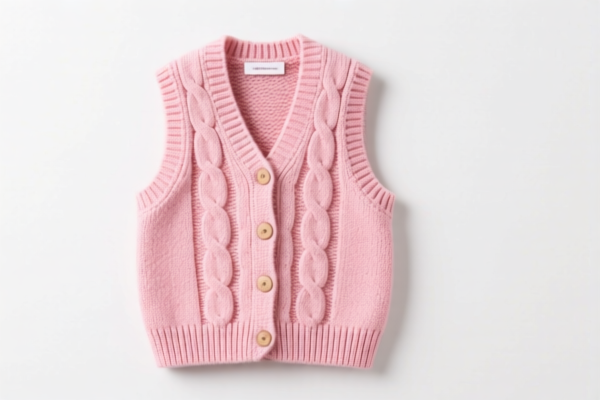
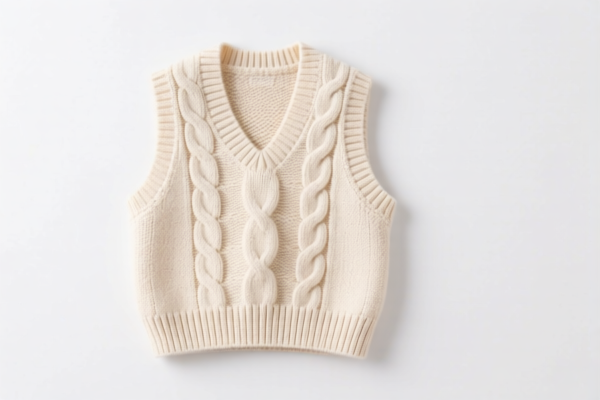
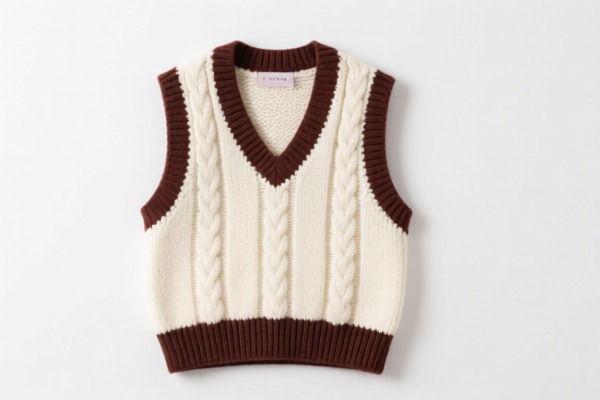
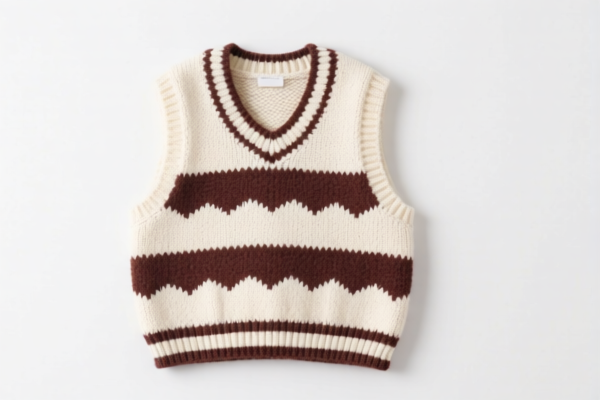
Children's Vest
CN → US| HS Code | Tariff Rate | Origin | Destination | Doc |
|---|---|---|---|---|
| 6117809570 | 32.1% | CN | US | Official Doc |
| 6114909070 | 15.6% | CN | US | Official Doc |
| 6114909010 | 15.6% | CN | US | Official Doc |
| 6117809540 | 32.1% | CN | US | Official Doc |
| 6211398060 | 20.3% | CN | US | Official Doc |
Product Images
AI Analysis
👕 Children's Vest (Waistcoat)
🌐 HS Code Reference & Clearance Guide | 2026 Latest Tariff Analysis | Professional Entry Strategy
📌 I. Product Definition & Classification: Do You Really Understand "Children's Vest"?
A Children's Vest is a sleeveless garment worn by children, typically made from knit or woven fabrics. In international trade, classification depends heavily on the fabric material (knitted vs. woven) and the specific fiber content (synthetic vs. other textile materials). Misclassification can lead to significant tariff differences due to Section 301 and Section 122 duties.
⚠️ Key Distinction Points:
- Knitted/Hooked vs. Woven:
- If Knitted/Hooked: Generally falls under Chapter 61.
- If Woven: Generally falls under Chapter 62.
- Material Matters:
- Synthetic Fibers (e.g., Polyester): Often subject to higher base duties.
- "Other" Textile Materials (e.g., Cotton, Wool, Blends): May have lower base duties but still face punitive tariffs.
- "Other" Category: If the specific material doesn't fit into standard headings, it falls under "Other" subheadings, which are critical for tariff calculation.
📦 II. HS Code Classification Details (2026 Latest Tariff Authority Comparison)
| HS Code | Product Description | Applicable Scenario | Tax Rate Breakdown |
|---|---|---|---|
6117.80.95.70 |
Children's Vest, Other Materials, Classified as Clothing Accessories | "Other" materials; potentially non-standard or accessory-type vests | 32.1% |
6114.90.90.70 |
Children's Vest, Other Textile Materials, Belongs to Catch-all Category | Knitted, "Other" materials (not synthetic); catch-all for unspecified knitted vests | 15.6% |
6114.90.90.10 |
Children's Vest, Knitted/Hooked, Other Textile Materials | Knitted, "Other" materials; specific subheading for knitted vests | 15.6% |
6117.80.95.40 |
Children's Vest, Other Materials, Inferred as Synthetic Fibers | Likely Synthetic (e.g., Polyester); high base duty applies | 32.1% |
6211.39.80.60 |
Children's Vest, Other Textile Materials, Belongs to Other Clothing | Woven, "Other" materials; classified under "Other" woven clothing | 20.3% |
🔍 Key Reminders:
- Knitted vs. Woven:
- Knitted vests usually fall under 6114.
- Woven vests usually fall under 6211.
- Synthetic vs. Other:
- Synthetic materials (e.g., polyester) often incur higher base duties (14.6%) compared to "Other" materials (2.8%–5.6%).
- "Other" Category:
- If the material is not explicitly listed as synthetic, cotton, or wool, it may be classified as "Other," which still incurs Section 122 duties.
💰 III. 2026 Latest Tariff Rate Details (Including Additional Duties & Policy Add-ons)
✅ Applicable Country: United States (US)
✅ Origin: China (CN)
✅ Effective Time: Current rates apply (including subsequent imports)
🎯 1. 6117.80.95.70 —— Children's Vest, Other Materials, Clothing Accessories
| Item | Content |
|---|---|
| Base Duty Rate | 14.6% (ad valorem) |
| Additional Duty (Section 301) | +7.5% |
| Section 122 Duty | +10% |
| Total Effective Rate | 32.1% |
| Tax Calculation | CIF Value × 32.1% |
| De Minimis Exemption | ❌ Not Applicable (High tariff rates typically exclude de minimis) |
| Legal Basis | USITC 6117.80.95.70 + Section 301 Footnotes + Section 122 |
📌 Explanation:
- Base Duty 14.6%: Standard duty for "Other" materials in Chapter 61 accessories.
- Section 301 (7.5%): Additional tariff on Chinese goods.
- Section 122 (10%): Additional duty on specific textile/apparel items.
- Total 32.1%: This is a high tariff category. Cost estimation must include all three components.
🎯 2. 6114.90.90.70 —— Children's Vest, Other Textile Materials, Catch-all Category
| Item | Content |
|---|---|
| Base Duty Rate | 5.6% (ad valorem) |
| Additional Duty (Section 301) | +0.0% |
| Section 122 Duty | +10% |
| Total Effective Rate | 15.6% |
| Tax Calculation | CIF Value × 15.6% |
| De Minimis Exemption | ❌ Not Applicable |
| Legal Basis | USITC 6114.90.90.70 + Section 122 |
📌 Note:
- Base Duty 5.6%: Lower base duty for "Other" knitted materials.
- Section 301 (0%): No additional Section 301 duty in this specific subheading (check latest footnotes for changes).
- Section 122 (10%): Still applies.
- Total 15.6%: Significantly cheaper than synthetic/synthetic-like categories. Strategic advantage!
🎯 3. 6114.90.90.10 —— Children's Vest, Knitted/Hooked, Other Textile Materials
| Item | Content |
|---|---|
| Base Duty Rate | 5.6% (ad valorem) |
| Additional Duty (Section 301) | +0.0% |
| Section 122 Duty | +10% |
| Total Effective Rate | 15.6% |
| Tax Calculation | CIF Value × 15.6% |
| De Minimis Exemption | ❌ Not Applicable |
| Legal Basis | USITC 6114.90.90.10 + Section 122 |
📌 Note:
- Identical tax structure to6114.90.90.70.
- Base Duty 5.6% + Section 122 10% = 15.6%.
- Recommendation: If the vest is knitted, this is a cost-effective classification.
🎯 4. 6117.80.95.40 —— Children's Vest, Other Materials, Inferred as Synthetic
| Item | Content |
|---|---|
| Base Duty Rate | 14.6% (ad valorem) |
| Additional Duty (Section 301) | +7.5% |
| Section 122 Duty | +10% |
| Total Effective Rate | 32.1% |
| Tax Calculation | CIF Value × 32.1% |
| De Minimis Exemption | ❌ Not Applicable |
| Legal Basis | USITC 6117.80.95.40 + Section 301 Footnotes + Section 122 |
📌 Note:
- Base Duty 14.6%: Higher base duty for synthetic-like materials.
- Section 301 (7.5%): Applies to synthetic/textile categories.
- Section 122 (10%): Applies.
- Total 32.1%: High tariff. Avoid if possible; consider material adjustment if compliant.
🎯 5. 6211.39.80.60 —— Children's Vest, Other Textile Materials, Other Clothing (Woven)
| Item | Content |
|---|---|
| Base Duty Rate | 2.8% (ad valorem) |
| Additional Duty (Section 301) | +7.5% |
| Section 122 Duty | +10% |
| Total Effective Rate | 20.3% |
| Tax Calculation | CIF Value × 20.3% |
| De Minimis Exemption | ❌ Not Applicable |
| Legal Basis | USITC 6211.39.80.60 + Section 301 Footnotes + Section 122 |
📌 Note:
- Base Duty 2.8%: Very low base duty for "Other" woven materials.
- Section 301 (7.5%): Applies.
- Section 122 (10%): Applies.
- Total 20.3%: Moderate tariff. Lower than knitted synthetic but higher than knitted "Other."
🛠️ IV. Clearance Practical Advice (Battle-Tested Pitfall Avoidance)
✅ 1. Preparation Checklist (All Required)
| Document | Mandatory | Description |
|---|---|---|
| ✅ Product Spec Sheet | ✔️ | Must specify: Knitted/Woven, Fiber Content (e.g., 100% Cotton, 100% Polyester), Age Group |
| ✅ Fabric Composition Label | ✔️ | Clear label showing % of each fiber (e.g., 80% Cotton, 20% Polyester) |
| ✅ Product Photos | ✔️ | Front, Back, Label, Tag showing "Knitted" or "Woven" |
| ✅ Commercial Invoice | ✔️ | Must explicitly state "Children's Vest, Knitted/Woven, Material: [Specify]" |
| ✅ Packing List | ✔️ | Match invoice details |
| ✅ Certificate of Origin | ✔️ | If applicable for preferential rates (rare for China-US) |
✅ 2. Declaration Tips (Key Mnemonics)
🔥 “Knit Woven Distinct, Material is King, Section 122 Always!”
| Scenario | Correct Declaration | Incorrect Practice |
|---|---|---|
| Knitted Vest (Cotton/Other) | 6114.90.90.10 or 6114.90.90.70 |
Misclassifying as Woven → 20.3% instead of 15.6% |
| Knitted Vest (Synthetic) | 6117.80.95.40 (or similar) |
Misclassifying as "Other" → Avoid 32.1% if possible, but accurate declaration is key |
| Woven Vest (Other Material) | 6211.39.80.60 |
Misclassifying as Knitted → Wrong Chapter |
| Accessory-type Vest | 6117.80.95.70 |
Misclassifying as Clothing → 32.1% vs. 15.6% |
✅ 3. Special Handling
| Scenario | Handling Advice |
|---|---|
| Blended Fabrics | Declare the dominant fiber or follow HTS rules for mixtures. If >50% Cotton, it’s likely "Other." |
| Unlined vs. Lined | Lining material does not change the primary classification unless it defines the garment’s nature. |
| Seasonal Variations | "Thermal" vests may still fall under the same HS Code if they are still vests. |
| Pre-shipment Inspection | Ensure fabric composition matches the declaration. Discrepancies lead to delays/fines. |
🌍 V. Global Market Clearance Comparison (2026 Latest)
| Country/Region | Recommended HS Code | Tariff | Certification | Notes |
|---|---|---|---|---|
| 🇺🇸 USA | 6114.90.90.10 (Knitted/Other) |
15.6% | CPSIA (Children’s Product) | Best Rate for Knitted |
| 🇺🇸 USA | 6117.80.95.40 (Synthetic) |
32.1% | CPSIA | Highest Rate |
| 🇨🇳 China | 6114.90.90.10 |
~5–10% | CCC (if applicable) | No Section 301/122 |
| 🇪🇺 EU | 6114.90.90 |
~12–16% | CE (if applicable) | No Section 122 |
| 🇬🇧 UK | 6114.90.90 |
~12–16% | UKCA | Post-Brexit rules apply |
📌 Conclusion:
- USA has the most complex tariff structure due to Section 301 and Section 122.
- Knitted vests made from "Other" materials (e.g., cotton) offer the lowest duty rate (15.6%) in the US.
- Synthetic vests are penalized with 32.1% due to higher base duties + Section 301.
📌 VI. Common Errors & Pitfall Guide (Lessons Learned)
❌ Error 1: Misidentifying Knitted as Woven
👉 Consequence: Wrong HS Code → Possible 15% penalty + delay.
❌ Error 2: Ignoring Section 122
👉 Consequence: Under-declaration of duties → Back taxes + interest.
❌ Error 3: Incorrect Fiber Content declaration
👉 Consequence: Customs reclassifies → Higher duty (e.g., 32.1% instead of 15.6%) + fine.
❌ Error 4: Not declaring Children’s Product status
👉 Consequence: Missing CPSIA compliance → Seizure or return.
✅ Correct Practice:
“Children’s Knitted Vest, 100% Cotton, Unlined, Size 6T, CPSIA Certified, HTS 6114.90.90.10”
🎯 VII. Conclusion: Precise Classification, Cost Optimization!
🎯 Remember the Mnemonic:
🔹 “Knit Woven Distinct, Material is King, Section 122 Always!”
🔹 “Cotton Knitted = 15.6%, Synthetic = 32.1%, Woven = 20.3%”
📌 Pro Tip:
If your children’s vest is made from cotton or other non-synthetic materials, classify under 6114.90.90.10 or 6114.90.90.70 for the lowest US tariff (15.6%).
If synthetic, expect 32.1%. Always ensure CPSIA compliance for children’s apparel.
📣 Immediate Action:
📞 Verify fabric composition with supplier.
📄 Prepare CPSIA test reports.
🚀 Apply for Pre-Ruling if unsure about classification.
💡 Accurate declaration saves up to 16.5% in tariffs!
✨ Professional Clearance Starts with Accurate Classification!
💼 Every percent counts in global trade.
Customer Reviews
About HS Code Classification
The Harmonized System (HS) is an internationally standardized nomenclature developed by the World Customs Organization (WCO) to classify traded products. Over 200 countries use the HS system as the basis for customs tariffs, trade statistics, and import/export regulations.
Each HS code follows a hierarchical structure:
- Chapter (2 digits) — Broad category of goods (e.g., Chapter 84: Machinery and Mechanical Appliances)
- Heading (4 digits) — More specific grouping within the chapter
- Subheading (6 digits) — Internationally standardized breakdown, used by all WCO member countries
- National subdivisions (8-10 digits) — Country-specific extensions for further classification, such as US HTSUS 10-digit codes
Correct HS code classification is essential for smooth customs clearance, accurate duty payment, and compliance with trade regulations. Misclassification can lead to customs delays, overpayment of duties, or penalties.
When importing from CN to US, the applicable tariff rates may include:
- Most-Favored-Nation (MFN) rate — The standard duty rate applied to WTO members
- General rate — Applied to countries without trade agreements
- Trade remedy duties — Additional tariffs such as Section 301 (anti-dumping), Section 232 (national security), or countervailing duties
The information provided on this page is for reference purposes only. For official classification, please consult with your local customs authority or a licensed customs broker.