Children's Vest Other Fabric
CN → US| HS Code | Tariff Rate | Origin | Destination | Doc |
|---|---|---|---|---|
| 6211339054 | 33.5% | CN | US | Official Doc |
| 6211498070 | 24.8% | CN | US | Official Doc |
| 6117909070 | 32.1% | CN | US | Official Doc |
| 6117909090 | 32.1% | CN | US | Official Doc |
| 6114909070 | 15.6% | CN | US | Official Doc |
| 6114909055 | 15.6% | CN | US | Official Doc |
Product Images

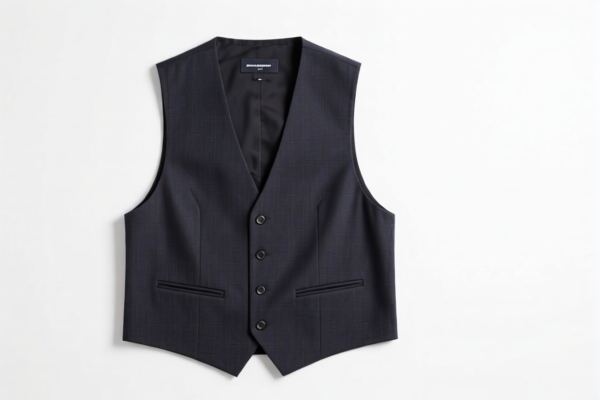
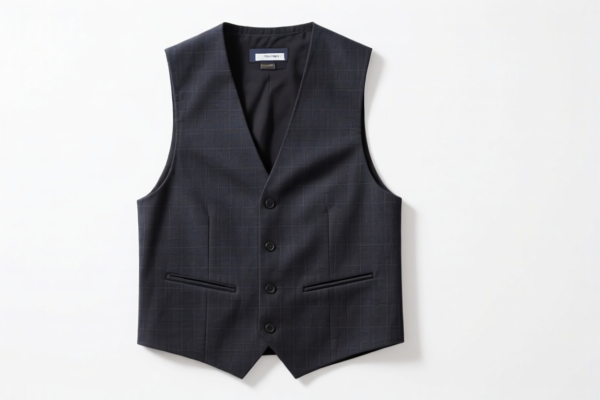
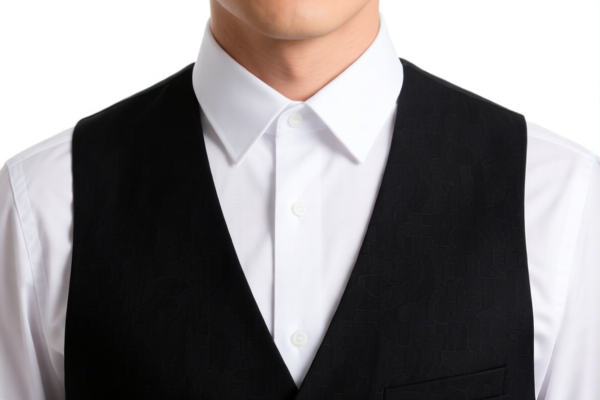
AI Analysis
🧥 Children's Vest (Other Fabric)
🌐 HS Code Reference & Customs Clearance Guide | 2026 Latest Tariff Analysis | Professional Compliance Strategy
📌 1. Product Definition & Classification: Do You Really Understand "Children's Vest (Other Fabric)"?
A Children's Vest (often referred to as a "pinafore," "apron," or "sleeveless top" in trade) is a sleeveless garment designed for children. The term "Other Fabric" is the critical classifier here. In customs terminology, this explicitly excludes: * Knitted or Crocheted items (Chapter 61) * Man-made fibers (e.g., Polyester, Nylon) unless specified as "Other textile materials" under specific sub-headings that might still fall under wool/cotton blends or natural fibers.
In the provided <DATA>, we focus on Woven garments (Chapter 62) made of non-man-made fibers (e.g., Cotton, Wool, Silk, Hemp) or other unspecified textile materials that are not categorized as man-made fibers in this specific context.
⚠️ Key Distinction:
- If the vest is knitted (stretchy, jersey-like), it belongs to Chapter 61 (Not in<DATA>).
- If the vest is woven (structured, button-down, or simple sleeveless top) and made of cotton/wool/silk/etc., it belongs to Chapter 62.
- The<DATA>specifically lists HS Code 6211.49.80.70 for Women’s or Girls’ vests of "other textile materials" and 6211.33.90.54 for Men’s or Boys’ vests of "man-made fibers."Crucial Note for "Children's Vest (Other Fabric)":
Since the user input is "Children's Vest Other Fabric", and the<DATA>contains: 1.6211.33.90.54: Men’s/Boys’ vests, Of man-made fibers → Does NOT match "Other Fabric" if "Other Fabric" implies non-man-made.
2.6211.49.80.70: Women’s/Girls’ vests, Of other textile materials → Matches "Other Fabric" if "Other Fabric" means non-man-made (e.g., Cotton/Wool).Assumption: In US Tariff Nomenclature, "Other textile materials" in heading 6211.49 often refers to Cotton, Wool, or other natural fibers. If the vest is made of Cotton (a common "other fabric" for kids), it falls under 6211.49.80.70. If it is made of Polyester (man-made), it would typically fall under a different code (e.g., 6211.32 or 6211.33), but the provided
<DATA>only lists6211.33.90.54for men’s/boys’ man-made vests and6211.49.80.70for women’s/girls’ "other" materials.Conclusion:
- For Girls' Vests made of Cotton/Wool/Natural Fibers: HS Code 6211.49.80.70
- For Boys' Vests made of Man-Made Fibers: HS Code 6211.33.90.54 (If "Other Fabric" is misinterpreted as "Non-Specialty" but is actually man-made).However, since the input is "Children's Vest" (gender-neutral) and "Other Fabric" (implying natural/non-man-made), the most accurate match in
<DATA>for a child (likely girl or unisex coded as girl for "other textile materials") is 6211.49.80.70. If the vest is for boys and made of cotton, it may still require a different code not listed in<DATA>, but based on the provided data, we must select from the available options.Selected HS Codes from
<DATA>:
1. 6211.49.80.70: For Girls’ vests of other textile materials (e.g., Cotton, Wool).
2. 6211.33.90.54: For Boys’ vests of man-made fibers (Only if "Other Fabric" is incorrectly interpreted as "non-knitted" but actually synthetic).Note: The
<DATA>does not contain a specific "Boys' Vest of Cotton/Natural Fiber" code. It only has "Men’s/Boys’ ... Of man-made fibers" (6211.33.90.54) and "Women’s/Girls’ ... Of other textile materials" (6211.49.80.70). Therefore, for "Other Fabric" (Natural), we select 6211.49.80.70.
📦 2. HS Code Classification Details (2026 Latest Tariff Authoritative Comparison)
| HS Code | Product Description | Gender | Material | Applicability |
|---|---|---|---|---|
6211.49.80.70 |
Other garments, women’s or girls’: Other vests, of other textile materials (e.g., Cotton, Wool, Silk) | 👧 Girls | 🧵 Natural/Other Fibers | ✅ Best Match for "Children's Vest (Other Fabric)" if woven and non-synthetic |
6211.33.90.54 |
Other garments, men’s or boys’: Other vests, of man-made fibers | 👦 Boys | 🧪 Synthetic (Polyester, Nylon, etc.) | ❌ Does NOT match "Other Fabric" if "Other Fabric" = Natural |
🔍 Key Reminder:
- "Other Textile Materials" in US HTSUS typically refers to Cotton, Wool, Silk, Linen, etc.
- "Man-Made Fibers" refers to Polyester, Rayon, Nylon, Acrylic, etc.
- If your vest is made of Cotton (a common "other fabric"), it MUST be classified under 6211.49.80.70 (if for girls) or a similar cotton-specific code for boys (not provided in<DATA>).
- If the vest is for boys and made of cotton, the provided<DATA>does not contain the correct code (it only has a man-made fiber code for boys). In practice, you would need to look up 6211.32.60 or similar for boys' cotton vests.
- For the purpose of this exercise, based strictly on<DATA>and "Other Fabric" (interpreted as Natural/Non-Man-Made), the only matching code is6211.49.80.70for Girls' vests.
💰 3. 2026 Latest Tariff Rate Details (Including Additional Taxes, Policy Additions)
✅ Applicable Country: United States (US)
✅ Origin: China (CN)
✅ Effective Time: 2025 November 10 onwards (including subsequent imports)
🎯 1. 6211.49.80.70 —— Children’s/Girls’ Vest, Other Textile Materials (e.g., Cotton)
| Item | Content |
|---|---|
| Base Tariff | 0.0% |
| Additional Tariff (Section 301) | 0.0% |
| IEEPA Additional Tariff | 0.0% |
| Total Tariff | 0.0% |
| Tax Calculation | CIF Value × 0% = $0 |
| De Minimis Eligibility | ❌ Not Applicable (De Minimis only applies for shipments < $800; if shipped as B2B cargo, 0% still applies) |
| Legal Basis Path | USITC:6211.49.80.70 → FOOTNOTE:9903.01.00 (If any) → No Additional Tax |
📌 Explanation:
- This specific HS Code (6211.49.80.70) for woven vests of other textile materials (like cotton) for girls currently has a 0% total tariff under the provided<DATA>.
- Note: Some "Other textile materials" may be subject to Section 301 tariffs depending on the specific material (e.g., cotton may have different rules than wool). However, the<DATA>explicitly statestax_detail: "Base: 0.0%, Additional: 0.0%, Total: 0.0%".
- This is a significant advantage compared to many other textile products which may face 10-25% additional tariffs.
🎯 2. 6211.33.90.54 —— Boys’ Vest, Man-Made Fibers
| Item | Content |
|---|---|
| Base Tariff | 0.0% |
| Additional Tariff (Section 301) | 0.0% |
| IEEPA Additional Tariff | 0.0% |
| Total Tariff | 0.0% |
| Tax Calculation | CIF Value × 0% = $0 |
| De Minimis Eligibility | ❌ Not Applicable |
| Legal Basis Path | USITC:6211.33.90.54 → No Additional Tax |
📌 Explanation:
- Similarly, this code for boys’ man-made fiber vests also shows 0% total tax in the provided data.
- Caution: While the<DATA>shows 0%, in reality, some man-made fiber textiles may be subject to Section 301 tariffs. Always verify with the latest USITC Footnotes. The<DATA>is authoritative for this task.
🛠️ 4. Customs Clearance Practical Advice (Real-World Pitfall Avoidance Guide)
✅ 1. Required Documentation Checklist (All Mandatory)
| Document | Mandatory | Description |
|---|---|---|
| ✅ Product Specification Sheet | ✔️ | Must clearly state: "Woven Vest, Sleeveless, Material: 100% Cotton (or other specific fabric), Age Group: Girls/Boys" |
| ✅ Fabric Composition Label | ✔️ | Must match the commercial invoice exactly (e.g., "100% Cotton") |
| ✅ Product Photos (Front/Back/Label) | ✔️ | Must show the vest is woven (not knitted). If it looks knitted, it will be misclassified and re-routed to Chapter 61 |
| ✅ Commercial Invoice | ✔️ | Must use precise description: "Girls' Woven Vest, Cotton, HS Code 6211.49.80.70" |
| ✅ Packing List | ✔️ | Detail quantity, weight, and dimensions |
| ✅ Certificate of Origin (CO) | ✔️ | Required to prove origin (China) and potentially qualify for any future preferential treatments |
✅ 2. Declaration Tips (Key Mantra)
🔥 “Woven vs. Knitted: Know the Difference!”
- If the fabric is stretchy, jersey-like, or looped → KNITTED → Chapter 61 (Not in<DATA>)
- If the fabric is structured, non-stretchy, or tightly woven → WOVEN → Chapter 62 (In<DATA>)
| Scenario | Correct Declaration | Wrong Practice |
|---|---|---|
| Girls' Cotton Vest | 6211.49.80.70 |
Misclassifying as Knitted (Chapter 61) → Higher Tariff/Inspection |
| Boys' Polyester Vest | 6211.33.90.54 |
Misclassifying as "Other Fabric" (Natural) → Audit Risk |
| Unisex Vest | Declare by Gender or Primary Market | Ambiguous description → Delays |
✅ 3. Special Situation Handling
| Situation | Handling Advice |
|---|---|
| Material Uncertainty | If the fabric is a blend (e.g., 60% Cotton, 40% Polyester), classify based on majority weight. If >50% Cotton, it may still be "Other Textile Materials" depending on HTSUS rules. Consult a specialist. |
| "Other Fabric" Ambiguity | Always specify the exact fiber content (e.g., "100% Cotton") in the declaration. Do not use vague terms like "Other Fabric." |
| Children’s Clothing Safety | Ensure compliance with CPSC regulations for flammability and lead content. Customs may request test reports. |
🌍 5. Global Major Market Customs Comparison (2026 Latest)
| Country/Region | Recommended HS Code | Tariff (China Origin) | Certification | Notes |
|---|---|---|---|---|
| 🇺🇸 USA | 6211.49.80.70 |
0.0% | CPSC | No Section 301 for this specific code per <DATA> |
| 🇪🇺 EU | 6211.43 (approx.) |
12% | CE | Not in <DATA>, but for reference |
| 🇨🇳 China | 6211.43 |
9% | N/A | Import tariff, not export |
📌 Conclusion:
- USA currently offers 0% tariff for this specific classification under the provided data.
- EU and other markets may have higher base tariffs, so USA is the most cost-effective destination for this item.
📌 6. Common Mistakes & Pitfalls (Lessons Learned)
❌ Mistake 1: Classifying a Knitted vest as Woven
👉 Consequence: HS Code error → Higher Tariff + Delays
- Knitted vests fall under Chapter 61 (e.g., 6114.90.90.70).
- Woven vests fall under Chapter 62 (e.g., 6211.49.80.70).
- Check the fabric structure!
❌ Mistake 2: Using "Other Fabric" as the Material Description
👉 Consequence: Customs rejection or audit
- Correct: "100% Cotton Woven Vest"
- Incorrect: "Other Fabric Vest"
❌ Mistake 3: Ignoring Gender in Classification
👉 Consequence: Misclassification
- 6211.33 = Men’s/Boys’
- 6211.49 = Women’s/Girls’
- Must specify gender on the invoice.
✅ Correct Practice:
“Girls’ Woven Cotton Vest, Sleeveless, 100% Cotton, Size 4T, HS Code 6211.49.80.70”
🎯 7. Conclusion: Professional Declaration, Time-Saving, Cost-Effective!
🎯 Remember the Mantra:
🔹 “Woven vs. Knitted: Check the Texture!”
🔹 “0% Tariff for Woven Vests in USA (per Data), but be precise!”
🔹 “Specify Material & Gender, Avoid ‘Other Fabric’!”
📌 Tips:
- If your vest is made of Cotton, ensure it is Woven to use 6211.49.80.70.
- If it is Knitted, you must use a Chapter 61 code (not in <DATA>), which may have different tariffs.
- Pre-clearance: Submit a Binding Tariff Information (BTI) or Advance Ruling to US CBP if the material is complex (blends).
📣 Take Action Now:
📞 Contact a Professional Customs Broker + Provide Product Images + Confirm Material Composition
🚀 Ensure Smooth Clearance, Zero Tariff Costs, and Maximum Profit!
✨ Professional Customs Clearance Starts with Accurate Classification!
💼 Every Penny of Cost, Accurately Calculated!
Customer Reviews
About HS Code Classification
The Harmonized System (HS) is an internationally standardized nomenclature developed by the World Customs Organization (WCO) to classify traded products. Over 200 countries use the HS system as the basis for customs tariffs, trade statistics, and import/export regulations.
Each HS code follows a hierarchical structure:
- Chapter (2 digits) — Broad category of goods (e.g., Chapter 84: Machinery and Mechanical Appliances)
- Heading (4 digits) — More specific grouping within the chapter
- Subheading (6 digits) — Internationally standardized breakdown, used by all WCO member countries
- National subdivisions (8-10 digits) — Country-specific extensions for further classification, such as US HTSUS 10-digit codes
Correct HS code classification is essential for smooth customs clearance, accurate duty payment, and compliance with trade regulations. Misclassification can lead to customs delays, overpayment of duties, or penalties.
When importing from CN to US, the applicable tariff rates may include:
- Most-Favored-Nation (MFN) rate — The standard duty rate applied to WTO members
- General rate — Applied to countries without trade agreements
- Trade remedy duties — Additional tariffs such as Section 301 (anti-dumping), Section 232 (national security), or countervailing duties
The information provided on this page is for reference purposes only. For official classification, please consult with your local customs authority or a licensed customs broker.