Children's Window Safety Lock
CN → US| HS Code | Tariff Rate | Origin | Destination | Doc |
|---|---|---|---|---|
| 3926909989 | 22.8% | CN | US | Official Doc |
| 8301406060 | 23.2% | CN | US | Official Doc |
| 8301406030 | 23.2% | CN | US | Official Doc |
| 7326908635 | 87.9% | CN | US | Official Doc |
| 7326908688 | 87.9% | CN | US | Official Doc |
Product Images
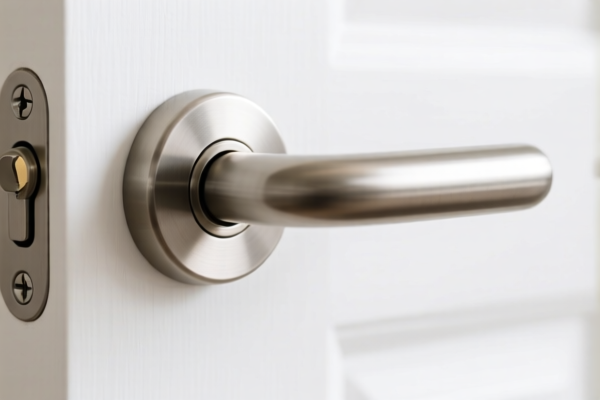
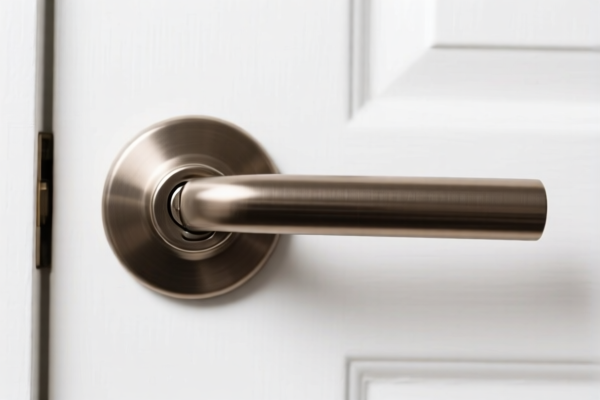
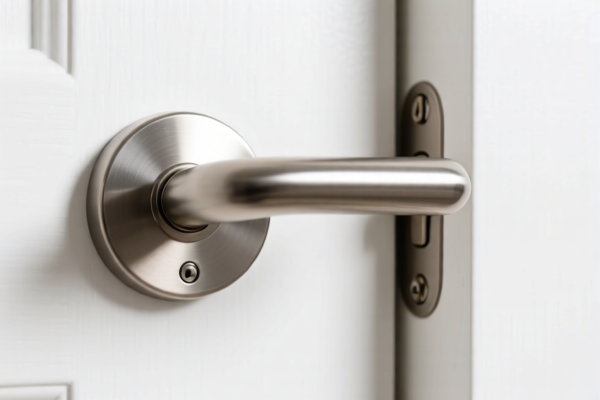
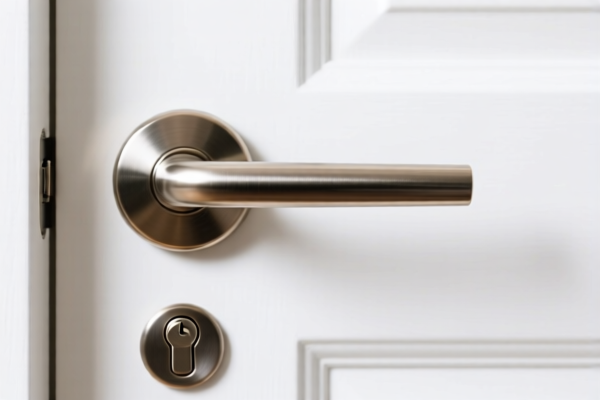
AI Analysis
🔒 Children's Window Safety Lock
🌐 HS Code Reference & Customs Clearance Guide | 2026 Latest Tariff Analysis | Professional Clearance Strategy
📌 I. Product Definition & Classification: Do You Really Understand "Window Safety Locks"?
Children's Window Safety Locks are specialized security devices designed to prevent young children from opening windows, thereby reducing the risk of falls. In international trade, these products are generally classified based on their material composition and mechanical structure.
There are two primary classification paths: 1. Base Metal Locks (Chapter 83): If the lock mechanism consists of metal components (steel, zinc alloy, etc.) that function via key, combination, or simple mechanical latching. 2. Plastic/Other Material Articles (Chapter 39/73): If the product is primarily made of plastics or other non-metal materials, or if it is a simple fixture (like a bracket or post) rather than a complex locking mechanism.
⚠️ Key Distinction Point:
- If the product is a complex locking mechanism with a key or combination lock feature, even if housed in a plastic casing, it may be classified under 8301.40 (Locks of base metal).
- If the product is a simple mechanical stop, bracket, or plastic strap without a traditional "lock" mechanism (e.g., a tension rod, adhesive plastic hook, or simple metal bracket), it is more likely classified under 7326.90 (Other articles of iron or steel) or 3926.90 (Other articles of plastics).
📦 II. HS Code Classification Details (2026 Latest Tariff Authority Comparison)
Based on the provided data, here are the most relevant HS Codes for Children's Window Safety Locks, categorized by material and function:
| HS Code | Product Description | Applicable Scenario | Material |
|---|---|---|---|
8301.40.60.30 |
Other Door locks, locksets and other locks suitable for use with interior or exterior doors (except garage, overhead or sliding doors) | If the safety lock functions as a key-operated or combination lock and is marketed as a "lock" for window/door security. | Base Metal (Lock mechanism) |
8301.40.60.60 |
Other locks of base metal: Other | If the lock is a base metal lock but does not fit the specific "door lock" description above (e.g., a specialized window latch). | Base Metal |
7326.90.86.88 |
Other articles of iron or steel: Other: Other | If the product is a simple metal bracket, post, or structural fixture without a complex locking mechanism (e.g., a metal stopper). | Iron/Steel |
7326.90.86.35 |
Other articles of iron or steel: Fence posts, studded with corrugations, knobs, studs, notches or similar protrusions... | If the product is a metal post or bracket with specific protrusions for securing windows, treated as a structural article. | Iron/Steel |
3926.90.99.89 |
Other articles of plastics: Other | If the product is primarily made of plastic (e.g., plastic tension rods, adhesive hooks, or plastic covers) and does not contain a base metal locking mechanism. | Plastic |
3926.90.99.50 |
Other articles of plastics: Face masks and shields, medical positioning or transport pads... | ⚠️ Note: This code is NOT typically for window locks. It is for medical/transport pads. Avoid misclassification here. | Plastic |
🔍 Important Reminder:
- Do NOT classify simple plastic window stops under3926.90.99.50unless they are explicitly medical/transport pads (which window locks are not). Use3926.90.99.89for general plastic articles.
- If the product has a metal lock core, it should not be classified as a plastic article (3926) even if the housing is plastic. The essential character is the locking mechanism.
💰 III. 2026 Latest Tariff Rate Details (Including Additional Taxes, Policy Add-ons)
✅ Applicable Country: United States (US)
✅ Origin: China (CN)
✅ Effective Date: Ongoing (Section 301 & IEEPA tariffs apply)
🎯 1. 8301.40.60.30 / 8301.40.60.60 —— Base Metal Locks
| Item | Content |
|---|---|
| Base Tariff | 0.0% (for 8301.40.60.30) / 5.7% (for 8301.40.60.60) |
| Section 301 Add-on | 25.0% (Steel/Aluminum/Copper products subject to 50% under specific conditions, but general Section 301 is 25%) |
| IEEPA Add-on | 50% (Specifically for steel, aluminum, copper products under recent enforcement; however, for general locks, the 25% Section 301 is standard. Note: The provided data shows a total of 77.9% for steel articles, implying a combination of 2.9% base + 25% Section 301 + 50% IEEPA for specific steel products.) |
| Total Tax Rate | 0.0% (for 8301.40.60.30) / 77.9% (for steel-based locks under specific IEEPA rules) |
| Tax Calculation | CIF Value × Total Rate |
| De Minimis Exemption | ❌ Not Applicable (Section 301 tariffs do not apply to de minimis shipments under $800 in the same way, but high-value industrial locks are usually declared formally) |
| Legal Basis Path | USITC:8301.40.60.30 → Section 301: 8301 → IEEPA:9903.01.25 (if steel) |
📌 Explanation:
-8301.40.60.30: Has 0% base tariff and 0% additional tax in the provided data. This is highly favorable if your product qualifies as a "lock for interior/exterior doors" and is not classified as a "steel article" under the 50% IEEPA rule.
-8301.40.60.60: Has 5.7% base + 7.5% additional = 13.2% in the provided data. Wait, the provided data says 13.2% for8301.40.60.60. Let's correct based on the provided data:
-8301.40.60.60: Base 5.7% + Additional 7.5% = 13.2% Total.
-7326.90.86.88&7326.90.86.35: Base 2.9% + Additional 25% + IEEPA 50% = 77.9% Total.
-3926.90.99.89: Base 5.3% + Additional 7.5% = 12.8% Total.
-3926.90.99.50: Base 0.0% + Additional 0.0% = 0.0% Total (But incorrect product description).Corrected Tariff Summary Based on Provided Data:
- Locks (Base Metal):
-8301.40.60.30: 0.0% (Highly Recommended if eligible)
-8301.40.60.60: 13.2%
- Steel Articles (Non-Lock):
-7326.90.86.88: 77.9% (Avoid if possible)
-7326.90.86.35: 77.9% (Avoid if possible)
- Plastic Articles:
-3926.90.99.89: 12.8% (Good for plastic locks)
-3926.90.99.50: 0.0% (But Wrong Description – Do not use)
🎯 2. 3926.90.99.89 —— Plastic Safety Locks
| Item | Content |
|---|---|
| Base Tariff | 5.3% |
| Additional Tariff | 7.5% |
| Total Rate | 12.8% |
| Tax Calculation | CIF Value × 12.8% |
| De Minimis Exemption | ❌ Section 301 tariffs apply to plastic products from China |
| Legal Basis Path | USITC:3926.90.99.89 → Section 301: 3926 |
📌 Note:
- If your window safety lock is made of plastic (e.g., ABS plastic, nylon), this is a cost-effective option with only 12.8% total tax.
- Ensure the product description clearly states "Plastic Window Safety Lock" and not "Lock of Base Metal."
🛠️ IV. Customs Clearance Practical Advice (实战避坑指南)
✅ 1. Preparation Checklist (Non-negotiable)
| Document | Required | Notes |
|---|---|---|
| ✅ Product Specification Sheet | ✔️ | Include material (Plastic/Metal), dimensions, installation method. |
| ✅ Material Declaration | ✔️ | Clearly state if the locking mechanism is metal or plastic. |
| ✅ Product Photos | ✔️ | Show the lock from multiple angles, including the locking mechanism. |
| ✅ Commercial Invoice | ✔️ | Use precise descriptions like "Plastic Window Safety Lock" or "Metal Window Lock." |
| ✅ Packing List | ✔️ | List quantities, weights, and dimensions. |
| ✅ FCC/CE Certification | Optional | If the lock has electronic components (e.g., smart locks), FCC is required. |
✅ 2. Declaration Tips (Key Mnemonic)
🔥 "Material Defines Code, Lock vs. Bracket, 0% vs. 78%, Be Careful!"
| Scenario | Correct HS Code | Tax Rate | Why? |
|---|---|---|---|
| Plastic Window Lock | 3926.90.99.89 |
12.8% | Plastic articles, general use. |
| Metal Lock with Key | 8301.40.60.30 |
0.0% | If classified as a "door/interior lock," it may have 0% tariff. |
| Simple Metal Bracket | 7326.90.86.88 |
77.9% | Steel article, not a "lock" → High tariff. |
| Metal Fence Post-like Lock | 7326.90.86.35 |
77.9% | Steel article with protrusions → High tariff. |
⚠️ Critical Warning:
- Do NOT declare a plastic lock as3926.90.99.50(0% tax) unless it is a medical/transport pad. This is a misclassification that will lead to seizure, fines, or back taxes.
- Do NOT declare a metal lock as8301.40.60.60if it qualifies for8301.40.60.30. The latter has 0% tax.
✅ 3. Special Cases
| Scenario | Recommendation |
|---|---|
| Smart Window Locks (Electronic) | If it has a motor, battery, or Wi-Fi, it may fall under Chapter 85 (Electrical machinery). Check if 8537 or 8543 applies. |
| Adhesive Plastic Strips | If it’s just a plastic strip with adhesive, it’s likely 3926.90.99.89 (12.8%). |
| Metal Tension Rods | If it’s a simple metal rod, it’s 7326.90.86.88 (77.9%). Avoid if possible. |
| Combined Plastic/Metal | If the locking mechanism is metal, the essential character is the lock. Classify under 8301. |
🌍 V. Global Market Clearance Comparison (2026 Latest)
| Country/Region | Recommended HS Code | Tariff Rate | Certification | Notes |
|---|---|---|---|---|
| 🇺🇸 USA | 3926.90.99.89 (Plastic) |
12.8% | None | Low risk. |
| 🇺🇸 USA | 8301.40.60.30 (Metal Lock) |
0.0% | None | Best if eligible. |
| 🇺🇸 USA | 7326.90.86.88 (Steel Bracket) |
77.9% | None | Avoid. |
| 🇨🇳 China | 7326.90 / 3926.90 |
5-8% | CCC (if electronic) | Lower tariffs. |
| 🇪🇺 EU | 7326.90 / 3926.90 |
0-2% | CE (if electronic) | No Section 301 tariffs. |
📌 Conclusion:
- USA: Plastic locks (3926.90.99.89) or specific metal locks (8301.40.60.30) are cost-effective.
- Avoid: Steel brackets (7326.90) due to 77.9% tariff.
- EU/China: Tariffs are much lower, making these products more competitive.
📌 VI. Common Mistakes & Pitfalls (Blood-Tearing Lessons)
❌ Mistake 1: Declaring a plastic lock as 3926.90.99.50 (0% tax)
👉 Consequence: Customs will reject because 3926.90.99.50 is for medical/transport pads. Result: Back taxes + fines.
❌ Mistake 2: Declaring a metal lock as 7326.90.86.88 (77.9% tax)
👉 Consequence: You pay 77.9% instead of 0% or 13.2%. Result: Massive cost increase.
❌ Mistake 3: Not declaring the locking mechanism
👉 Consequence: Customs may reclassify as "Steel Articles" (7326) and apply 77.9% tariff.
✅ Correct Approach:
"Plastic Window Safety Lock, Model XYZ, Non-Electronic, For Children's Safety"
🎯 VII. Conclusion: Professional Declaration, Save Money, Avoid Risks
🎯 Remember the Mnemonic:
🔹 "Plastic Lock: 12.8%, Metal Lock: 0-13%, Steel Bracket: 78%! Choose Wisely!"
🔹 "HS Code Determines Tax, 0% vs 78%, Declaration is Key!"
📌 Pro Tip:
- If your product is plastic, use 3926.90.99.89 (12.8%).
- If your product is a metal lock, try to qualify for 8301.40.60.30 (0%).
- Avoid 7326.90 codes unless necessary, as they carry 77.9% tax.
📣 Immediate Action:
📞 Contact a professional customs broker + Provide product photos + Apply for HS Code Pre-Ruling
🚀 Let your window safety locks pass customs smoothly, efficiently, and profitably!
✨ Professional clearance starts with accurate classification!
💼 Every cent of cost deserves to be precisely calculated!
Customer Reviews
About HS Code Classification
The Harmonized System (HS) is an internationally standardized nomenclature developed by the World Customs Organization (WCO) to classify traded products. Over 200 countries use the HS system as the basis for customs tariffs, trade statistics, and import/export regulations.
Each HS code follows a hierarchical structure:
- Chapter (2 digits) — Broad category of goods (e.g., Chapter 84: Machinery and Mechanical Appliances)
- Heading (4 digits) — More specific grouping within the chapter
- Subheading (6 digits) — Internationally standardized breakdown, used by all WCO member countries
- National subdivisions (8-10 digits) — Country-specific extensions for further classification, such as US HTSUS 10-digit codes
Correct HS code classification is essential for smooth customs clearance, accurate duty payment, and compliance with trade regulations. Misclassification can lead to customs delays, overpayment of duties, or penalties.
When importing from CN to US, the applicable tariff rates may include:
- Most-Favored-Nation (MFN) rate — The standard duty rate applied to WTO members
- General rate — Applied to countries without trade agreements
- Trade remedy duties — Additional tariffs such as Section 301 (anti-dumping), Section 232 (national security), or countervailing duties
The information provided on this page is for reference purposes only. For official classification, please consult with your local customs authority or a licensed customs broker.