Children's Wooden Xylophone
CN → US| HS Code | Tariff Rate | Origin | Destination | Doc |
|---|---|---|---|---|
| 9202904000 | 26.2% | CN | US | Official Doc |
| 9503000073 | 10.0% | CN | US | Official Doc |
| 9503000071 | 10.0% | CN | US | Official Doc |
| 9202906000 | 14.6% | CN | US | Official Doc |
| 9209998000 | 22.8% | CN | US | Official Doc |
Product Images
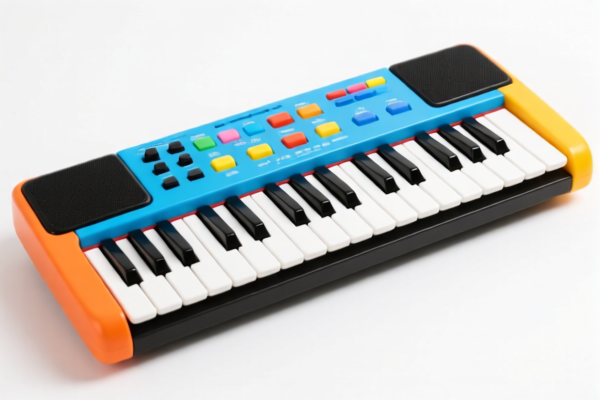
AI Analysis
🎵 Children's Wooden Xylophone: The Ultimate HS Code Classification & Tax Strategy Guide (2026 Update)
🌐 HS Code Reference & Customs Clearance Guide | 2026 Latest Tariff Analysis | Professional Customs Strategy 📌 One Product, Four Fates: Why Classification Matters for Wooden Xylophones
A "Children's Wooden Xylophone" is a deceptively simple item that sits at the crossroads of Musical Instruments and Toys. This ambiguity creates massive tax discrepancies—ranging from 10% to 26.2%.
In international trade, the distinction lies in two critical factors: 1. Primary Purpose: Is it for musical education/performance (Instrument) or for play/entertainment (Toy)? 2. Structural Complexity: Is it a complete instrument, a toy version, or just a part/accessory?
⚠️ Key Distinction:
- If marketed specifically for children’s play, educational kits, or simple rhythm games → Likely Toy (HS 9503).
- If marketed as a musical instrument for learning notes, pitches, or stage use → Likely Instrument (HS 9202).
- Material Alone is Not Decisive: Wood is common to both. Do not rely solely on "Wooden" to determine the code.
📦 II. HS Code Classification Details (2026 Authoritative Reference)
Based on the provided data, here are the four possible classifications for a Children's Wooden Xylophone, ranked by tax burden.
| HS Code | Product Description | Classification Logic | Total Tax Rate |
|---|---|---|---|
9503.00.00.73 |
Other Toys / Wooden Xylophone as Toy | Primary use is children's entertainment. Function is play, not serious musical performance. | 10.0% |
9503.00.00.71 |
Toys / Models: Wooden Xylophone | Classified as a Toy/Model. Material (wood) aligns with traditional toy construction. | 10.0% |
9202.90.60.00 |
String Instruments: Wooden Xylophone | Classified as a String Instrument. Wood material fits common inference for string-based classification (Note: Xylophones are technically percussion, but some customs jurisdictions may misclassify or group broadly if not precise). | 14.6% |
9202.90.40.00 |
String Instruments: General | Classified as String Instruments/General Instruments. No material conflict (wood), but higher tariff band for general instruments. | 26.2% |
9209.99.80.00 |
Parts & Accessories of Instruments | Classified as Parts/Accessories. Only applicable if the xylophone is incomplete, disassembled, or sold as a kit of parts without mallets/frame. | 22.8% |
🔍 Critical Insight:
- Lowest Tax (10%): Achieved only if classified as a Toy (9503). This is the optimal strategy for standard children's wooden xylophones intended for play.
- Highest Tax (26.2%): Occurs if classified as a general Instrument (9202.90.40.00) with additional trade measures.
- Risk Zone: Misclassifying a toy as an instrument can lead to retroactive tax penalties and delays.
💰 III. 2026 Detailed Tariff Breakdown (Including Surcharges & Policy Add-ons)
✅ Applicable Market: Implied US/China Trade Context (based on "122 Section" and specific rates)
✅ Origin: China (CN)
✅ Effective Date: Current regulations (2025-2026)
🎯 1. The "Toy" Advantage: 9503.00.00.71 & 9503.00.00.73
Recommended for 90% of children's wooden xylophones.
| Item | Content |
|---|---|
| Base Tariff | 0.0% (ad valorem) |
| Section 301 Surcharge | 0.0% |
| Section 122 Surcharge | +10% |
| Total Tax Rate | 10.0% |
| Calculation | CIF Value × 10% |
| De Minimis Exemption | ✅ Possible (if < $800 for US shipments via informal entry, subject to current law changes) |
| Legal Basis | 9503.00.00.71/73 → 122: 10% |
📌 Explanation:
- Toys generally enjoy lower base tariffs.
- Section 122 (a specific trade remedy) applies a flat 10% surcharge.
- Crucially, these codes are exempt from Section 301 (7.5% or 25%) and standard higher base duties, resulting in the lowest total cost.
🎯 2. The "Instrument" Penalty: 9202.90.60.00
Higher risk, higher cost.
| Item | Content |
|---|---|
| Base Tariff | 4.6% |
| Section 301 Surcharge | 0.0% |
| Section 122 Surcharge | +10% |
| Total Tax Rate | 14.6% |
| Calculation | CIF Value × 14.6% |
| De Minimis Exemption | ❌ No (Usually denied for instruments) |
| Legal Basis | 9202.90.60.00 → 122: 10% |
📌 Explanation:
- Even without Section 301, the base tariff (4.6%) makes this 4.6% more expensive than the toy classification.
- Only consider this if the product is a professional-grade instrument for older children/students, marketed strictly as a musical tool.
🎯 3. The "General Instrument" Heavyweight: 9202.90.40.00
Avoid this classification for children's toys.
| Item | Content |
|---|---|
| Base Tariff | 8.7% |
| Section 301 Surcharge | +7.5% |
| Section 122 Surcharge | +10% |
| Total Tax Rate | 26.2% |
| Calculation | CIF Value × 26.2% |
| De Minimis Exemption | ❌ No |
| Legal Basis | 9202.90.40.00 → 301: 7.5% → 122: 10% |
📌 Explanation:
- This is the worst-case scenario.
- It incurs all three layers of taxation: Base, Section 301, and Section 122.
- Result: Nearly triple the tax of the toy classification.
🎯 4. The "Parts" Trap: 9209.99.80.00
Only for disassembled/kit forms.
| Item | Content |
|---|---|
| Base Tariff | 5.3% |
| Section 301 Surcharge | +7.5% |
| Section 122 Surcharge | +10% |
| Total Tax Rate | 22.8% |
| Calculation | CIF Value × 22.8% |
| De Minimis Exemption | ❌ No |
| Legal Basis | 9209.99.80.00 → 301: 7.5% → 122: 10% |
📌 Explanation:
- Do not use this code for a complete xylophone.
- Use only if importing replacement mallets, strings, or wooden bars separately.
- Misdeclaring a complete product as "parts" will result in customs seizure and fines.
🛠️ IV. Customs Clearance Practical Advice (Real-World Pitfall Guide)
✅ 1. Documentation Checklist (Non-Negotiable)
| Document | Required? | Explanation |
|---|---|---|
| ✅ Product Description | ✔️ | Must clearly state: "Wooden Xylophone Toy for Children, Ages 3+" or "Musical Instrument, Wood, Non-Electronic". |
| ✅ Product Photos | ✔️ | Show the complete unit, including mallets. If mallets are separate, show them clearly. |
| ✅ Usage Statement | ✔️ | "Intended for children's play and educational rhythm exercises." (Supports Toy classification). |
| ✅ Material Declaration | ✔️ | "100% Natural Wood, Non-Toxic Paint." |
| ✅ HS Code Justification | ✔️ | Reference Chapter 95 (Toys) over Chapter 92 (Instruments) due to primary design for children's play. |
✅ 2. Classification Strategy (Key Mantra)
🔥 "Toy First, Instrument Last. Wood Doesn't Define; Purpose Does!"
| Scenario | Recommended HS Code | Tax Rate | Why? |
|---|---|---|---|
| Standard Children's Xylophone (Plastic/Wood, colorful, with mallets, sold in toy stores) | 9503.00.00.71 or 9503.00.00.73 |
10.0% | Primary purpose is play. Lowest tax. |
| Educational Kit (Boxed, includes sheet music, simple rhythms) | 9503.00.00.71 or 9503.00.00.73 |
10.0% | Still considered a toy/educational toy. |
| Professional Student Model (High-quality wood, precise tuning, sold in music shops) | 9202.90.60.00 |
14.6% | Marketed as an instrument. Higher base duty. |
| Disassembled Kit (Bare wood bars, no frame/mallets) | 9209.99.80.00 |
22.8% | Classified as parts. High tax. Avoid if possible. |
| General Musical Instrument (Any other wooden instrument) | 9202.90.40.00 |
26.2% | Avoid. Highest tax due to combined surcharges. |
✅ 3. Special Case Handling
| Situation | Handling Advice |
|---|---|
| OEM Custom Toys | Provide design drawings showing child-friendly features (rounded edges, bright colors) to prove Toy status. |
| Mixed Packages (Toy + Music Book) | Declare as Toy. The book is an accessory. Do not split. |
| Electronic Xylophone | Not covered in this data. Would fall under 9208 or 8517 with different tax rules. Ensure your product is acoustic/wooden only. |
| Age Specification | Explicitly state "For Children 3 Years+" on the invoice. This strongly supports Chapter 95 (Toys). |
🌍 V. Global Market Comparison (2026 Snapshot)
| Market | Recommended HS Code | Estimated Tax | Key Requirement |
|---|---|---|---|
| 🇺🇸 USA | 9503.00.00.71 |
10.0% | CPC (Children's Product Certificate) required. |
| 🇨🇳 China | 9503.00.00.71 |
0.0% (Import Duty) | CCC Certification may be required for toys. |
| 🇪🇺 EU | 9503.00.30 |
0.0% (if CE compliant) | CE Marking + EN71 Safety Standard. |
| 🇯🇵 Japan | 9503.00.00 |
0.0% | JITI Certificate (Toys) may be requested. |
📌 Conclusion:
- The US is the most tax-sensitive market due to Section 122 and Section 301.
- Classifying as a Toy (10%) vs. Instrument (26.2%) results in a 16.2% difference in cost. On a $10,000 shipment, that’s a $1,620 saving!
📌 VI. Common Mistakes & Pitfalls (Lessons Learned)
❌ Mistake 1: Calling it "Musical Instrument" on the Commercial Invoice when it's a toy.
👉 Consequence: Customs may reclassify to 9202.90.40.00 → 26.2% tax + fines.
❌ Mistake 2: Importing as "Parts" to avoid higher tax, but shipping it assembled.
👉 Consequence: Customs inspection reveals complete item → Penalty + Delay.
❌ Mistake 3: Ignoring "Wood" material conflicts.
👉 Correction: Wood is allowed in both Toys and Instruments. Purpose is the deciding factor, not material.
✅ Correct Declaration Example:
"Wooden Xylophone Toy for Children, Acoustic, Non-Electronic, Ages 3+, Includes Mallets, Model XY-123, CE/ASTM Certified"
🎯 VII. Conclusion: Professional Declaration, Maximize Profit!
🎯 Remember the Mantra:
🔹 "Toy First, Instrument Last. Purpose Over Material."
🔹 "10% vs 26%: A $1,620 Difference on Every $10k!"
🔹 "HS Code Determines Survival, Tax Rate Determines Profit!"
📌 Pro Tip:
- For US Imports, always apply for an Advance Ruling from CBP if the product is borderline.
- Ensure Children's Product Certificate (CPC) is ready for 9503 classifications to avoid port holds.
📣 Immediate Action:
📞 Verify Product Intent: Is it for Play or Performance?
📋 Choose HS Code:9503for Toys (10%) vs.9202for Instruments (14-26%).
🚀 Declare Clearly: "Wooden Xylophone Toy for Children" to secure the 10% rate.
✨ Professional Customs Clearance Starts with Accurate Classification!
💼 Every Percent Saved is Pure Profit!
Customer Reviews
About HS Code Classification
The Harmonized System (HS) is an internationally standardized nomenclature developed by the World Customs Organization (WCO) to classify traded products. Over 200 countries use the HS system as the basis for customs tariffs, trade statistics, and import/export regulations.
Each HS code follows a hierarchical structure:
- Chapter (2 digits) — Broad category of goods (e.g., Chapter 84: Machinery and Mechanical Appliances)
- Heading (4 digits) — More specific grouping within the chapter
- Subheading (6 digits) — Internationally standardized breakdown, used by all WCO member countries
- National subdivisions (8-10 digits) — Country-specific extensions for further classification, such as US HTSUS 10-digit codes
Correct HS code classification is essential for smooth customs clearance, accurate duty payment, and compliance with trade regulations. Misclassification can lead to customs delays, overpayment of duties, or penalties.
When importing from CN to US, the applicable tariff rates may include:
- Most-Favored-Nation (MFN) rate — The standard duty rate applied to WTO members
- General rate — Applied to countries without trade agreements
- Trade remedy duties — Additional tariffs such as Section 301 (anti-dumping), Section 232 (national security), or countervailing duties
The information provided on this page is for reference purposes only. For official classification, please consult with your local customs authority or a licensed customs broker.