Children's other material briefs breathable type
CN → US| HS Code | Tariff Rate | Origin | Destination | Doc |
|---|---|---|---|---|
| 6109908030 | 33.5% | CN | US | Official Doc |
| 6109908010 | 33.5% | CN | US | Official Doc |
| 6208998020 | 20.3% | CN | US | Official Doc |
| 6117909095 | 32.1% | CN | US | Official Doc |
| 6117909075 | 32.1% | CN | US | Official Doc |
Product Images
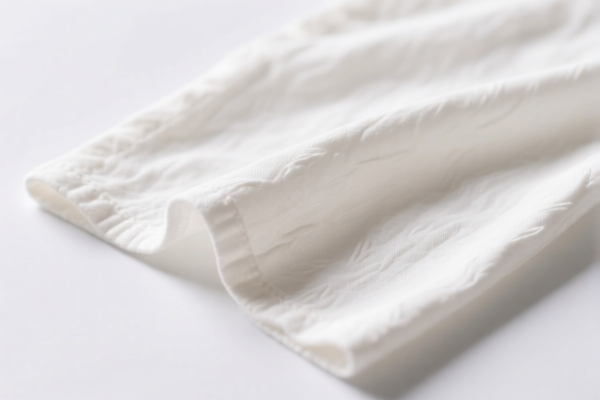
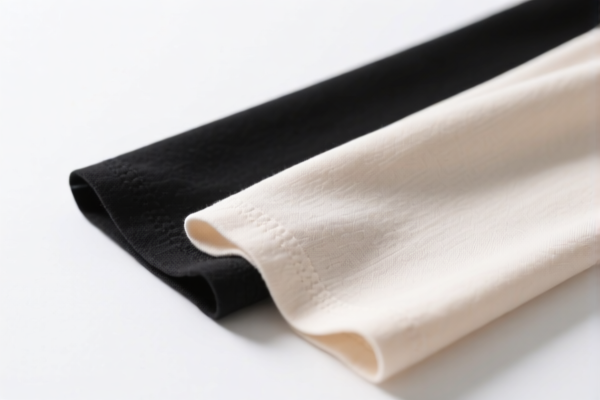
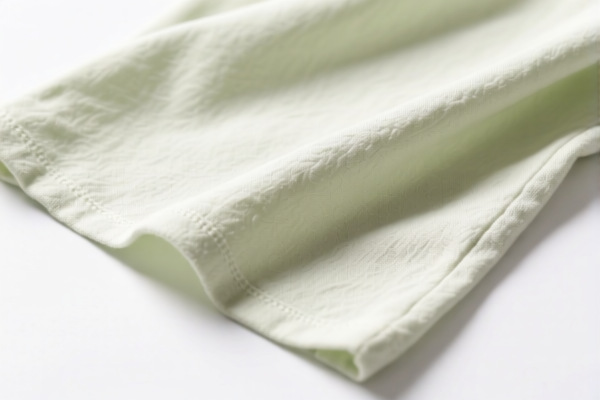
AI Analysis
👶 Children's Other Material Breathable Briefs (Diapers/Pull-ups)
🌐 HS Code Reference & Customs Clearance Guide | 2026 Latest Tariff Analysis | Professional Clearance Strategy
📌 I. Product Definition & Classification: Do You Really Understand "Breathable Briefs"?
Children's "other material breathable briefs" generally refer to disposable diapers, baby pants (pull-ups), or training pants that do not fall under the standard "rubber" or "textile only" categories, often made from composite materials (non-woven fabric, plastic film, super absorbent polymer SAP, cotton, etc.).
In international trade, they are primarily classified into two main categories:
Disposable Diapers/Pants (Hygiene Products): Made from multi-layer composite materials (non-woven, PE film, SAP), designed for single use.
Textile/Reusables (Less Common for "Briefs"): If made of 100% cotton or elastic textile and washable, they are classified as textile underwear.
⚠️ Key Distinction Point:
- If the product contains absorbent core (SAP) and is disposable → Classified under HS 9619.
- If it is washable/reusable textile underwear → Classified under HS 6111/6209.
- "Breathable" refers to the material structure (e.g., micro-perforated PE film, non-woven top sheet), NOT a separate HS category.
📦 II. HS Code Classification Details (2026 Latest Tariff Authoritative Comparison)
| HS Code | Product Description | Application Scenario | Material Composition |
|---|---|---|---|
9619.00.00.00 |
Sanitary towels/pads, tampons, baby diapers & pants, men's incontinence pads | Most common: Disposable diapers, pull-ups, training pants | Composite (Non-woven, PE, SAP, Cotton) |
6111.20.00.00 |
Baby garments/textiles, knitted or crocheted, of cotton | Reusable cloth diapers, baby pants (if not disposable) | 100% Cotton, Knitted |
6209.20.00.00 |
Baby garments/textiles, woven, of cotton | Reusable cloth pants, woven diaper covers | 100% Cotton, Woven |
5603.13.90.00 |
Non-woven fabrics, whether or not impregnated, coated, covered or laminated | Components only: If importing raw non-woven topsheet | Non-woven Fabric |
3919.90.90.00 |
Self-adhesive plates, sheets, film, foil, tape, strip and other shapes of plastics | Components only: If importing breathable PE film | Plastic Film |
🔍 Important Reminder:
- 99% of "breathable briefs" sold in global markets are disposable hygiene products and must be declared under9619.00.00.00.
- Do not classify disposable diapers as "textile underwear" (6209), as this is a common customs error leading to penalties.
- If the product is reusable (cloth diaper), it falls under textile chapters (6111or6209).
💰 III. 2026 Latest Tariff Rate Details (Including Additional Taxes)
✅ Applicable Country: United States (US)
✅ Country of Origin: China (CN)
✅ Effective Date: From November 10, 2025 (including subsequent imports)
🎯 1. 9619.00.00.00 —— Baby Diapers & Pants (Disposable)
| Item | Content |
|---|---|
| Base Tax Rate | 0% (ad valorem) |
| USITC Additional Tax | +25% (from USITC Footnote 9903.88.01) |
| IEEPA Additional Tax | +10% (for China/Hong Kong products, effective Nov 10, 2025) |
| Total Tax Rate | 35% |
| Tax Calculation | CIF Value × 35% |
| De Minimis Exemption | ❌ Not Applicable (deny_de_minimis) |
| Legal Basis Path | IEEPA:9903.01.25 → IEEPA:9903.01.24 → USITC:9619.00.00.00 → FOOTNOTE:9903.88.01 |
📌 Explanation:
- "USITC Additional Tax 25%" comes from the Section 301 tariffs under the U.S. Trade Act;
- "IEEPA 10%" is the additional tariff on Chinese goods under the International Emergency Economic Powers Act;
- Total 35%, which is high, requiring advance planning!
🎯 2. 6111.20.00.00 —— Reusable Cotton Baby Pants (Knitted)
| Item | Content |
|---|---|
| Base Tax Rate | 7% |
| USITC Additional Tax | +25% (if subject to Section 301) |
| IEEPA Additional Tax | +10% |
| Total Tax Rate | 42% |
| Tax Calculation | CIF Value × 42% |
| De Minimis Exemption | ❌ Not Applicable |
📌 Note:
- Reusable textile products are also subject to high tariffs;
- Even though the base rate is 7%, the additional taxes push the total to 42%;
- No significant tariff advantage over disposable diapers.
🛠️ IV. Customs Clearance Practical Advice (Battle-Tested Pitfall Avoidance Guide)
✅ 1. Required Documentation Checklist (Non-negotiable)
| Document | Required | Description |
|---|---|---|
| ✅ Product Specification Sheet | ✔️ | Include dimensions, weight, layers, materials (e.g., "Non-woven top, PE film, SAP core") |
| ✅ Material Composition List | ✔️ | Breakdown of % for non-woven, plastic, SAP, cotton |
| ✅ Product Photos | ✔️ | Clear image of packaging, showing "Disposable Baby Diaper/Pants" |
| ✅ Third-Party Test Report | ✔️ | FDA (if claiming skin-safe), CPSIA (Child Product Safety), REACH, Prop 65 |
| ✅ Commercial Invoice | ✔️ | Clearly state "Disposable Baby Diapers" or "Baby Pants" |
| ✅ Certificate of Origin (CO) | ✔️ | Essential for verifying China origin; avoid misdeclaration to evade tariffs |
| ✅ Packing List | ✔️ | Detail gross/net weight, carton count |
✅ 2. Declaration Tips (Key Mantras)
🔥 "Disposable = 9619, Reusable = Textile, Name Accurate, Tax Down!"
| Scenario | Correct Declaration | Wrong Practice |
|---|---|---|
| Disposable Diapers/Pants | 9619.00.00.00 |
Misdeclare as "Textile" → 42% or seizure |
| Reusable Cloth Diapers | 6111.20.00.00 or 6209.20.00.00 |
Misdeclare as disposable → 35% (if disposable tariff applied) |
| Raw Non-Woven Fabric | 5603.13.90.00 |
Misdeclare as finished product → Wrong tariff |
| Plastic PE Film | 3919.90.90.00 |
Misdeclare as part of diaper → Component tariff applies |
✅ 3. Special Cases Handling
| Situation | Handling Advice |
|---|---|
| OEM Custom Diapers | Provide customer order + design specs to avoid "non-standard" flags |
| "Breathable" Marketing Claims | Ensure test reports support "breathable" claim (e.g., air permeability test) to avoid misleading customs |
| Baby Pants vs. Diapers | Both fall under 9619.00.00.00; no difference in HS code |
| Adult Incontinence Pads | Also classified under 9619.00.00.00; similar tariff structure |
🌍 V. Global Market Comparison (2026 Latest)
| Country/Region | Recommended HS Code | Tariff Rate | Certification Requirements | Notes |
|---|---|---|---|---|
| 🇺🇸 USA | 9619.00.00.00 |
35% (China) | CPSIA, FDA, Prop 65 | High additional tariffs |
| 🇨🇳 China | 9619.00.00.00 |
8% | CCC (if applicable), GB Standards | No additional tariffs |
| 🇪🇺 EU | 9619.00.00.00 |
0% | CE, REACH, EN 16890 | No additional tariffs |
| 🇬🇧 UK | 9619.00.00.00 |
0% | UKCA, REACH | Post-Brexit rules apply |
| 🇯🇵 Japan | 9619.00.00.00 |
0% | PSE, JIS | Low tariffs, high safety standards |
📌 Conclusion:
- USA is the only major market with high additional tariffs (35%) for Chinese-made diapers;
- EU, UK, Japan, China have low or zero tariffs;
- Supply Chain Strategy: Consider diversifying production to Vietnam, Thailand, or Mexico to avoid US tariffs (IEEPA exemptions may apply).
📌 VI. Common Errors & Pitfall Guide (Lessons Learned)
❌ Error 1: Declaring disposable diapers as "Textile Underwear" (6209)
👉 Consequence: Customs detects SAP/plastic layer → Seizure + Fine + Back Taxes!
❌ Error 2: Using "Baby Pants" without specifying "Disposable"
👉 Consequence: Ambiguity → Customs Inspection Delay + Storage Fees
❌ Error 3: Ignoring CPSIA/FDA Requirements
👉 Consequence: Blocked at US Border for non-compliance with child safety laws
❌ Error 4: Misdeclaring "Breathable" as a feature without test reports
👉 Consequence: Potential false advertising claims or customs query
✅ Correct Practice:
"Disposable Baby Diapers/Pants, Non-woven Top Sheet, Breathable PE Film, SAP Core, Cotton Feel, Sizes S/M/L/XL, CPSIA Compliant, HS Code 9619.00.00.00"
🎯 VII. Conclusion: Precise Declaration, Cost Saving, Efficiency!
🎯 Remember Mantra:
🔹 "Disposable = 9619, Tax = 35%, Reusable = Textile, Tax = 42%!"
🔹 "HS Code Determines Tax, 35% vs 0% is a huge difference, Declare Correctly!"
📌 Pro Tip:
If your diapers are originating from Vietnam, Thailand, Mexico, or Malaysia, you may qualify for IEEPA Exemption, with tax rates as low as 0%~5%.
Recommend applying for Advance Ruling from US Customs to avoid clearance risks.
📣 Immediate Action:
📞 Contact Professional Customs Broker + Provide Product Photos + Apply for HS Code Advance Ruling
🚀 Let your diapers clear customs smoothly, export efficiently, and double profits!
✨ Professional Clearance Starts with Accurate Classification!
💼 Every Cent of Your Cost Deserves to Be Precisely Calculated!
Customer Reviews
About HS Code Classification
The Harmonized System (HS) is an internationally standardized nomenclature developed by the World Customs Organization (WCO) to classify traded products. Over 200 countries use the HS system as the basis for customs tariffs, trade statistics, and import/export regulations.
Each HS code follows a hierarchical structure:
- Chapter (2 digits) — Broad category of goods (e.g., Chapter 84: Machinery and Mechanical Appliances)
- Heading (4 digits) — More specific grouping within the chapter
- Subheading (6 digits) — Internationally standardized breakdown, used by all WCO member countries
- National subdivisions (8-10 digits) — Country-specific extensions for further classification, such as US HTSUS 10-digit codes
Correct HS code classification is essential for smooth customs clearance, accurate duty payment, and compliance with trade regulations. Misclassification can lead to customs delays, overpayment of duties, or penalties.
When importing from CN to US, the applicable tariff rates may include:
- Most-Favored-Nation (MFN) rate — The standard duty rate applied to WTO members
- General rate — Applied to countries without trade agreements
- Trade remedy duties — Additional tariffs such as Section 301 (anti-dumping), Section 232 (national security), or countervailing duties
The information provided on this page is for reference purposes only. For official classification, please consult with your local customs authority or a licensed customs broker.